
The Troubles in Northern Ireland were a period of conflict...
 History14 views·Updated Jun 13, 2026·4 pages
The Northern Ireland Troubles Explained: Timeline, Events, and Key Terms
A
Abigail@abigail1
1 / 4
1
of 4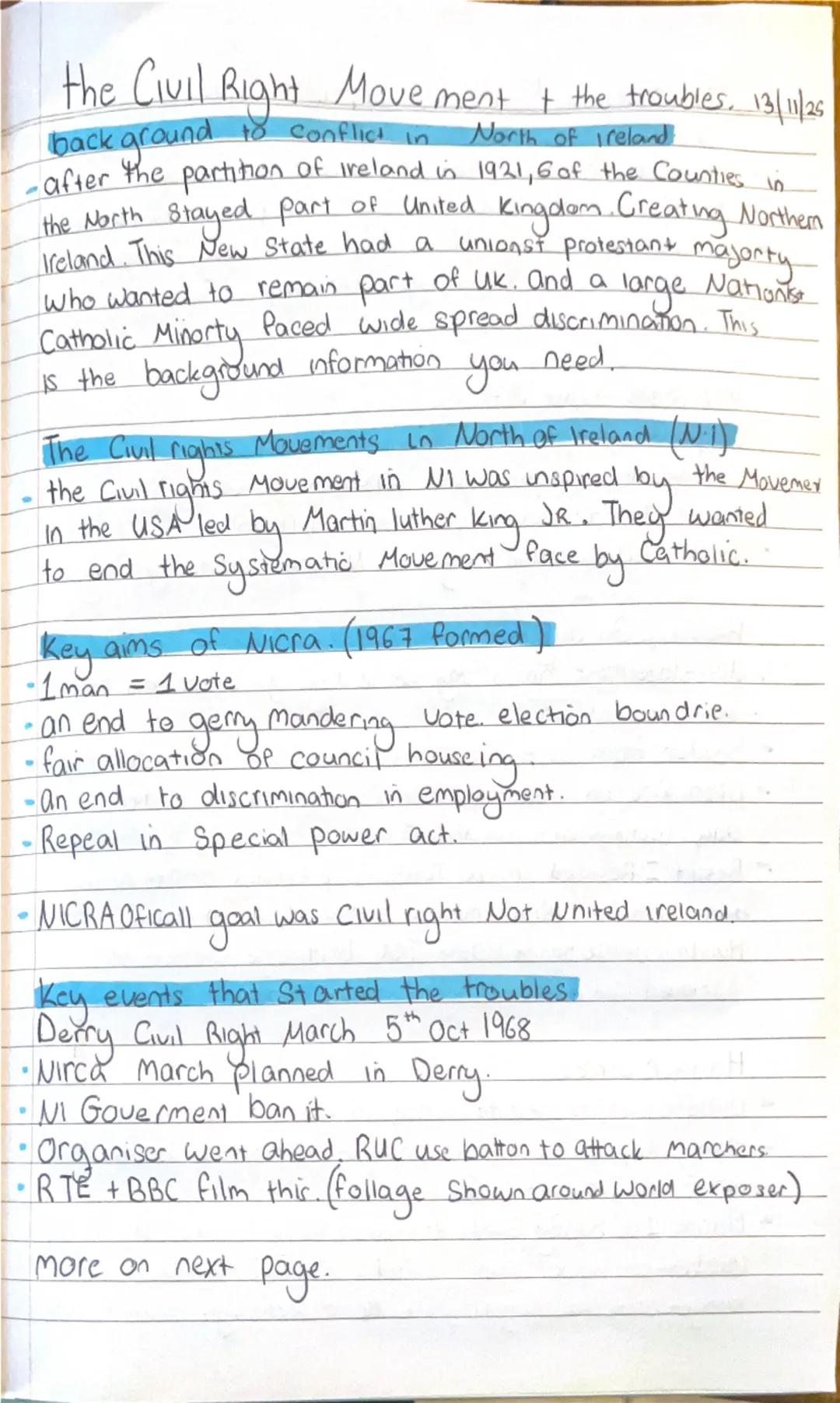
Background to the Conflict
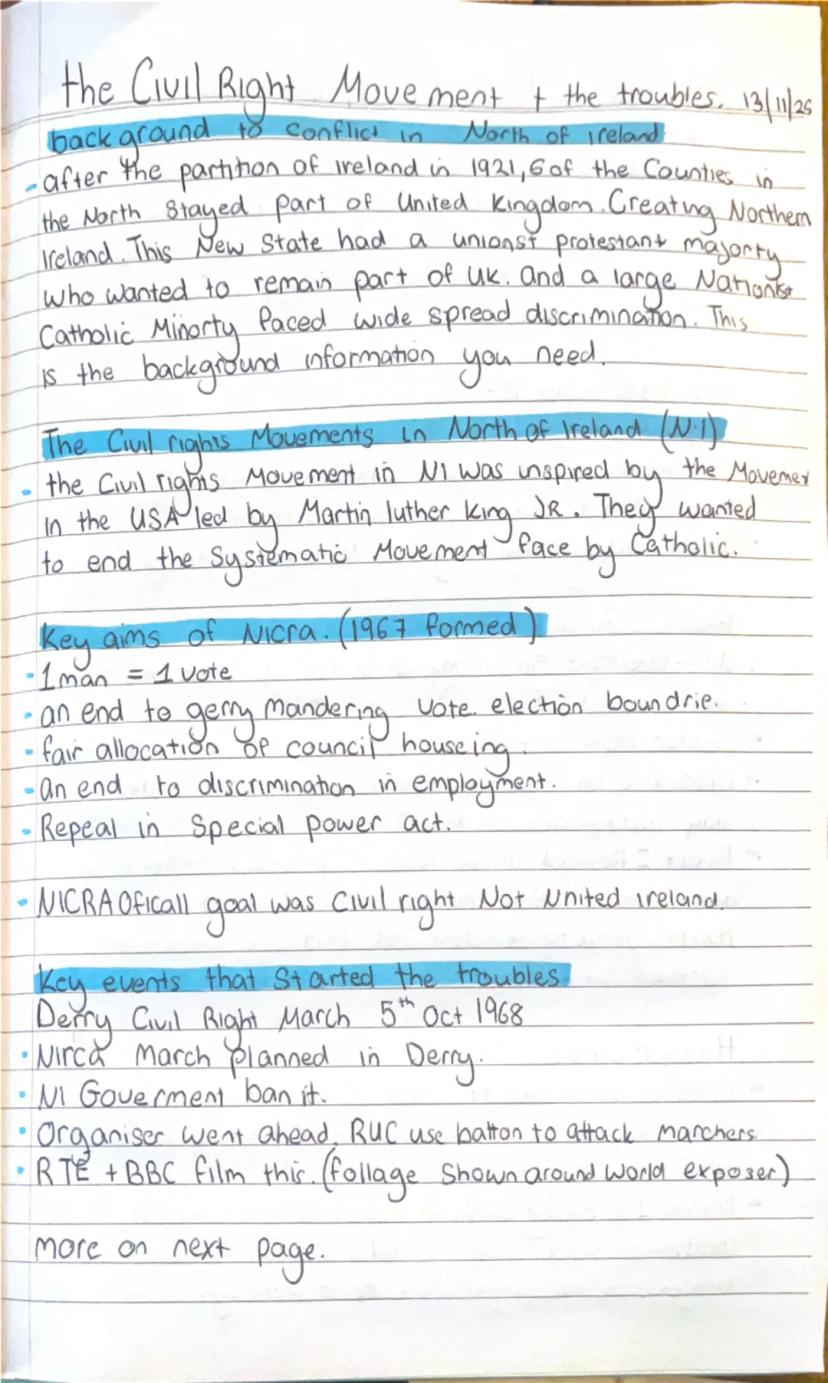
After Ireland was partitioned in 1921, six counties in the north remained part of the United Kingdom, creating Northern Ireland. This new state had a Protestant unionist majority who wanted to stay British, but also a large Catholic nationalist minority who faced serious discrimination.
The civil rights movement in Northern Ireland took inspiration from Martin Luther King Jr.'s work in America. Catholics were treated unfairly in housing, jobs, and voting, so they organised to demand equal treatment.
NICRA (formed in 1967) had clear goals: equal voting rights (one person, one vote), fair housing, an end to job discrimination, and stopping gerrymandering (unfair election boundaries). Importantly, they officially wanted civil rights, not a united Ireland.
The Derry Civil Rights March on 5th October 1968 became a turning point. When the government banned the march but organisers went ahead anyway, the RUC attacked peaceful marchers with batons. This violence was filmed and shown worldwide, exposing the discrimination.
Remember: The civil rights movement started peacefully - they just wanted fair treatment, not political change.
2
of 4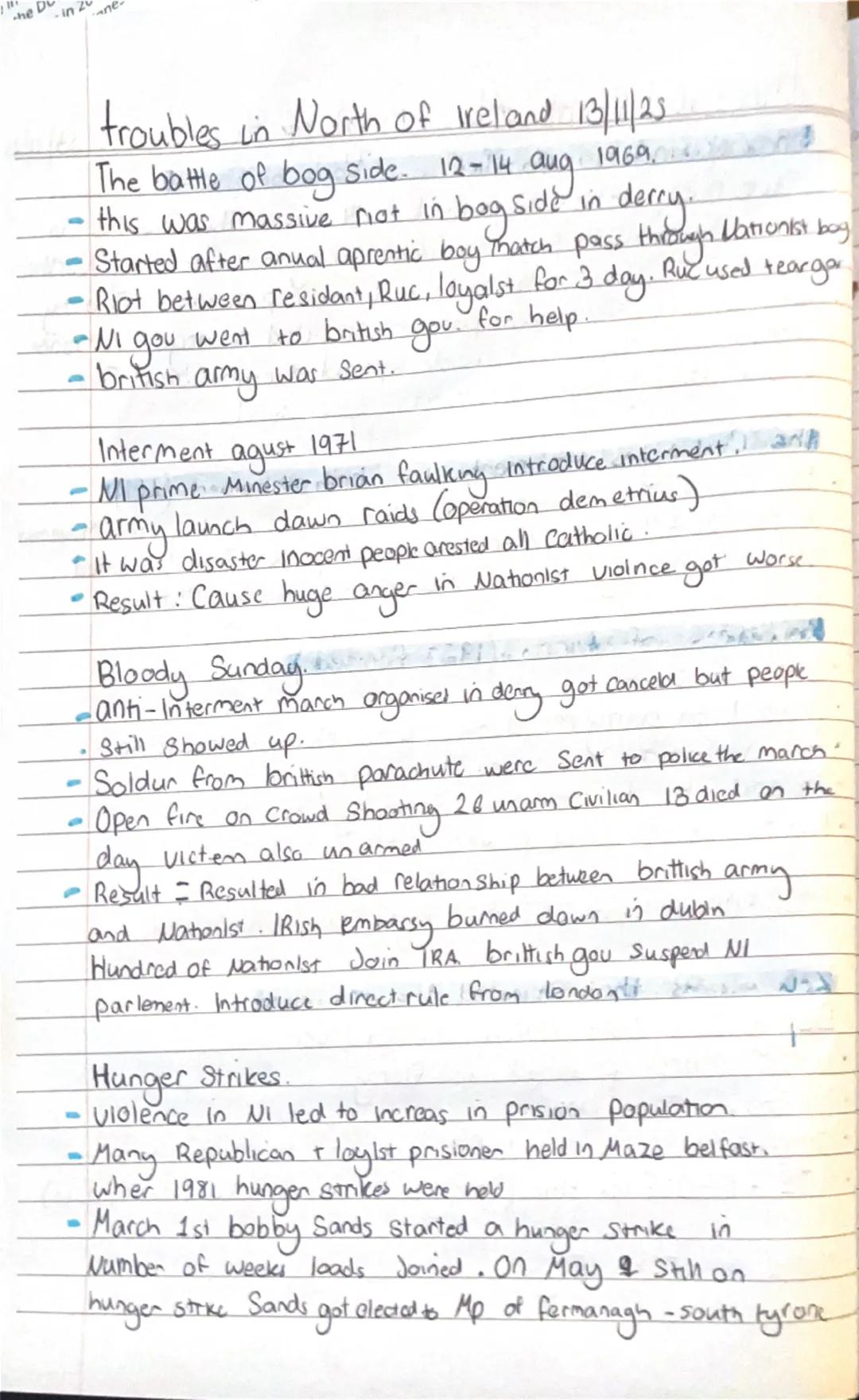
Key Events That Escalated the Troubles
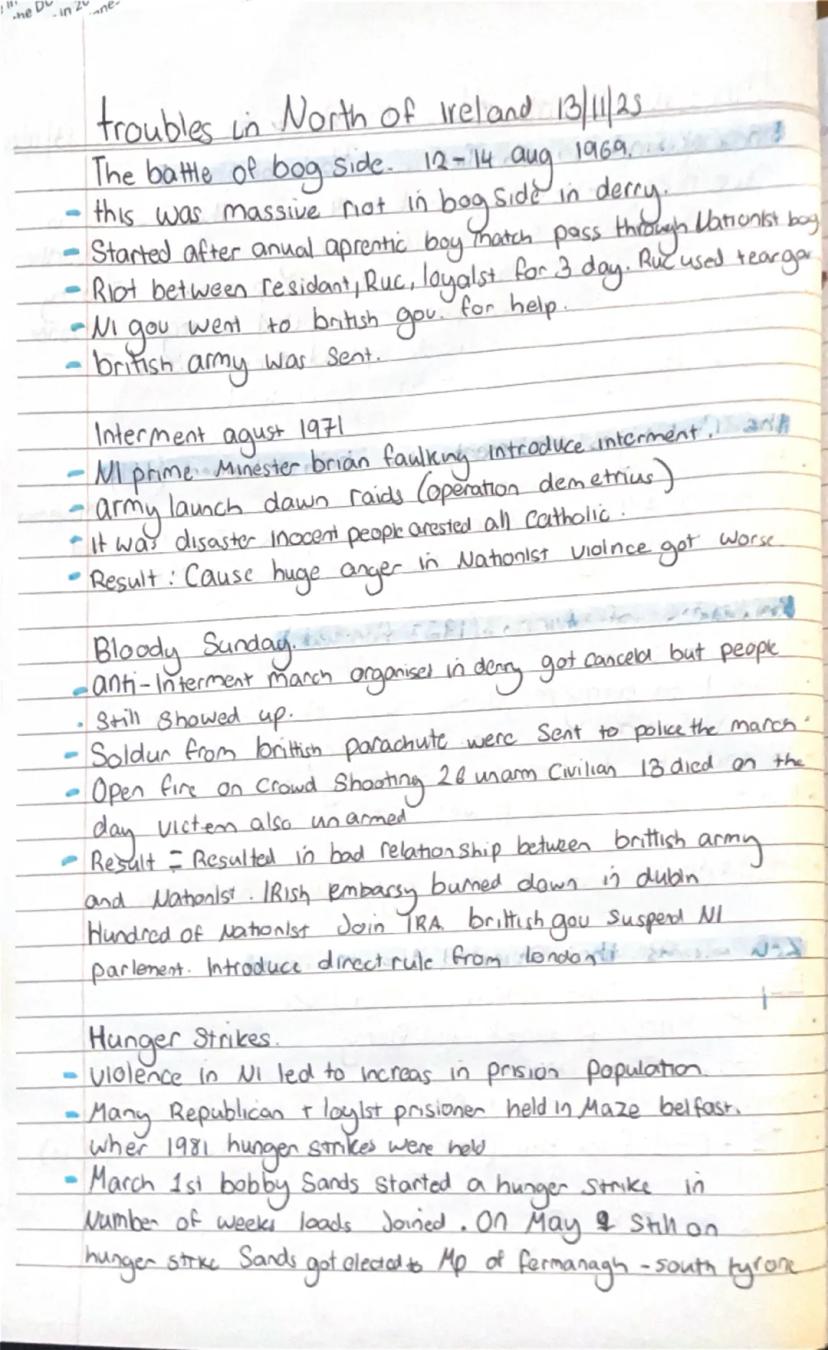
The Battle of the Bogside was a massive riot in Derry that lasted three days. It started after a loyalist parade passed through a nationalist area, leading to fierce clashes between residents, police, and loyalists. The Northern Ireland government asked Britain for help, and the British Army was sent in.
Internment in August 1971 was a disaster that made everything worse. The army launched dawn raids (Operation Demetrius) to arrest suspected republicans without trial. The problem? Only Catholics were arrested, including many innocent people, which caused huge anger and more violence.
Bloody Sunday was the most shocking event. During an anti-internment march in Derry, British paratroopers opened fire on unarmed civilians, shooting 26 people and killing 13. This destroyed the relationship between nationalists and the British Army.
The aftermath was dramatic: the Irish embassy in Dublin was burned down, hundreds joined the IRA, and Britain suspended the Northern Ireland parliament, introducing direct rule from London.
Key Point: Each attempt to solve problems through force only made the conflict worse and more violent.
3
of 4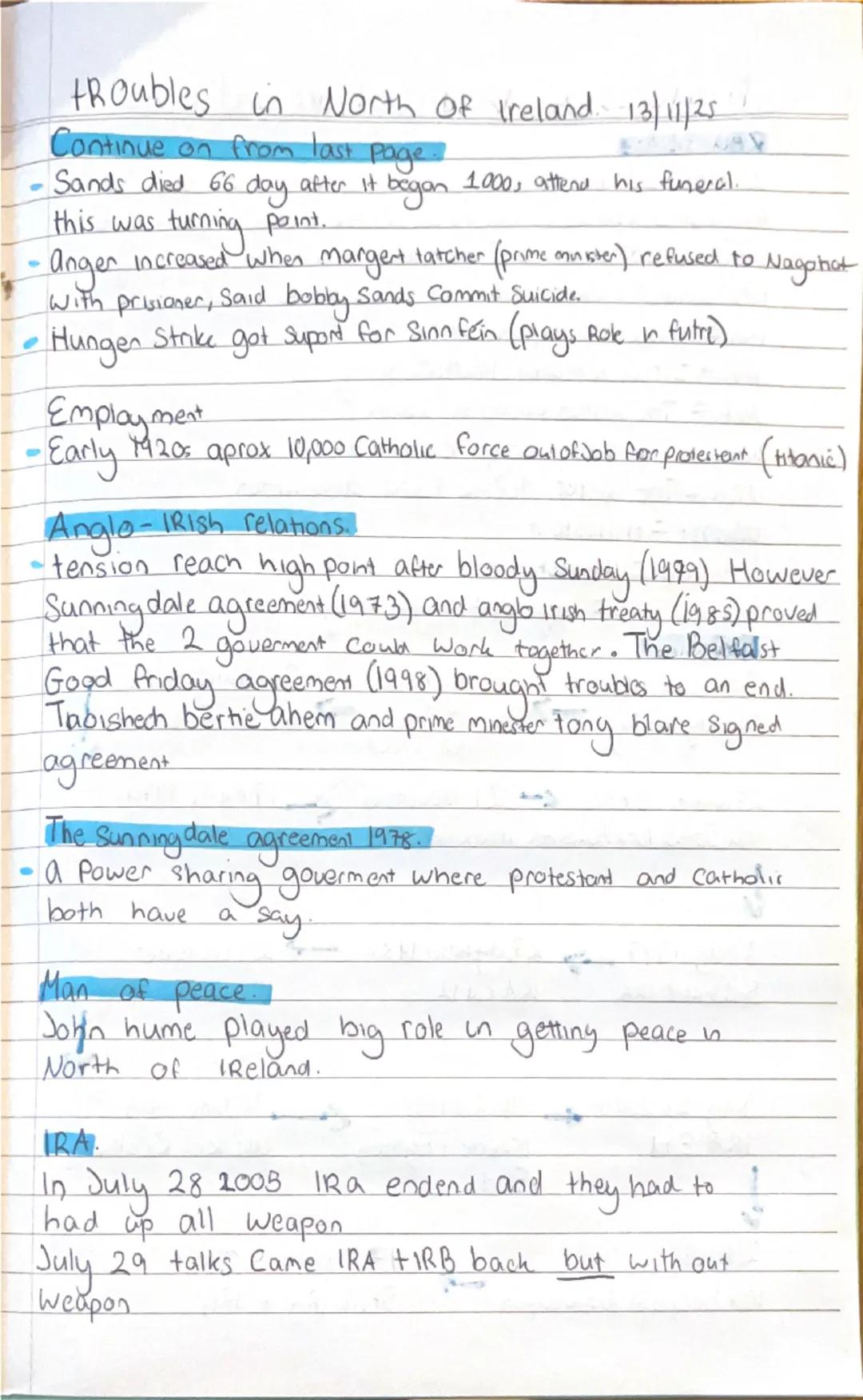
The Hunger Strikes and Path to Peace
The 1981 hunger strikes at the Maze prison became a major turning point. Bobby Sands started the protest in March, demanding political prisoner status. Even while on hunger strike, he was elected as an MP, showing the political support behind the republican cause.
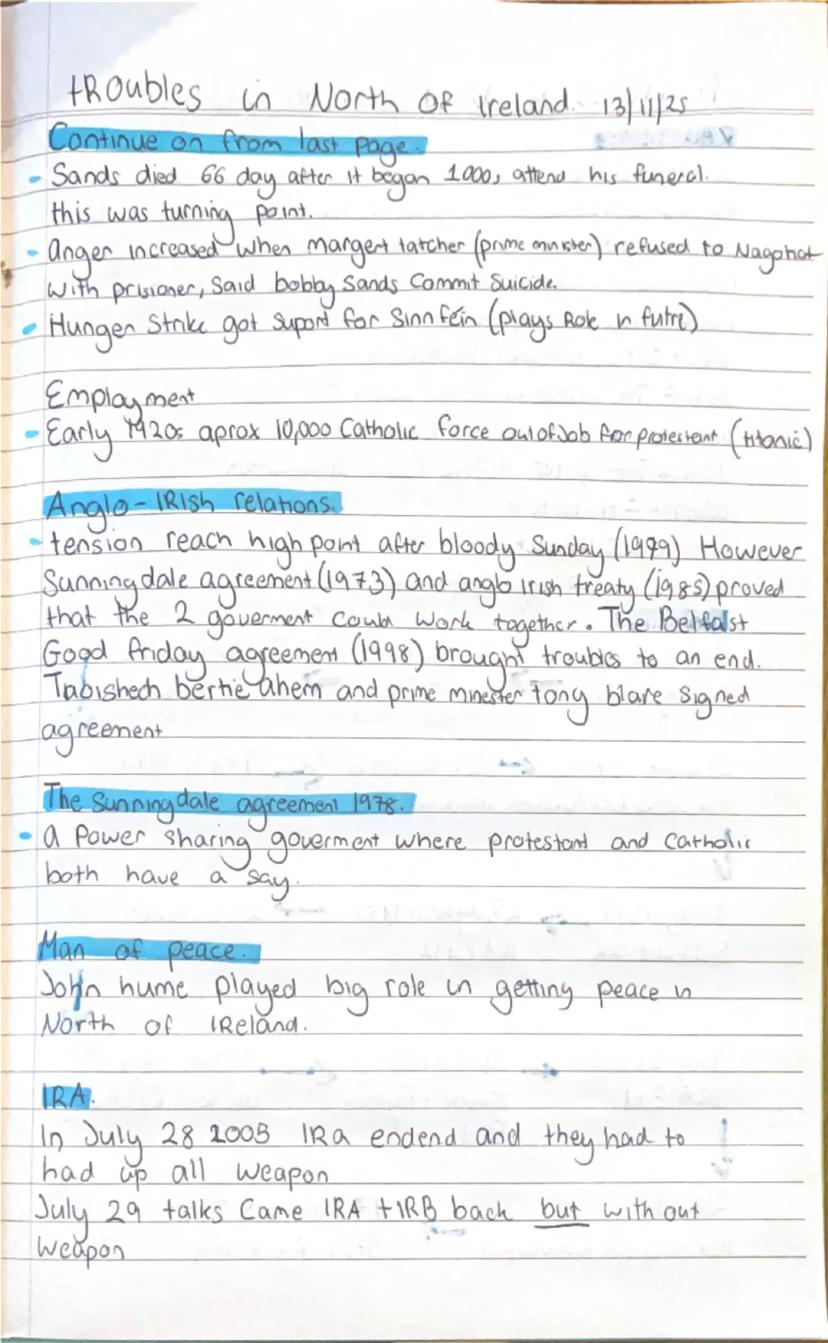
Sands died after 66 days, with 10,000 people attending his funeral. Margaret Thatcher's refusal to negotiate and her claim that Sands "committed suicide" caused massive anger. These events increased support for Sinn Féin, giving them political influence.
The journey to peace involved several important agreements. The Sunningdale Agreement (1973) introduced power-sharing between Protestants and Catholics. The Anglo-Irish Agreement (1985) showed both governments could work together.
Finally, the Good Friday Agreement (1998) ended the Troubles. Taoiseach Bertie Ahern and Prime Minister Tony Blair signed this historic peace deal. John Hume played a crucial role as a "man of peace" in achieving this breakthrough.
On 28th July 2005, the IRA officially ended their campaign and decommissioned all weapons, marking the true end of the conflict.
Hope: Despite decades of violence, people chose peace through dialogue and compromise.
4
of 4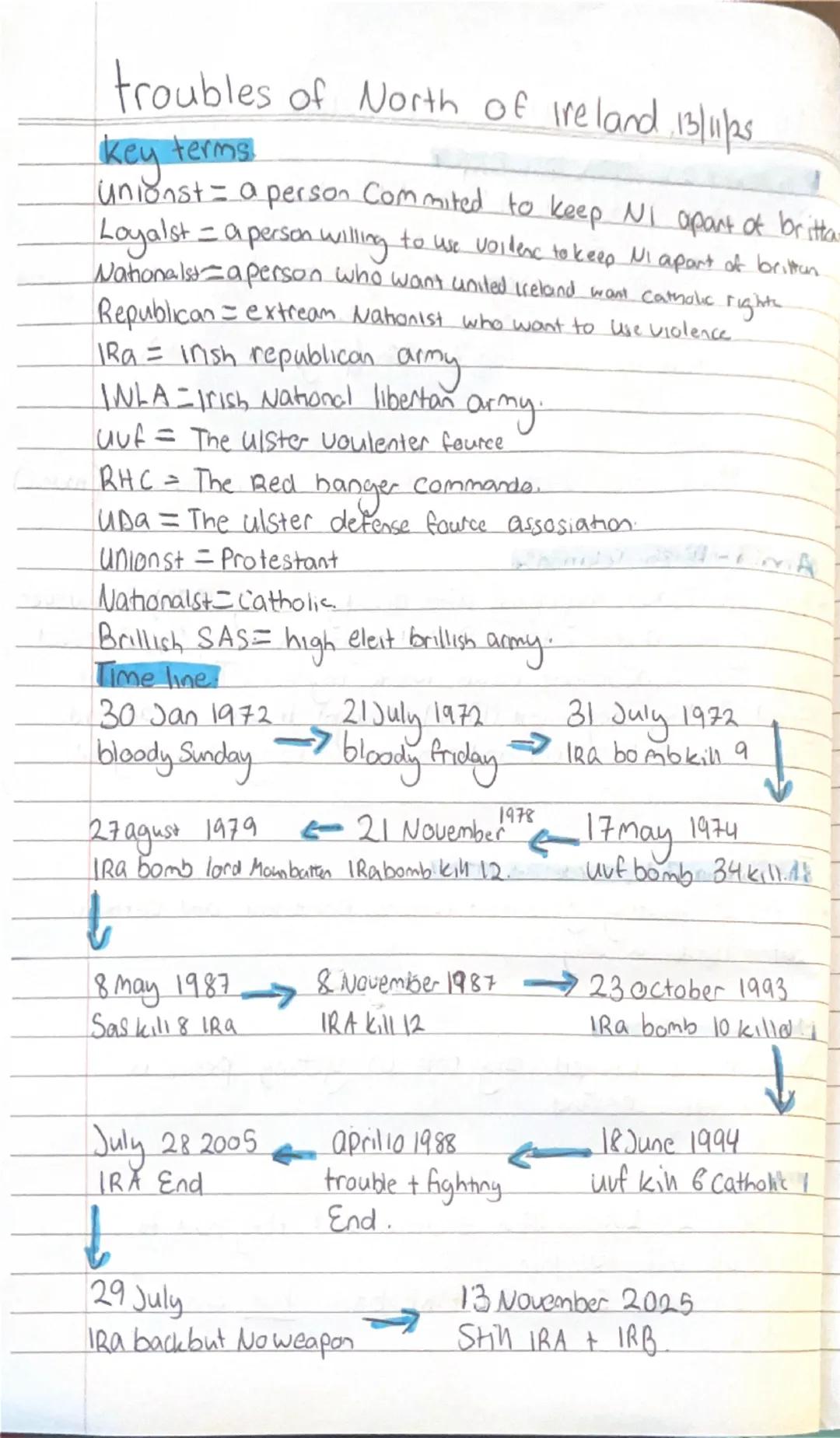
Understanding the Groups and Timeline
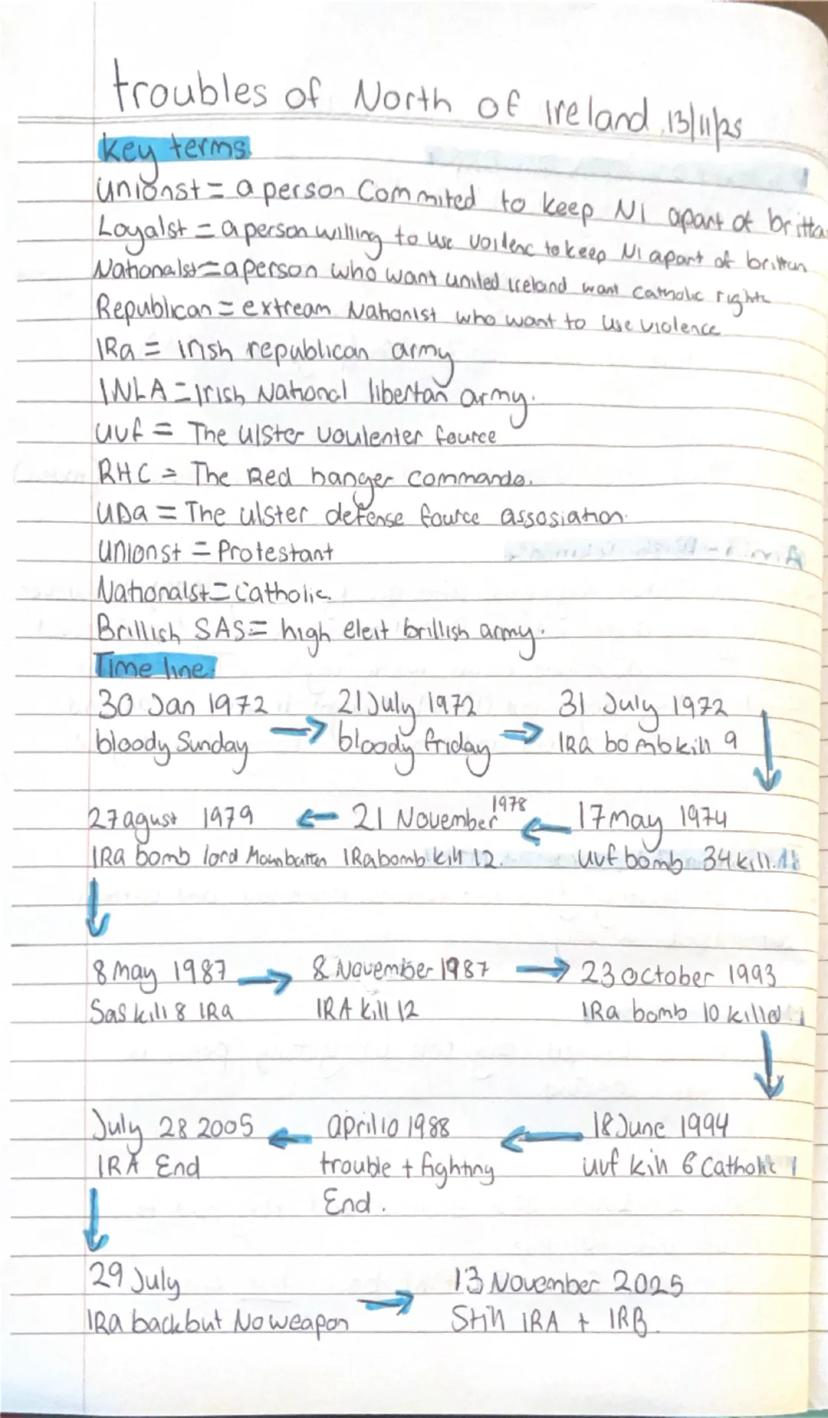
It's important to understand the different groups involved. Unionists wanted Northern Ireland to stay British, while loyalists were willing to use violence for this cause. Nationalists wanted Irish unity and Catholic rights, while republicans were the extreme nationalists who used violence.
Key organisations included the IRA (Irish Republican Army) on the republican side, and the UVF (Ulster Volunteer Force) and UDA (Ulster Defence Association) on the loyalist side. The British Army and elite SAS forces were also heavily involved.
The timeline shows how violence escalated: from Bloody Sunday (1972) through bombings, assassinations, and revenge attacks by all sides. Major incidents like Bloody Friday, the Mountbatten bombing, and various sectarian killings kept the cycle of violence spinning.
However, the timeline also shows hope - peace talks continued throughout the worst violence, eventually leading to ceasefires in 1994 and the final IRA statement in 2005 that they had returned "but without weapons."
Remember: While these events seem distant, they shaped the Ireland we live in today and show why peace and dialogue matter.
We thought you’d never ask...
What is the Knowunity AI companion?
Our AI companion is specifically built for the needs of students. Based on the millions of content pieces we have on the platform we can provide truly meaningful and relevant answers to students. But its not only about answers, the companion is even more about guiding students through their daily learning challenges, with personalised study plans, quizzes or content pieces in the chat and 100% personalisation based on the students skills and developments.
Where can I download the Knowunity app?
You can download the app in the Google Play Store and in the Apple App Store.
Is Knowunity really free of charge?
That's right! Enjoy free access to study content, connect with fellow students, and get instant help – all at your fingertips.
Most popular content in History
9HistoryThe Great Famine (An Gorta Mór)
Students will learn about the causes, devastating impact, and long-term consequences of the potato famine on Irish population and society.
2nd Year282
HistoryThe renaissance
junior cert renaissance summary
1st Year361
HistoryCauses and Consequences of World War II
This subtopic covers the origins of the Second World War, its global scale, and its devastating human and political consequences, including the atomic bomb.
3rd Year152
HistoryThe 1798 Rebellion in Ireland
Learning about the causes, events, and aftermath of the United Irishmen's rebellion against British rule, inspired by revolutionary ideals.
3rd Year211
HistoryAmerican revolution
junior cert american revolution summary
1st Year442
HistoryThe Great Famine (An Gorta Mór)
This critical subtopic examines the causes, devastating impact, and long-term consequences of the potato famine on Irish society, population, and emigration.
3rd Year140
HistoryThe Renaissance
Students will learn about a time of 'rebirth' in Europe, where new ideas in art, science, and literature flourished.
1st Year140
History1916 Rising Revison Sheet
revision sheet
3rd Year211
HistoryThe Reformation in Europe
Students will learn about the causes and key figures of the Protestant Reformation and its impact on European society and politics.
3rd Year110
Most popular content
9 Irish
IrishIrish oral questions and answers
Questions and answers for the leaving cert oral
5th Year4264
 English
Key Quotes : Sive
Key Quotes and explanations: Sive
6th Year2842
IrishIrish oral questions
Outline of oral questions
5th Year2055
IrishIníon- le hÁine Durkin
Aine Durkin’s poem, Iníon: Themes & summary
5th Year850
IrishIrish poetry 2027
Iníon + Dínit an Bhróin
5th Year1133
IrishLC HL notes- Iníon (poem)
Includes poem in English and Irish, theme, key words & phrases
5th Year2284
EnglishCultural Context : Shawshank Redemption : Sive : Small Things Like These
Comparative Study : Cultural Context : Shawshank Redemption, Sive and Small Things Like These
6th Year1430
IrishMo Ghrá-sa (Idir Lúibíní)
Notes on mo ghrá-sa
5th Year380
IrishAn Gaeilge Aiste
Irish Language essay
6th Year1320
Can't find what you're looking for? Explore other subjects.
Students love us — and so will you.
4.6/5App Store
4.7/5Google Play
The app is very easy to use and well designed. I have found everything I was looking for so far and have been able to learn a lot from the presentations! I will definitely use the app for a class assignment! And of course it also helps a lot as an inspiration.
Stefan SiOS user
This app is really great. There are so many study notes and help [...]. My problem subject is French, for example, and the app has so many options for help. Thanks to this app, I have improved my French. I would recommend it to anyone.
Samantha KlichAndroid user
Wow, I am really amazed. I just tried the app because I've seen it advertised many times and was absolutely stunned. This app is THE HELP you want for school and above all, it offers so many things, such as workouts and fact sheets, which have been VERY helpful to me personally.
AnnaiOS user
History14 views·Updated Jun 13, 2026·4 pagesThe Northern Ireland Troubles Explained: Timeline, Events, and Key Terms
A
Abigail@abigail1
The Troubles in Northern Ireland were a period of conflict that lasted for decades, deeply affecting communities and families. Understanding this complex history helps us learn about civil rights, discrimination, and the long journey towards peace that shaped modern Ireland.
1
of 4
Sign up to see the content. It's free!
- Access to all documents
- Improve your grades
- Join milions of students
Background to the Conflict
After Ireland was partitioned in 1921, six counties in the north remained part of the United Kingdom, creating Northern Ireland. This new state had a Protestant unionist majority who wanted to stay British, but also a large Catholic nationalist minority who faced serious discrimination.
The civil rights movement in Northern Ireland took inspiration from Martin Luther King Jr.'s work in America. Catholics were treated unfairly in housing, jobs, and voting, so they organised to demand equal treatment.
NICRA (formed in 1967) had clear goals: equal voting rights (one person, one vote), fair housing, an end to job discrimination, and stopping gerrymandering (unfair election boundaries). Importantly, they officially wanted civil rights, not a united Ireland.
The Derry Civil Rights March on 5th October 1968 became a turning point. When the government banned the march but organisers went ahead anyway, the RUC attacked peaceful marchers with batons. This violence was filmed and shown worldwide, exposing the discrimination.
Remember: The civil rights movement started peacefully - they just wanted fair treatment, not political change.
2
of 4Sign up to see the content. It's free!
- Access to all documents
- Improve your grades
- Join milions of students
Key Events That Escalated the Troubles
The Battle of the Bogside was a massive riot in Derry that lasted three days. It started after a loyalist parade passed through a nationalist area, leading to fierce clashes between residents, police, and loyalists. The Northern Ireland government asked Britain for help, and the British Army was sent in.
Internment in August 1971 was a disaster that made everything worse. The army launched dawn raids (Operation Demetrius) to arrest suspected republicans without trial. The problem? Only Catholics were arrested, including many innocent people, which caused huge anger and more violence.
Bloody Sunday was the most shocking event. During an anti-internment march in Derry, British paratroopers opened fire on unarmed civilians, shooting 26 people and killing 13. This destroyed the relationship between nationalists and the British Army.
The aftermath was dramatic: the Irish embassy in Dublin was burned down, hundreds joined the IRA, and Britain suspended the Northern Ireland parliament, introducing direct rule from London.
Key Point: Each attempt to solve problems through force only made the conflict worse and more violent.
3
of 4Sign up to see the content. It's free!
- Access to all documents
- Improve your grades
- Join milions of students
The Hunger Strikes and Path to Peace
The 1981 hunger strikes at the Maze prison became a major turning point. Bobby Sands started the protest in March, demanding political prisoner status. Even while on hunger strike, he was elected as an MP, showing the political support behind the republican cause.
Sands died after 66 days, with 10,000 people attending his funeral. Margaret Thatcher's refusal to negotiate and her claim that Sands "committed suicide" caused massive anger. These events increased support for Sinn Féin, giving them political influence.
The journey to peace involved several important agreements. The Sunningdale Agreement (1973) introduced power-sharing between Protestants and Catholics. The Anglo-Irish Agreement (1985) showed both governments could work together.
Finally, the Good Friday Agreement (1998) ended the Troubles. Taoiseach Bertie Ahern and Prime Minister Tony Blair signed this historic peace deal. John Hume played a crucial role as a "man of peace" in achieving this breakthrough.
On 28th July 2005, the IRA officially ended their campaign and decommissioned all weapons, marking the true end of the conflict.
Hope: Despite decades of violence, people chose peace through dialogue and compromise.
4
of 4Sign up to see the content. It's free!
- Access to all documents
- Improve your grades
- Join milions of students
Understanding the Groups and Timeline
It's important to understand the different groups involved. Unionists wanted Northern Ireland to stay British, while loyalists were willing to use violence for this cause. Nationalists wanted Irish unity and Catholic rights, while republicans were the extreme nationalists who used violence.
Key organisations included the IRA (Irish Republican Army) on the republican side, and the UVF (Ulster Volunteer Force) and UDA (Ulster Defence Association) on the loyalist side. The British Army and elite SAS forces were also heavily involved.
The timeline shows how violence escalated: from Bloody Sunday (1972) through bombings, assassinations, and revenge attacks by all sides. Major incidents like Bloody Friday, the Mountbatten bombing, and various sectarian killings kept the cycle of violence spinning.
However, the timeline also shows hope - peace talks continued throughout the worst violence, eventually leading to ceasefires in 1994 and the final IRA statement in 2005 that they had returned "but without weapons."
Remember: While these events seem distant, they shaped the Ireland we live in today and show why peace and dialogue matter.
We thought you’d never ask...
What is the Knowunity AI companion?
Our AI companion is specifically built for the needs of students. Based on the millions of content pieces we have on the platform we can provide truly meaningful and relevant answers to students. But its not only about answers, the companion is even more about guiding students through their daily learning challenges, with personalised study plans, quizzes or content pieces in the chat and 100% personalisation based on the students skills and developments.
Where can I download the Knowunity app?
You can download the app in the Google Play Store and in the Apple App Store.
Is Knowunity really free of charge?
That's right! Enjoy free access to study content, connect with fellow students, and get instant help – all at your fingertips.
Most popular content in History
9HistoryThe Great Famine (An Gorta Mór)
Students will learn about the causes, devastating impact, and long-term consequences of the potato famine on Irish population and society.
2nd Year282
HistoryThe renaissance
junior cert renaissance summary
1st Year361
HistoryCauses and Consequences of World War II
This subtopic covers the origins of the Second World War, its global scale, and its devastating human and political consequences, including the atomic bomb.
3rd Year152
HistoryThe 1798 Rebellion in Ireland
Learning about the causes, events, and aftermath of the United Irishmen's rebellion against British rule, inspired by revolutionary ideals.
3rd Year211
HistoryAmerican revolution
junior cert american revolution summary
1st Year442
HistoryThe Great Famine (An Gorta Mór)
This critical subtopic examines the causes, devastating impact, and long-term consequences of the potato famine on Irish society, population, and emigration.
3rd Year140
HistoryThe Renaissance
Students will learn about a time of 'rebirth' in Europe, where new ideas in art, science, and literature flourished.
1st Year140
History1916 Rising Revison Sheet
revision sheet
3rd Year211
HistoryThe Reformation in Europe
Students will learn about the causes and key figures of the Protestant Reformation and its impact on European society and politics.
3rd Year110
Most popular content
9IrishIrish oral questions and answers
Questions and answers for the leaving cert oral
5th Year4264
EnglishKey Quotes : Sive
Key Quotes and explanations: Sive
6th Year2842
IrishIrish oral questions
Outline of oral questions
5th Year2055
IrishIníon- le hÁine Durkin
Aine Durkin’s poem, Iníon: Themes & summary
5th Year850
IrishIrish poetry 2027
Iníon + Dínit an Bhróin
5th Year1133
IrishLC HL notes- Iníon (poem)
Includes poem in English and Irish, theme, key words & phrases
5th Year2284
EnglishCultural Context : Shawshank Redemption : Sive : Small Things Like These
Comparative Study : Cultural Context : Shawshank Redemption, Sive and Small Things Like These
6th Year1430
IrishMo Ghrá-sa (Idir Lúibíní)
Notes on mo ghrá-sa
5th Year380
IrishAn Gaeilge Aiste
Irish Language essay
6th Year1320
Can't find what you're looking for? Explore other subjects.
Students love us — and so will you.
4.6/5App Store
4.7/5Google Play
The app is very easy to use and well designed. I have found everything I was looking for so far and have been able to learn a lot from the presentations! I will definitely use the app for a class assignment! And of course it also helps a lot as an inspiration.
Stefan SiOS user
This app is really great. There are so many study notes and help [...]. My problem subject is French, for example, and the app has so many options for help. Thanks to this app, I have improved my French. I would recommend it to anyone.
Samantha KlichAndroid user
Wow, I am really amazed. I just tried the app because I've seen it advertised many times and was absolutely stunned. This app is THE HELP you want for school and above all, it offers so many things, such as workouts and fact sheets, which have been VERY helpful to me personally.
AnnaiOS user