
Your cells are constantly releasing energy from the food you...
 Biology8 views·Updated Jun 5, 2026·7 pages
Complete Respiration Study Guide
J
Jenny Reynolds@jennyreynolds
1 / 7
1
of 7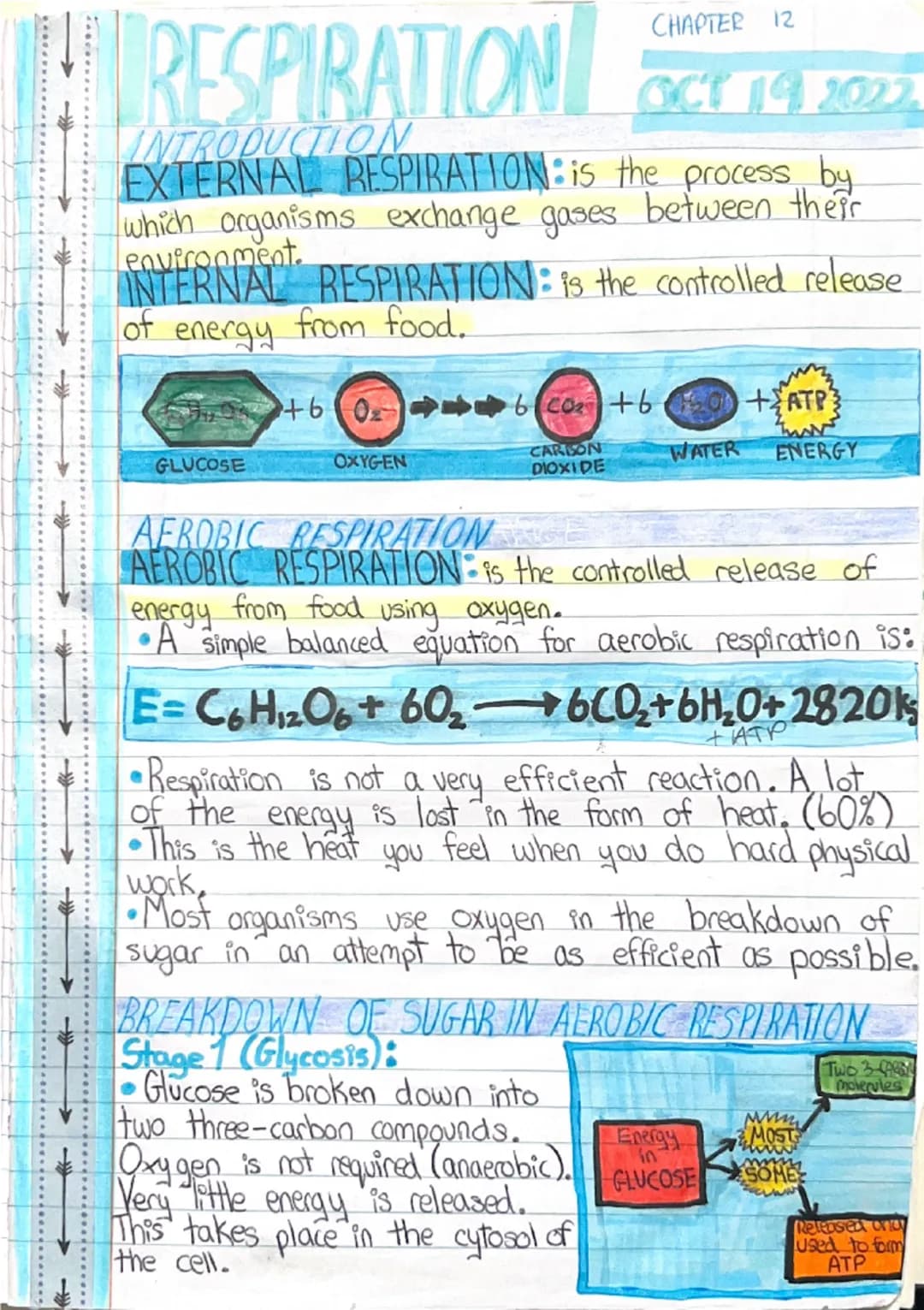
Understanding External and Internal Respiration
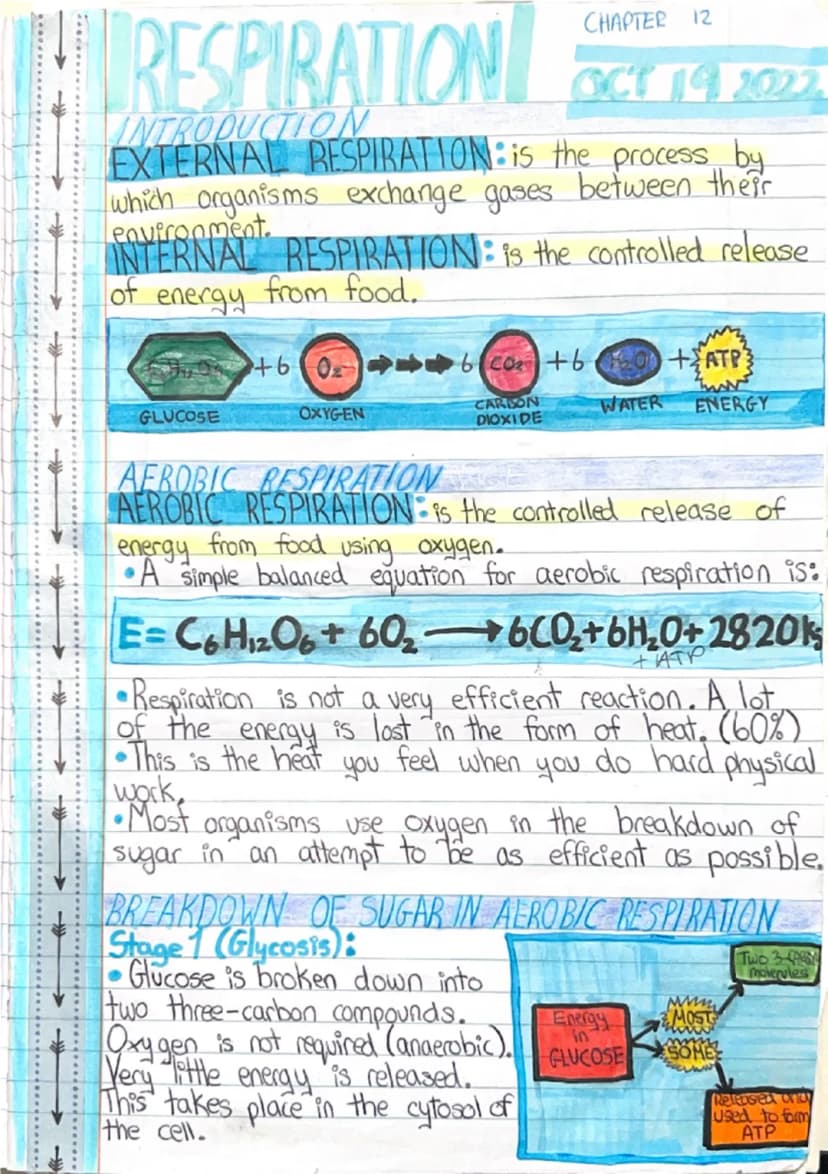
External respiration is simply the gas exchange between your body and the environment - basically breathing in and out. But the real action happens with internal respiration, which is how your cells actually release energy from food.
Aerobic respiration uses oxygen to break down glucose (sugar) and release energy. The basic equation shows glucose + oxygen producing carbon dioxide + water + energy (ATP). Think of it like burning fuel in a car engine, but much more controlled.
Here's something interesting - respiration is only about 40% efficient. The other 60% of energy gets lost as heat, which is why you feel warm when exercising hard. Your body is literally heating up from all the chemical reactions happening inside your cells.
Quick Tip: Remember that respiration happens in every single one of your cells, not just your lungs!
2
of 7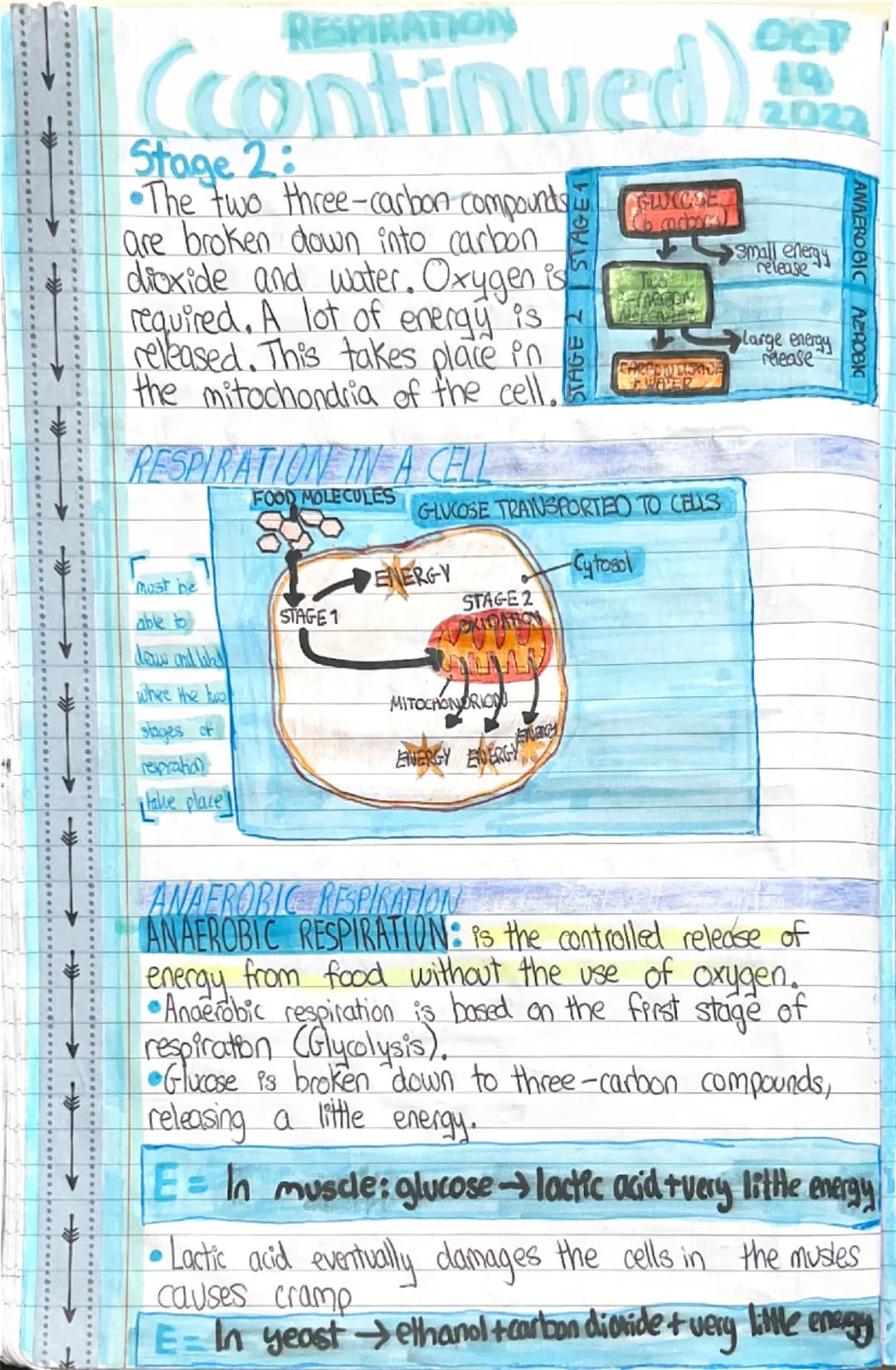
The Two Stages of Aerobic Respiration
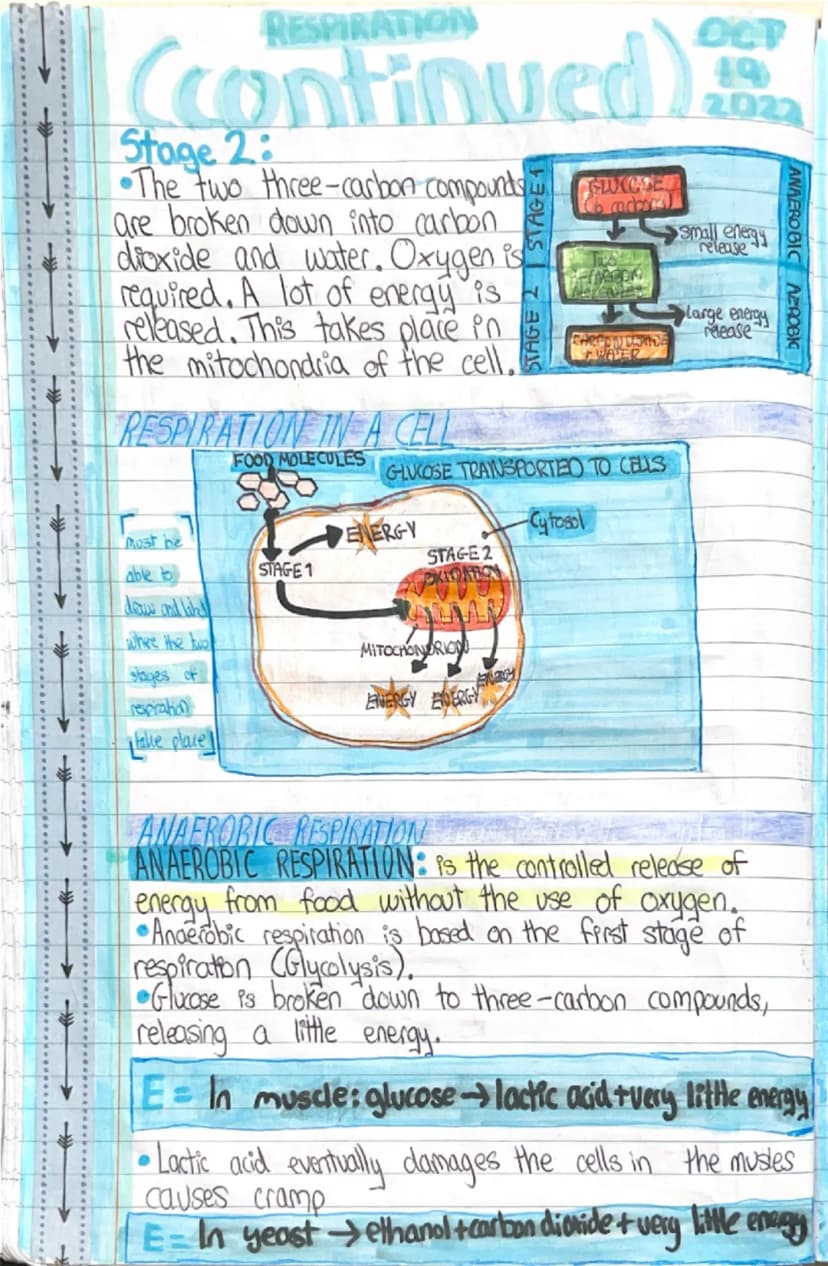
Stage 1 (Glycolysis) happens in the cytosol . Here, glucose gets broken down into two smaller three-carbon compounds. This stage doesn't need oxygen and only releases a tiny bit of energy - just enough to keep things ticking over.
Stage 2 is where the magic happens, taking place inside the mitochondria (your cell's powerhouses). The three-carbon compounds get completely broken down into carbon dioxide and water, but this time oxygen is essential. This stage releases loads of energy - way more than stage 1.
When oxygen isn't available, your cells switch to anaerobic respiration. This only uses stage 1, so you get much less energy. In your muscles, this produces lactic acid (hello, muscle cramps!). In yeast, it produces ethanol and carbon dioxide.
Remember: Mitochondria = lots of energy, Cytosol = little energy!
3
of 7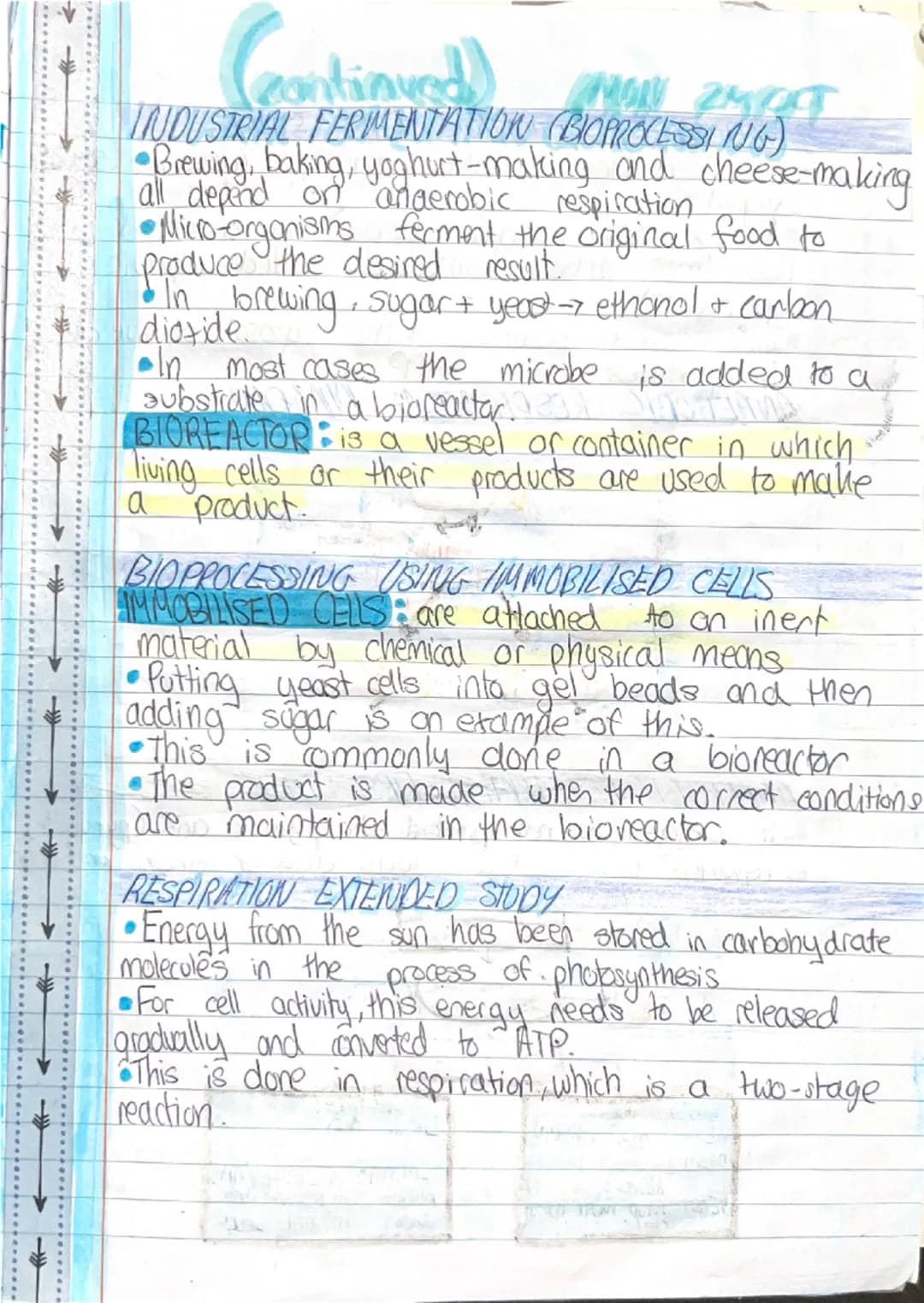
Industrial Applications and Fermentation
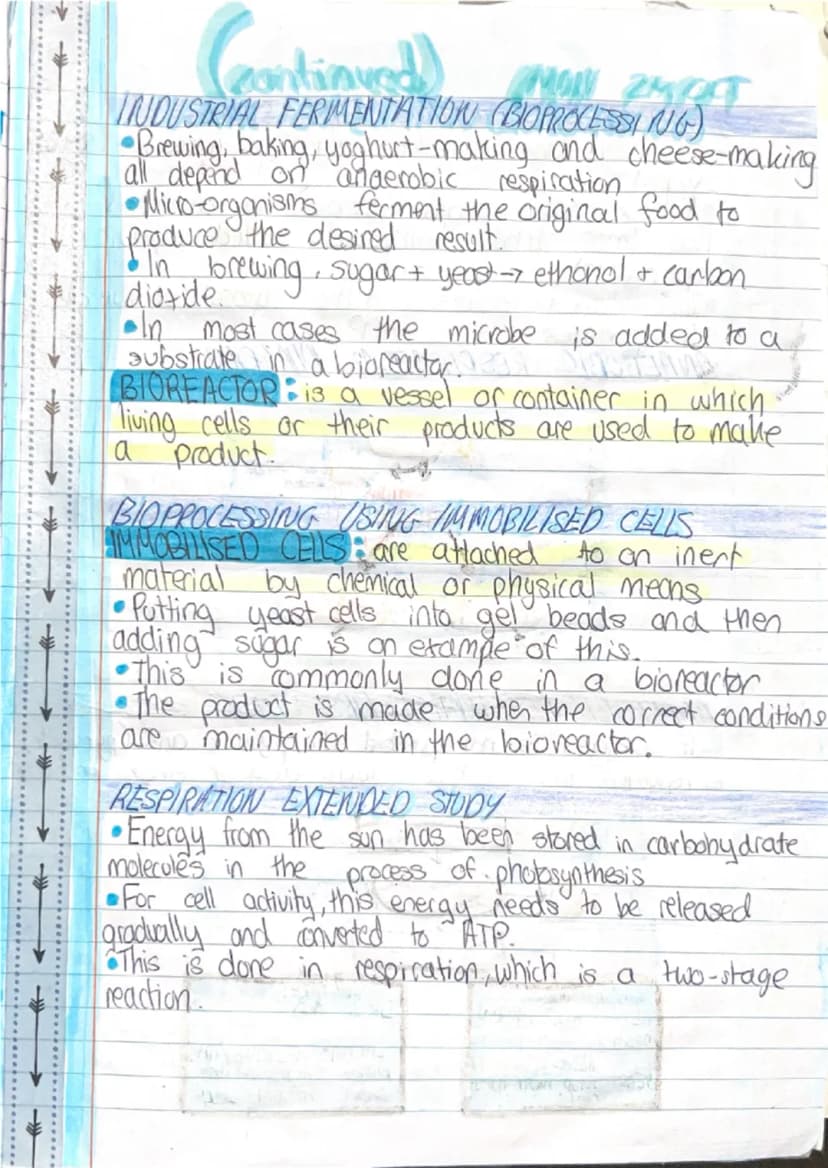
Anaerobic respiration isn't just something that happens when you're out of breath - it's actually used to make loads of things you probably consume regularly. Brewing, baking, yoghurt-making and cheese-making all depend on microorganisms fermenting sugars without oxygen.
Bioreactors are special containers where scientists control the conditions to get microorganisms to produce what they want. Think of them as high-tech fermentation tanks. Immobilised cells are often used - basically trapping yeast or bacteria in gel beads so they can't escape but can still do their job.
The process is surprisingly simple: sugar + yeast = ethanol + carbon dioxide. That's how bread rises (the CO₂ creates bubbles) and how alcoholic drinks are made. Bioprocessing is just the fancy term for using living organisms to make products on an industrial scale.
Fun Fact: The yeast in your bread dough is actually doing anaerobic respiration and getting a bit tipsy in the process!
4
of 7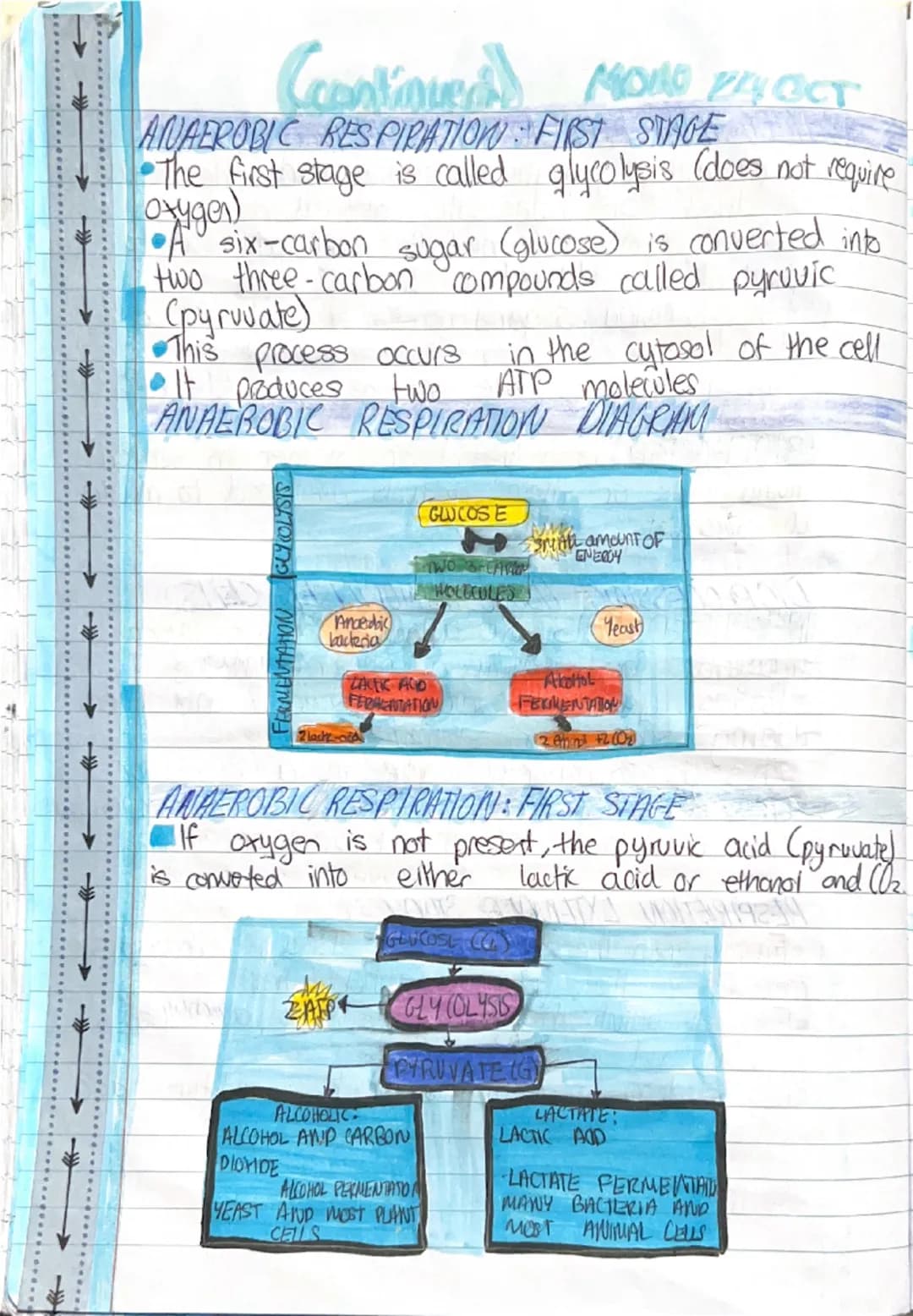
Glycolysis - The First Stage Explained
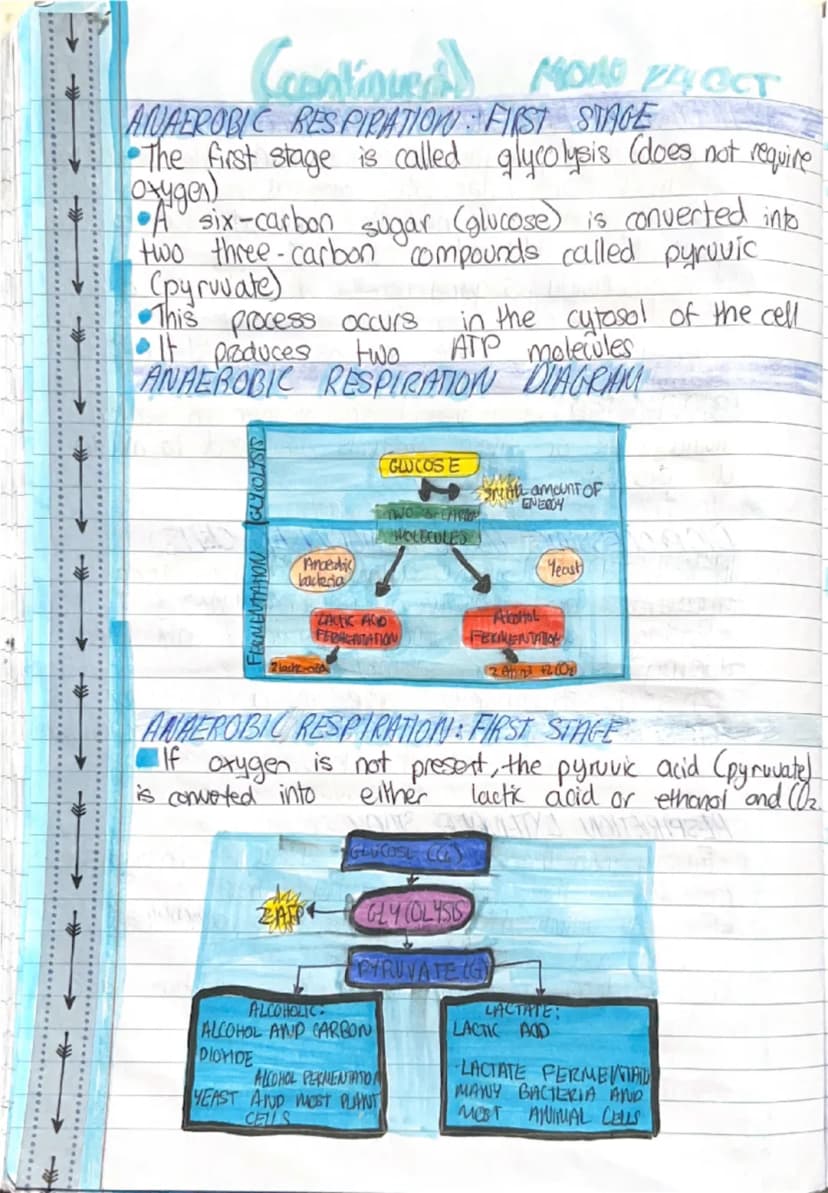
Glycolysis is literally "sugar splitting" - a six-carbon glucose molecule gets chopped up into two three-carbon pyruvate molecules. This happens in every living cell, whether oxygen is around or not. The process produces just 2 ATP molecules, which isn't much energy.
What happens next depends entirely on whether oxygen is available. Without oxygen, pyruvate gets converted into either lactic acid (in your muscles and most bacteria) or ethanol and CO₂ (in yeast and plant cells). This is called fermentation.
Lactic acid fermentation happens when you exercise so hard that your muscles can't get enough oxygen. The lactic acid buildup is what causes that burning sensation in your muscles. Alcoholic fermentation is what yeast does when making bread or beer.
Key Point: Pyruvate is the crossroads molecule - it can go aerobic or anaerobic depending on oxygen availability!
5
of 7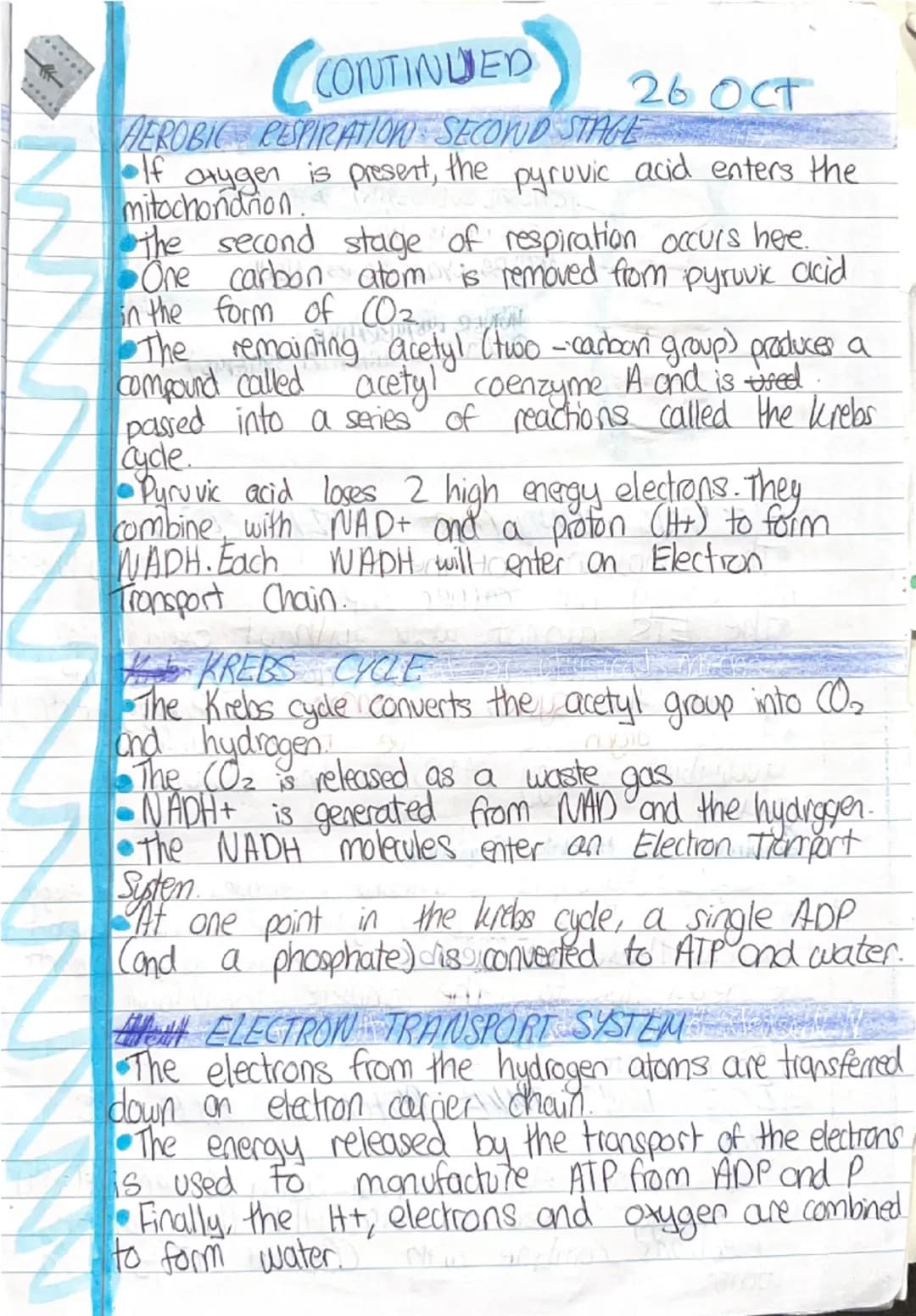
The Krebs Cycle and Electron Transport
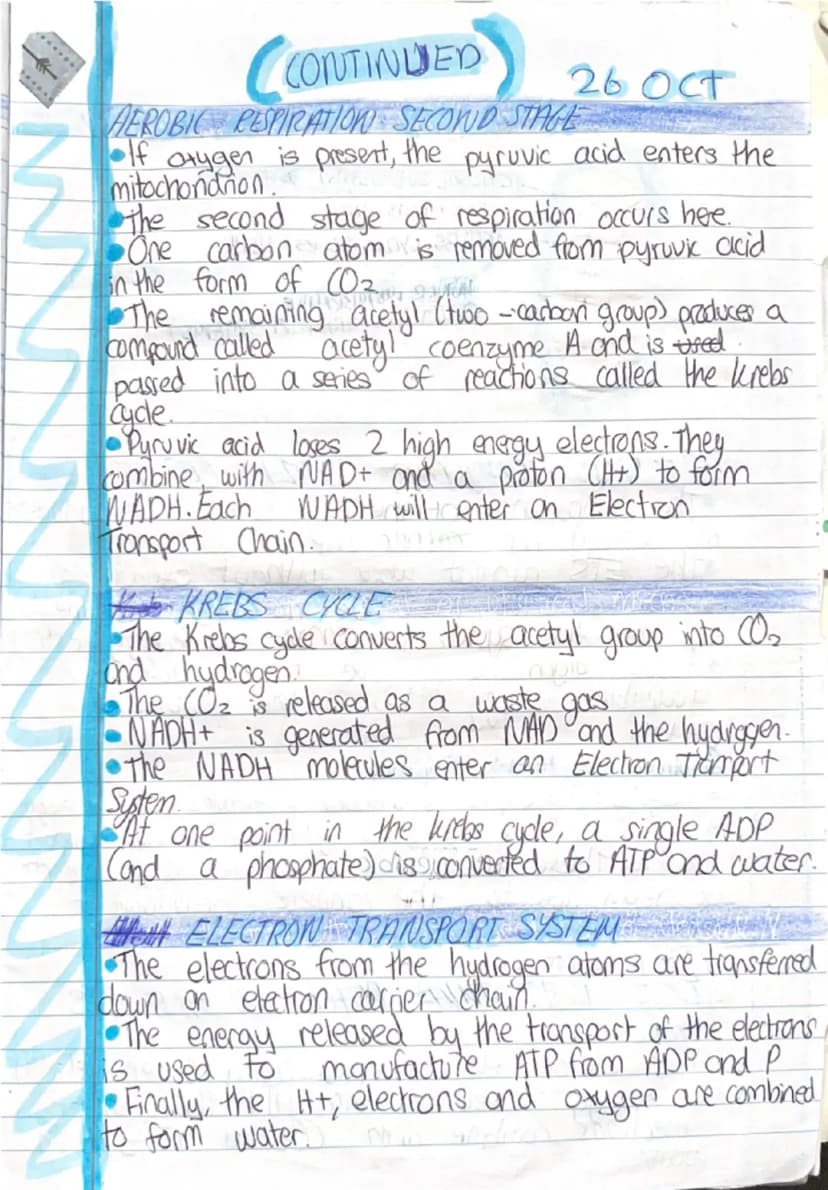
When oxygen is present, pyruvate enters the mitochondria for the second stage. First, one carbon is removed as CO₂, leaving a two-carbon acetyl group that combines with coenzyme A. This acetyl-CoA then enters the Krebs cycle.
The Krebs cycle completely breaks down the acetyl group into CO₂ and hydrogen. More importantly, it produces NADH molecules, which are like energy-carrying taxis. These NADH molecules head straight to the Electron Transport System.
The Electron Transport System is where the real energy production happens. Electrons from NADH get passed down a chain of carriers, and the energy released is used to make loads of ATP. Finally, the electrons combine with oxygen and hydrogen to form water.
Remember: No oxygen = no electron transport = no ATP = cellular death!
6
of 7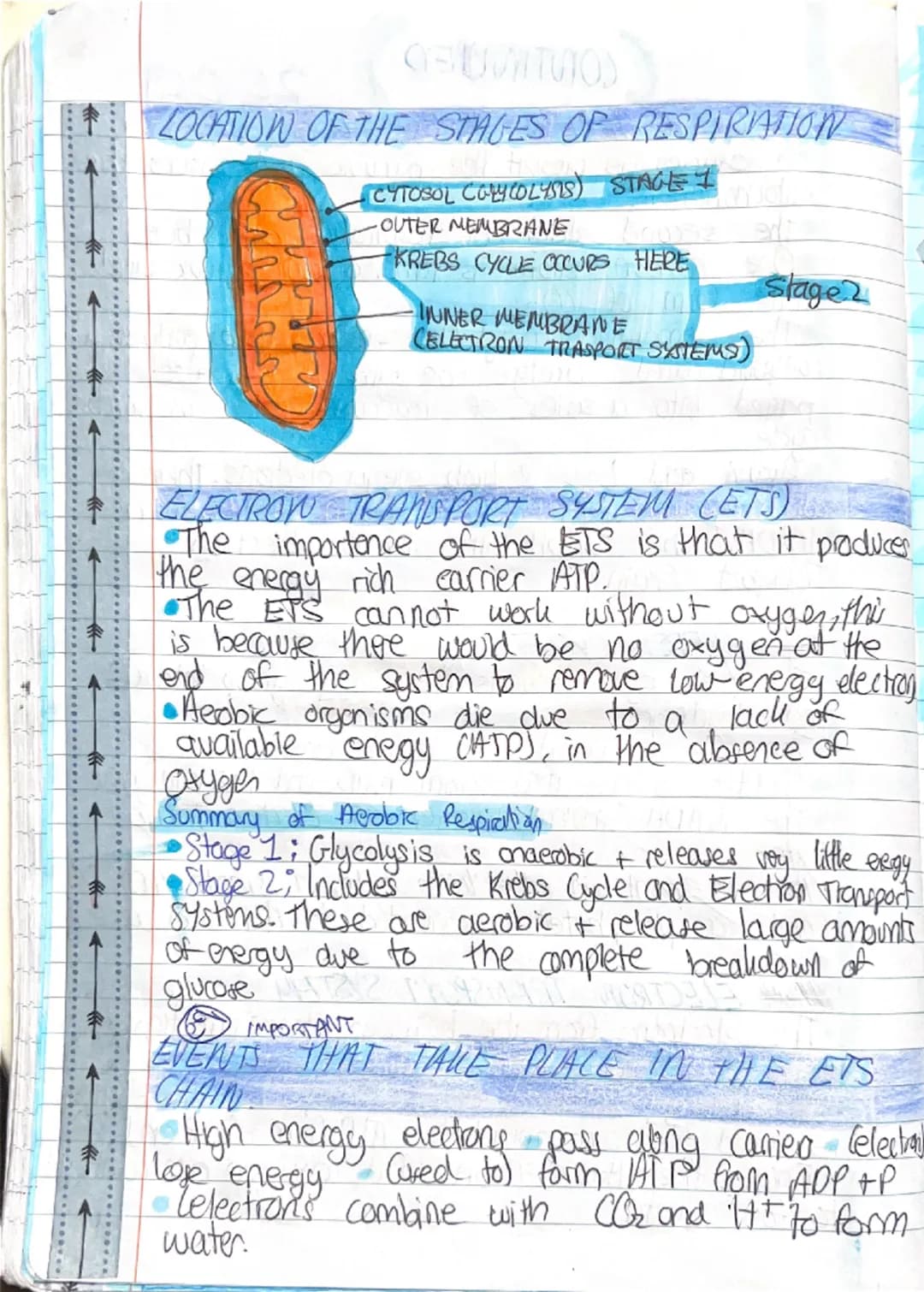
Location and Energy Production Summary
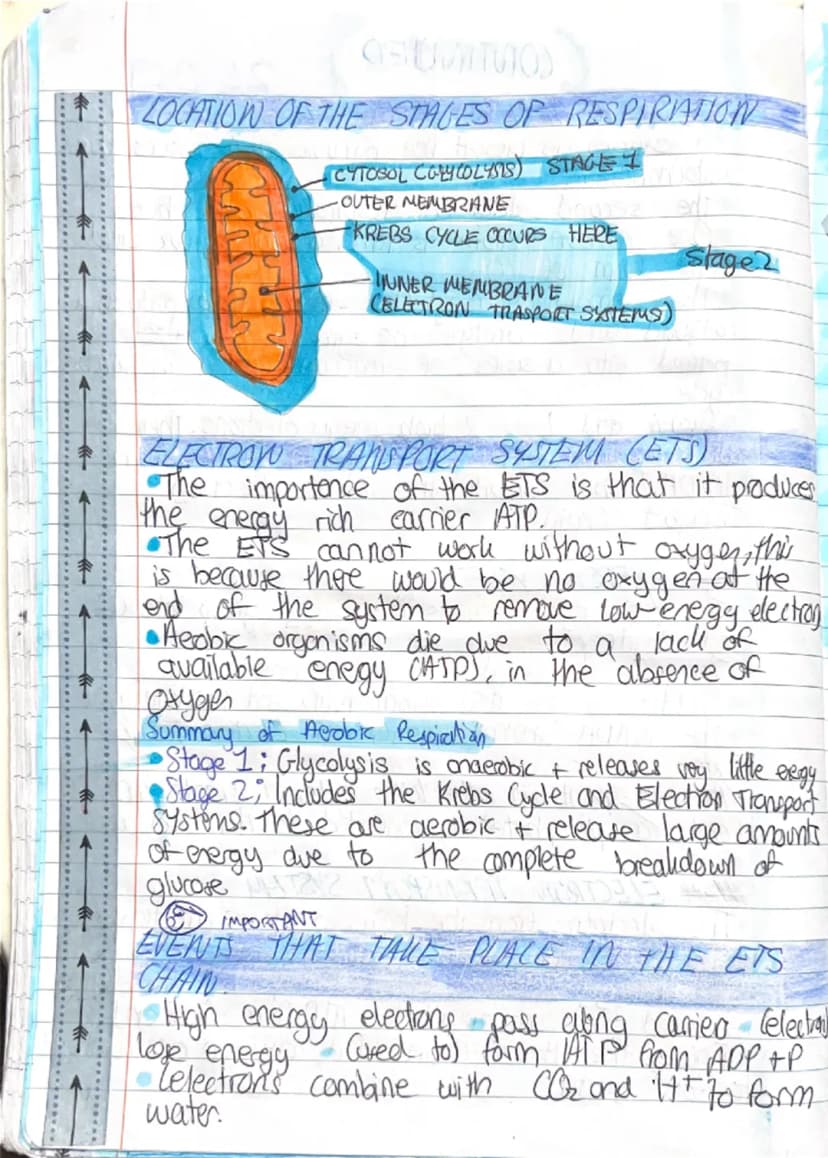
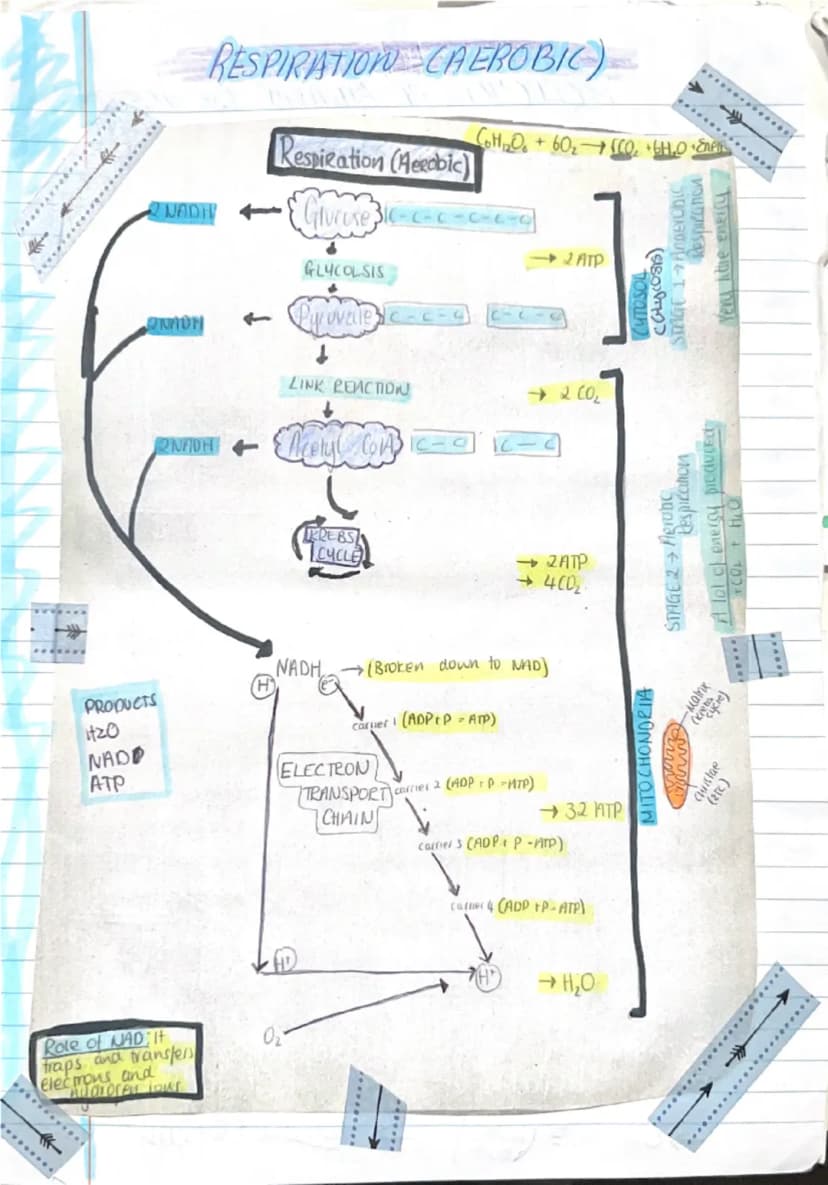
Stage 1 (Glycolysis) happens in the cytosol and produces just 2 ATP molecules. Stage 2 occurs in the mitochondria - the Krebs cycle happens in the inner space, while the Electron Transport System operates on the inner membrane folds called cristae.
The Electron Transport System is absolutely crucial because it produces about 32 ATP molecules - that's 16 times more than glycolysis! This is why oxygen is so important; without it, the electron transport chain stops working and your cells run out of energy.
Aerobic organisms literally die without oxygen because they can't produce enough ATP to keep their cells functioning. This is why humans can only survive a few minutes without breathing, even though we might have glucose stored in our bodies.
Energy Scorecard: Glycolysis = 2 ATP, Krebs Cycle = 2 ATP, Electron Transport = 32 ATP. Total = 36 ATP per glucose!
7
of 7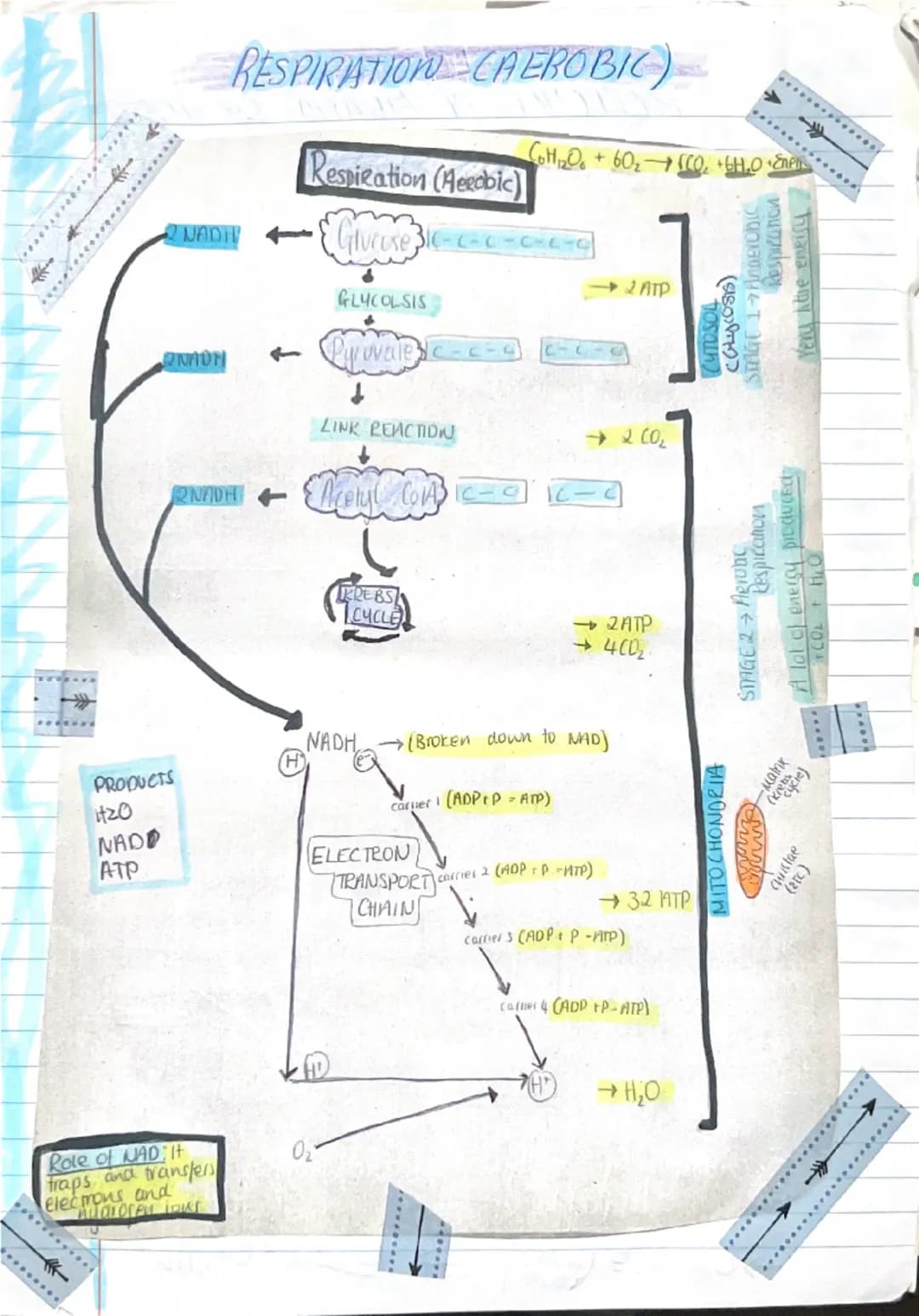
The Complete Picture of Aerobic Respiration
Here's how it all fits together: one glucose molecule plus six oxygen molecules produces six carbon dioxide molecules, six water molecules, and approximately 36 ATP molecules. The whole process is like a well-oiled machine with multiple stages.
NAD⁺ plays a crucial role as an electron carrier, picking up high-energy electrons and hydrogen to become NADH. These NADH molecules then shuttle the energy to the electron transport chain, where most of the ATP gets made.
The beauty of this system is its efficiency compared to anaerobic respiration. While fermentation might give you 2 ATP molecules, aerobic respiration delivers 36 - that's 18 times more energy from the same glucose molecule. This is why aerobic exercise is so much more sustainable than anaerobic bursts.
The Bottom Line: Aerobic respiration is your body's premium energy package - maximum ATP output for every glucose molecule invested!
We thought you’d never ask...
What is the Knowunity AI companion?
Our AI companion is specifically built for the needs of students. Based on the millions of content pieces we have on the platform we can provide truly meaningful and relevant answers to students. But its not only about answers, the companion is even more about guiding students through their daily learning challenges, with personalised study plans, quizzes or content pieces in the chat and 100% personalisation based on the students skills and developments.
Where can I download the Knowunity app?
You can download the app in the Google Play Store and in the Apple App Store.
Is Knowunity really free of charge?
That's right! Enjoy free access to study content, connect with fellow students, and get instant help – all at your fingertips.
Most popular content in Biology
8BiologyEcology introduction notes!
Start of the leaving cert ecology chapter
6th Year131
BiologyDNA & RNA
All notes on DNA & RNA including protein synthesis which is a HL topic
5th Year250
BiologyVertebrates and Invertebrates
Students will distinguish between animals that have a backbone (vertebrates) and those that do not (invertebrates), identifying examples of each.
2nd Year240
BiologyBiomolecules: chapter 8
Summary and easily understandable notes to revise chapter 8 biomolecules. Includes good labelled diagrams for visual learners
5th Year210
BiologyCirculatory System
Students will learn about the heart, blood, and blood vessels, and how this system transports oxygen, nutrients, and waste products around the body.
3rd Year140
BiologyRespiration
All respiration notes including simple diagrams and glycolysis and the Krebs cycle
5th Year120
BiologyPhotosynthesis : Biology
Photosynthesis
6th Year371
BiologyPlant Cells
Learning about the unique structures found in plant cells, such as the cell wall, chloroplasts, and large vacuole, and how they differ from animal cells.
1st Year80
Most popular content
9 Irish
IrishIrish oral questions and answers
Questions and answers for the leaving cert oral
5th Year4264
 English
Key Quotes : Sive
Key Quotes and explanations: Sive
6th Year2842
IrishIrish oral questions
Outline of oral questions
5th Year2055
IrishIníon- le hÁine Durkin
Aine Durkin’s poem, Iníon: Themes & summary
5th Year890
IrishIrish poetry 2027
Iníon + Dínit an Bhróin
5th Year1153
IrishLC HL notes- Iníon (poem)
Includes poem in English and Irish, theme, key words & phrases
5th Year2304
EnglishCultural Context : Shawshank Redemption : Sive : Small Things Like These
Comparative Study : Cultural Context : Shawshank Redemption, Sive and Small Things Like These
6th Year1430
IrishMo Ghrá-sa (Idir Lúibíní)
Notes on mo ghrá-sa
5th Year380
IrishAn Gaeilge Aiste
Irish Language essay
6th Year1320
Can't find what you're looking for? Explore other subjects.
Students love us — and so will you.
4.6/5App Store
4.7/5Google Play
The app is very easy to use and well designed. I have found everything I was looking for so far and have been able to learn a lot from the presentations! I will definitely use the app for a class assignment! And of course it also helps a lot as an inspiration.
Stefan SiOS user
This app is really great. There are so many study notes and help [...]. My problem subject is French, for example, and the app has so many options for help. Thanks to this app, I have improved my French. I would recommend it to anyone.
Samantha KlichAndroid user
Wow, I am really amazed. I just tried the app because I've seen it advertised many times and was absolutely stunned. This app is THE HELP you want for school and above all, it offers so many things, such as workouts and fact sheets, which have been VERY helpful to me personally.
AnnaiOS user
Biology8 views·Updated Jun 5, 2026·7 pagesComplete Respiration Study Guide
J
Jenny Reynolds@jennyreynolds
Your cells are constantly releasing energy from the food you eat through a process called respiration. This isn't just breathing - it's actually the chemical process that powers everything your body does, from thinking to moving.
1
of 7
Sign up to see the content. It's free!
- Access to all documents
- Improve your grades
- Join milions of students
Understanding External and Internal Respiration
External respiration is simply the gas exchange between your body and the environment - basically breathing in and out. But the real action happens with internal respiration, which is how your cells actually release energy from food.
Aerobic respiration uses oxygen to break down glucose (sugar) and release energy. The basic equation shows glucose + oxygen producing carbon dioxide + water + energy (ATP). Think of it like burning fuel in a car engine, but much more controlled.
Here's something interesting - respiration is only about 40% efficient. The other 60% of energy gets lost as heat, which is why you feel warm when exercising hard. Your body is literally heating up from all the chemical reactions happening inside your cells.
Quick Tip: Remember that respiration happens in every single one of your cells, not just your lungs!
2
of 7Sign up to see the content. It's free!
- Access to all documents
- Improve your grades
- Join milions of students
The Two Stages of Aerobic Respiration
Stage 1 (Glycolysis) happens in the cytosol . Here, glucose gets broken down into two smaller three-carbon compounds. This stage doesn't need oxygen and only releases a tiny bit of energy - just enough to keep things ticking over.
Stage 2 is where the magic happens, taking place inside the mitochondria (your cell's powerhouses). The three-carbon compounds get completely broken down into carbon dioxide and water, but this time oxygen is essential. This stage releases loads of energy - way more than stage 1.
When oxygen isn't available, your cells switch to anaerobic respiration. This only uses stage 1, so you get much less energy. In your muscles, this produces lactic acid (hello, muscle cramps!). In yeast, it produces ethanol and carbon dioxide.
Remember: Mitochondria = lots of energy, Cytosol = little energy!
3
of 7Sign up to see the content. It's free!
- Access to all documents
- Improve your grades
- Join milions of students
Industrial Applications and Fermentation
Anaerobic respiration isn't just something that happens when you're out of breath - it's actually used to make loads of things you probably consume regularly. Brewing, baking, yoghurt-making and cheese-making all depend on microorganisms fermenting sugars without oxygen.
Bioreactors are special containers where scientists control the conditions to get microorganisms to produce what they want. Think of them as high-tech fermentation tanks. Immobilised cells are often used - basically trapping yeast or bacteria in gel beads so they can't escape but can still do their job.
The process is surprisingly simple: sugar + yeast = ethanol + carbon dioxide. That's how bread rises (the CO₂ creates bubbles) and how alcoholic drinks are made. Bioprocessing is just the fancy term for using living organisms to make products on an industrial scale.
Fun Fact: The yeast in your bread dough is actually doing anaerobic respiration and getting a bit tipsy in the process!
4
of 7Sign up to see the content. It's free!
- Access to all documents
- Improve your grades
- Join milions of students
Glycolysis - The First Stage Explained
Glycolysis is literally "sugar splitting" - a six-carbon glucose molecule gets chopped up into two three-carbon pyruvate molecules. This happens in every living cell, whether oxygen is around or not. The process produces just 2 ATP molecules, which isn't much energy.
What happens next depends entirely on whether oxygen is available. Without oxygen, pyruvate gets converted into either lactic acid (in your muscles and most bacteria) or ethanol and CO₂ (in yeast and plant cells). This is called fermentation.
Lactic acid fermentation happens when you exercise so hard that your muscles can't get enough oxygen. The lactic acid buildup is what causes that burning sensation in your muscles. Alcoholic fermentation is what yeast does when making bread or beer.
Key Point: Pyruvate is the crossroads molecule - it can go aerobic or anaerobic depending on oxygen availability!
5
of 7Sign up to see the content. It's free!
- Access to all documents
- Improve your grades
- Join milions of students
The Krebs Cycle and Electron Transport
When oxygen is present, pyruvate enters the mitochondria for the second stage. First, one carbon is removed as CO₂, leaving a two-carbon acetyl group that combines with coenzyme A. This acetyl-CoA then enters the Krebs cycle.
The Krebs cycle completely breaks down the acetyl group into CO₂ and hydrogen. More importantly, it produces NADH molecules, which are like energy-carrying taxis. These NADH molecules head straight to the Electron Transport System.
The Electron Transport System is where the real energy production happens. Electrons from NADH get passed down a chain of carriers, and the energy released is used to make loads of ATP. Finally, the electrons combine with oxygen and hydrogen to form water.
Remember: No oxygen = no electron transport = no ATP = cellular death!
6
of 7Sign up to see the content. It's free!
- Access to all documents
- Improve your grades
- Join milions of students
Location and Energy Production Summary
Stage 1 (Glycolysis) happens in the cytosol and produces just 2 ATP molecules. Stage 2 occurs in the mitochondria - the Krebs cycle happens in the inner space, while the Electron Transport System operates on the inner membrane folds called cristae.
The Electron Transport System is absolutely crucial because it produces about 32 ATP molecules - that's 16 times more than glycolysis! This is why oxygen is so important; without it, the electron transport chain stops working and your cells run out of energy.
Aerobic organisms literally die without oxygen because they can't produce enough ATP to keep their cells functioning. This is why humans can only survive a few minutes without breathing, even though we might have glucose stored in our bodies.
Energy Scorecard: Glycolysis = 2 ATP, Krebs Cycle = 2 ATP, Electron Transport = 32 ATP. Total = 36 ATP per glucose!
7
of 7Sign up to see the content. It's free!
- Access to all documents
- Improve your grades
- Join milions of students
The Complete Picture of Aerobic Respiration
Here's how it all fits together: one glucose molecule plus six oxygen molecules produces six carbon dioxide molecules, six water molecules, and approximately 36 ATP molecules. The whole process is like a well-oiled machine with multiple stages.
NAD⁺ plays a crucial role as an electron carrier, picking up high-energy electrons and hydrogen to become NADH. These NADH molecules then shuttle the energy to the electron transport chain, where most of the ATP gets made.
The beauty of this system is its efficiency compared to anaerobic respiration. While fermentation might give you 2 ATP molecules, aerobic respiration delivers 36 - that's 18 times more energy from the same glucose molecule. This is why aerobic exercise is so much more sustainable than anaerobic bursts.
The Bottom Line: Aerobic respiration is your body's premium energy package - maximum ATP output for every glucose molecule invested!
We thought you’d never ask...
What is the Knowunity AI companion?
Our AI companion is specifically built for the needs of students. Based on the millions of content pieces we have on the platform we can provide truly meaningful and relevant answers to students. But its not only about answers, the companion is even more about guiding students through their daily learning challenges, with personalised study plans, quizzes or content pieces in the chat and 100% personalisation based on the students skills and developments.
Where can I download the Knowunity app?
You can download the app in the Google Play Store and in the Apple App Store.
Is Knowunity really free of charge?
That's right! Enjoy free access to study content, connect with fellow students, and get instant help – all at your fingertips.
Most popular content in Biology
8BiologyEcology introduction notes!
Start of the leaving cert ecology chapter
6th Year131
BiologyDNA & RNA
All notes on DNA & RNA including protein synthesis which is a HL topic
5th Year250
BiologyVertebrates and Invertebrates
Students will distinguish between animals that have a backbone (vertebrates) and those that do not (invertebrates), identifying examples of each.
2nd Year240
BiologyBiomolecules: chapter 8
Summary and easily understandable notes to revise chapter 8 biomolecules. Includes good labelled diagrams for visual learners
5th Year210
BiologyCirculatory System
Students will learn about the heart, blood, and blood vessels, and how this system transports oxygen, nutrients, and waste products around the body.
3rd Year140
BiologyRespiration
All respiration notes including simple diagrams and glycolysis and the Krebs cycle
5th Year120
BiologyPhotosynthesis : Biology
Photosynthesis
6th Year371
BiologyPlant Cells
Learning about the unique structures found in plant cells, such as the cell wall, chloroplasts, and large vacuole, and how they differ from animal cells.
1st Year80
Most popular content
9IrishIrish oral questions and answers
Questions and answers for the leaving cert oral
5th Year4264
EnglishKey Quotes : Sive
Key Quotes and explanations: Sive
6th Year2842
IrishIrish oral questions
Outline of oral questions
5th Year2055
IrishIníon- le hÁine Durkin
Aine Durkin’s poem, Iníon: Themes & summary
5th Year890
IrishIrish poetry 2027
Iníon + Dínit an Bhróin
5th Year1153
IrishLC HL notes- Iníon (poem)
Includes poem in English and Irish, theme, key words & phrases
5th Year2304
EnglishCultural Context : Shawshank Redemption : Sive : Small Things Like These
Comparative Study : Cultural Context : Shawshank Redemption, Sive and Small Things Like These
6th Year1430
IrishMo Ghrá-sa (Idir Lúibíní)
Notes on mo ghrá-sa
5th Year380
IrishAn Gaeilge Aiste
Irish Language essay
6th Year1320
Can't find what you're looking for? Explore other subjects.
Students love us — and so will you.
4.6/5App Store
4.7/5Google Play
The app is very easy to use and well designed. I have found everything I was looking for so far and have been able to learn a lot from the presentations! I will definitely use the app for a class assignment! And of course it also helps a lot as an inspiration.
Stefan SiOS user
This app is really great. There are so many study notes and help [...]. My problem subject is French, for example, and the app has so many options for help. Thanks to this app, I have improved my French. I would recommend it to anyone.
Samantha KlichAndroid user
Wow, I am really amazed. I just tried the app because I've seen it advertised many times and was absolutely stunned. This app is THE HELP you want for school and above all, it offers so many things, such as workouts and fact sheets, which have been VERY helpful to me personally.
AnnaiOS user