
Ever wondered what makes you tick at the most basic...
 Biology7 views·Updated Jun 6, 2026·6 pages
Understanding Cell Structure with Microscope Insights
E
emma f@emlfty
1 / 6
1
of 6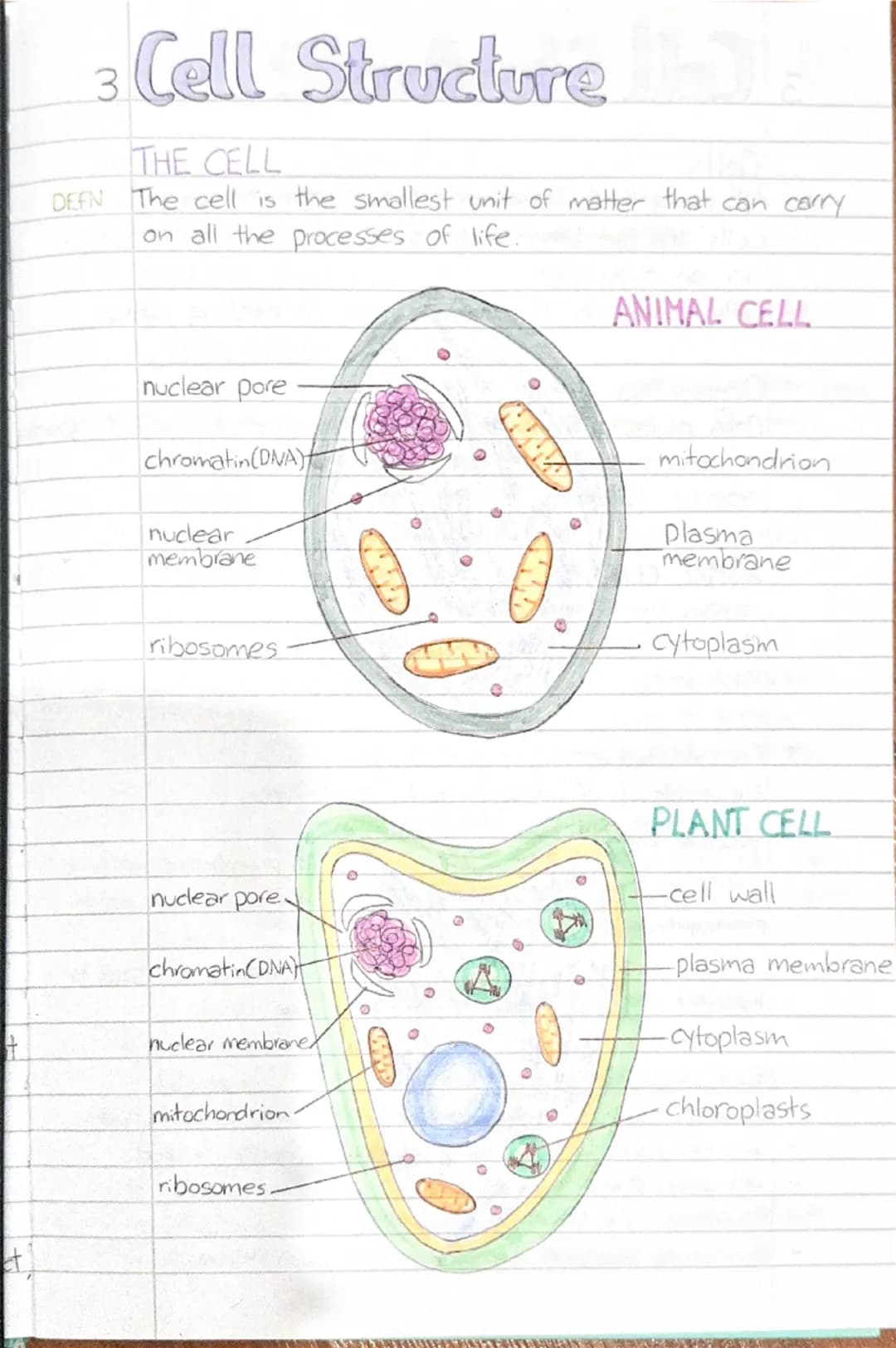
What Actually Is a Cell?
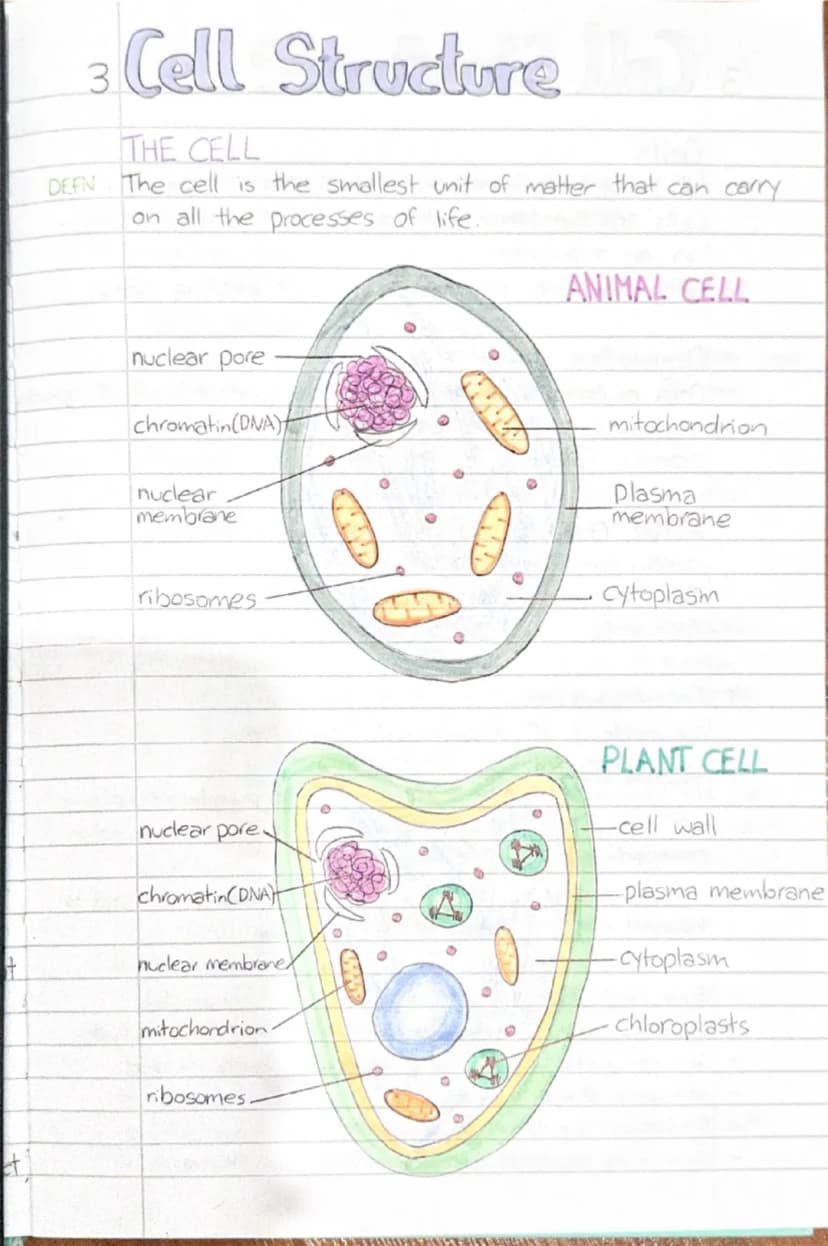
Think of a cell as nature's most incredible mini-factory. It's the smallest unit of matter that can actually carry out all the processes needed for life - breathing, eating, growing, the lot.
Every single living thing you can think of is made up of these tiny units. Whether it's your pet dog, the grass in your garden, or even you reading this right now, it all comes down to cells doing their thing. They're basically the ultimate multitaskers of the biological world.
Quick Fact: Cells can only come from other existing cells - they don't just pop up out of nowhere!
2
of 6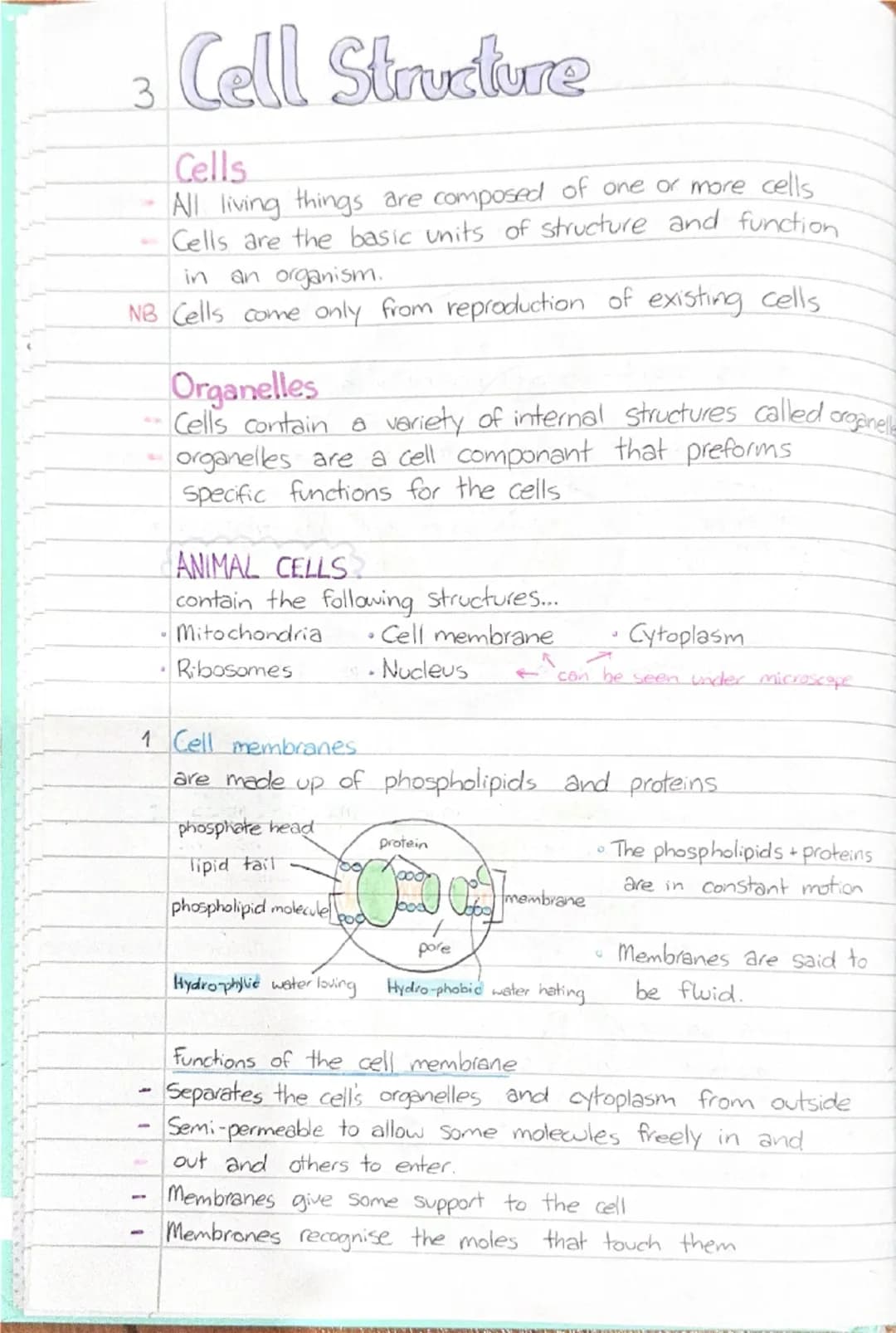
Animal Cells and Cell Membranes
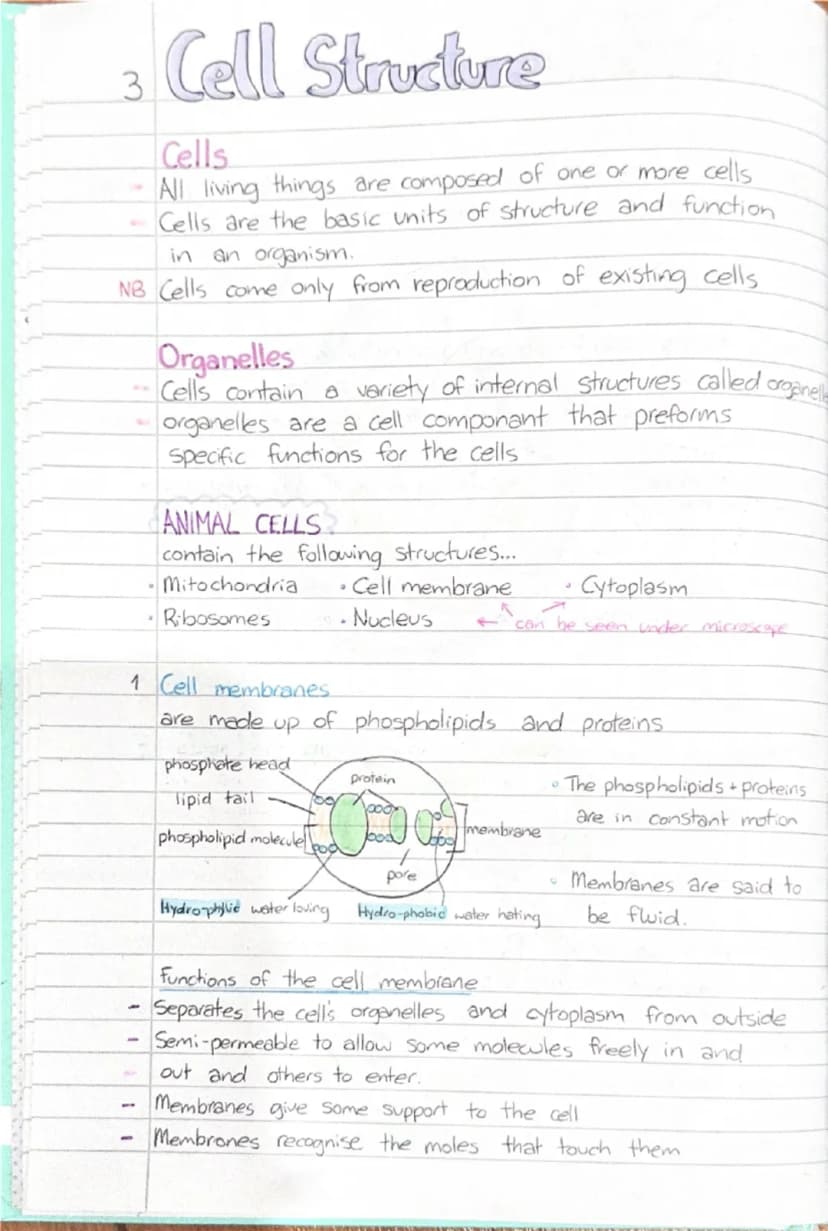
Animal cells are like bustling cities with different districts, each with a specific job. The main residents include the nucleus (the control centre), mitochondria (the power stations), ribosomes (the protein factories), and cytoplasm .
The cell membrane is your cell's bouncer - it's made of phospholipids and proteins that are constantly moving around. This makes the membrane "fluid," which is just a fancy way of saying it's flexible and can change shape.
What makes this membrane brilliant is that it's semi-permeable. This means it's picky about what gets in and out of the cell, letting some molecules pass freely whilst blocking others. It's like having the world's most sophisticated security system protecting your cellular city.
Remember: The cell membrane doesn't just protect - it also recognises molecules that touch it, like a biological ID scanner!
3
of 6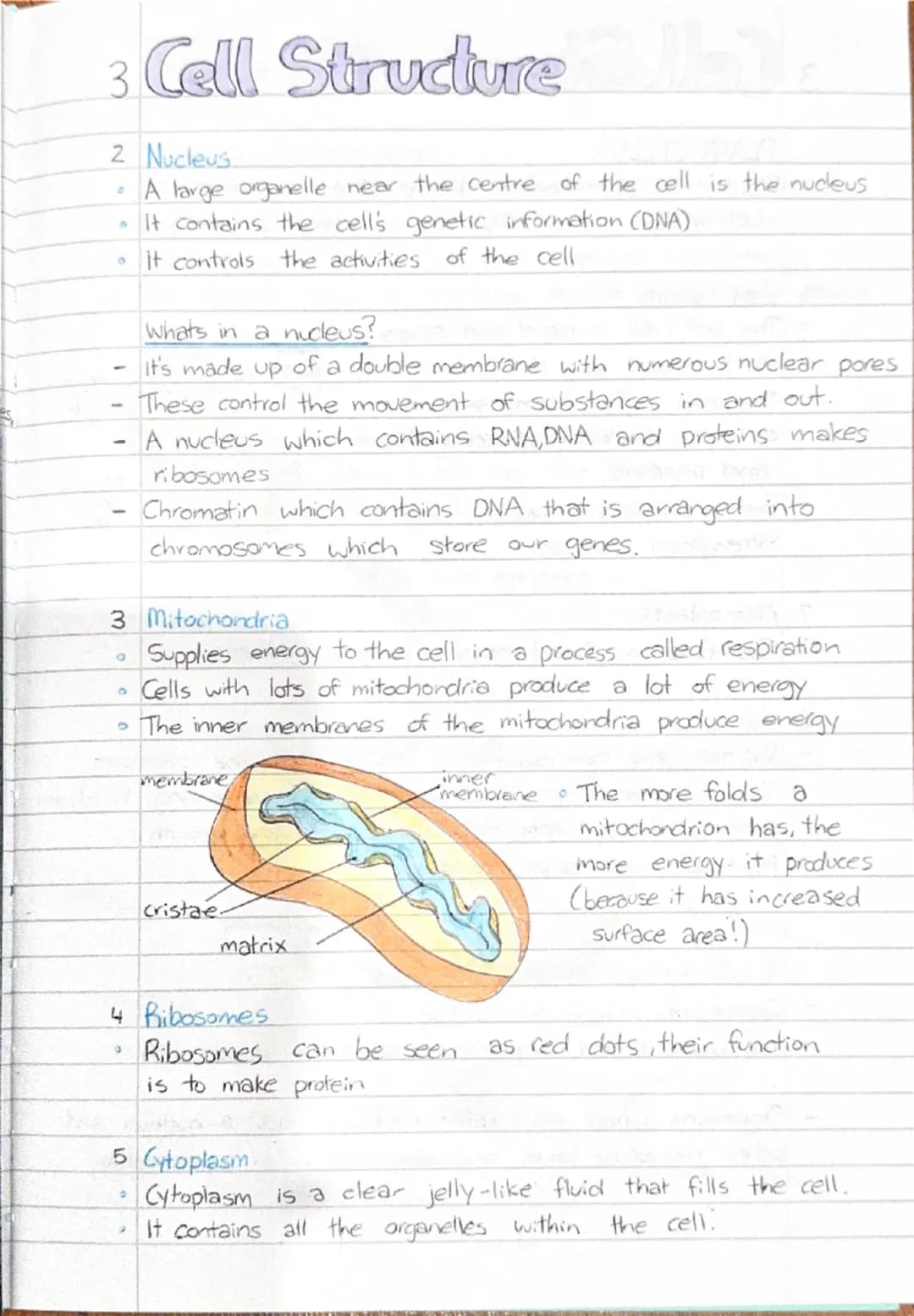
The Cell's Control Centre and Power Plants
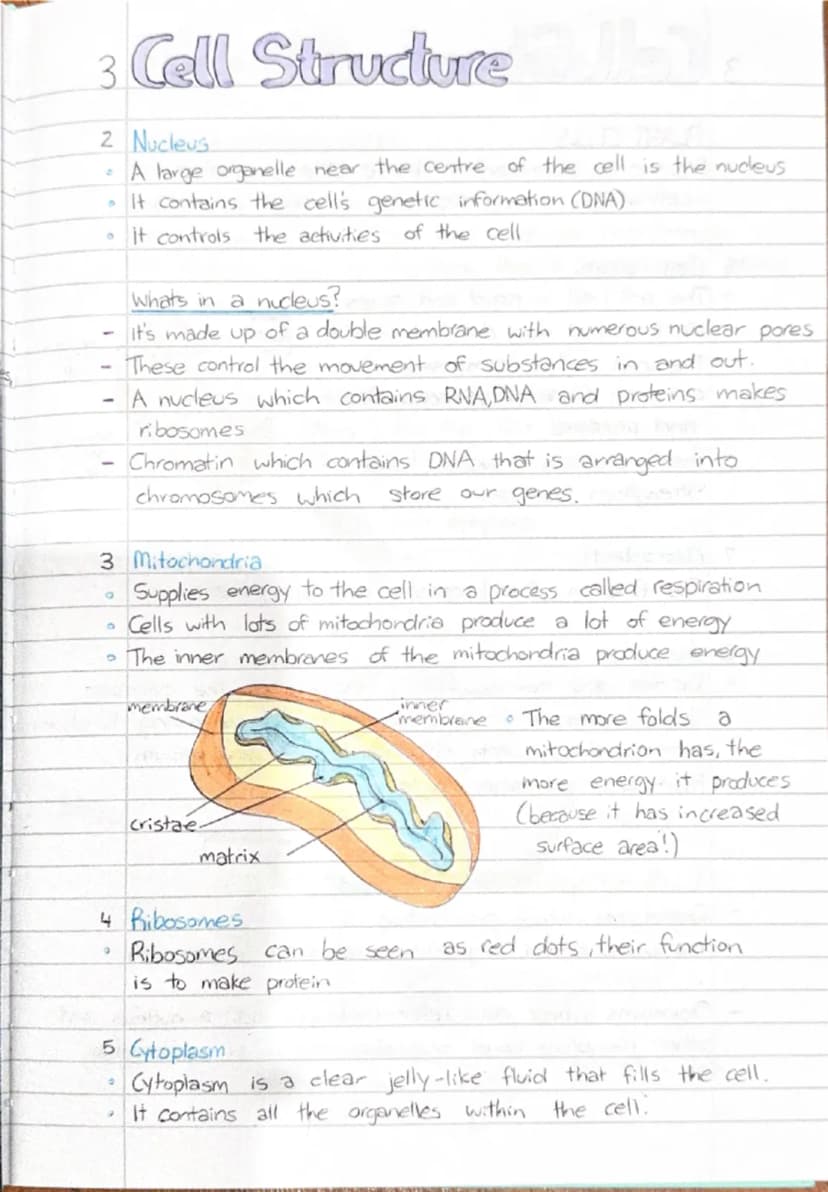
The nucleus is basically your cell's CEO - it contains all the DNA (your genetic information) and controls everything that happens in the cell. It's surrounded by a double membrane with nuclear pores that act like security checkpoints for molecules going in and out.
Mitochondria are your cell's power stations, creating energy through a process called respiration. The more mitochondria a cell has, the more energy it can produce. These little powerhouses have folded inner membranes called cristae - more folds mean more surface area, which means more energy production.
Ribosomes might look like tiny red dots under a microscope, but they're protein-making machines. Meanwhile, the cytoplasm is the clear, jelly-like fluid that acts like the cell's transport system, carrying materials around and housing all the organelles.
Top Tip: Cells that need lots of energy (like muscle cells) are packed with mitochondria - that's why they're called the powerhouses of the cell!
4
of 6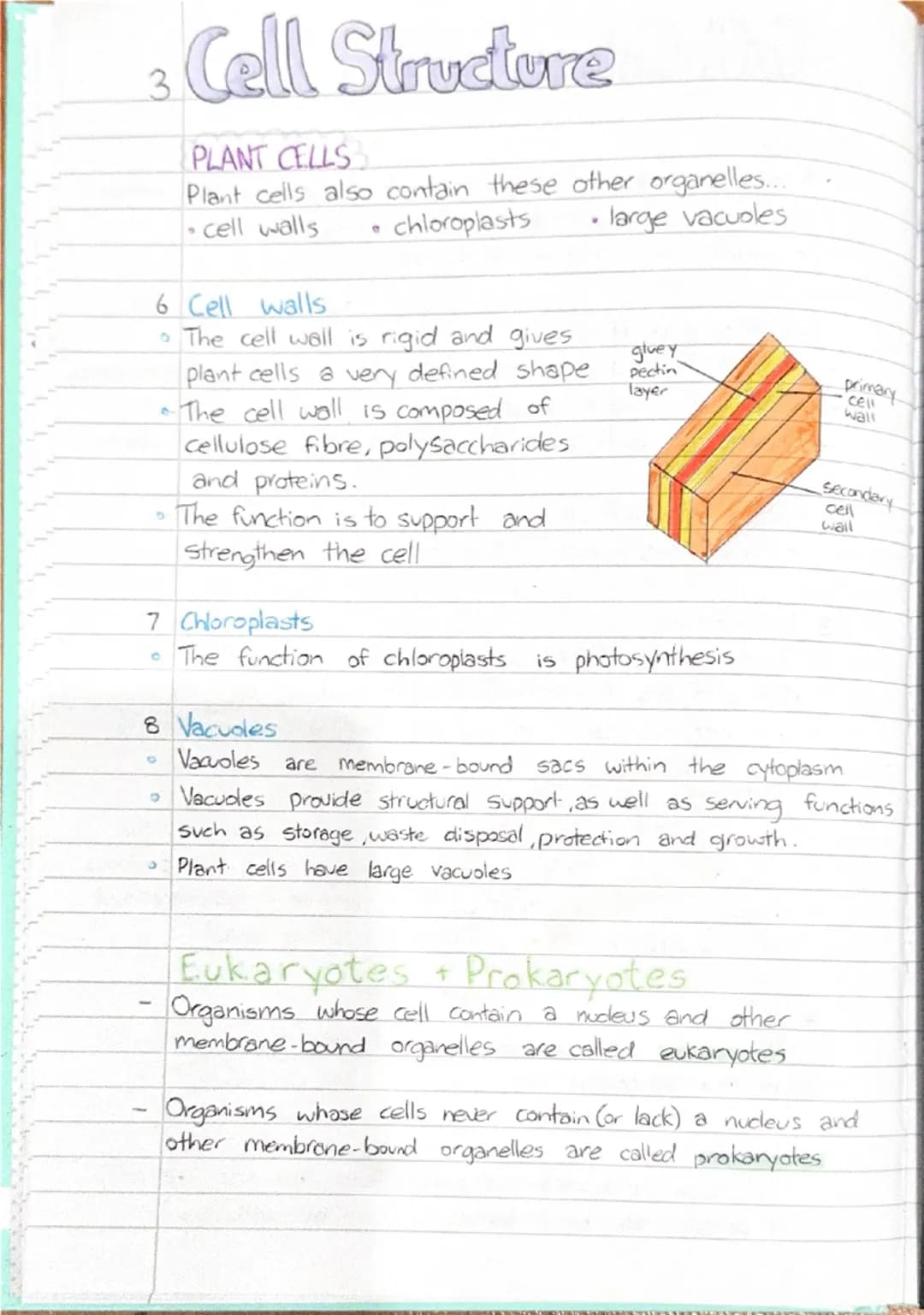
Plant Cells: The Green Difference
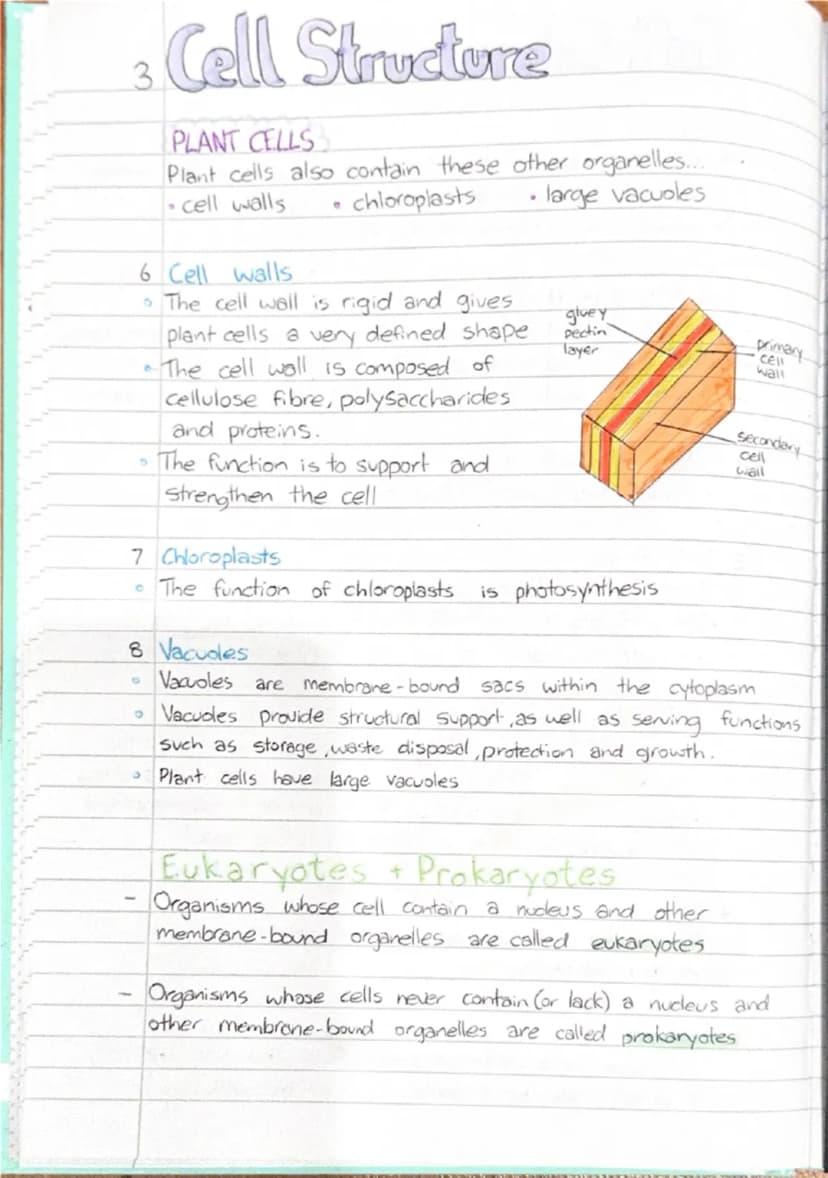
Plant cells have everything animal cells have, plus some extra kit that makes them pretty special. They've got cell walls, chloroplasts, and massive vacuoles that animal cells either don't have or have much smaller versions of.
The cell wall is like a rigid outer shell made of cellulose fibres that gives plant cells their defined, boxy shape. It's basically the plant's equivalent of a skeleton, providing support and strength that keeps plants standing upright.
Chloroplasts are where the magic of photosynthesis happens - they're essentially solar panels that convert sunlight into food. Vacuoles in plant cells are huge storage units that provide structural support and handle everything from waste disposal to growth.
Here's something that'll blow your mind: organisms with a nucleus and membrane-bound organelles (like plants and animals) are called eukaryotes, whilst those without (like bacteria) are prokaryotes.
Cool Fact: Plant cell walls are so strong that they keep their shape even after the plant dies - that's why wood is so sturdy!
5
of 6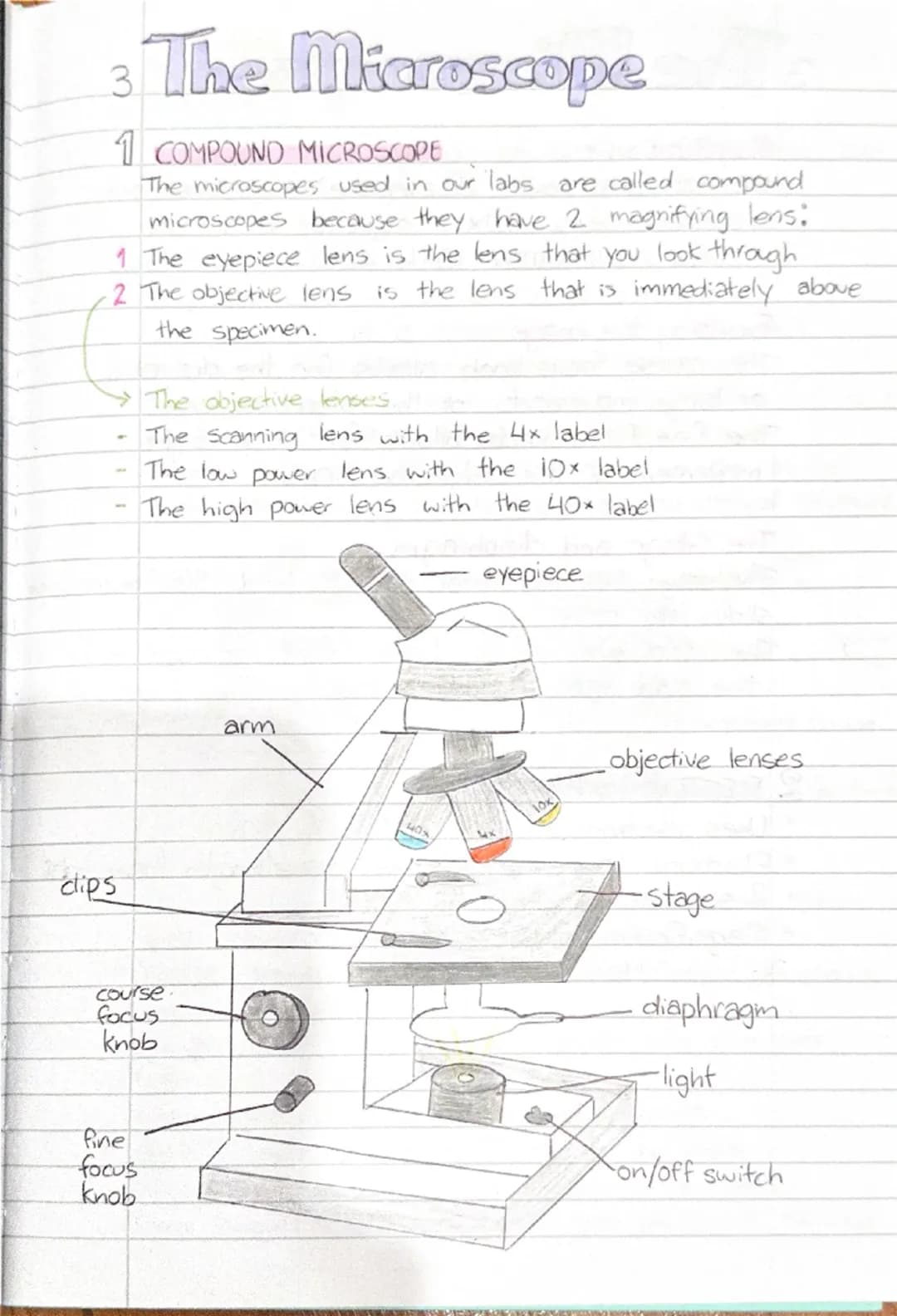
Compound Microscopes: Your Window Into the Microscopic World
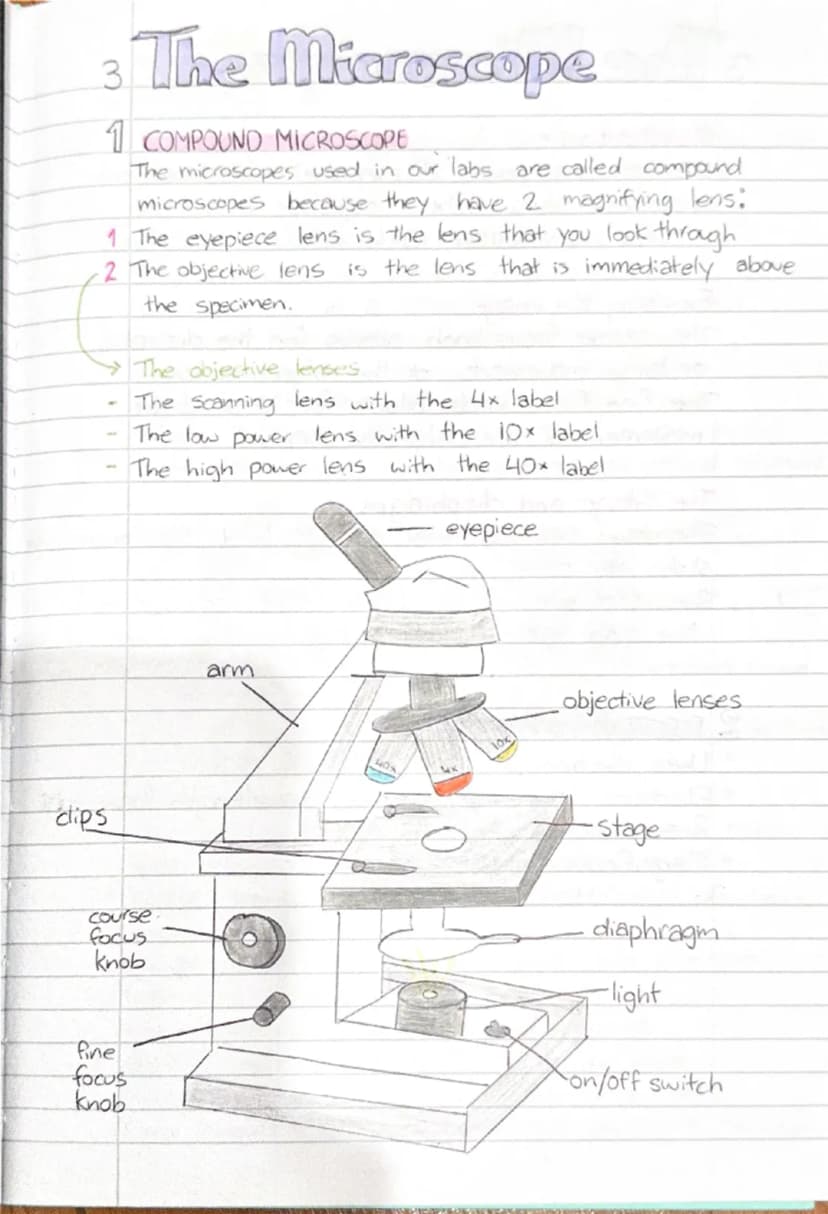
The compound microscope in your lab is called "compound" because it uses two magnifying lenses working together. The eyepiece lens is what you look through, whilst the objective lens sits right above your specimen doing the heavy lifting.
Most microscopes have three objective lenses: the scanning lens (4x), low power lens (10x), and high power lens (40x). Each gives you a different level of detail, like zooming in on your phone camera but way more powerful.
The microscope's got some clever bits too. The stage holds your slide steady with metal clips, whilst the diaphragm controls how much light hits your specimen. Getting the right amount of light is crucial for seeing clearly.
Pro Tip: Always start with the lowest magnification and work your way up - it's much easier to find what you're looking for this way!
6
of 6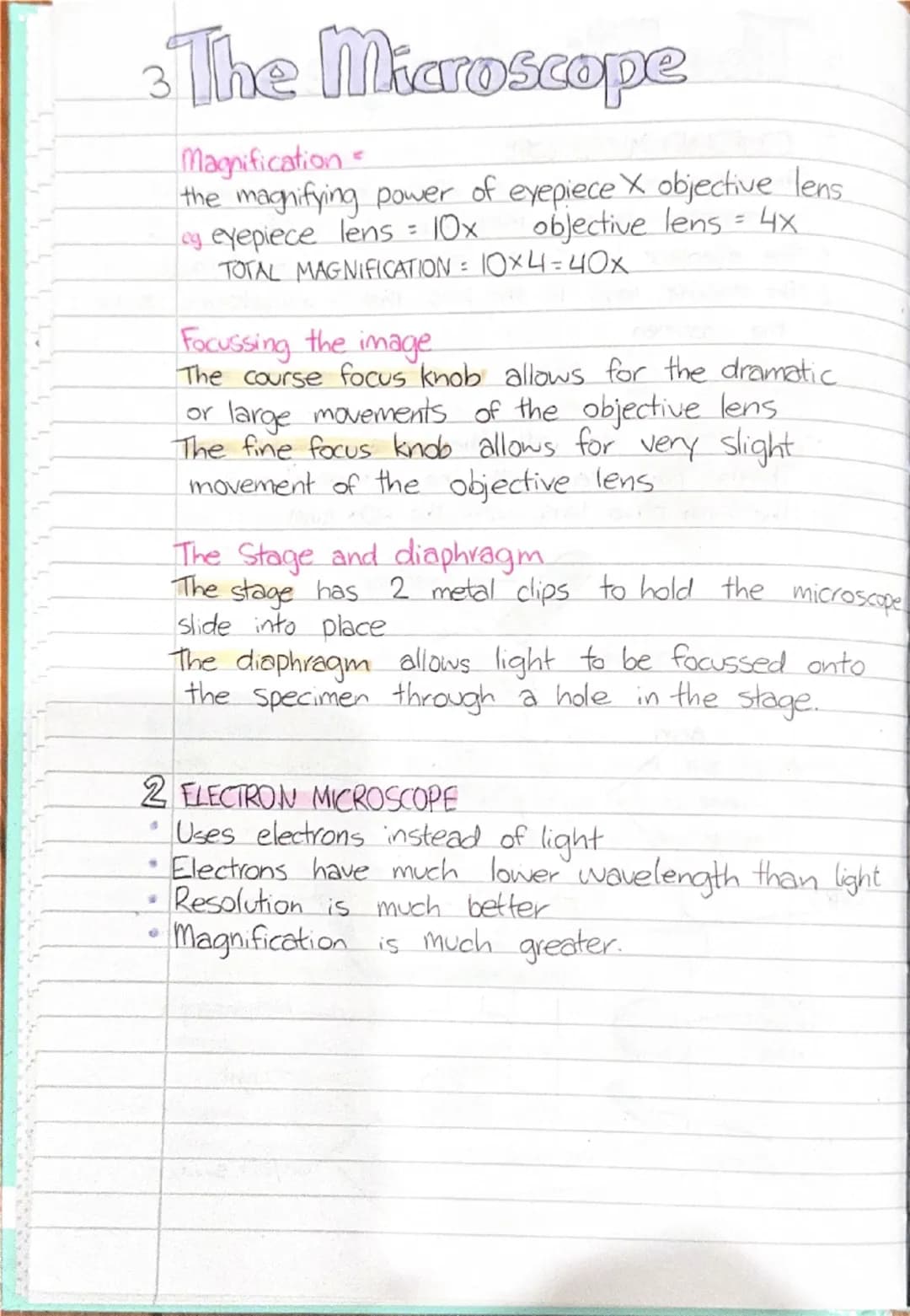
Magnification and Electron Microscopes
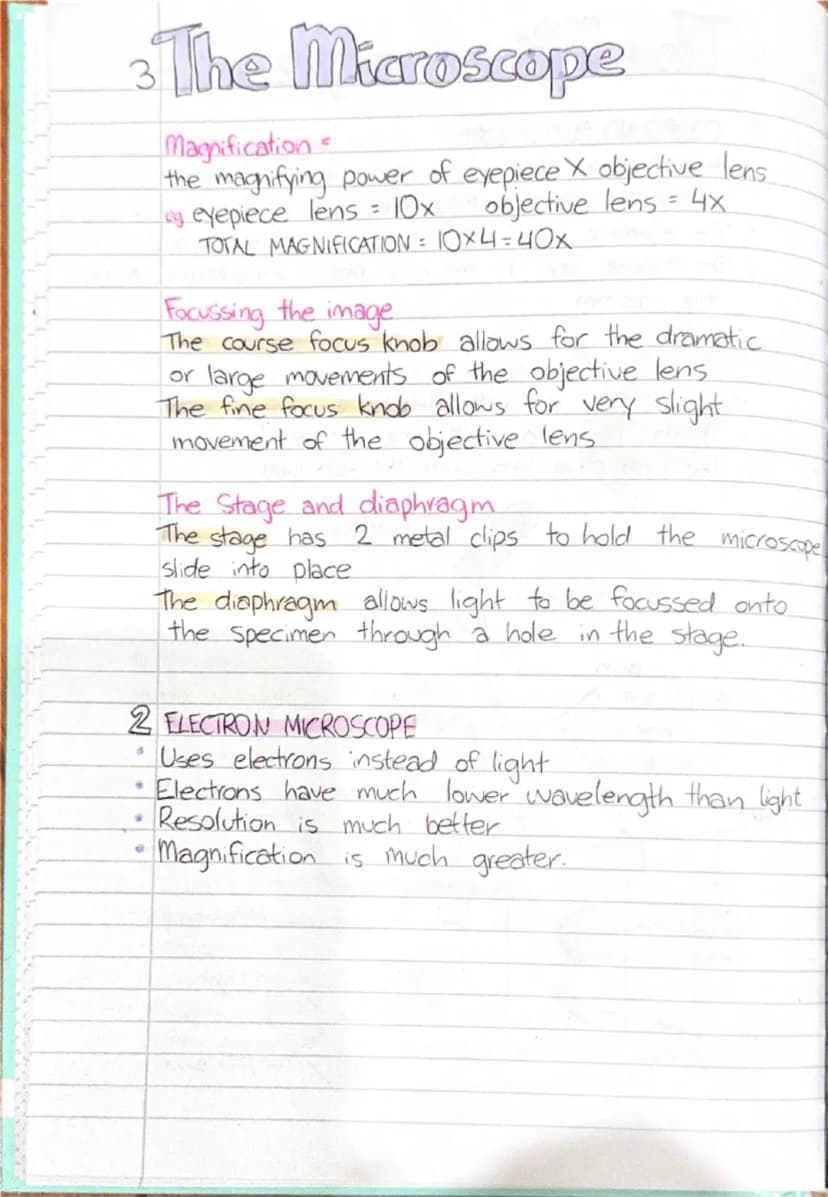
Working out magnification is dead simple: just multiply the eyepiece lens power by the objective lens power. So if you're using a 10x eyepiece with a 4x objective, you get 40x total magnification - everything appears 40 times bigger than real life.
Focusing your image involves two knobs. The coarse focus knob makes big adjustments to get you in the right ballpark, whilst the fine focus knob makes tiny tweaks for that perfect, crisp image.
Electron microscopes are the supercars of the microscope world. Instead of light, they use electrons, which have much shorter wavelengths. This means they can show incredible detail and magnify things thousands of times more than regular microscopes.
Mind-blowing Fact: Electron microscopes can magnify objects up to 2 million times - that's like making a football look the size of a city!
We thought you’d never ask...
What is the Knowunity AI companion?
Our AI companion is specifically built for the needs of students. Based on the millions of content pieces we have on the platform we can provide truly meaningful and relevant answers to students. But its not only about answers, the companion is even more about guiding students through their daily learning challenges, with personalised study plans, quizzes or content pieces in the chat and 100% personalisation based on the students skills and developments.
Where can I download the Knowunity app?
You can download the app in the Google Play Store and in the Apple App Store.
Is Knowunity really free of charge?
That's right! Enjoy free access to study content, connect with fellow students, and get instant help – all at your fingertips.
Most popular content in Biology
8BiologyEcology introduction notes!
Start of the leaving cert ecology chapter
6th Year131
BiologyDNA & RNA
All notes on DNA & RNA including protein synthesis which is a HL topic
5th Year250
BiologyVertebrates and Invertebrates
Students will distinguish between animals that have a backbone (vertebrates) and those that do not (invertebrates), identifying examples of each.
2nd Year240
BiologyBiomolecules: chapter 8
Summary and easily understandable notes to revise chapter 8 biomolecules. Includes good labelled diagrams for visual learners
5th Year210
BiologyCirculatory System
Students will learn about the heart, blood, and blood vessels, and how this system transports oxygen, nutrients, and waste products around the body.
3rd Year140
BiologyRespiration
All respiration notes including simple diagrams and glycolysis and the Krebs cycle
5th Year120
BiologyPhotosynthesis : Biology
Photosynthesis
6th Year371
BiologyPlant Cells
Learning about the unique structures found in plant cells, such as the cell wall, chloroplasts, and large vacuole, and how they differ from animal cells.
1st Year80
Most popular content
9 Irish
IrishIrish oral questions and answers
Questions and answers for the leaving cert oral
5th Year4264
 English
Key Quotes : Sive
Key Quotes and explanations: Sive
6th Year2842
IrishIrish oral questions
Outline of oral questions
5th Year2055
IrishIníon- le hÁine Durkin
Aine Durkin’s poem, Iníon: Themes & summary
5th Year850
IrishIrish poetry 2027
Iníon + Dínit an Bhróin
5th Year1133
IrishLC HL notes- Iníon (poem)
Includes poem in English and Irish, theme, key words & phrases
5th Year2284
EnglishCultural Context : Shawshank Redemption : Sive : Small Things Like These
Comparative Study : Cultural Context : Shawshank Redemption, Sive and Small Things Like These
6th Year1430
IrishMo Ghrá-sa (Idir Lúibíní)
Notes on mo ghrá-sa
5th Year380
IrishAn Gaeilge Aiste
Irish Language essay
6th Year1320
Can't find what you're looking for? Explore other subjects.
Students love us — and so will you.
4.6/5App Store
4.7/5Google Play
The app is very easy to use and well designed. I have found everything I was looking for so far and have been able to learn a lot from the presentations! I will definitely use the app for a class assignment! And of course it also helps a lot as an inspiration.
Stefan SiOS user
This app is really great. There are so many study notes and help [...]. My problem subject is French, for example, and the app has so many options for help. Thanks to this app, I have improved my French. I would recommend it to anyone.
Samantha KlichAndroid user
Wow, I am really amazed. I just tried the app because I've seen it advertised many times and was absolutely stunned. This app is THE HELP you want for school and above all, it offers so many things, such as workouts and fact sheets, which have been VERY helpful to me personally.
AnnaiOS user
Biology7 views·Updated Jun 6, 2026·6 pagesUnderstanding Cell Structure with Microscope Insights
E
emma f@emlfty
Ever wondered what makes you tick at the most basic level? Cells are literally the building blocks of all life - from the tiniest bacteria to massive whales, everything starts with these microscopic powerhouses. Understanding cell structure is your gateway...
1
of 6
Sign up to see the content. It's free!
- Access to all documents
- Improve your grades
- Join milions of students
What Actually Is a Cell?
Think of a cell as nature's most incredible mini-factory. It's the smallest unit of matter that can actually carry out all the processes needed for life - breathing, eating, growing, the lot.
Every single living thing you can think of is made up of these tiny units. Whether it's your pet dog, the grass in your garden, or even you reading this right now, it all comes down to cells doing their thing. They're basically the ultimate multitaskers of the biological world.
Quick Fact: Cells can only come from other existing cells - they don't just pop up out of nowhere!
2
of 6Sign up to see the content. It's free!
- Access to all documents
- Improve your grades
- Join milions of students
Animal Cells and Cell Membranes
Animal cells are like bustling cities with different districts, each with a specific job. The main residents include the nucleus (the control centre), mitochondria (the power stations), ribosomes (the protein factories), and cytoplasm .
The cell membrane is your cell's bouncer - it's made of phospholipids and proteins that are constantly moving around. This makes the membrane "fluid," which is just a fancy way of saying it's flexible and can change shape.
What makes this membrane brilliant is that it's semi-permeable. This means it's picky about what gets in and out of the cell, letting some molecules pass freely whilst blocking others. It's like having the world's most sophisticated security system protecting your cellular city.
Remember: The cell membrane doesn't just protect - it also recognises molecules that touch it, like a biological ID scanner!
3
of 6Sign up to see the content. It's free!
- Access to all documents
- Improve your grades
- Join milions of students
The Cell's Control Centre and Power Plants
The nucleus is basically your cell's CEO - it contains all the DNA (your genetic information) and controls everything that happens in the cell. It's surrounded by a double membrane with nuclear pores that act like security checkpoints for molecules going in and out.
Mitochondria are your cell's power stations, creating energy through a process called respiration. The more mitochondria a cell has, the more energy it can produce. These little powerhouses have folded inner membranes called cristae - more folds mean more surface area, which means more energy production.
Ribosomes might look like tiny red dots under a microscope, but they're protein-making machines. Meanwhile, the cytoplasm is the clear, jelly-like fluid that acts like the cell's transport system, carrying materials around and housing all the organelles.
Top Tip: Cells that need lots of energy (like muscle cells) are packed with mitochondria - that's why they're called the powerhouses of the cell!
4
of 6Sign up to see the content. It's free!
- Access to all documents
- Improve your grades
- Join milions of students
Plant Cells: The Green Difference
Plant cells have everything animal cells have, plus some extra kit that makes them pretty special. They've got cell walls, chloroplasts, and massive vacuoles that animal cells either don't have or have much smaller versions of.
The cell wall is like a rigid outer shell made of cellulose fibres that gives plant cells their defined, boxy shape. It's basically the plant's equivalent of a skeleton, providing support and strength that keeps plants standing upright.
Chloroplasts are where the magic of photosynthesis happens - they're essentially solar panels that convert sunlight into food. Vacuoles in plant cells are huge storage units that provide structural support and handle everything from waste disposal to growth.
Here's something that'll blow your mind: organisms with a nucleus and membrane-bound organelles (like plants and animals) are called eukaryotes, whilst those without (like bacteria) are prokaryotes.
Cool Fact: Plant cell walls are so strong that they keep their shape even after the plant dies - that's why wood is so sturdy!
5
of 6Sign up to see the content. It's free!
- Access to all documents
- Improve your grades
- Join milions of students
Compound Microscopes: Your Window Into the Microscopic World
The compound microscope in your lab is called "compound" because it uses two magnifying lenses working together. The eyepiece lens is what you look through, whilst the objective lens sits right above your specimen doing the heavy lifting.
Most microscopes have three objective lenses: the scanning lens (4x), low power lens (10x), and high power lens (40x). Each gives you a different level of detail, like zooming in on your phone camera but way more powerful.
The microscope's got some clever bits too. The stage holds your slide steady with metal clips, whilst the diaphragm controls how much light hits your specimen. Getting the right amount of light is crucial for seeing clearly.
Pro Tip: Always start with the lowest magnification and work your way up - it's much easier to find what you're looking for this way!
6
of 6Sign up to see the content. It's free!
- Access to all documents
- Improve your grades
- Join milions of students
Magnification and Electron Microscopes
Working out magnification is dead simple: just multiply the eyepiece lens power by the objective lens power. So if you're using a 10x eyepiece with a 4x objective, you get 40x total magnification - everything appears 40 times bigger than real life.
Focusing your image involves two knobs. The coarse focus knob makes big adjustments to get you in the right ballpark, whilst the fine focus knob makes tiny tweaks for that perfect, crisp image.
Electron microscopes are the supercars of the microscope world. Instead of light, they use electrons, which have much shorter wavelengths. This means they can show incredible detail and magnify things thousands of times more than regular microscopes.
Mind-blowing Fact: Electron microscopes can magnify objects up to 2 million times - that's like making a football look the size of a city!
We thought you’d never ask...
What is the Knowunity AI companion?
Our AI companion is specifically built for the needs of students. Based on the millions of content pieces we have on the platform we can provide truly meaningful and relevant answers to students. But its not only about answers, the companion is even more about guiding students through their daily learning challenges, with personalised study plans, quizzes or content pieces in the chat and 100% personalisation based on the students skills and developments.
Where can I download the Knowunity app?
You can download the app in the Google Play Store and in the Apple App Store.
Is Knowunity really free of charge?
That's right! Enjoy free access to study content, connect with fellow students, and get instant help – all at your fingertips.
Most popular content in Biology
8BiologyEcology introduction notes!
Start of the leaving cert ecology chapter
6th Year131
BiologyDNA & RNA
All notes on DNA & RNA including protein synthesis which is a HL topic
5th Year250
BiologyVertebrates and Invertebrates
Students will distinguish between animals that have a backbone (vertebrates) and those that do not (invertebrates), identifying examples of each.
2nd Year240
BiologyBiomolecules: chapter 8
Summary and easily understandable notes to revise chapter 8 biomolecules. Includes good labelled diagrams for visual learners
5th Year210
BiologyCirculatory System
Students will learn about the heart, blood, and blood vessels, and how this system transports oxygen, nutrients, and waste products around the body.
3rd Year140
BiologyRespiration
All respiration notes including simple diagrams and glycolysis and the Krebs cycle
5th Year120
BiologyPhotosynthesis : Biology
Photosynthesis
6th Year371
BiologyPlant Cells
Learning about the unique structures found in plant cells, such as the cell wall, chloroplasts, and large vacuole, and how they differ from animal cells.
1st Year80
Most popular content
9IrishIrish oral questions and answers
Questions and answers for the leaving cert oral
5th Year4264
EnglishKey Quotes : Sive
Key Quotes and explanations: Sive
6th Year2842
IrishIrish oral questions
Outline of oral questions
5th Year2055
IrishIníon- le hÁine Durkin
Aine Durkin’s poem, Iníon: Themes & summary
5th Year850
IrishIrish poetry 2027
Iníon + Dínit an Bhróin
5th Year1133
IrishLC HL notes- Iníon (poem)
Includes poem in English and Irish, theme, key words & phrases
5th Year2284
EnglishCultural Context : Shawshank Redemption : Sive : Small Things Like These
Comparative Study : Cultural Context : Shawshank Redemption, Sive and Small Things Like These
6th Year1430
IrishMo Ghrá-sa (Idir Lúibíní)
Notes on mo ghrá-sa
5th Year380
IrishAn Gaeilge Aiste
Irish Language essay
6th Year1320
Can't find what you're looking for? Explore other subjects.
Students love us — and so will you.
4.6/5App Store
4.7/5Google Play
The app is very easy to use and well designed. I have found everything I was looking for so far and have been able to learn a lot from the presentations! I will definitely use the app for a class assignment! And of course it also helps a lot as an inspiration.
Stefan SiOS user
This app is really great. There are so many study notes and help [...]. My problem subject is French, for example, and the app has so many options for help. Thanks to this app, I have improved my French. I would recommend it to anyone.
Samantha KlichAndroid user
Wow, I am really amazed. I just tried the app because I've seen it advertised many times and was absolutely stunned. This app is THE HELP you want for school and above all, it offers so many things, such as workouts and fact sheets, which have been VERY helpful to me personally.
AnnaiOS user