
Protein is a vital macronutrient that your body needs in...
 Other41 views·Updated 18 Jul 2026·13 pages
H1 Protein Notes for Leaving Cert Home Economics
L
Leah Dennehy@leahdennehy
1 / 10
1
of 10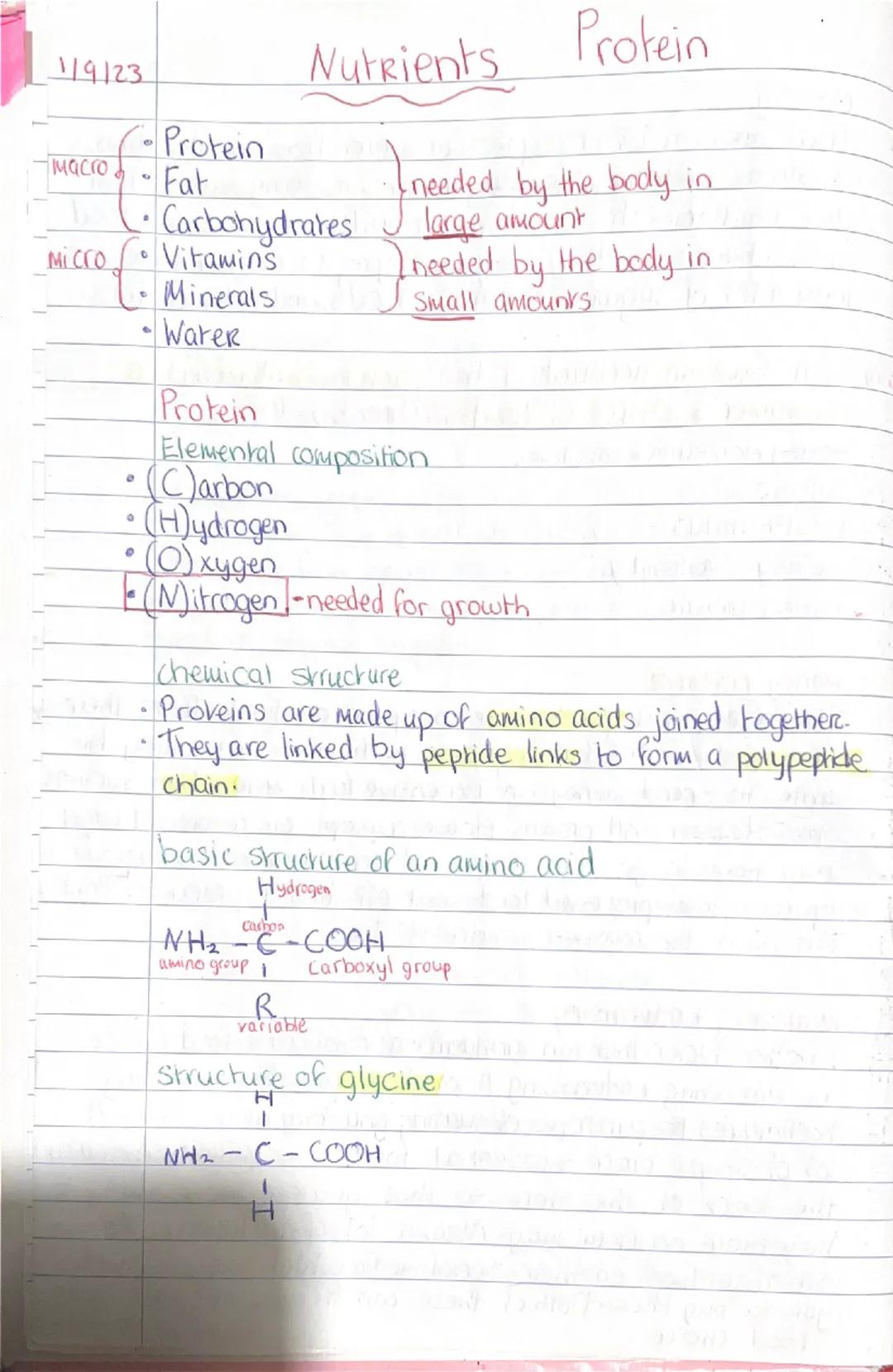
Nutrients and Protein Basics
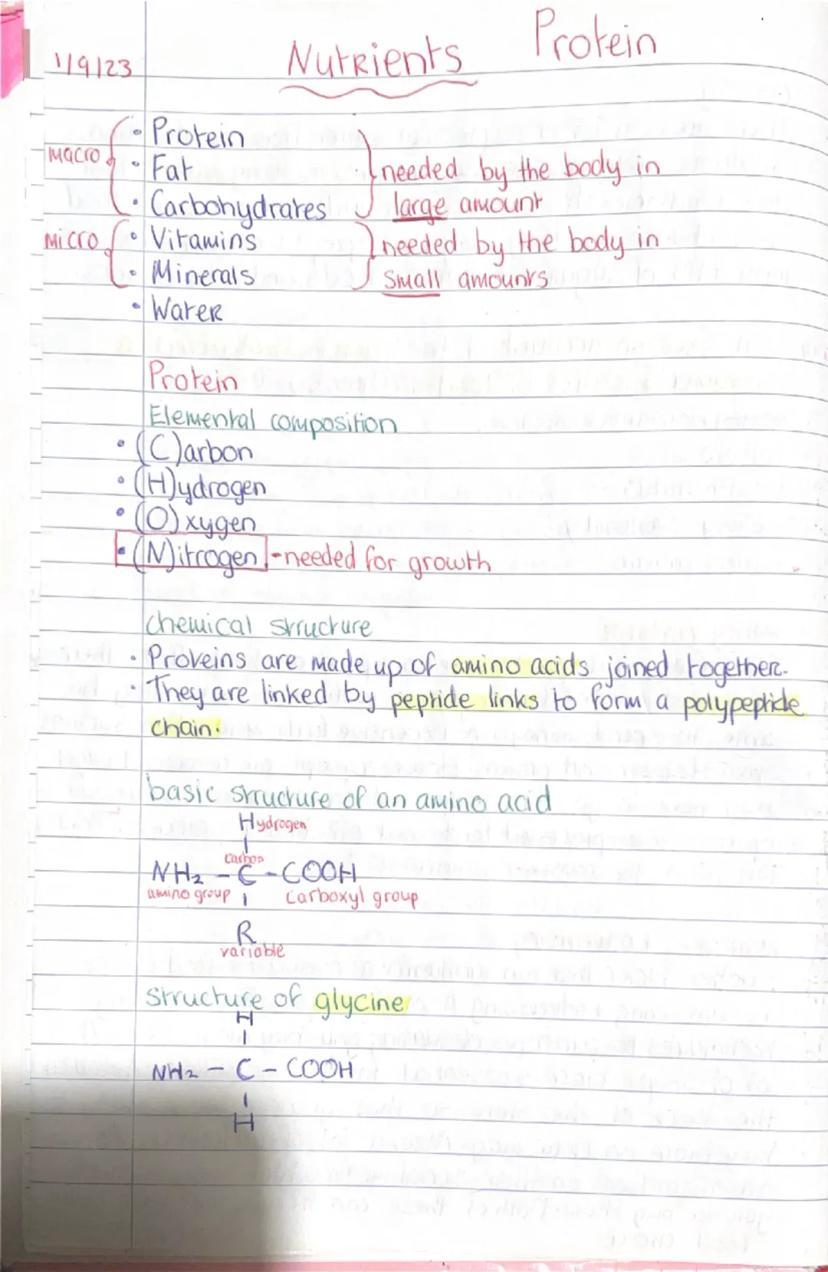
Nutrients are divided into macronutrients (protein, fat, carbohydrates) needed in large amounts and micronutrients (vitamins, minerals, water) required in smaller quantities. Among these, protein has a special role in growth due to its nitrogen content.
Proteins have a unique elemental composition of carbon, hydrogen, oxygen and nitrogen. The building blocks of proteins are amino acids, which link together through peptide bonds to form polypeptide chains.
Each amino acid has a basic structure with an amino group (NH₂), a carboxyl group (COOH), and a variable R-group that makes each amino acid unique. Glycine is the simplest amino acid with just a hydrogen atom as its R-group.
Remember this! Nitrogen is what makes protein different from carbohydrates and fats - it's essential for growth and tissue development in your body.
2
of 10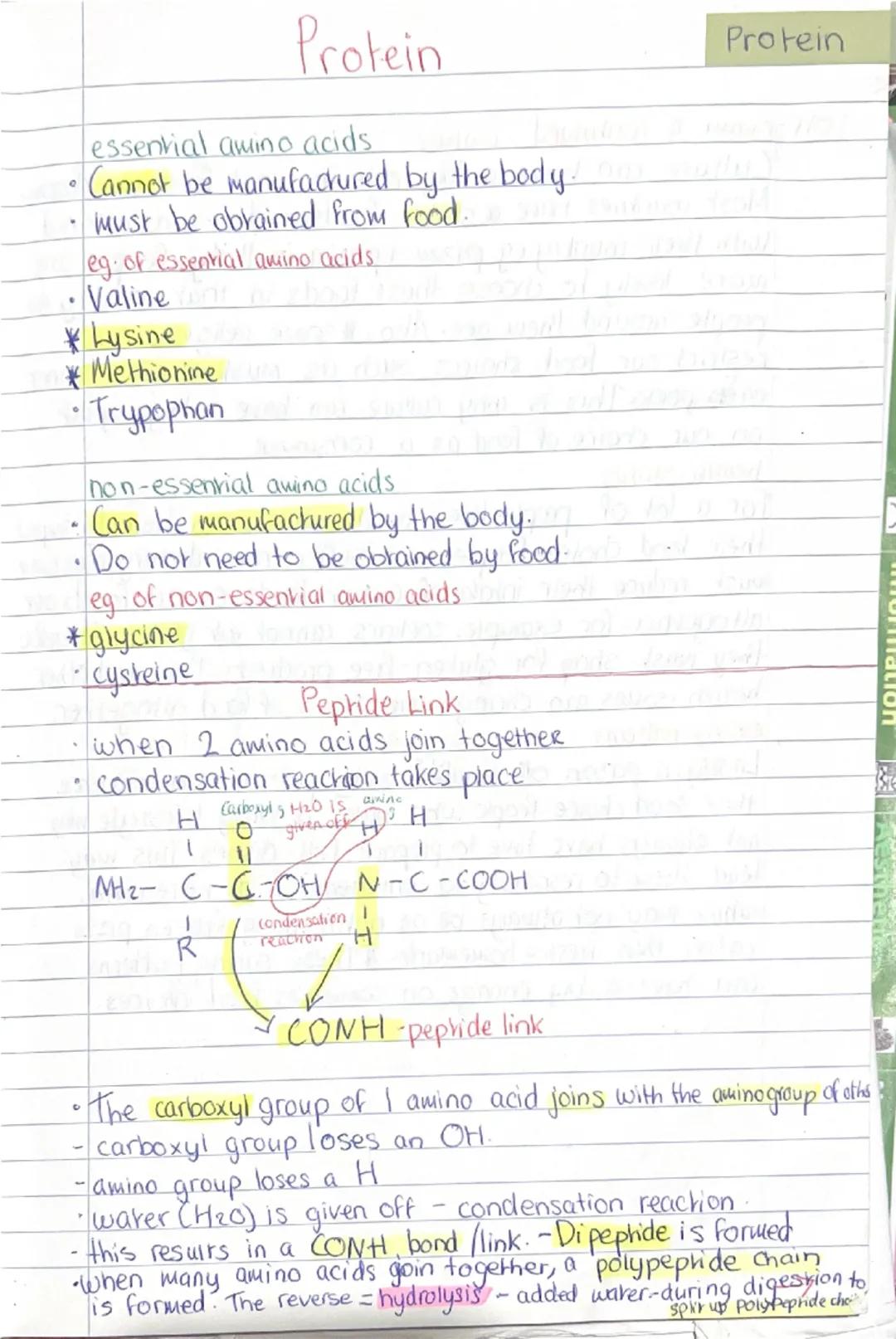
Essential and Non-Essential Amino Acids
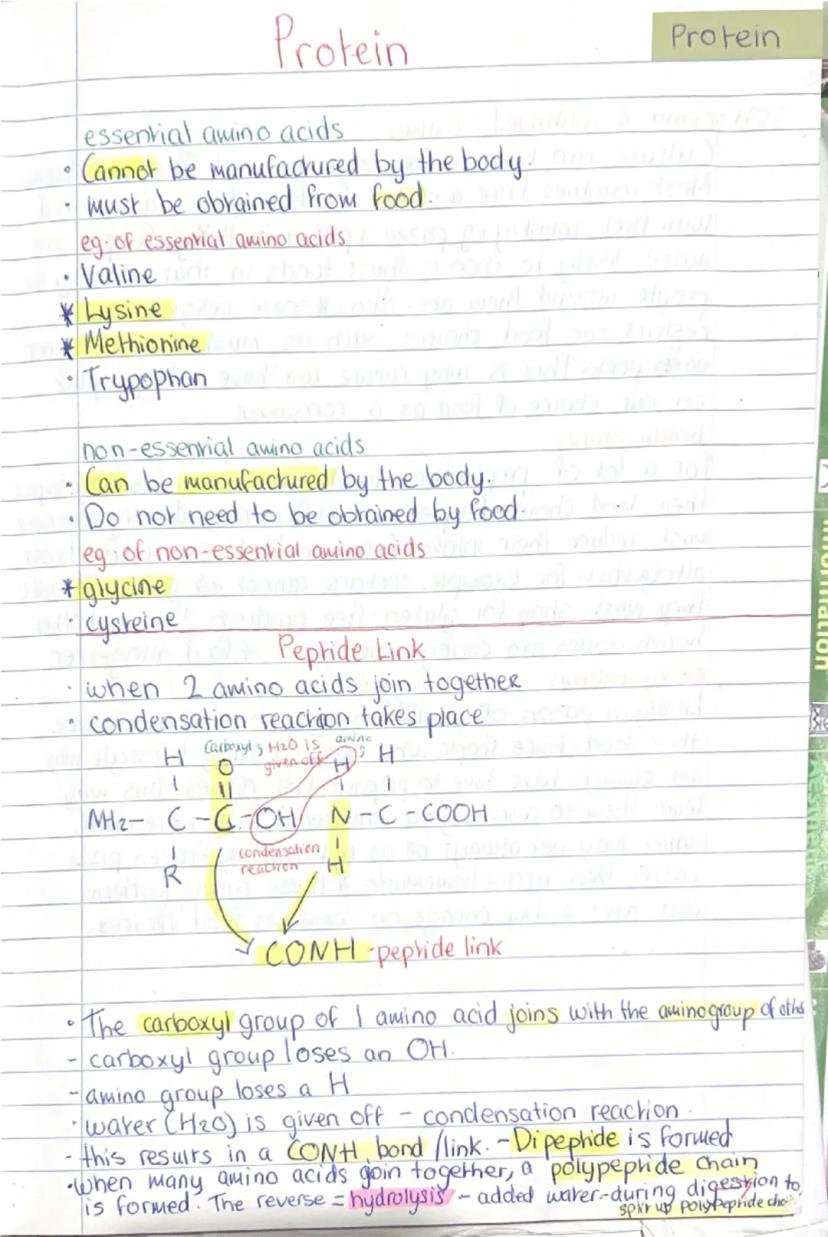
Your body needs 20 different amino acids, but not all of them need to come from food. Essential amino acids like valine, lysine, methionine, and tryptophan cannot be manufactured by your body and must be obtained through your diet.
Non-essential amino acids like glycine and cysteine can be made by your body, so you don't need to worry about getting them from food. This distinction is particularly important when planning balanced meals.
When amino acids join together, a peptide link forms through a condensation reaction. The carboxyl group of one amino acid connects with the amino group of another, releasing a water molecule (H₂O) in the process. This creates a CONH bond, forming a dipeptide. When many amino acids join, they create a polypeptide chain.
Quick tip: During digestion, your body breaks down proteins through hydrolysis – essentially adding water back to split the peptide links and release individual amino acids for absorption.
3
of 10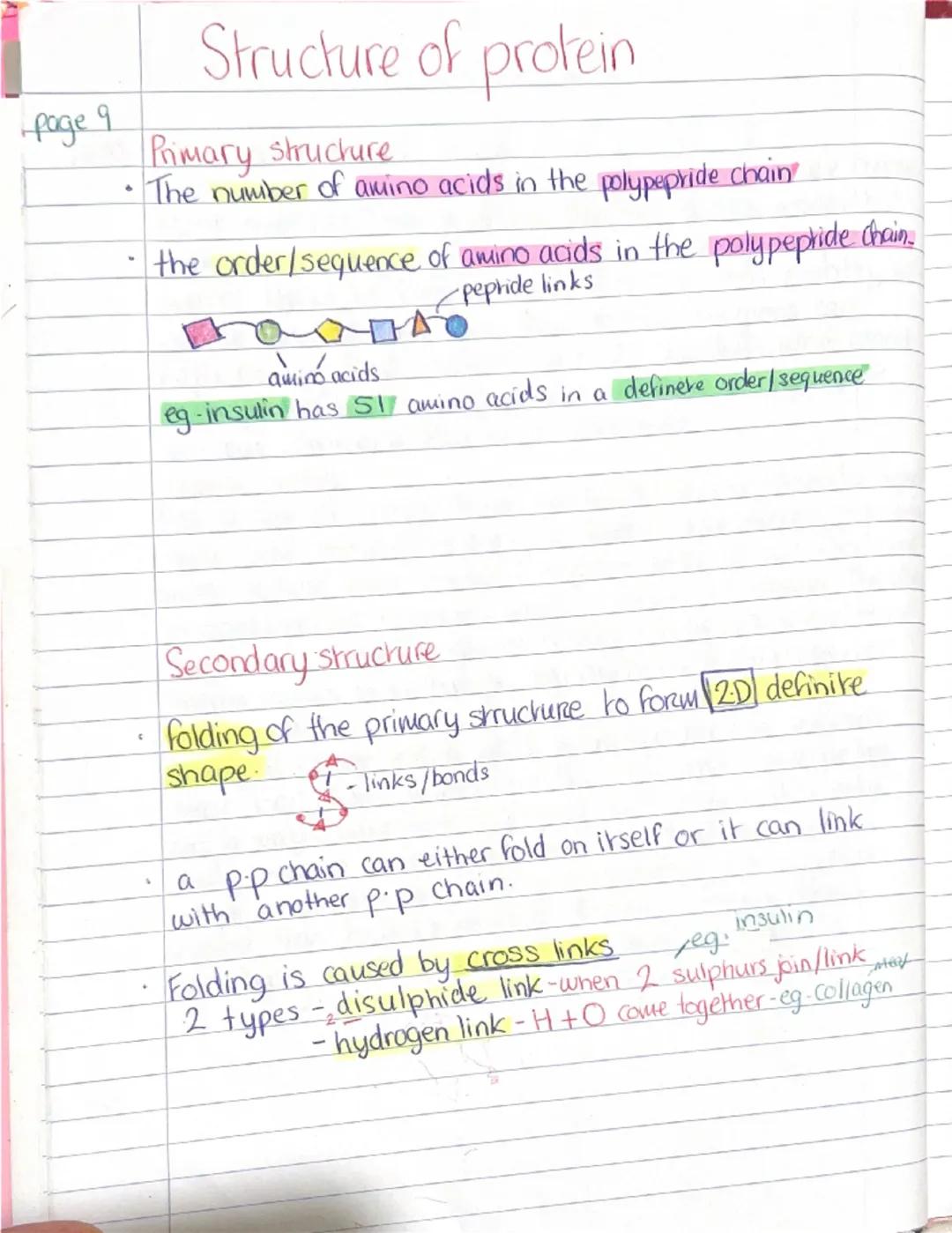
Protein Structure: Primary and Secondary
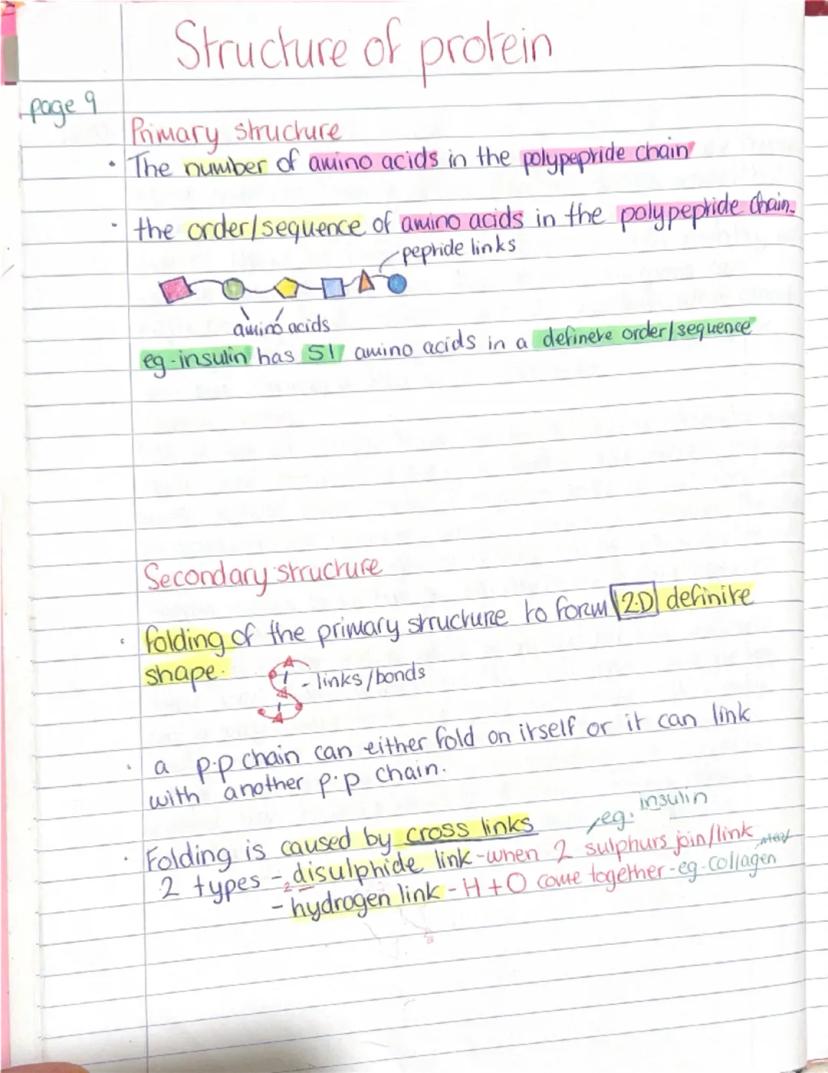
Proteins have multiple levels of structure that determine their function. The primary structure refers to the number and sequence of amino acids in the polypeptide chain. This sequence is crucial - for example, insulin has exactly 51 amino acids arranged in a specific order.
The secondary structure happens when the primary structure folds to form a two-dimensional shape. This folding isn't random but is caused by specific cross-links between parts of the chain. A polypeptide chain can either fold on itself or link with another chain.
These folds are held together by two types of bonds: disulphide links (when two sulphur atoms join) and hydrogen links (between hydrogen and oxygen atoms). Collagen is an example of a protein with hydrogen links, while insulin features disulphide links.
Fascinating fact: The precise folding of proteins is so important that even small changes in structure can completely alter how a protein functions in your body!
4
of 10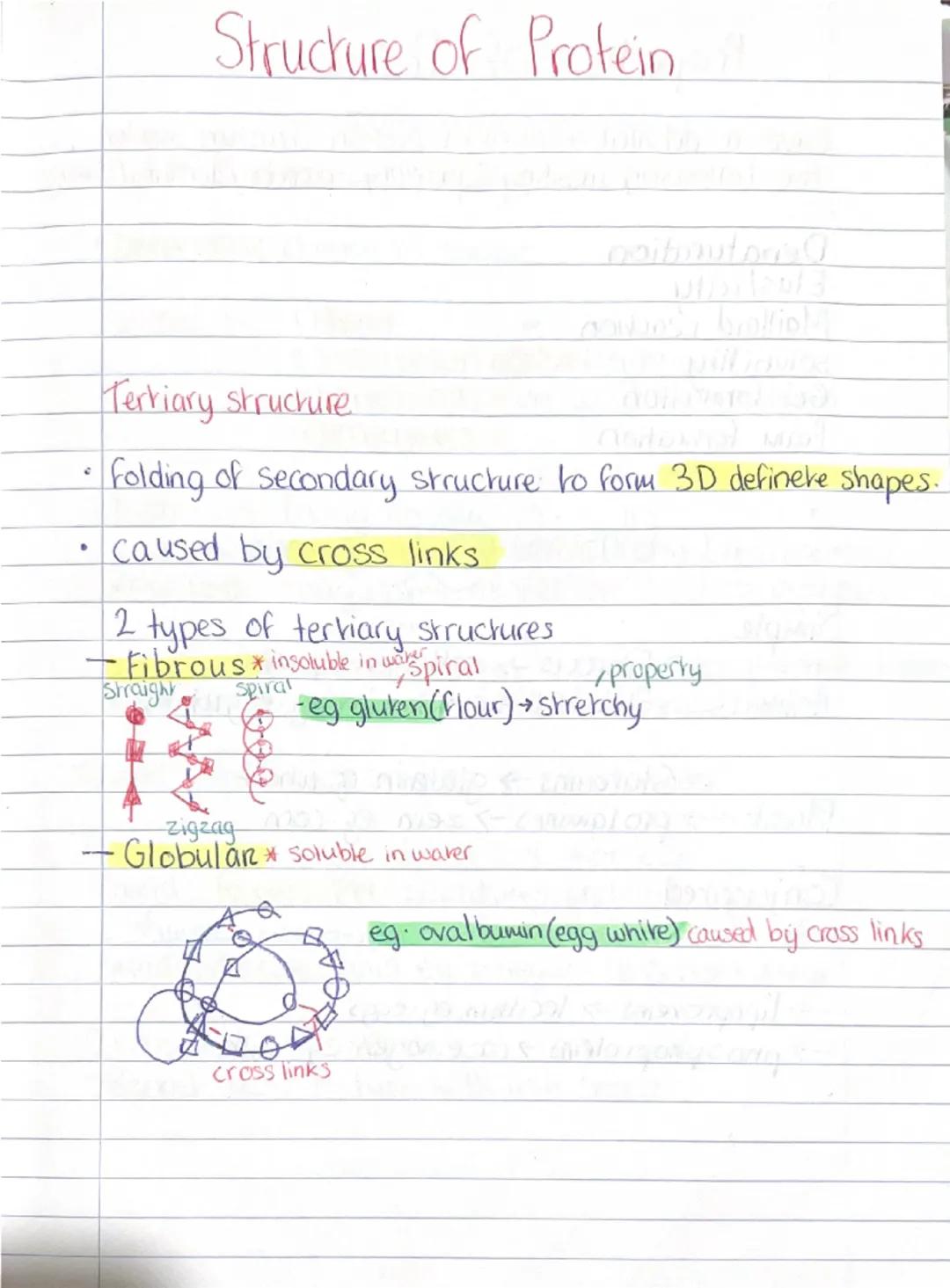
Tertiary Protein Structure
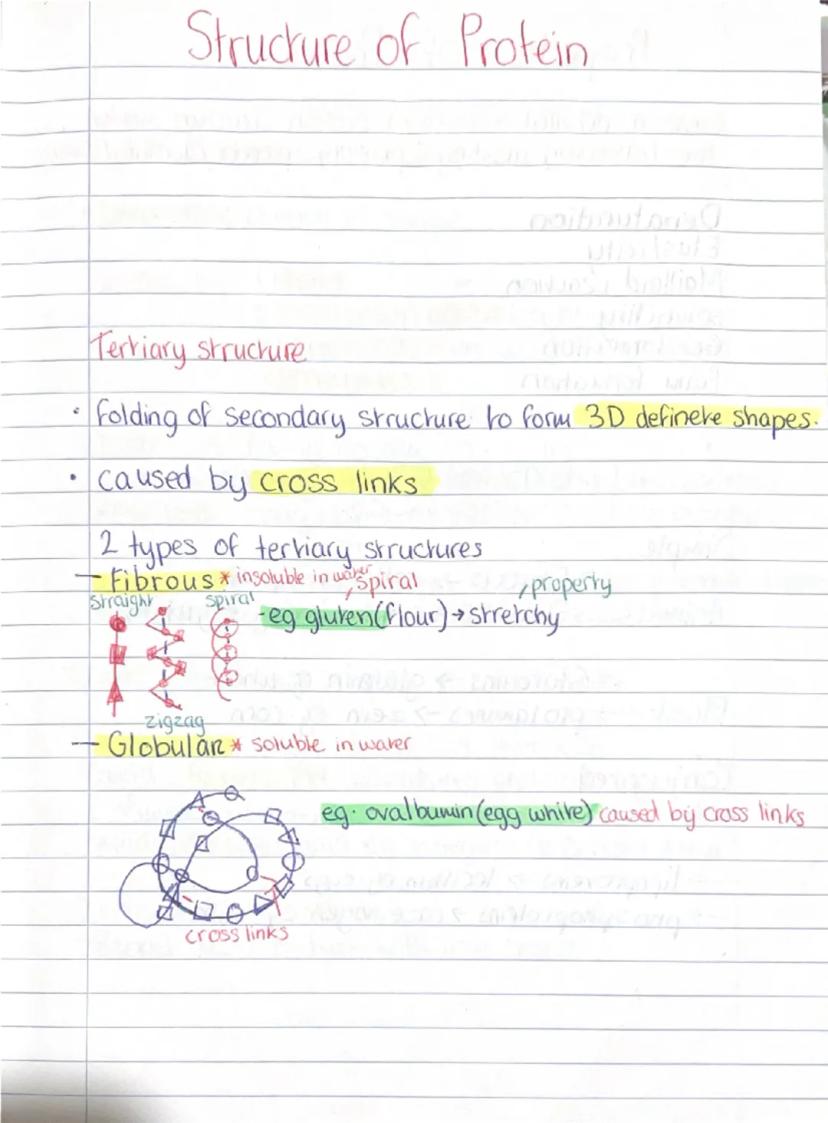
The tertiary structure forms when the secondary structure folds further into a complex three-dimensional shape. These 3D shapes are maintained by cross-links and determine how proteins function in your body.
Proteins with tertiary structure fall into two main categories. Fibrous proteins are insoluble in water and can form spiral, straight, or zigzag structures. They often have stretchy properties - like gluten in flour that gives bread dough its elasticity.
Globular proteins like ovalbumin in egg white are soluble in water and form rounded, compact structures. The differences between these two types are crucial in food preparation and explain why some proteins behave differently when cooking.
Think about it: When you're making bread, you're working with the tertiary structure of gluten proteins. Kneading the dough helps develop this structure, giving bread its characteristic texture!
5
of 10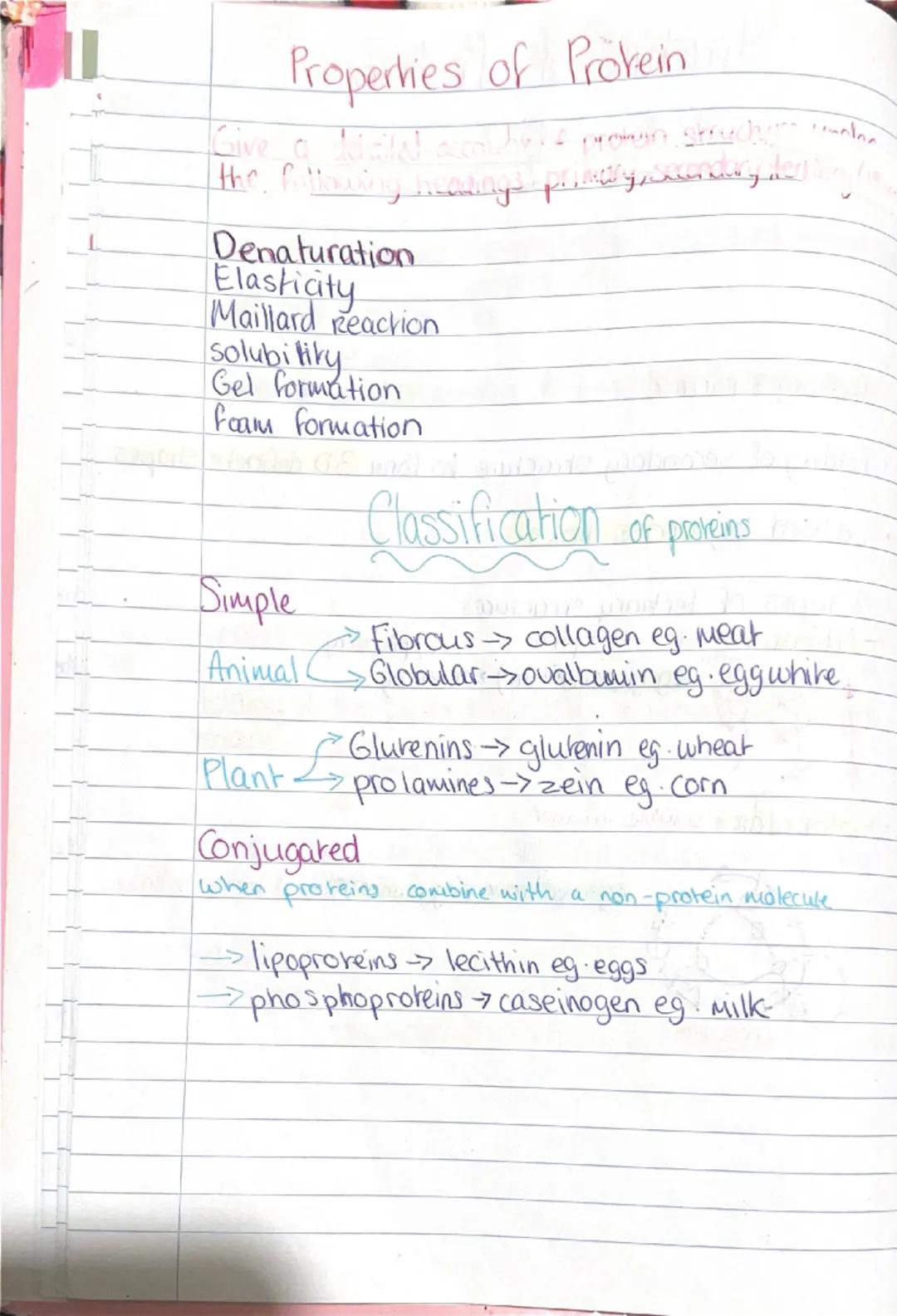
Protein Properties and Classification
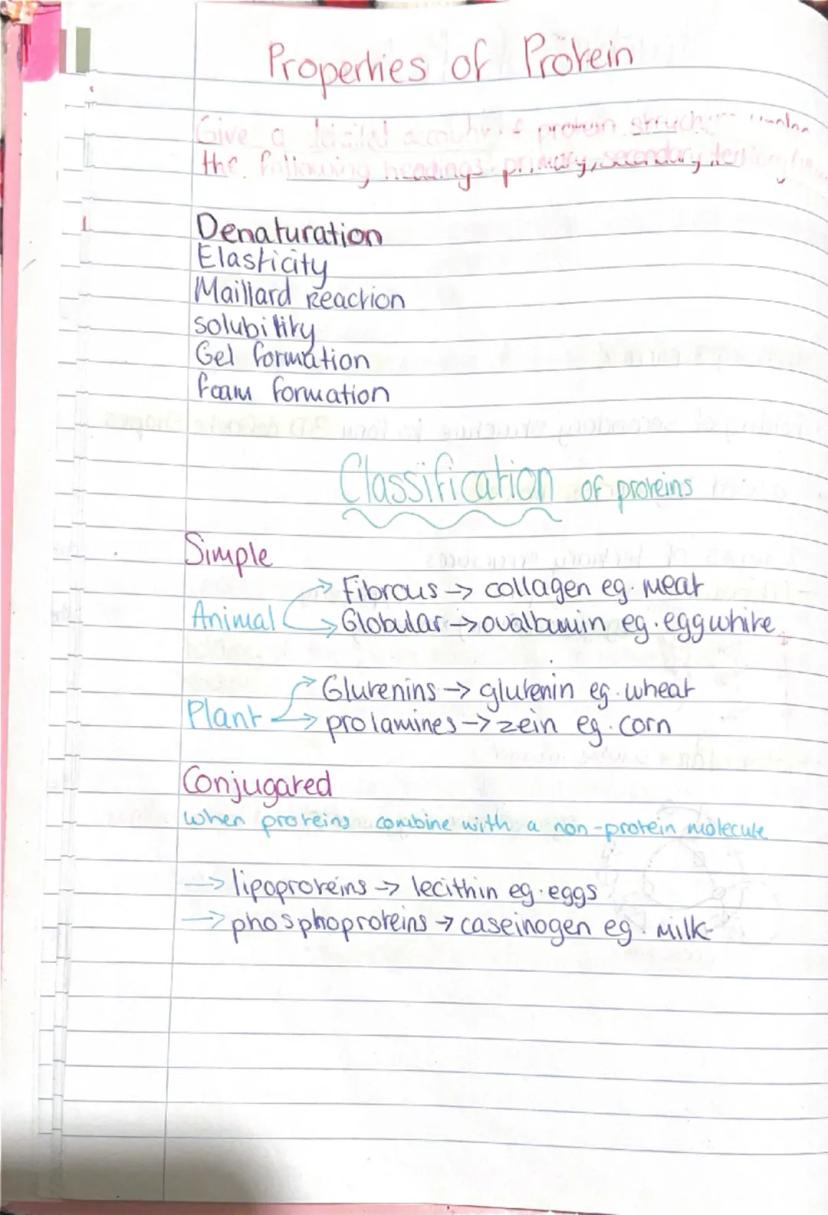
Proteins have several important properties that affect cooking: denaturation, elasticity, Maillard reaction, solubility, gel formation, and foam formation. Each property explains different aspects of how proteins behave when prepared in various ways.
Proteins are classified into two main groups. Simple proteins include animal-derived fibrous proteins like collagen in meat and globular proteins like ovalbumin in egg white. Plant-derived proteins include glutenins and prolamines like zein in corn.
Conjugated proteins form when proteins combine with non-protein molecules. Examples include lipoproteins like lecithin in eggs and phosphoproteins like caseinogen in milk. These combinations give these foods their unique characteristics.
Kitchen chemistry: Understanding protein classification helps you predict how foods will behave during cooking. For example, knowing that meat contains collagen explains why slow, moist cooking methods work best for tough cuts!
6
of 10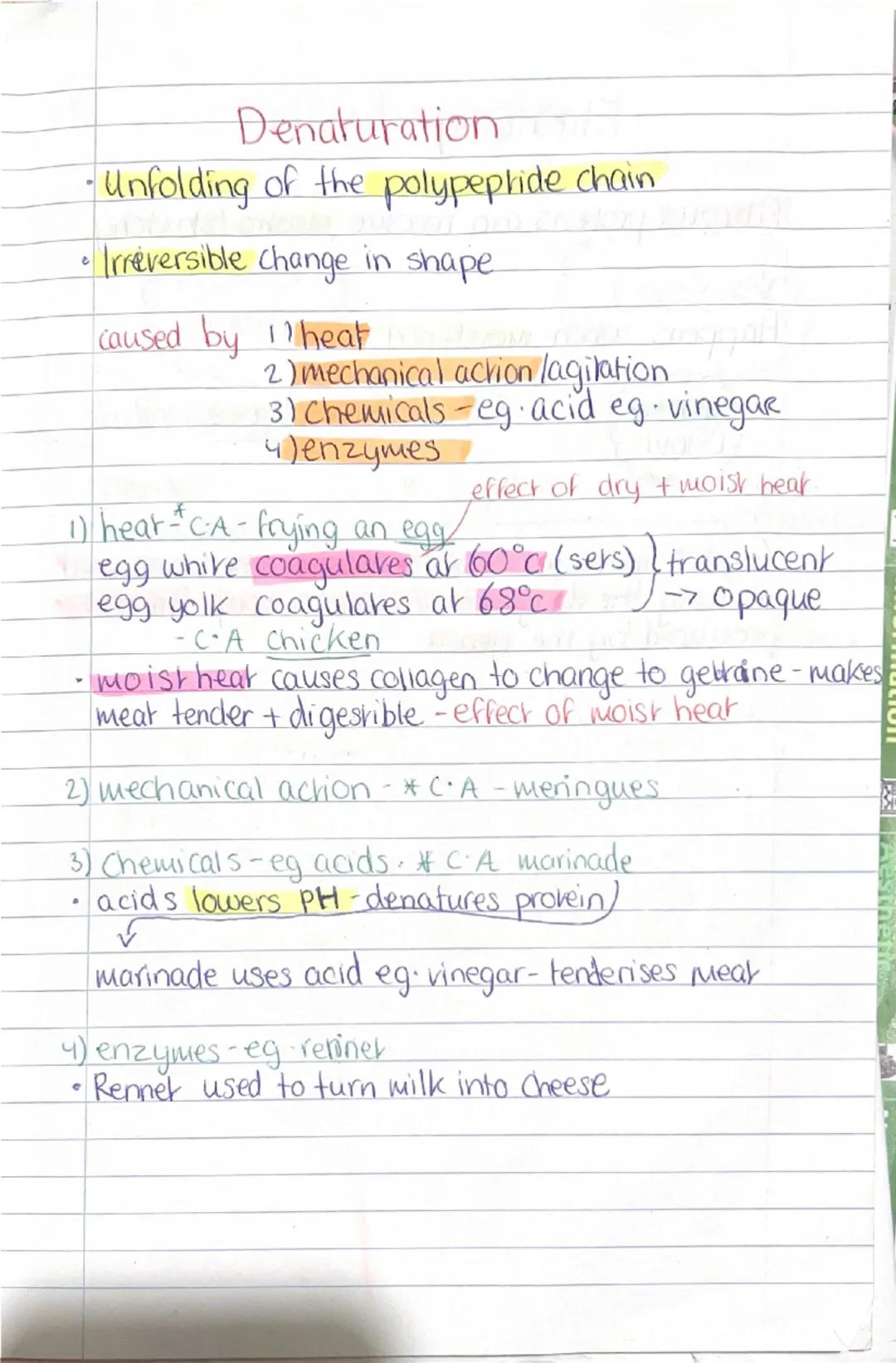
Denaturation of Proteins
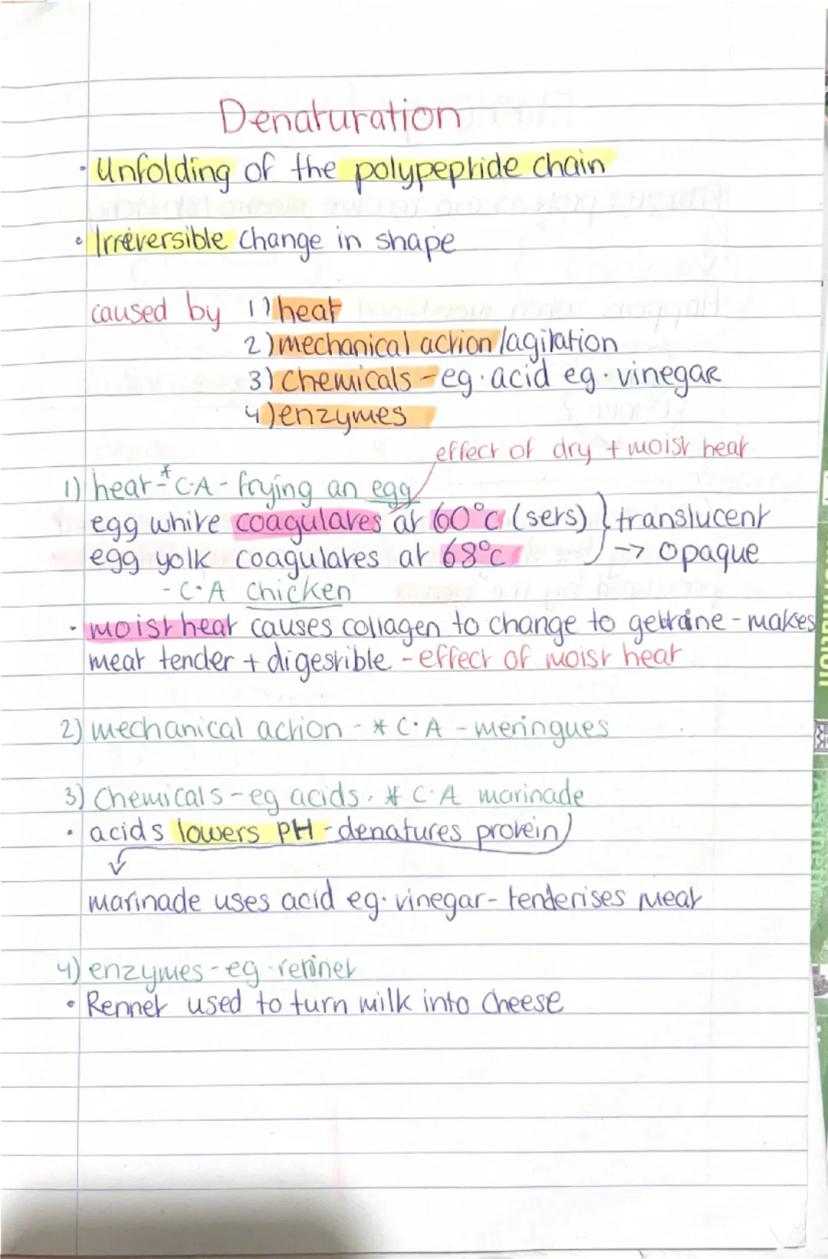
Denaturation is the unfolding of a protein's polypeptide chain, causing an irreversible change in its shape. This process fundamentally alters how proteins behave and is central to cooking.
There are four main causes of denaturation. Heat is the most common - egg whites become translucent and set at 60°C while egg yolks turn opaque at 68°C. When cooking meat, moist heat converts collagen to gelatine, making the meat tender and more digestible.
Mechanical action can also denature proteins, as seen when whipping egg whites for meringues. Chemical agents like acids in vinegar lower the pH and denature proteins, which is why marinades tenderise meat. Finally, enzymes like rennet can denature proteins, transforming milk into cheese.
Cooking tip: Understanding denaturation helps you control texture in cooking. For perfectly tender meat, use slow, moist cooking for tough cuts rich in collagen, or quick cooking for naturally tender cuts.
7
of 10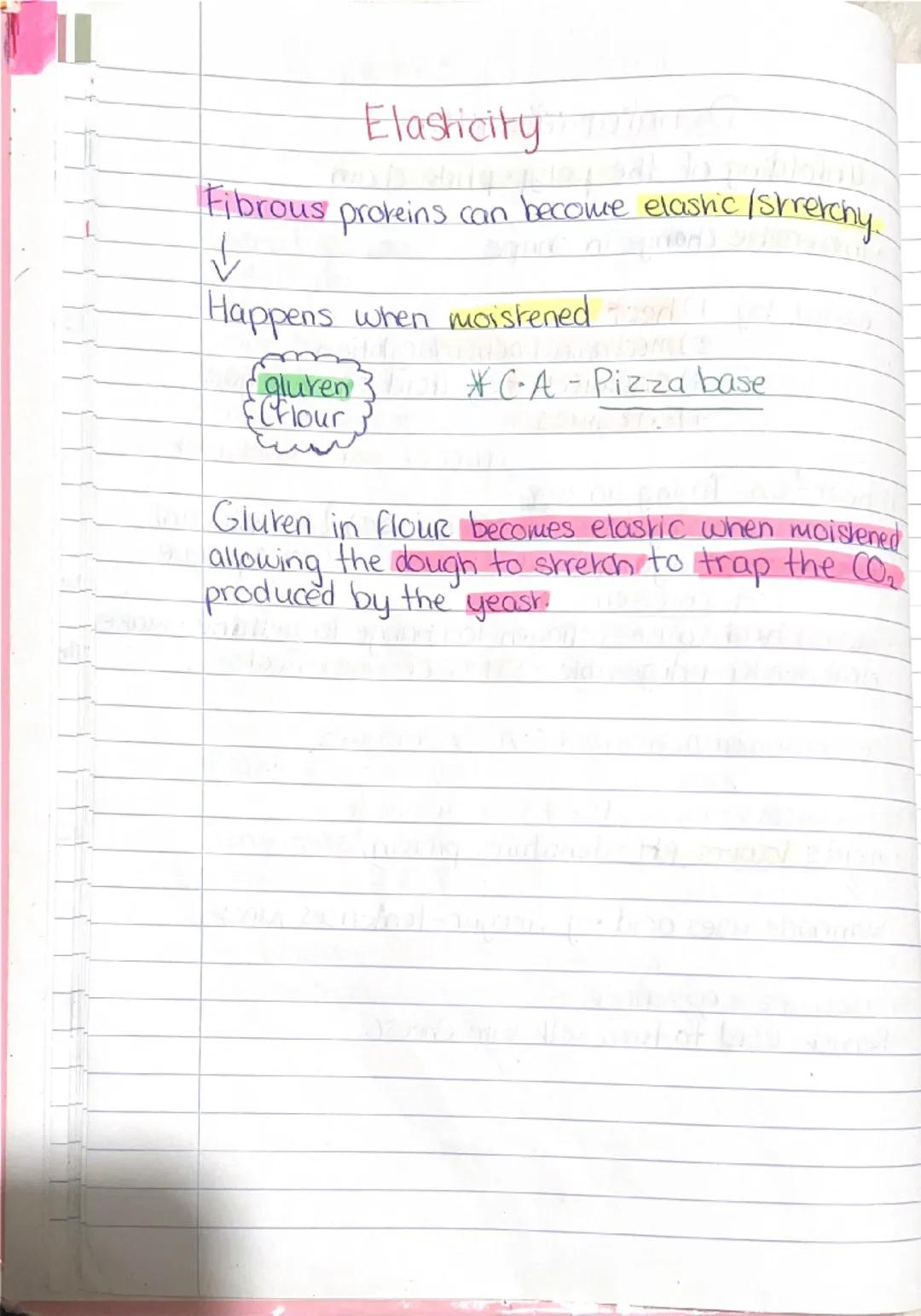
Elasticity in Proteins
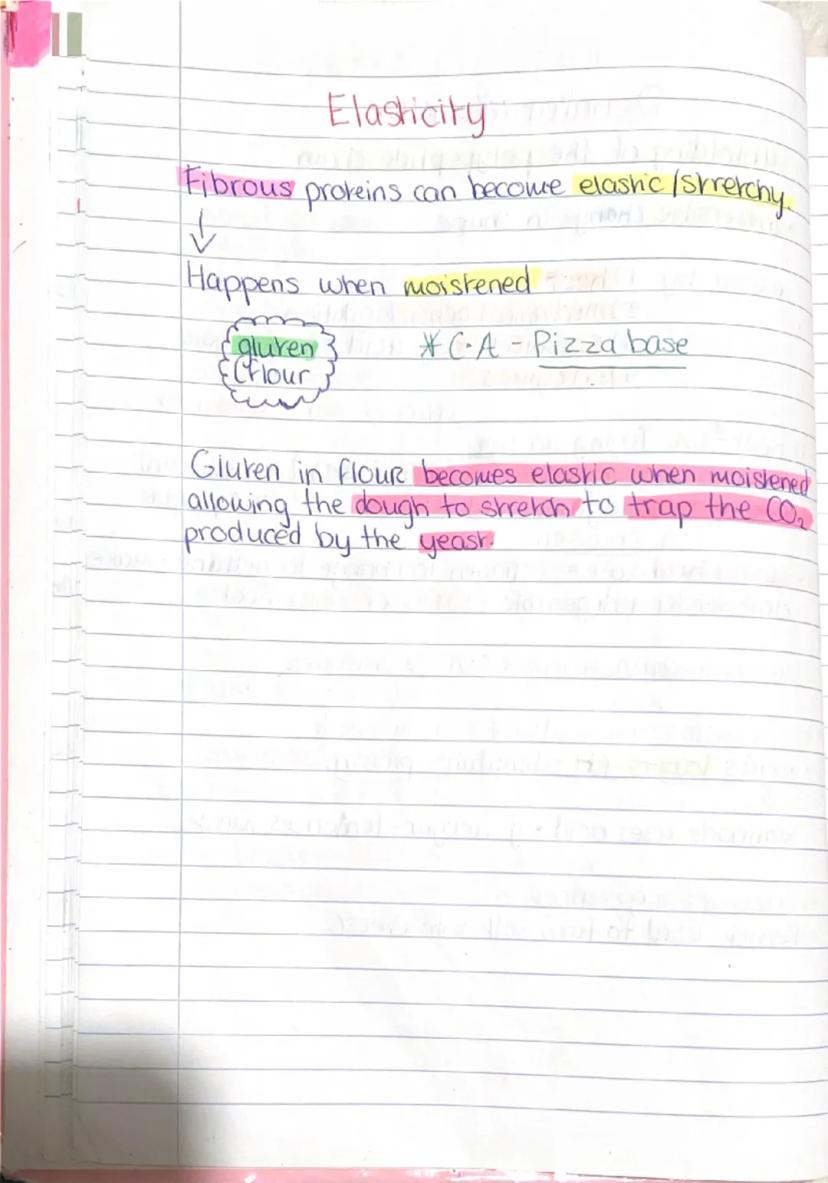
Fibrous proteins have a remarkable ability to become elastic or stretchy when moistened. This property is especially important in baking and dough preparation.
The classic example is gluten in flour. When flour mixes with water, the gluten proteins develop elasticity, allowing the dough to stretch. This elasticity isn't just interesting - it's essential for good baking results.
In pizza base preparation, this elasticity allows the dough to stretch thin while still trapping the carbon dioxide produced by yeast. Without this elasticity, your pizza would be flat and dense rather than light and airy.
Baking secret: Next time you're making pizza or bread, observe how the dough becomes more elastic as you knead it. This is the gluten developing structure that will give your finished product the perfect texture!
8
of 10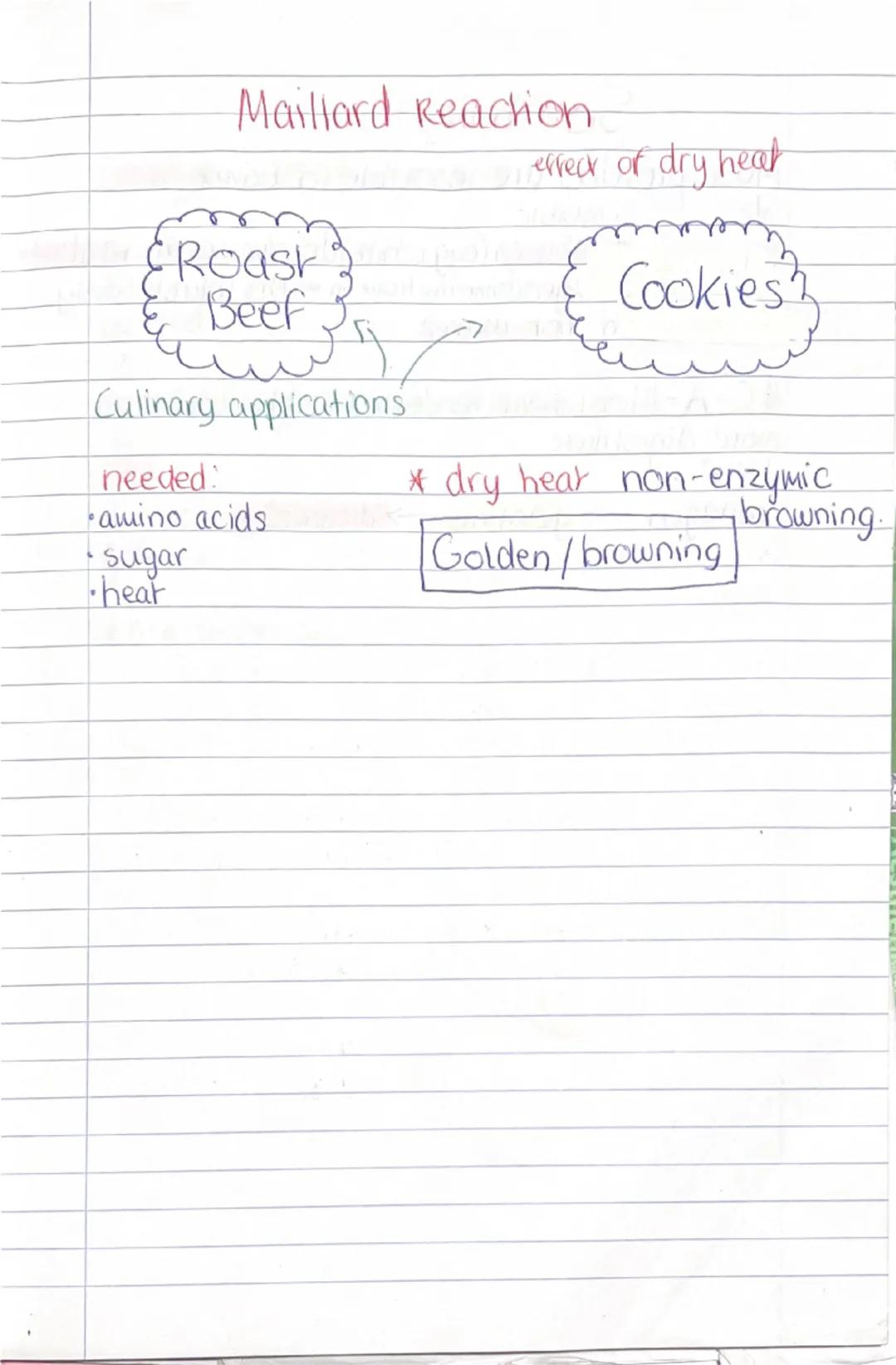
The Maillard Reaction
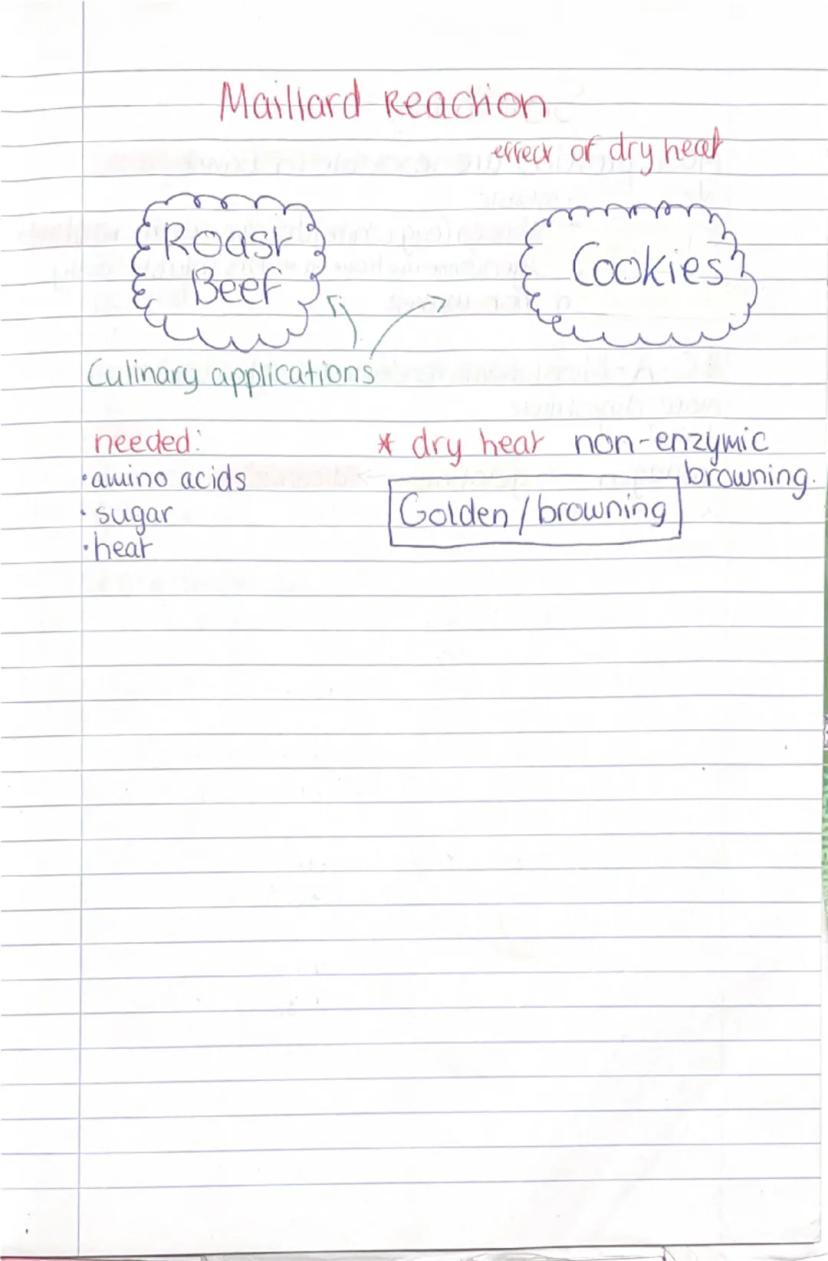
The Maillard reaction is a non-enzymic browning process that occurs when proteins are exposed to dry heat. This reaction happens between amino acids and sugars in food, creating appealing golden brown colours and rich flavours.
You see the Maillard reaction when roasting beef, baking cookies, or toasting bread. The brown crust on these foods isn't just visually appealing - it adds complex flavours that make food taste delicious.
This reaction is different from caramelisation (which involves only sugars) because it requires both proteins and sugars. The resulting compounds give foods their characteristic roasted, baked, or toasted flavours that can't be achieved through other cooking methods.
Culinary insight: For the best Maillard browning, use moderately high temperatures and make sure your food surface is reasonably dry. That's why patting meat dry before roasting helps achieve that perfect brown crust!
9
of 10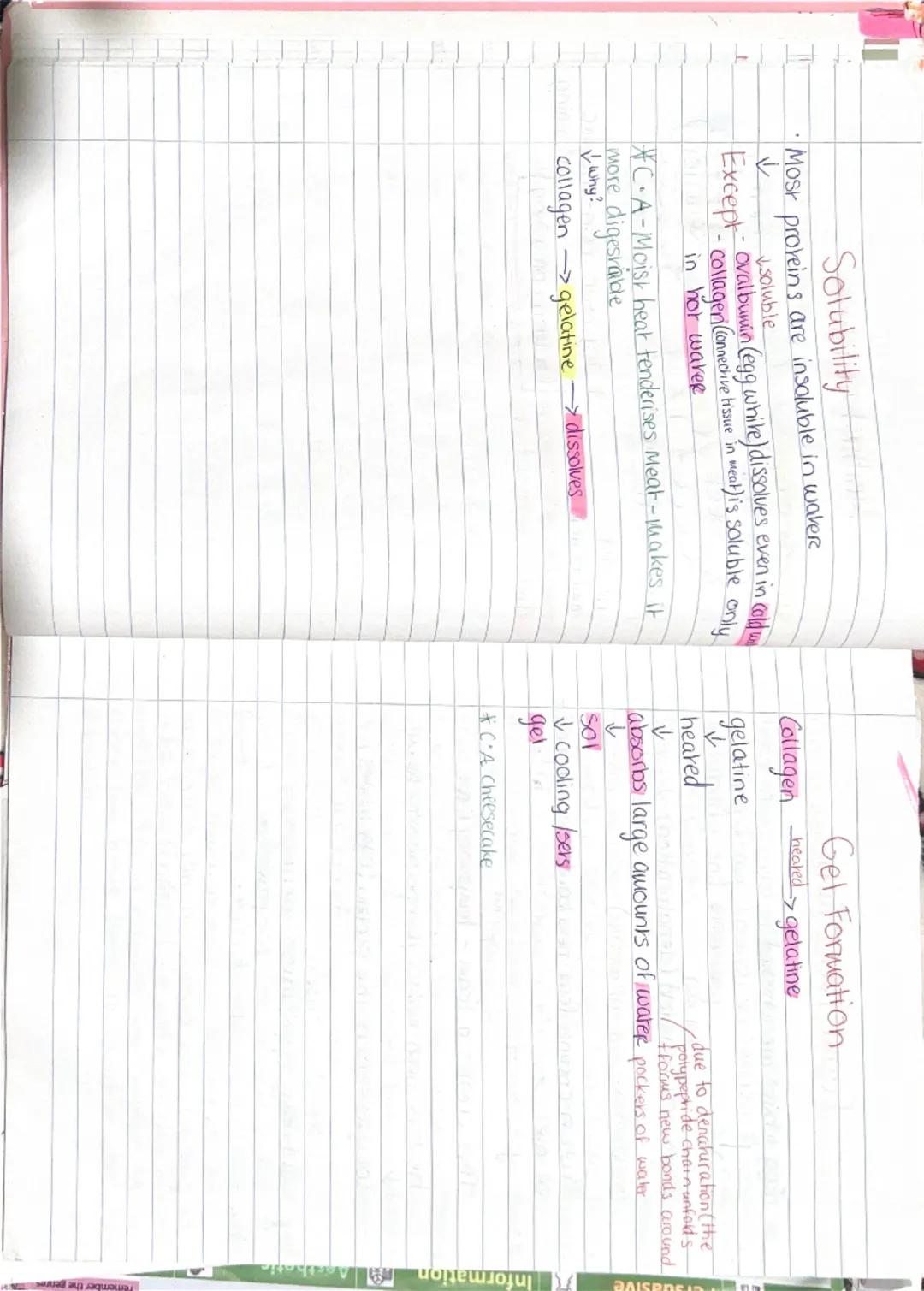
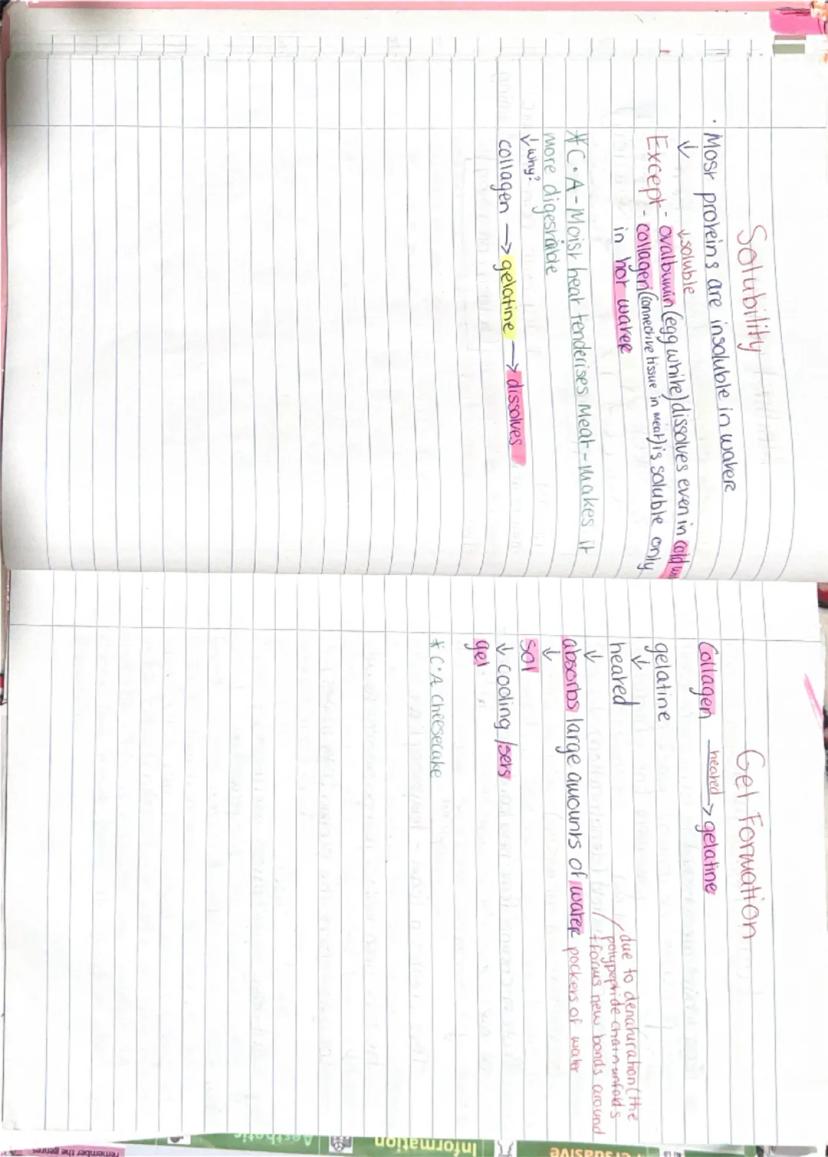
Solubility and Gel Formation
Most proteins are insoluble in water with notable exceptions. Ovalbumin in egg white dissolves even in cold water, while collagen in meat is only soluble when exposed to hot water. This explains why moist heat cooking methods tenderise meat - the collagen dissolves and converts to gelatine, making the meat more digestible.
Gel formation occurs when certain proteins like collagen are heated and denatured. When collagen converts to gelatine, it absorbs large amounts of water and forms a solution called a sol. Upon cooling, this sol sets into a gel - a semi-solid structure that holds water within it.
This process is essential in dishes like cheesecake, where the gelatine creates a smooth, firm texture by trapping moisture. The ability of denatured proteins to form gels gives many foods their characteristic texture and mouthfeel.
Kitchen science: Gelatine's amazing ability to hold up to 10 times its weight in water makes it perfect for creating stable gels. This is why it's used in everything from jellies to mousses!
10
of 10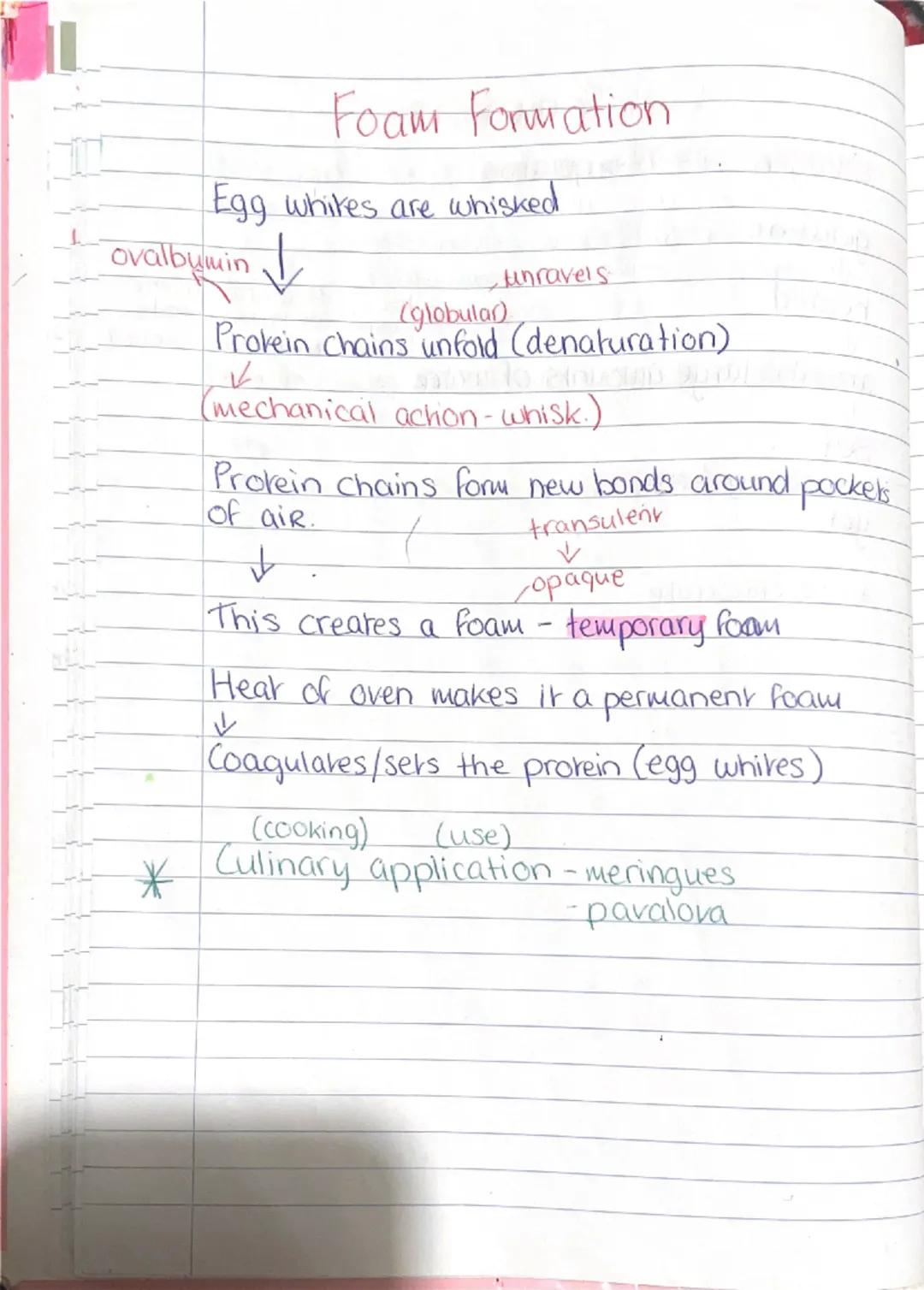
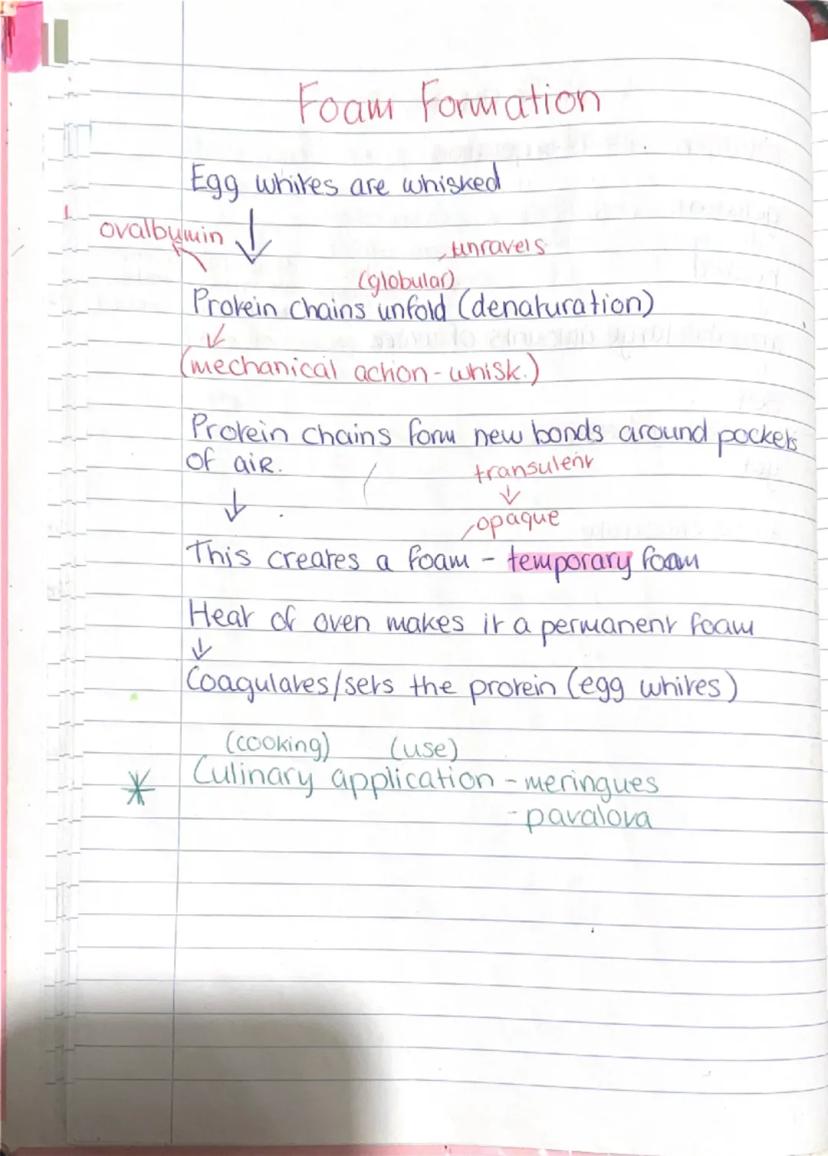
Foam Formation in Proteins
When egg whites are whisked, a fascinating transformation occurs. The ovalbumin (a globular protein) unfolds through mechanical action, a process of denaturation. As the protein chains unfold, they form new bonds around pockets of air.
This process changes the egg whites from translucent to opaque while creating a temporary foam. What makes this useful in cooking is that when heat is applied, such as in an oven, the protein coagulates and sets, turning the temporary foam into a permanent one.
This protein behaviour is the foundation of many delicious desserts. Meringues and pavlova rely on this principle - the whisking creates the foam structure, and then baking sets this structure into a light, crisp texture that's impossible to achieve any other way.
Baking hack: For the most stable egg white foam, ensure your bowl and whisks are completely free of any fat residue - even a small amount of egg yolk or oil can prevent proper foam formation!
We thought you’d never ask...
Our AI companion is specifically built for the needs of students. Based on the millions of content pieces we have on the platform we can provide truly meaningful and relevant answers to students. But its not only about answers, the companion is even more about guiding students through their daily learning challenges, with personalised study plans, quizzes or content pieces in the chat and 100% personalisation based on the students skills and developments.
You can download the app in the Google Play Store and in the Apple App Store.
That's right! Enjoy free access to study content, connect with fellow students, and get instant help – all at your fingertips.
Most popular content
9 English
Key Quotes : Sive
Key Quotes and explanations: Sive
6th Year2852
 Physics
Balanced and Unbalanced Forces
Students will explore how balanced forces result in no change in motion, while unbalanced forces cause an object to accelerate or change direction.
2nd Year592
 Irish
IrishIrish oral questions and answers
Questions and answers for the leaving cert oral
5th Year4274
IrishIníon- le hÁine Durkin
Aine Durkin’s poem, Iníon: Themes & summary
5th Year890
IrishMo Ghrá-sa (Idir Lúibíní)
Notes on mo ghrá-sa
5th Year380
IrishLC HL notes- Iníon (poem)
Includes poem in English and Irish, theme, key words & phrases
5th Year2324
EnglishCultural Context : Shawshank Redemption : Sive : Small Things Like These
Comparative Study : Cultural Context : Shawshank Redemption, Sive and Small Things Like These
6th Year1430
IrishAn Gaeilge Aiste
Irish Language essay
6th Year1320
EnglishElizabeth Bishop notes
Elizabeth Bishop notes
6th Year1271
Students love us — and so will you.
4.6/5App Store
4.7/5Google Play
The app is very easy to use and well designed. I have found everything I was looking for so far and have been able to learn a lot from the presentations! I will definitely use the app for a class assignment! And of course it also helps a lot as an inspiration.
Stefan SiOS user
This app is really great. There are so many study notes and help [...]. My problem subject is French, for example, and the app has so many options for help. Thanks to this app, I have improved my French. I would recommend it to anyone.
Samantha KlichAndroid user
Wow, I am really amazed. I just tried the app because I've seen it advertised many times and was absolutely stunned. This app is THE HELP you want for school and above all, it offers so many things, such as workouts and fact sheets, which have been VERY helpful to me personally.
AnnaiOS user
Other41 views·Updated 18 Jul 2026·13 pagesH1 Protein Notes for Leaving Cert Home Economics
L
Leah Dennehy@leahdennehy
Protein is a vital macronutrient that your body needs in large amounts for growth, repair and many other functions. It consists of amino acids joined together by peptide links forming complex structures that determine how proteins function in your body...
1
of 10
Sign up to see the content. It's free!
- Access to all documents
- Improve your grades
- Join milions of students
By signing up you accept Terms of Service and Privacy Policy
Nutrients and Protein Basics
Nutrients are divided into macronutrients (protein, fat, carbohydrates) needed in large amounts and micronutrients (vitamins, minerals, water) required in smaller quantities. Among these, protein has a special role in growth due to its nitrogen content.
Proteins have a unique elemental composition of carbon, hydrogen, oxygen and nitrogen. The building blocks of proteins are amino acids, which link together through peptide bonds to form polypeptide chains.
Each amino acid has a basic structure with an amino group (NH₂), a carboxyl group (COOH), and a variable R-group that makes each amino acid unique. Glycine is the simplest amino acid with just a hydrogen atom as its R-group.
Remember this! Nitrogen is what makes protein different from carbohydrates and fats - it's essential for growth and tissue development in your body.
2
of 10Sign up to see the content. It's free!
- Access to all documents
- Improve your grades
- Join milions of students
By signing up you accept Terms of Service and Privacy Policy
Essential and Non-Essential Amino Acids
Your body needs 20 different amino acids, but not all of them need to come from food. Essential amino acids like valine, lysine, methionine, and tryptophan cannot be manufactured by your body and must be obtained through your diet.
Non-essential amino acids like glycine and cysteine can be made by your body, so you don't need to worry about getting them from food. This distinction is particularly important when planning balanced meals.
When amino acids join together, a peptide link forms through a condensation reaction. The carboxyl group of one amino acid connects with the amino group of another, releasing a water molecule (H₂O) in the process. This creates a CONH bond, forming a dipeptide. When many amino acids join, they create a polypeptide chain.
Quick tip: During digestion, your body breaks down proteins through hydrolysis – essentially adding water back to split the peptide links and release individual amino acids for absorption.
3
of 10Sign up to see the content. It's free!
- Access to all documents
- Improve your grades
- Join milions of students
By signing up you accept Terms of Service and Privacy Policy
Protein Structure: Primary and Secondary
Proteins have multiple levels of structure that determine their function. The primary structure refers to the number and sequence of amino acids in the polypeptide chain. This sequence is crucial - for example, insulin has exactly 51 amino acids arranged in a specific order.
The secondary structure happens when the primary structure folds to form a two-dimensional shape. This folding isn't random but is caused by specific cross-links between parts of the chain. A polypeptide chain can either fold on itself or link with another chain.
These folds are held together by two types of bonds: disulphide links (when two sulphur atoms join) and hydrogen links (between hydrogen and oxygen atoms). Collagen is an example of a protein with hydrogen links, while insulin features disulphide links.
Fascinating fact: The precise folding of proteins is so important that even small changes in structure can completely alter how a protein functions in your body!
4
of 10Sign up to see the content. It's free!
- Access to all documents
- Improve your grades
- Join milions of students
By signing up you accept Terms of Service and Privacy Policy
Tertiary Protein Structure
The tertiary structure forms when the secondary structure folds further into a complex three-dimensional shape. These 3D shapes are maintained by cross-links and determine how proteins function in your body.
Proteins with tertiary structure fall into two main categories. Fibrous proteins are insoluble in water and can form spiral, straight, or zigzag structures. They often have stretchy properties - like gluten in flour that gives bread dough its elasticity.
Globular proteins like ovalbumin in egg white are soluble in water and form rounded, compact structures. The differences between these two types are crucial in food preparation and explain why some proteins behave differently when cooking.
Think about it: When you're making bread, you're working with the tertiary structure of gluten proteins. Kneading the dough helps develop this structure, giving bread its characteristic texture!
5
of 10Sign up to see the content. It's free!
- Access to all documents
- Improve your grades
- Join milions of students
By signing up you accept Terms of Service and Privacy Policy
Protein Properties and Classification
Proteins have several important properties that affect cooking: denaturation, elasticity, Maillard reaction, solubility, gel formation, and foam formation. Each property explains different aspects of how proteins behave when prepared in various ways.
Proteins are classified into two main groups. Simple proteins include animal-derived fibrous proteins like collagen in meat and globular proteins like ovalbumin in egg white. Plant-derived proteins include glutenins and prolamines like zein in corn.
Conjugated proteins form when proteins combine with non-protein molecules. Examples include lipoproteins like lecithin in eggs and phosphoproteins like caseinogen in milk. These combinations give these foods their unique characteristics.
Kitchen chemistry: Understanding protein classification helps you predict how foods will behave during cooking. For example, knowing that meat contains collagen explains why slow, moist cooking methods work best for tough cuts!
6
of 10Sign up to see the content. It's free!
- Access to all documents
- Improve your grades
- Join milions of students
By signing up you accept Terms of Service and Privacy Policy
Denaturation of Proteins
Denaturation is the unfolding of a protein's polypeptide chain, causing an irreversible change in its shape. This process fundamentally alters how proteins behave and is central to cooking.
There are four main causes of denaturation. Heat is the most common - egg whites become translucent and set at 60°C while egg yolks turn opaque at 68°C. When cooking meat, moist heat converts collagen to gelatine, making the meat tender and more digestible.
Mechanical action can also denature proteins, as seen when whipping egg whites for meringues. Chemical agents like acids in vinegar lower the pH and denature proteins, which is why marinades tenderise meat. Finally, enzymes like rennet can denature proteins, transforming milk into cheese.
Cooking tip: Understanding denaturation helps you control texture in cooking. For perfectly tender meat, use slow, moist cooking for tough cuts rich in collagen, or quick cooking for naturally tender cuts.
7
of 10Sign up to see the content. It's free!
- Access to all documents
- Improve your grades
- Join milions of students
By signing up you accept Terms of Service and Privacy Policy
Elasticity in Proteins
Fibrous proteins have a remarkable ability to become elastic or stretchy when moistened. This property is especially important in baking and dough preparation.
The classic example is gluten in flour. When flour mixes with water, the gluten proteins develop elasticity, allowing the dough to stretch. This elasticity isn't just interesting - it's essential for good baking results.
In pizza base preparation, this elasticity allows the dough to stretch thin while still trapping the carbon dioxide produced by yeast. Without this elasticity, your pizza would be flat and dense rather than light and airy.
Baking secret: Next time you're making pizza or bread, observe how the dough becomes more elastic as you knead it. This is the gluten developing structure that will give your finished product the perfect texture!
8
of 10Sign up to see the content. It's free!
- Access to all documents
- Improve your grades
- Join milions of students
By signing up you accept Terms of Service and Privacy Policy
The Maillard Reaction
The Maillard reaction is a non-enzymic browning process that occurs when proteins are exposed to dry heat. This reaction happens between amino acids and sugars in food, creating appealing golden brown colours and rich flavours.
You see the Maillard reaction when roasting beef, baking cookies, or toasting bread. The brown crust on these foods isn't just visually appealing - it adds complex flavours that make food taste delicious.
This reaction is different from caramelisation (which involves only sugars) because it requires both proteins and sugars. The resulting compounds give foods their characteristic roasted, baked, or toasted flavours that can't be achieved through other cooking methods.
Culinary insight: For the best Maillard browning, use moderately high temperatures and make sure your food surface is reasonably dry. That's why patting meat dry before roasting helps achieve that perfect brown crust!
9
of 10Sign up to see the content. It's free!
- Access to all documents
- Improve your grades
- Join milions of students
By signing up you accept Terms of Service and Privacy Policy
Solubility and Gel Formation
Most proteins are insoluble in water with notable exceptions. Ovalbumin in egg white dissolves even in cold water, while collagen in meat is only soluble when exposed to hot water. This explains why moist heat cooking methods tenderise meat - the collagen dissolves and converts to gelatine, making the meat more digestible.
Gel formation occurs when certain proteins like collagen are heated and denatured. When collagen converts to gelatine, it absorbs large amounts of water and forms a solution called a sol. Upon cooling, this sol sets into a gel - a semi-solid structure that holds water within it.
This process is essential in dishes like cheesecake, where the gelatine creates a smooth, firm texture by trapping moisture. The ability of denatured proteins to form gels gives many foods their characteristic texture and mouthfeel.
Kitchen science: Gelatine's amazing ability to hold up to 10 times its weight in water makes it perfect for creating stable gels. This is why it's used in everything from jellies to mousses!
10
of 10Sign up to see the content. It's free!
- Access to all documents
- Improve your grades
- Join milions of students
By signing up you accept Terms of Service and Privacy Policy
Foam Formation in Proteins
When egg whites are whisked, a fascinating transformation occurs. The ovalbumin (a globular protein) unfolds through mechanical action, a process of denaturation. As the protein chains unfold, they form new bonds around pockets of air.
This process changes the egg whites from translucent to opaque while creating a temporary foam. What makes this useful in cooking is that when heat is applied, such as in an oven, the protein coagulates and sets, turning the temporary foam into a permanent one.
This protein behaviour is the foundation of many delicious desserts. Meringues and pavlova rely on this principle - the whisking creates the foam structure, and then baking sets this structure into a light, crisp texture that's impossible to achieve any other way.
Baking hack: For the most stable egg white foam, ensure your bowl and whisks are completely free of any fat residue - even a small amount of egg yolk or oil can prevent proper foam formation!
We thought you’d never ask...
Our AI companion is specifically built for the needs of students. Based on the millions of content pieces we have on the platform we can provide truly meaningful and relevant answers to students. But its not only about answers, the companion is even more about guiding students through their daily learning challenges, with personalised study plans, quizzes or content pieces in the chat and 100% personalisation based on the students skills and developments.
You can download the app in the Google Play Store and in the Apple App Store.
That's right! Enjoy free access to study content, connect with fellow students, and get instant help – all at your fingertips.
Most popular content
9EnglishKey Quotes : Sive
Key Quotes and explanations: Sive
6th Year2852
PhysicsBalanced and Unbalanced Forces
Students will explore how balanced forces result in no change in motion, while unbalanced forces cause an object to accelerate or change direction.
2nd Year592
IrishIrish oral questions and answers
Questions and answers for the leaving cert oral
5th Year4274
IrishIníon- le hÁine Durkin
Aine Durkin’s poem, Iníon: Themes & summary
5th Year890
IrishMo Ghrá-sa (Idir Lúibíní)
Notes on mo ghrá-sa
5th Year380
IrishLC HL notes- Iníon (poem)
Includes poem in English and Irish, theme, key words & phrases
5th Year2324
EnglishCultural Context : Shawshank Redemption : Sive : Small Things Like These
Comparative Study : Cultural Context : Shawshank Redemption, Sive and Small Things Like These
6th Year1430
IrishAn Gaeilge Aiste
Irish Language essay
6th Year1320
EnglishElizabeth Bishop notes
Elizabeth Bishop notes
6th Year1271
Students love us — and so will you.
4.6/5App Store
4.7/5Google Play
The app is very easy to use and well designed. I have found everything I was looking for so far and have been able to learn a lot from the presentations! I will definitely use the app for a class assignment! And of course it also helps a lot as an inspiration.
Stefan SiOS user
This app is really great. There are so many study notes and help [...]. My problem subject is French, for example, and the app has so many options for help. Thanks to this app, I have improved my French. I would recommend it to anyone.
Samantha KlichAndroid user
Wow, I am really amazed. I just tried the app because I've seen it advertised many times and was absolutely stunned. This app is THE HELP you want for school and above all, it offers so many things, such as workouts and fact sheets, which have been VERY helpful to me personally.
AnnaiOS user