
Protein exam questions test your understanding of key concepts like...
 Other3 views·Updated Jun 5, 2026·4 pages
Comprehensive Protein Test Preparation Guide
K
Keira Kennedy McGrath@keirakennedymcg
1 / 4
1
of 4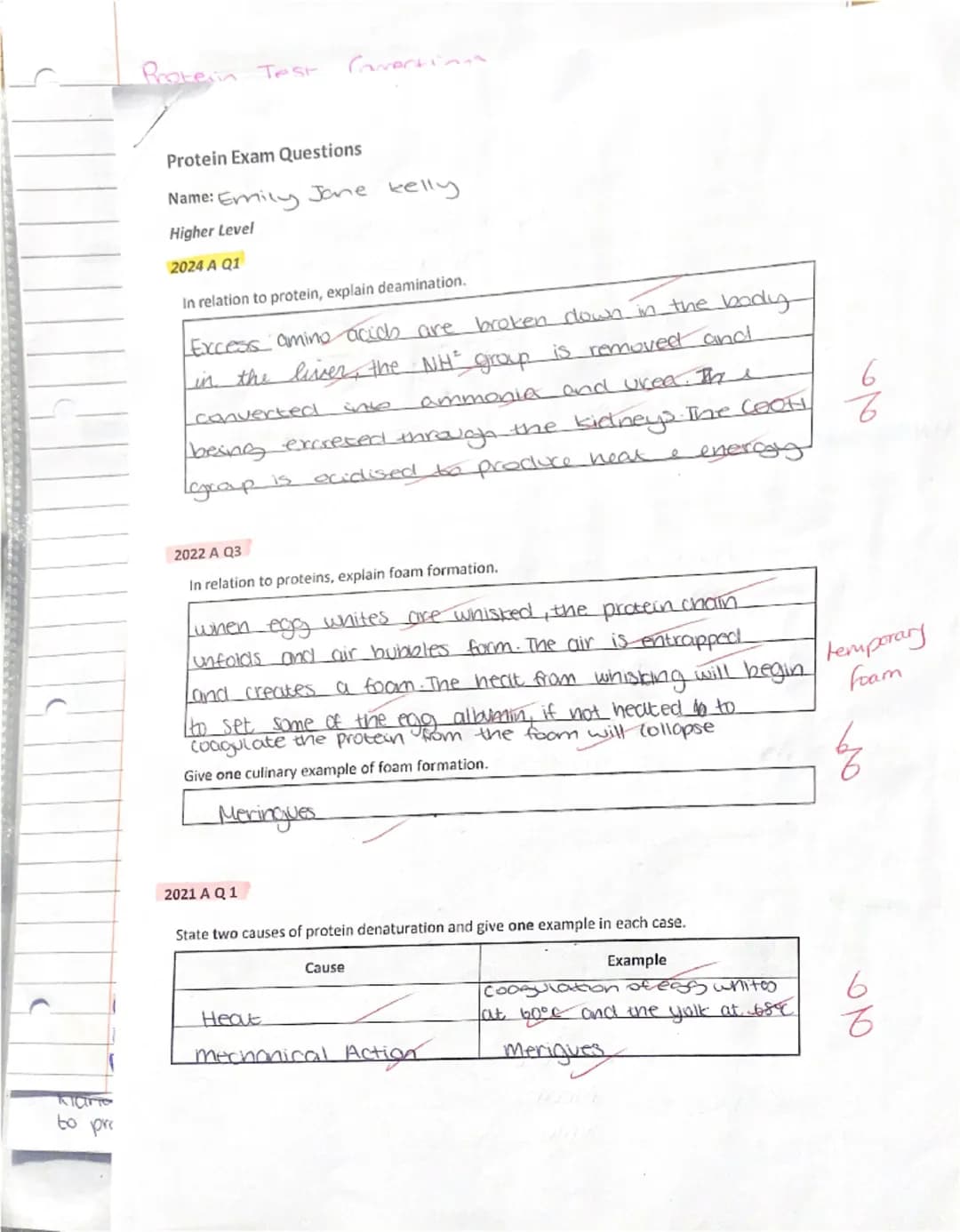
Protein Denaturation and Foam Formation
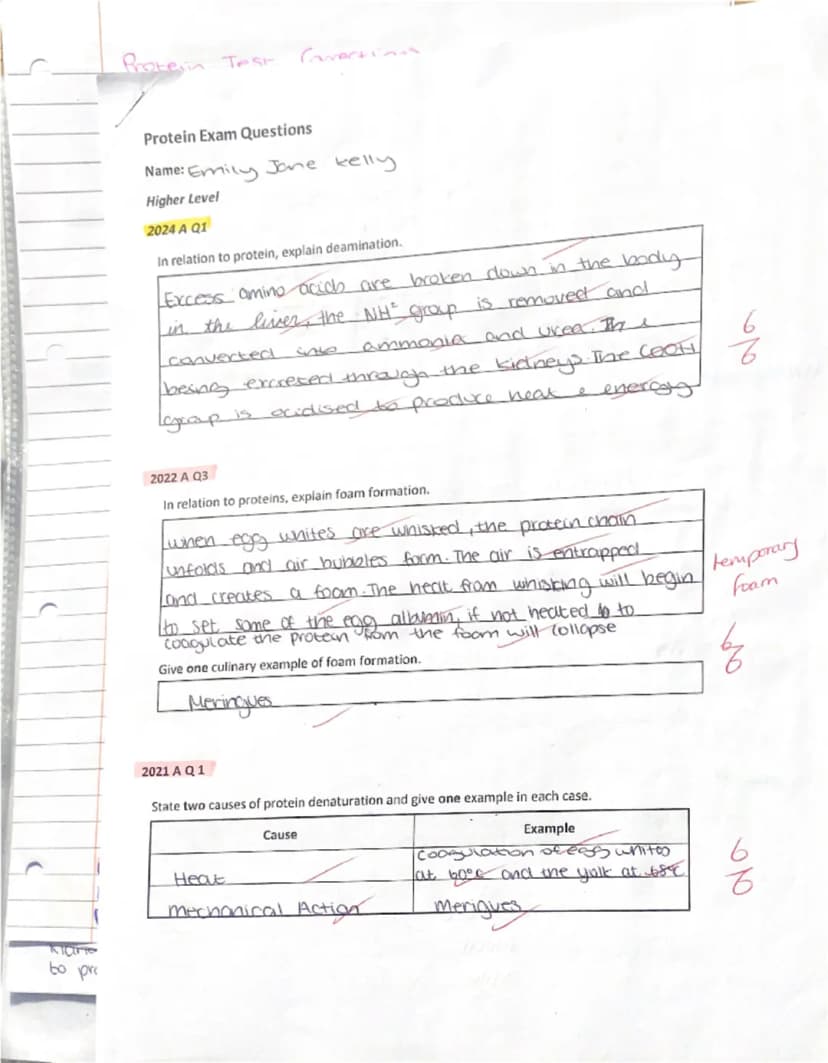
Protein denaturation occurs when proteins lose their structure. A common exam question asks about this process and its causes. Heat is a primary cause of denaturation, seen when egg whites coagulate at 60°C and egg yolks at 68°C. Mechanical action is another cause, demonstrated when whisking egg whites for meringues.
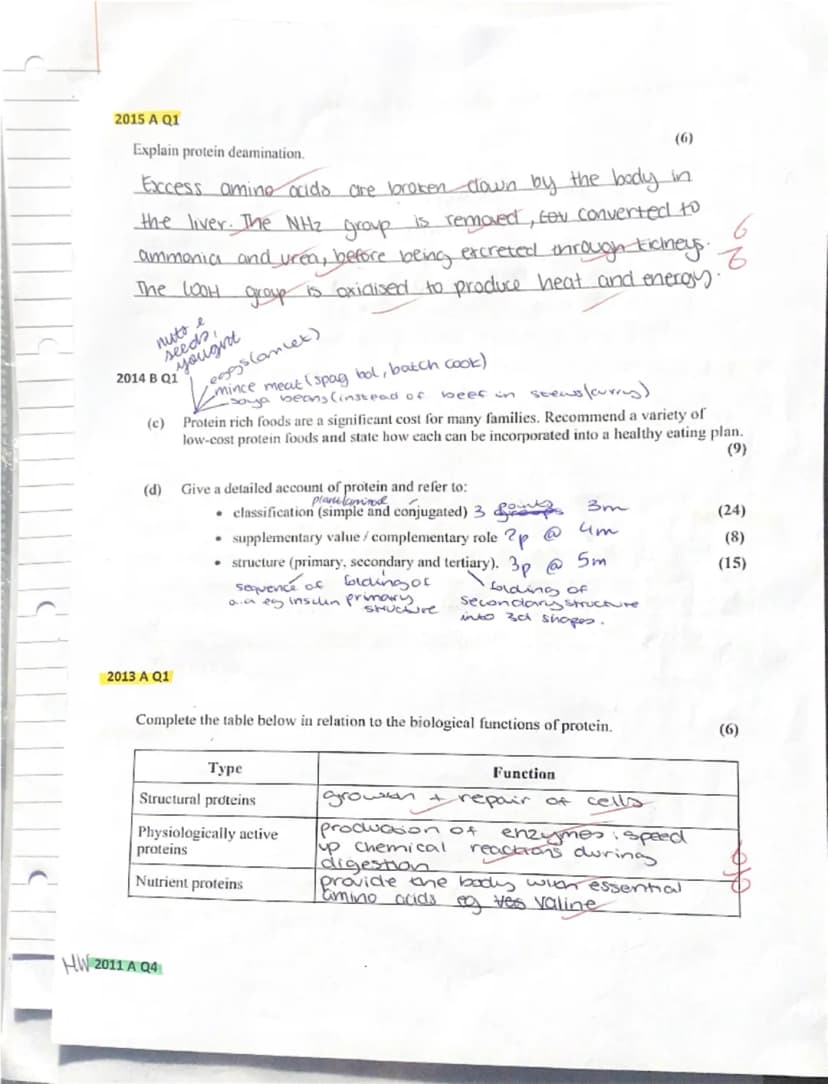
Deamination is another critical concept to understand. When your body has excess amino acids, they're broken down in the liver. The NH (amino) group is removed and converted to ammonia and urea, which is then excreted through the kidneys. The COOH (carboxyl) group undergoes oxidation to produce energy and heat.
Foam formation happens when proteins like egg whites are whisked. The protein chains unfold and trap air bubbles, creating a foam structure. The whisking generates heat which temporarily sets some of the albumin protein. However, if not heated enough to coagulate the protein, the foam will collapse.
Remember this! When answering questions about protein denaturation, always include both the cause (heat, mechanical action) AND a specific culinary example that demonstrates it.
2
of 4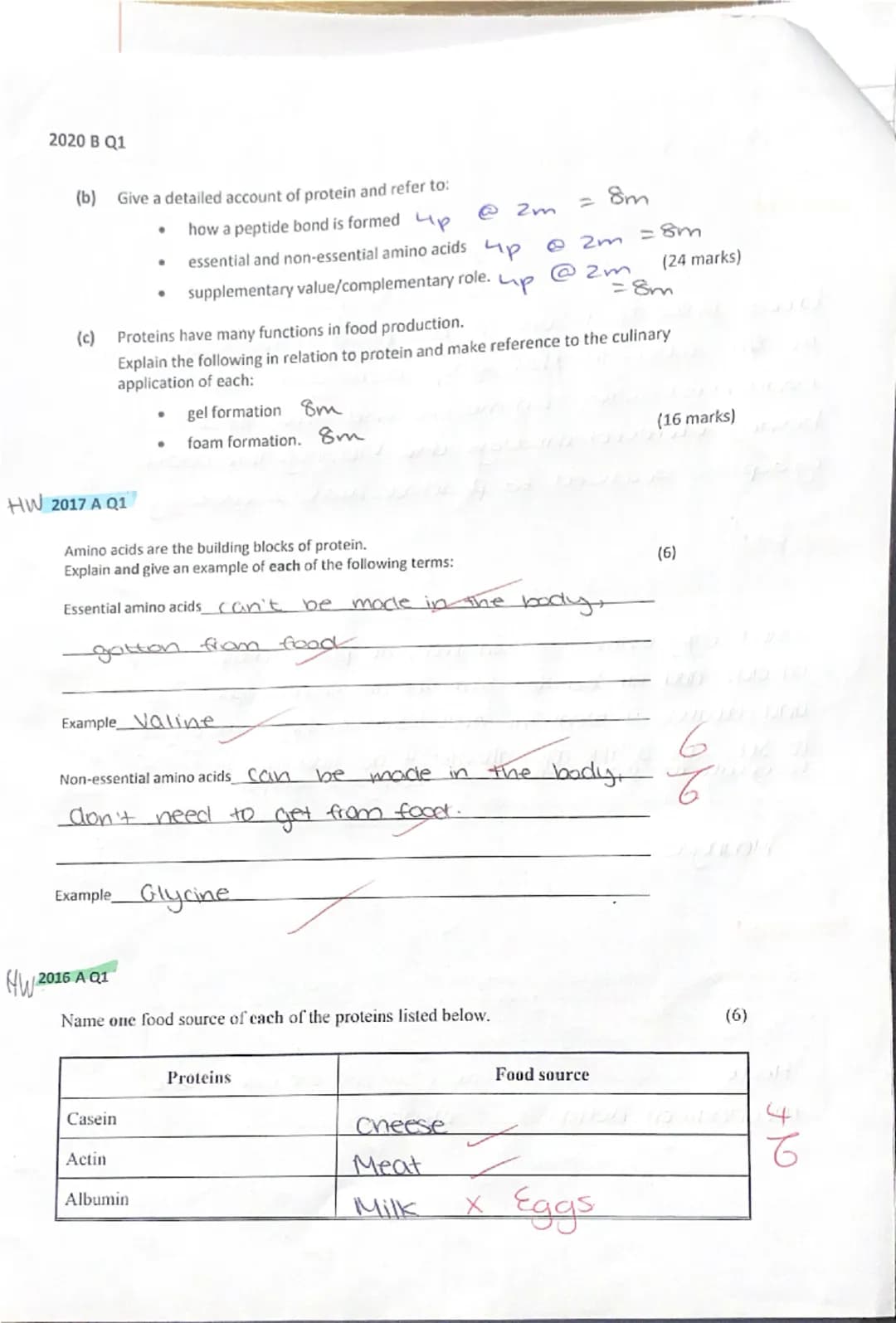
Amino Acids and Protein Types
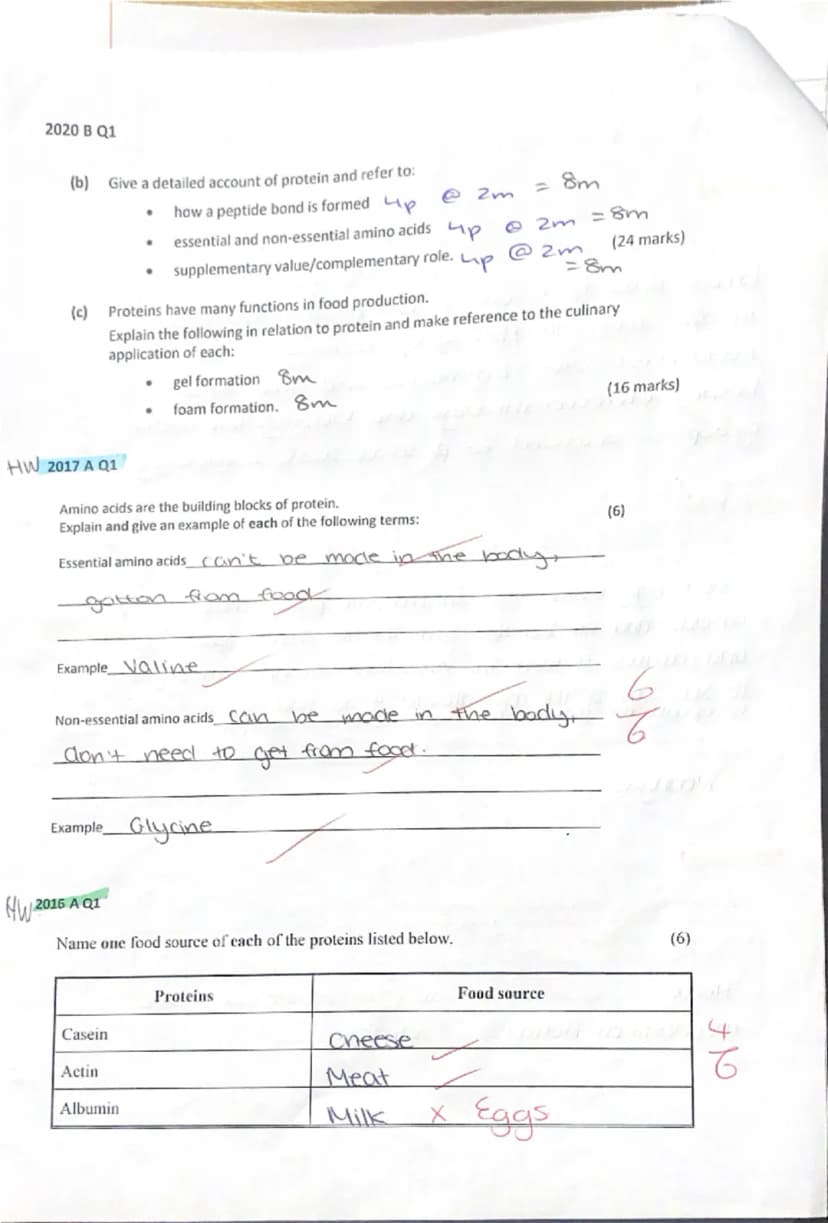
Understanding amino acids is crucial for protein questions. They're the building blocks of proteins and are classified as essential or non-essential. Essential amino acids cannot be produced by your body and must be obtained from food - valine is a good example to remember. Non-essential amino acids can be synthesised in your body, such as glycine.
Exams often ask about specific proteins in foods. Casein is found in cheese, actin in meat, and albumin in eggs. When discussing protein sources, know the difference between High Biological Value (HBV) proteins found in animal products and Low Biological Value (LBV) proteins found in plant sources like wheat (gluten).
For long-answer questions, be ready to explain peptide bond formation - how amino acids join together. You might also need to explain the supplementary value or complementary role of proteins, which refers to how combining different protein sources can improve the overall protein quality of a meal.
Exam tip: Questions about protein function in food production commonly ask about gel formation and foam formation. Be prepared to explain both processes and provide specific culinary applications for each.
3
of 4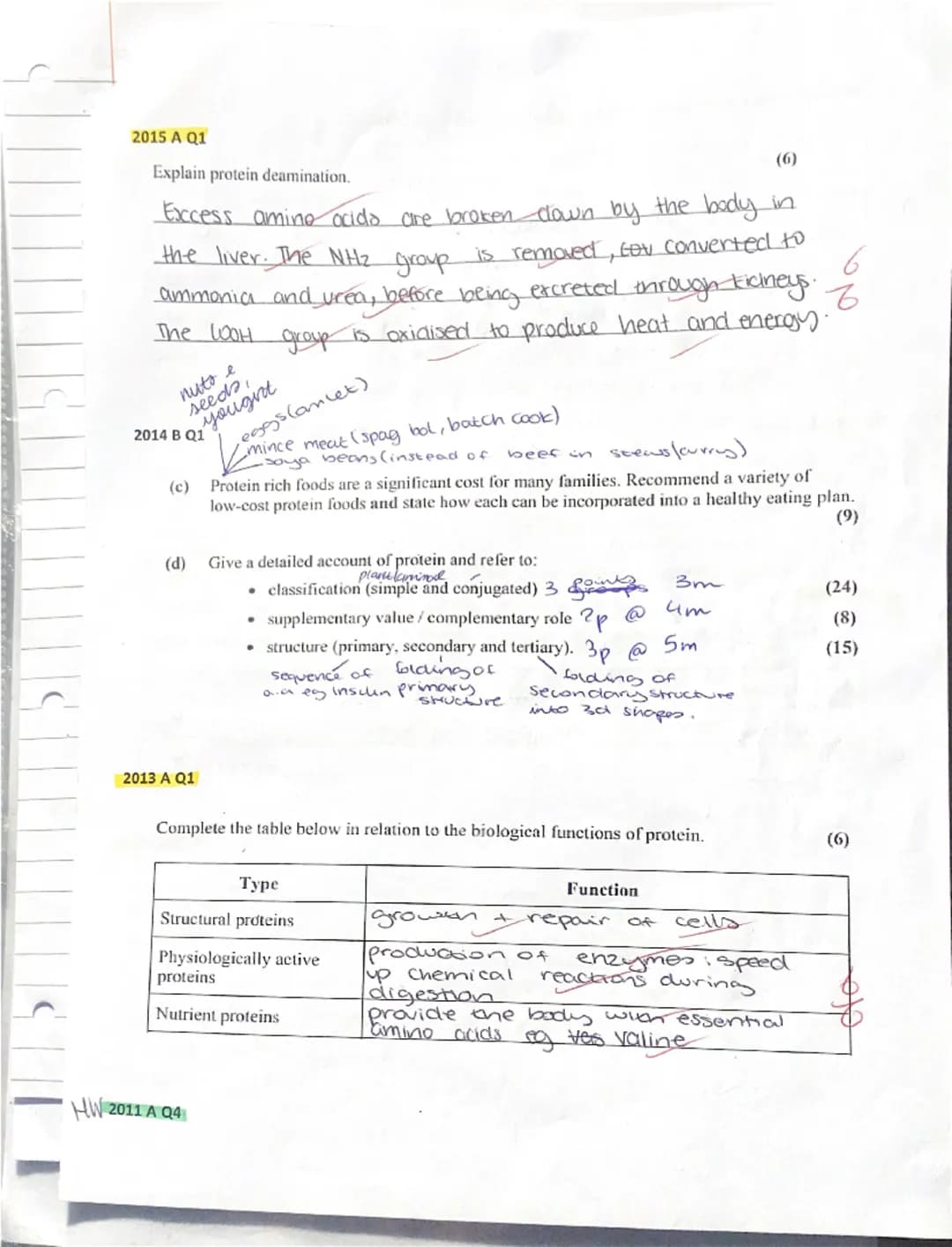
Protein Sources and Digestion
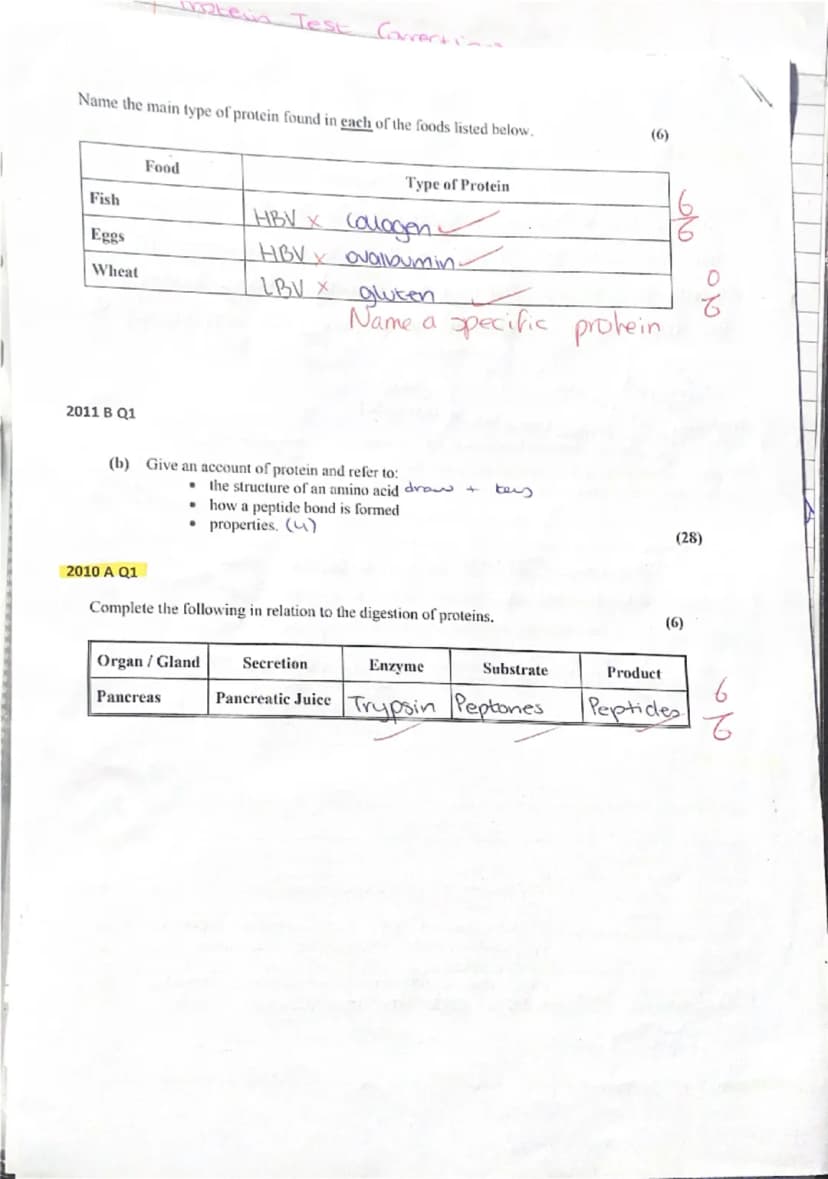
When identifying proteins in specific foods, remember that fish contains collagen (not simply HBV), eggs contain ovalbumin, and wheat contains gluten. These specific protein names score higher marks than general classifications like HBV or LBV.
For questions on protein structure, be prepared to draw an amino acid structure and label its components. You'll need to show the amino group (NH₂), carboxyl group (COOH), and R group (variable side chain). Knowing how a peptide bond forms between amino acids is essential - it involves the COOH group of one amino acid joining with the NH₂ group of another, releasing water.
Questions on protein digestion require knowledge of organs, secretions, and enzymes. For example, the pancreas secretes pancreatic juice containing the enzyme trypsin, which acts on peptones to produce peptides. Understanding this digestive pathway is frequently tested in protein questions.
Quick revision: For any protein question, think about its structure (amino acids, peptide bonds), function (in body and food), sources (animal vs plant), and how it behaves when heated or mechanically treated.
4
of 4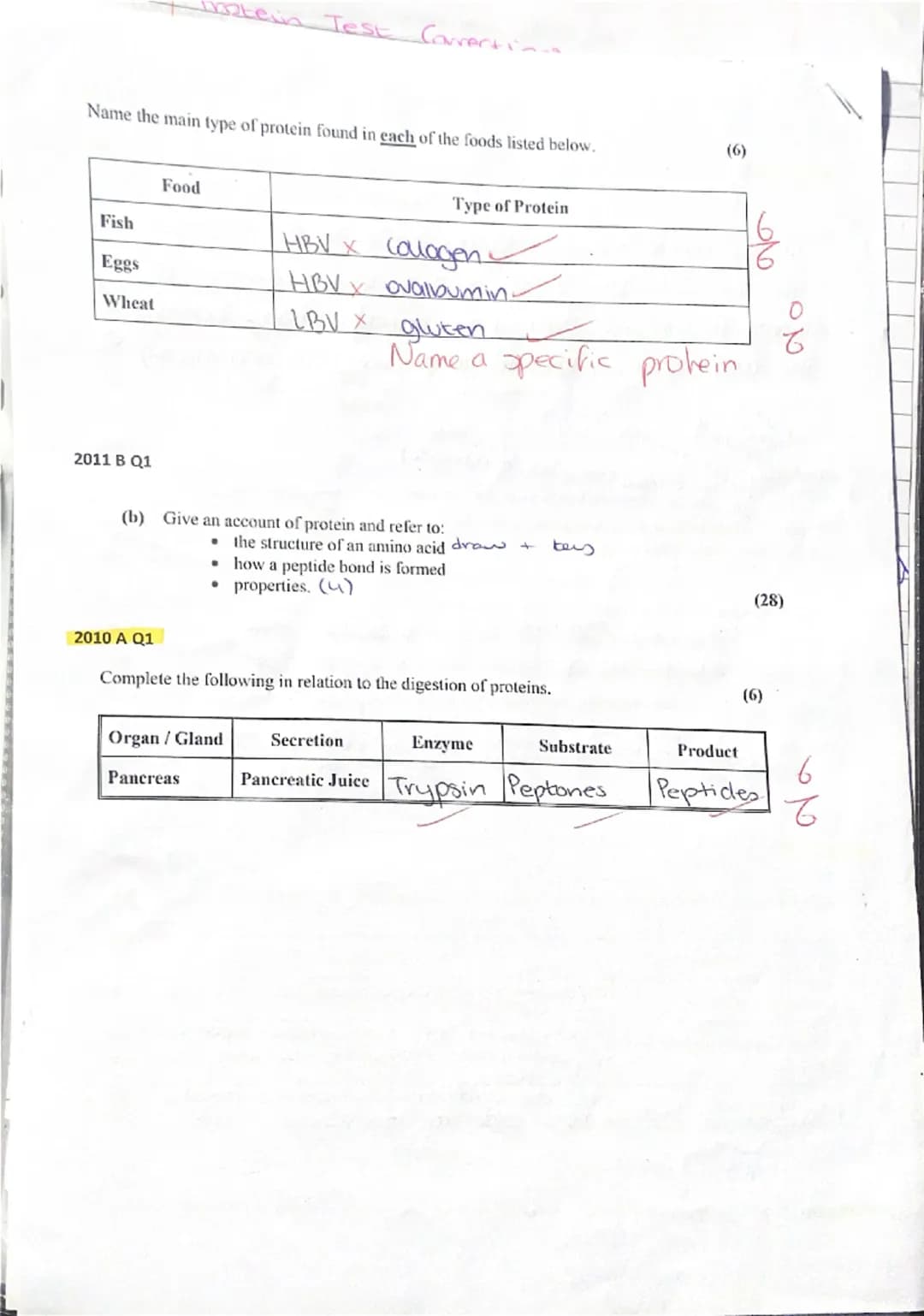
We thought you’d never ask...
What is the Knowunity AI companion?
Our AI companion is specifically built for the needs of students. Based on the millions of content pieces we have on the platform we can provide truly meaningful and relevant answers to students. But its not only about answers, the companion is even more about guiding students through their daily learning challenges, with personalised study plans, quizzes or content pieces in the chat and 100% personalisation based on the students skills and developments.
Where can I download the Knowunity app?
You can download the app in the Google Play Store and in the Apple App Store.
Is Knowunity really free of charge?
That's right! Enjoy free access to study content, connect with fellow students, and get instant help – all at your fingertips.
Most popular content in Other
2Most popular content
9 Irish
IrishIrish oral questions and answers
Questions and answers for the leaving cert oral
5th Year4264
 English
Key Quotes : Sive
Key Quotes and explanations: Sive
6th Year2842
IrishIrish oral questions
Outline of oral questions
5th Year2055
IrishIníon- le hÁine Durkin
Aine Durkin’s poem, Iníon: Themes & summary
5th Year850
IrishIrish poetry 2027
Iníon + Dínit an Bhróin
5th Year1133
IrishLC HL notes- Iníon (poem)
Includes poem in English and Irish, theme, key words & phrases
5th Year2284
EnglishCultural Context : Shawshank Redemption : Sive : Small Things Like These
Comparative Study : Cultural Context : Shawshank Redemption, Sive and Small Things Like These
6th Year1430
IrishMo Ghrá-sa (Idir Lúibíní)
Notes on mo ghrá-sa
5th Year380
IrishAn Gaeilge Aiste
Irish Language essay
6th Year1320
Can't find what you're looking for? Explore other subjects.
Students love us — and so will you.
4.6/5App Store
4.7/5Google Play
The app is very easy to use and well designed. I have found everything I was looking for so far and have been able to learn a lot from the presentations! I will definitely use the app for a class assignment! And of course it also helps a lot as an inspiration.
Stefan SiOS user
This app is really great. There are so many study notes and help [...]. My problem subject is French, for example, and the app has so many options for help. Thanks to this app, I have improved my French. I would recommend it to anyone.
Samantha KlichAndroid user
Wow, I am really amazed. I just tried the app because I've seen it advertised many times and was absolutely stunned. This app is THE HELP you want for school and above all, it offers so many things, such as workouts and fact sheets, which have been VERY helpful to me personally.
AnnaiOS user
Other3 views·Updated Jun 5, 2026·4 pagesComprehensive Protein Test Preparation Guide
K
Keira Kennedy McGrath@keirakennedymcg
Protein exam questions test your understanding of key concepts like denaturation, foam formation, and protein types. This summary covers common exam topics, highlighting essential information you'll need to answer questions confidently on protein structure, properties, and culinary applications.
1
of 4
Sign up to see the content. It's free!
- Access to all documents
- Improve your grades
- Join milions of students
Protein Denaturation and Foam Formation
Protein denaturation occurs when proteins lose their structure. A common exam question asks about this process and its causes. Heat is a primary cause of denaturation, seen when egg whites coagulate at 60°C and egg yolks at 68°C. Mechanical action is another cause, demonstrated when whisking egg whites for meringues.
Deamination is another critical concept to understand. When your body has excess amino acids, they're broken down in the liver. The NH (amino) group is removed and converted to ammonia and urea, which is then excreted through the kidneys. The COOH (carboxyl) group undergoes oxidation to produce energy and heat.
Foam formation happens when proteins like egg whites are whisked. The protein chains unfold and trap air bubbles, creating a foam structure. The whisking generates heat which temporarily sets some of the albumin protein. However, if not heated enough to coagulate the protein, the foam will collapse.
Remember this! When answering questions about protein denaturation, always include both the cause (heat, mechanical action) AND a specific culinary example that demonstrates it.
2
of 4Sign up to see the content. It's free!
- Access to all documents
- Improve your grades
- Join milions of students
Amino Acids and Protein Types
Understanding amino acids is crucial for protein questions. They're the building blocks of proteins and are classified as essential or non-essential. Essential amino acids cannot be produced by your body and must be obtained from food - valine is a good example to remember. Non-essential amino acids can be synthesised in your body, such as glycine.
Exams often ask about specific proteins in foods. Casein is found in cheese, actin in meat, and albumin in eggs. When discussing protein sources, know the difference between High Biological Value (HBV) proteins found in animal products and Low Biological Value (LBV) proteins found in plant sources like wheat (gluten).
For long-answer questions, be ready to explain peptide bond formation - how amino acids join together. You might also need to explain the supplementary value or complementary role of proteins, which refers to how combining different protein sources can improve the overall protein quality of a meal.
Exam tip: Questions about protein function in food production commonly ask about gel formation and foam formation. Be prepared to explain both processes and provide specific culinary applications for each.
3
of 4Sign up to see the content. It's free!
- Access to all documents
- Improve your grades
- Join milions of students
Protein Sources and Digestion
When identifying proteins in specific foods, remember that fish contains collagen (not simply HBV), eggs contain ovalbumin, and wheat contains gluten. These specific protein names score higher marks than general classifications like HBV or LBV.
For questions on protein structure, be prepared to draw an amino acid structure and label its components. You'll need to show the amino group (NH₂), carboxyl group (COOH), and R group (variable side chain). Knowing how a peptide bond forms between amino acids is essential - it involves the COOH group of one amino acid joining with the NH₂ group of another, releasing water.
Questions on protein digestion require knowledge of organs, secretions, and enzymes. For example, the pancreas secretes pancreatic juice containing the enzyme trypsin, which acts on peptones to produce peptides. Understanding this digestive pathway is frequently tested in protein questions.
Quick revision: For any protein question, think about its structure (amino acids, peptide bonds), function (in body and food), sources (animal vs plant), and how it behaves when heated or mechanically treated.
4
of 4Sign up to see the content. It's free!
- Access to all documents
- Improve your grades
- Join milions of students
We thought you’d never ask...
What is the Knowunity AI companion?
Our AI companion is specifically built for the needs of students. Based on the millions of content pieces we have on the platform we can provide truly meaningful and relevant answers to students. But its not only about answers, the companion is even more about guiding students through their daily learning challenges, with personalised study plans, quizzes or content pieces in the chat and 100% personalisation based on the students skills and developments.
Where can I download the Knowunity app?
You can download the app in the Google Play Store and in the Apple App Store.
Is Knowunity really free of charge?
That's right! Enjoy free access to study content, connect with fellow students, and get instant help – all at your fingertips.
Most popular content in Other
2Most popular content
9IrishIrish oral questions and answers
Questions and answers for the leaving cert oral
5th Year4264
EnglishKey Quotes : Sive
Key Quotes and explanations: Sive
6th Year2842
IrishIrish oral questions
Outline of oral questions
5th Year2055
IrishIníon- le hÁine Durkin
Aine Durkin’s poem, Iníon: Themes & summary
5th Year850
IrishIrish poetry 2027
Iníon + Dínit an Bhróin
5th Year1133
IrishLC HL notes- Iníon (poem)
Includes poem in English and Irish, theme, key words & phrases
5th Year2284
EnglishCultural Context : Shawshank Redemption : Sive : Small Things Like These
Comparative Study : Cultural Context : Shawshank Redemption, Sive and Small Things Like These
6th Year1430
IrishMo Ghrá-sa (Idir Lúibíní)
Notes on mo ghrá-sa
5th Year380
IrishAn Gaeilge Aiste
Irish Language essay
6th Year1320
Can't find what you're looking for? Explore other subjects.
Students love us — and so will you.
4.6/5App Store
4.7/5Google Play
The app is very easy to use and well designed. I have found everything I was looking for so far and have been able to learn a lot from the presentations! I will definitely use the app for a class assignment! And of course it also helps a lot as an inspiration.
Stefan SiOS user
This app is really great. There are so many study notes and help [...]. My problem subject is French, for example, and the app has so many options for help. Thanks to this app, I have improved my French. I would recommend it to anyone.
Samantha KlichAndroid user
Wow, I am really amazed. I just tried the app because I've seen it advertised many times and was absolutely stunned. This app is THE HELP you want for school and above all, it offers so many things, such as workouts and fact sheets, which have been VERY helpful to me personally.
AnnaiOS user