
Ever wondered how The Beatles created their groundbreaking sound? Let's...
 Music5 views·Updated Jun 15, 2026·3 pages
The Beatles' Sgt. Pepper's and Sixty-Four Notes
C
Cayla Martin@caylamartin
1 / 3
1
of 3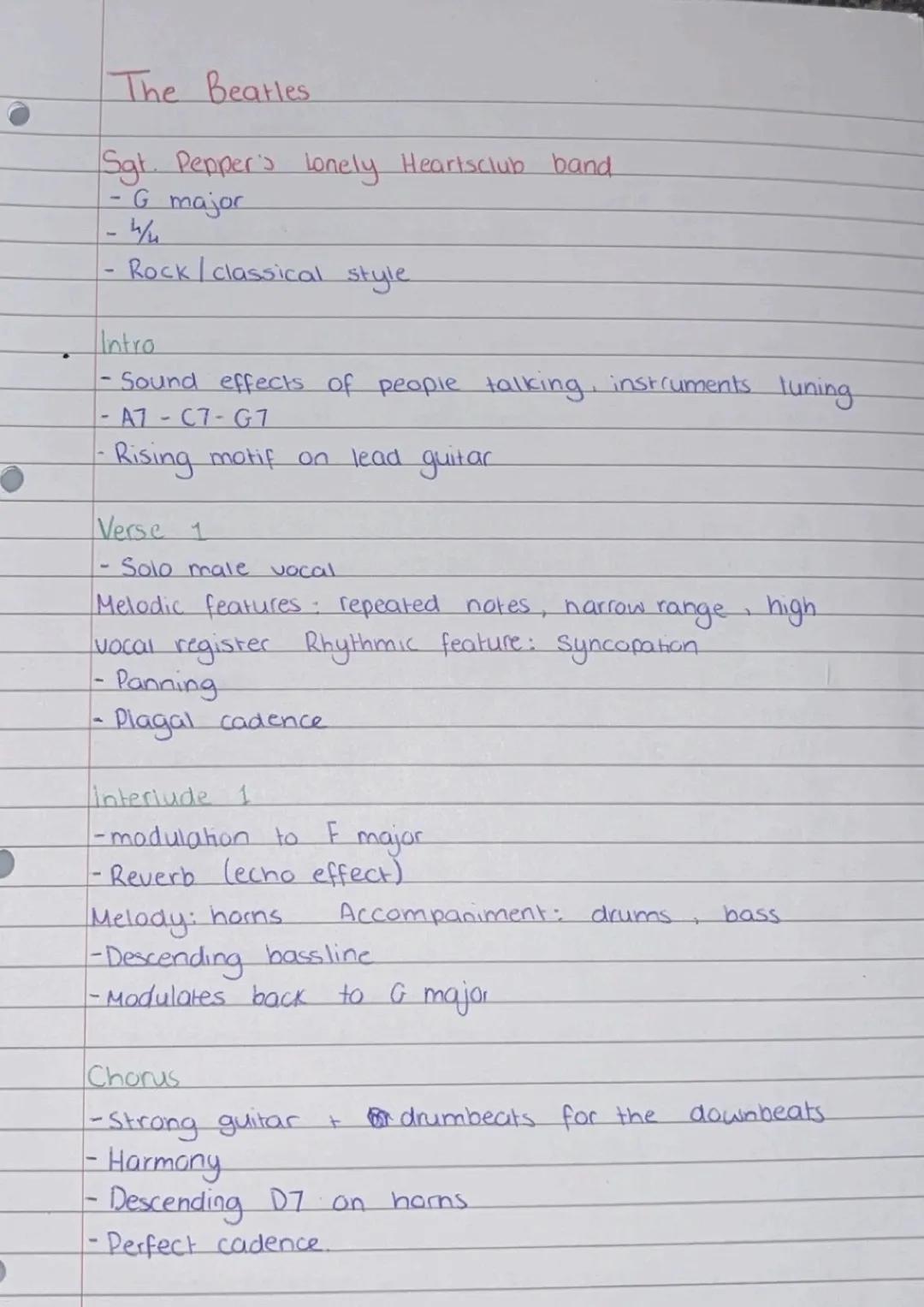
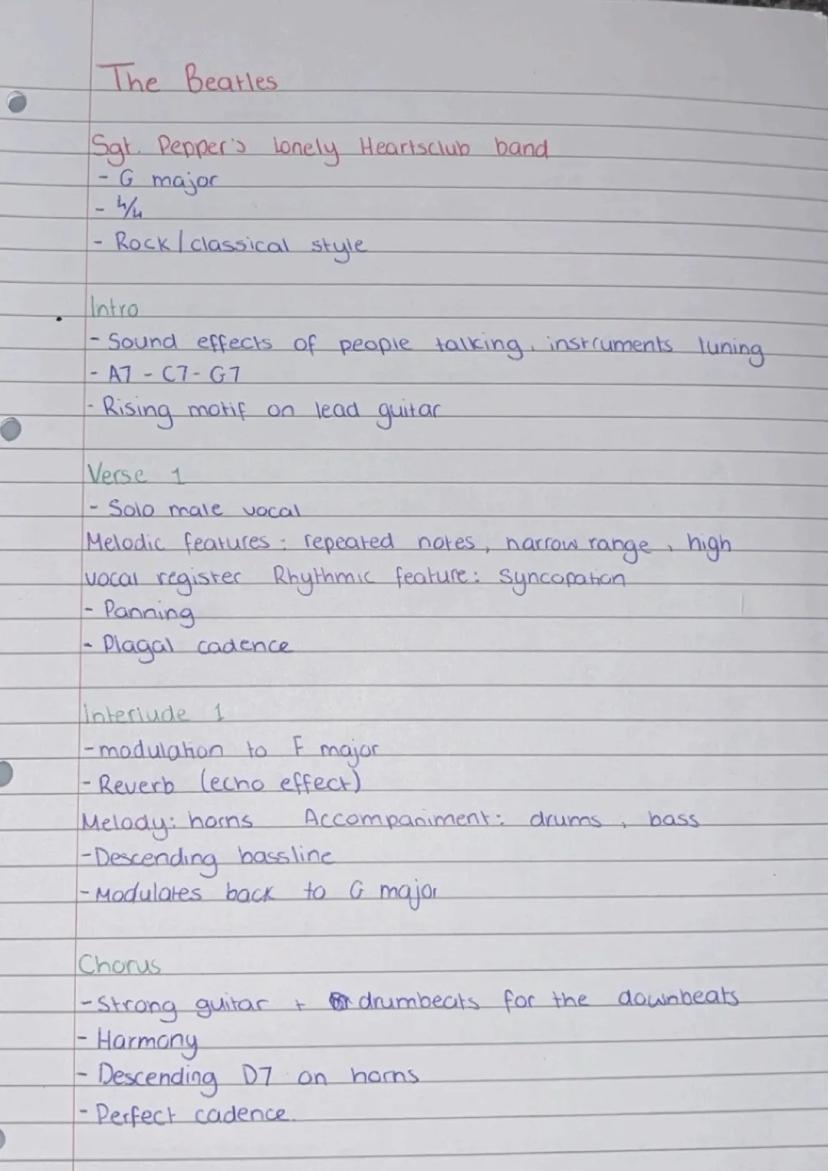
Sgt. Pepper's Lonely Hearts Club Band - The Title Track
This opening song immediately grabs your attention with sound effects of crowds and instruments tuning up, making you feel like you're at a live concert. The Beatles cleverly used this to create atmosphere before the music even starts.
The intro features a rising guitar motif over A7-C7-G7 chords, building excitement. Written in G major with a solid 4/4 time signature, it blends rock with classical elements - something pretty revolutionary for 1967.
Verse 1 showcases Paul McCartney's vocals with interesting features like syncopation and repeated notes in a narrow, high range. The Beatles used panning to move sounds between left and right speakers, and ended with a plagal cadence (that "Amen" chord progression).
Quick Tip: Listen for how the song modulates to F major in the interlude - this key change adds variety and keeps things interesting!
2
of 3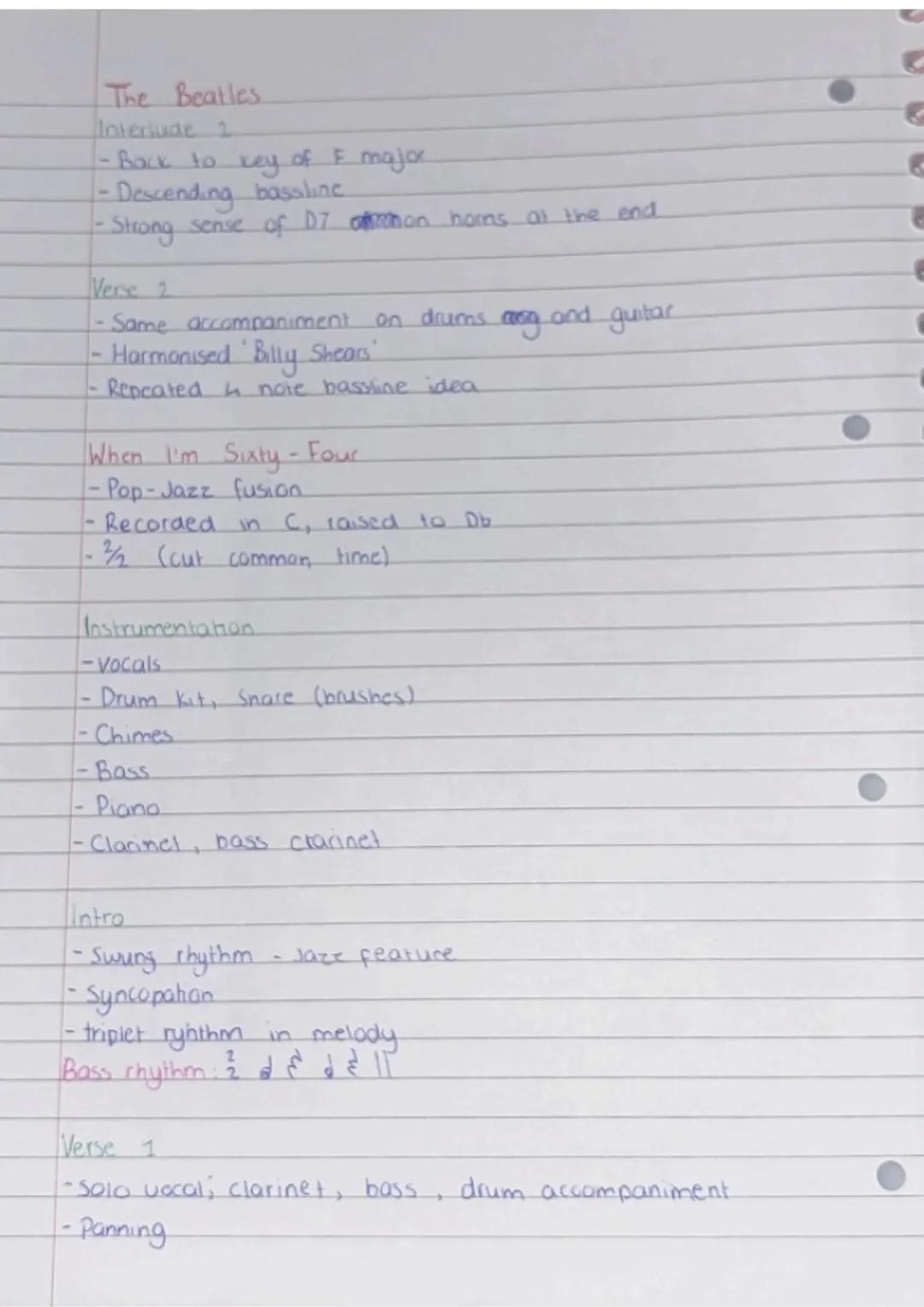
From Interlude to "When I'm Sixty-Four"
The interlude cleverly shifts to F major with reverb effects creating that dreamy, echoing sound. Horn melodies take centre stage while drums and bass provide the foundation, featuring a descending bassline that smoothly guides us back to G major.
The chorus hits hard with strong guitar and drum beats emphasising the downbeats, plus tight harmonies. You'll hear descending D7 chords on the horns leading to a satisfying perfect cadence - the most conclusive way to end a musical phrase.
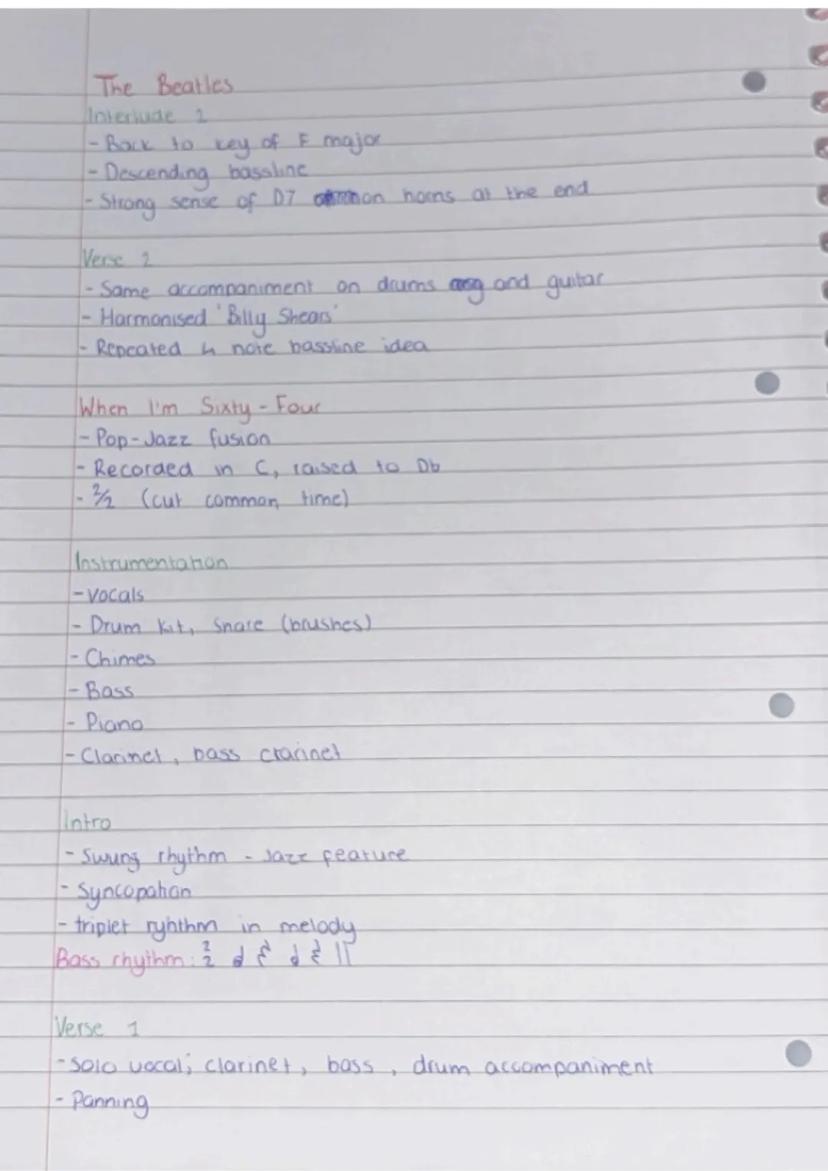
"When I'm Sixty-Four" completely changes the mood with its pop-jazz fusion style. Originally recorded in C major but sped up to D♭ major, it uses 3/4 time signature (cut common time) giving it that waltz-like feel.
The instrumentation gets sophisticated here - clarinet, bass clarinet, chimes, and drums played with brushes instead of sticks create that vintage jazz club atmosphere.
Did You Know: The swung rhythm and triplet patterns in the melody are classic jazz features that The Beatles borrowed to create this unique sound!
3
of 3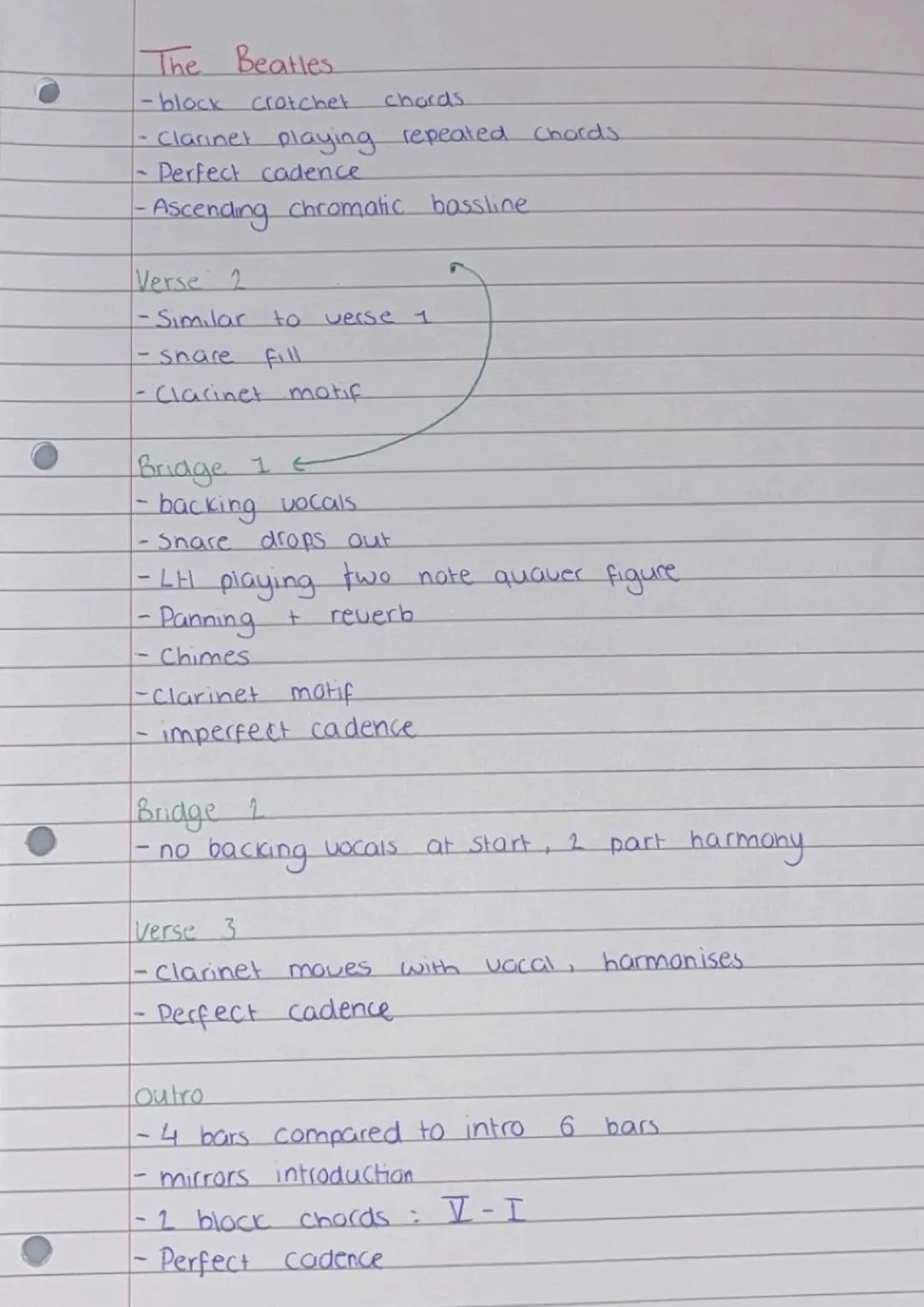
"When I'm Sixty-Four" - Structure and Techniques
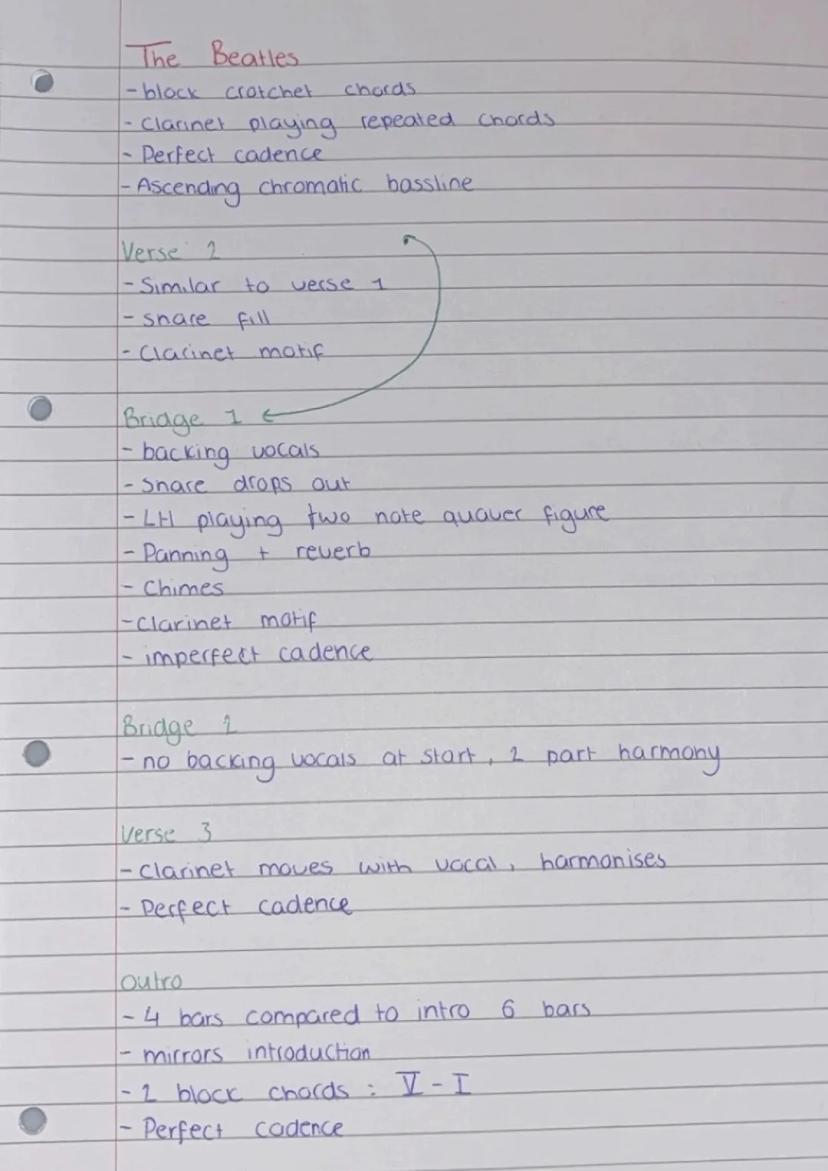
Verse 1 keeps things simple with solo vocals supported by clarinet, bass, and drums. The Beatles used panning again to create spatial interest, while block crotchet chords provide a steady harmonic foundation.
The clarinet playing repeated chords and an ascending chromatic bassline (notes moving up in semitones) add sophistication. Each verse ends with a perfect cadence for that satisfying resolution.
Bridge sections show The Beatles' attention to detail - backing vocals appear and disappear, the snare drum drops out completely, and chimes add sparkle. Reverb effects create space while the clarinet motif weaves throughout.
The outro is particularly clever - it's only 4 bars compared to the 6-bar intro, creating a neat mirror effect. Those final block chords with a perfect cadence bring everything to a tidy close.
Pro Analysis: Notice how the clarinet harmonises with the vocal in Verse 3 - this shows The Beatles treating rock instruments and classical instruments as equals in their arrangements!
We thought you’d never ask...
What is the Knowunity AI companion?
Our AI companion is specifically built for the needs of students. Based on the millions of content pieces we have on the platform we can provide truly meaningful and relevant answers to students. But its not only about answers, the companion is even more about guiding students through their daily learning challenges, with personalised study plans, quizzes or content pieces in the chat and 100% personalisation based on the students skills and developments.
Where can I download the Knowunity app?
You can download the app in the Google Play Store and in the Apple App Store.
Is Knowunity really free of charge?
That's right! Enjoy free access to study content, connect with fellow students, and get instant help – all at your fingertips.
Most popular content in Music
2MusicRhythm and Beat
Students will explore the steady pulse (beat) and the patterns of sounds and silences (rhythm) in music, including tempo (speed) and duration of notes.
1st Year50
MusicSean-nós singing
Main aspects of this Irish essay into bulkier material (may need to add a little more content, otherwise great for studying)
5th Year51
Most popular content
9 Irish
IrishIrish oral questions and answers
Questions and answers for the leaving cert oral
5th Year4264
 English
Key Quotes : Sive
Key Quotes and explanations: Sive
6th Year2842
IrishIrish oral questions
Outline of oral questions
5th Year2055
IrishIníon- le hÁine Durkin
Aine Durkin’s poem, Iníon: Themes & summary
5th Year890
IrishIrish poetry 2027
Iníon + Dínit an Bhróin
5th Year1153
IrishLC HL notes- Iníon (poem)
Includes poem in English and Irish, theme, key words & phrases
5th Year2304
EnglishCultural Context : Shawshank Redemption : Sive : Small Things Like These
Comparative Study : Cultural Context : Shawshank Redemption, Sive and Small Things Like These
6th Year1430
IrishMo Ghrá-sa (Idir Lúibíní)
Notes on mo ghrá-sa
5th Year380
IrishAn Gaeilge Aiste
Irish Language essay
6th Year1320
Can't find what you're looking for? Explore other subjects.
Students love us — and so will you.
4.6/5App Store
4.7/5Google Play
The app is very easy to use and well designed. I have found everything I was looking for so far and have been able to learn a lot from the presentations! I will definitely use the app for a class assignment! And of course it also helps a lot as an inspiration.
Stefan SiOS user
This app is really great. There are so many study notes and help [...]. My problem subject is French, for example, and the app has so many options for help. Thanks to this app, I have improved my French. I would recommend it to anyone.
Samantha KlichAndroid user
Wow, I am really amazed. I just tried the app because I've seen it advertised many times and was absolutely stunned. This app is THE HELP you want for school and above all, it offers so many things, such as workouts and fact sheets, which have been VERY helpful to me personally.
AnnaiOS user
Music5 views·Updated Jun 15, 2026·3 pagesThe Beatles' Sgt. Pepper's and Sixty-Four Notes
C
Cayla Martin@caylamartin
Ever wondered how The Beatles created their groundbreaking sound? Let's dive into two iconic tracks from their legendary album "Sgt. Pepper's Lonely Hearts Club Band" and see exactly what musical tricks they used to revolutionise popular music.
1
of 3
Sign up to see the content. It's free!
- Access to all documents
- Improve your grades
- Join milions of students
Sgt. Pepper's Lonely Hearts Club Band - The Title Track
This opening song immediately grabs your attention with sound effects of crowds and instruments tuning up, making you feel like you're at a live concert. The Beatles cleverly used this to create atmosphere before the music even starts.
The intro features a rising guitar motif over A7-C7-G7 chords, building excitement. Written in G major with a solid 4/4 time signature, it blends rock with classical elements - something pretty revolutionary for 1967.
Verse 1 showcases Paul McCartney's vocals with interesting features like syncopation and repeated notes in a narrow, high range. The Beatles used panning to move sounds between left and right speakers, and ended with a plagal cadence (that "Amen" chord progression).
Quick Tip: Listen for how the song modulates to F major in the interlude - this key change adds variety and keeps things interesting!
2
of 3Sign up to see the content. It's free!
- Access to all documents
- Improve your grades
- Join milions of students
From Interlude to "When I'm Sixty-Four"
The interlude cleverly shifts to F major with reverb effects creating that dreamy, echoing sound. Horn melodies take centre stage while drums and bass provide the foundation, featuring a descending bassline that smoothly guides us back to G major.
The chorus hits hard with strong guitar and drum beats emphasising the downbeats, plus tight harmonies. You'll hear descending D7 chords on the horns leading to a satisfying perfect cadence - the most conclusive way to end a musical phrase.
"When I'm Sixty-Four" completely changes the mood with its pop-jazz fusion style. Originally recorded in C major but sped up to D♭ major, it uses 3/4 time signature (cut common time) giving it that waltz-like feel.
The instrumentation gets sophisticated here - clarinet, bass clarinet, chimes, and drums played with brushes instead of sticks create that vintage jazz club atmosphere.
Did You Know: The swung rhythm and triplet patterns in the melody are classic jazz features that The Beatles borrowed to create this unique sound!
3
of 3Sign up to see the content. It's free!
- Access to all documents
- Improve your grades
- Join milions of students
"When I'm Sixty-Four" - Structure and Techniques
Verse 1 keeps things simple with solo vocals supported by clarinet, bass, and drums. The Beatles used panning again to create spatial interest, while block crotchet chords provide a steady harmonic foundation.
The clarinet playing repeated chords and an ascending chromatic bassline (notes moving up in semitones) add sophistication. Each verse ends with a perfect cadence for that satisfying resolution.
Bridge sections show The Beatles' attention to detail - backing vocals appear and disappear, the snare drum drops out completely, and chimes add sparkle. Reverb effects create space while the clarinet motif weaves throughout.
The outro is particularly clever - it's only 4 bars compared to the 6-bar intro, creating a neat mirror effect. Those final block chords with a perfect cadence bring everything to a tidy close.
Pro Analysis: Notice how the clarinet harmonises with the vocal in Verse 3 - this shows The Beatles treating rock instruments and classical instruments as equals in their arrangements!
We thought you’d never ask...
What is the Knowunity AI companion?
Our AI companion is specifically built for the needs of students. Based on the millions of content pieces we have on the platform we can provide truly meaningful and relevant answers to students. But its not only about answers, the companion is even more about guiding students through their daily learning challenges, with personalised study plans, quizzes or content pieces in the chat and 100% personalisation based on the students skills and developments.
Where can I download the Knowunity app?
You can download the app in the Google Play Store and in the Apple App Store.
Is Knowunity really free of charge?
That's right! Enjoy free access to study content, connect with fellow students, and get instant help – all at your fingertips.
Most popular content in Music
2MusicRhythm and Beat
Students will explore the steady pulse (beat) and the patterns of sounds and silences (rhythm) in music, including tempo (speed) and duration of notes.
1st Year50
MusicSean-nós singing
Main aspects of this Irish essay into bulkier material (may need to add a little more content, otherwise great for studying)
5th Year51
Most popular content
9IrishIrish oral questions and answers
Questions and answers for the leaving cert oral
5th Year4264
EnglishKey Quotes : Sive
Key Quotes and explanations: Sive
6th Year2842
IrishIrish oral questions
Outline of oral questions
5th Year2055
IrishIníon- le hÁine Durkin
Aine Durkin’s poem, Iníon: Themes & summary
5th Year890
IrishIrish poetry 2027
Iníon + Dínit an Bhróin
5th Year1153
IrishLC HL notes- Iníon (poem)
Includes poem in English and Irish, theme, key words & phrases
5th Year2304
EnglishCultural Context : Shawshank Redemption : Sive : Small Things Like These
Comparative Study : Cultural Context : Shawshank Redemption, Sive and Small Things Like These
6th Year1430
IrishMo Ghrá-sa (Idir Lúibíní)
Notes on mo ghrá-sa
5th Year380
IrishAn Gaeilge Aiste
Irish Language essay
6th Year1320
Can't find what you're looking for? Explore other subjects.
Students love us — and so will you.
4.6/5App Store
4.7/5Google Play
The app is very easy to use and well designed. I have found everything I was looking for so far and have been able to learn a lot from the presentations! I will definitely use the app for a class assignment! And of course it also helps a lot as an inspiration.
Stefan SiOS user
This app is really great. There are so many study notes and help [...]. My problem subject is French, for example, and the app has so many options for help. Thanks to this app, I have improved my French. I would recommend it to anyone.
Samantha KlichAndroid user
Wow, I am really amazed. I just tried the app because I've seen it advertised many times and was absolutely stunned. This app is THE HELP you want for school and above all, it offers so many things, such as workouts and fact sheets, which have been VERY helpful to me personally.
AnnaiOS user