
This guide covers three crucial maths topics you'll need to...
 Mathematics4 views·Updated Jun 5, 2026·7 pages
Easy Math Notes for Quick Learning
M
megan roche @meganroch_zj4pd

1 / 7
1
of 7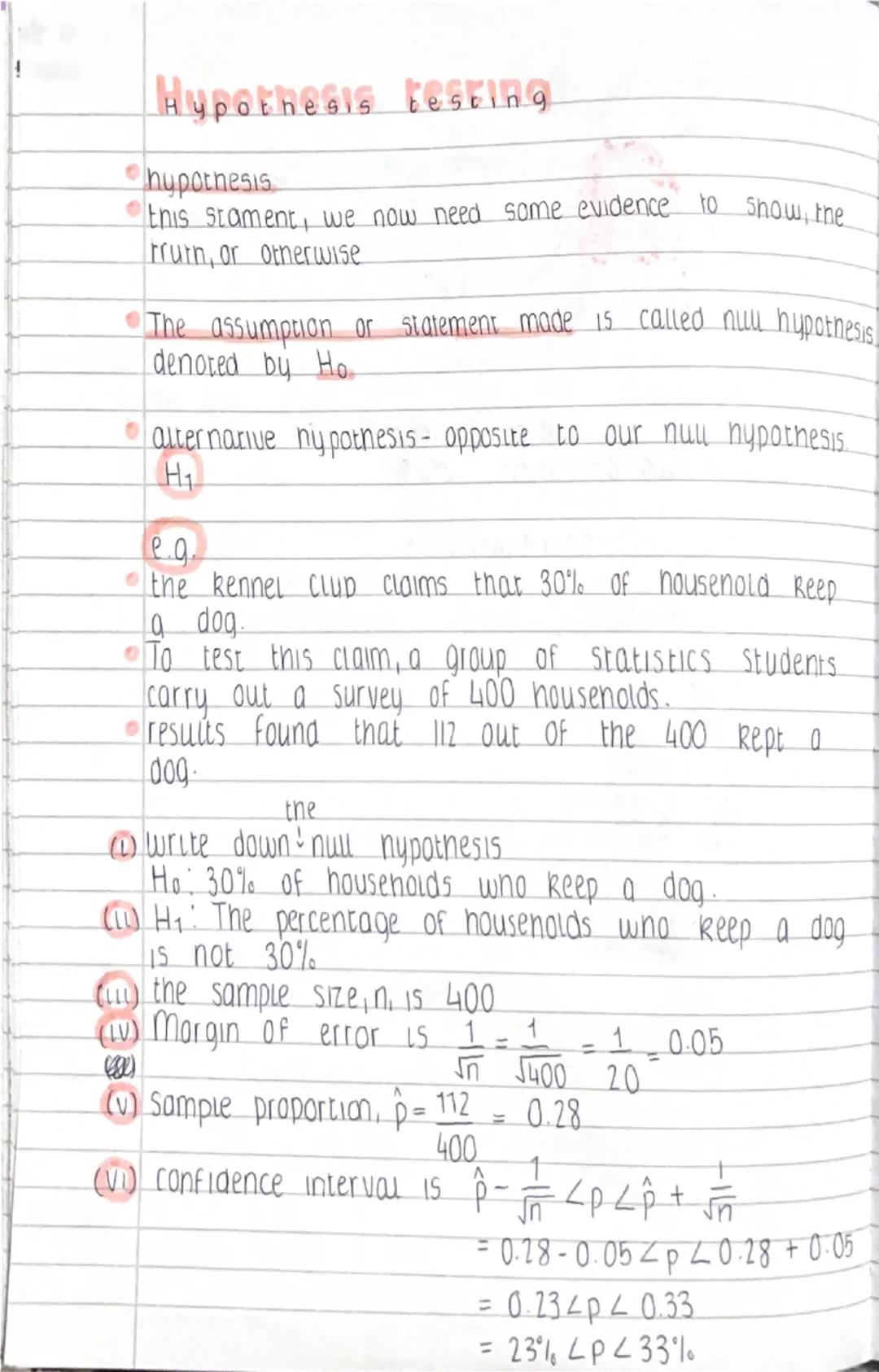
Hypothesis Testing Basics
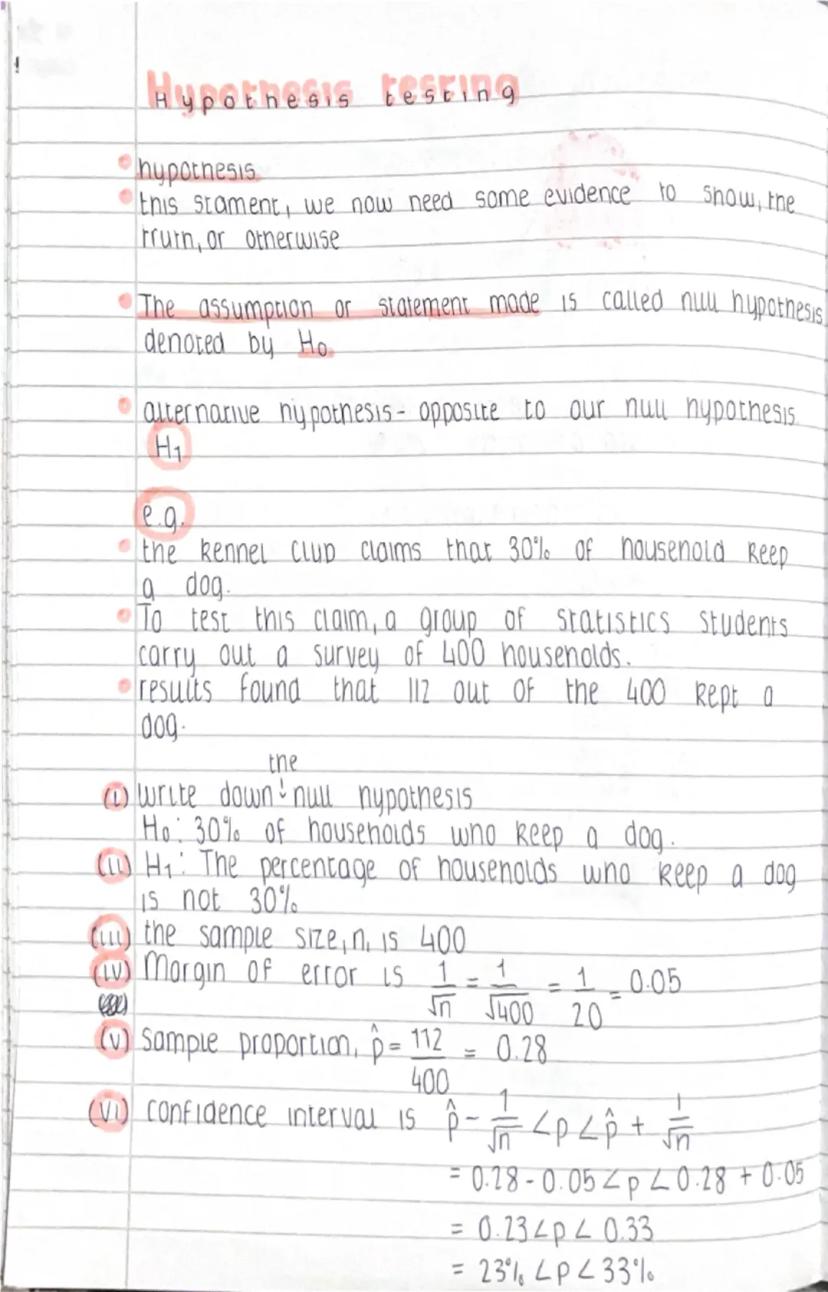
Ever wondered how statisticians decide if claims are actually true? Hypothesis testing is your tool for examining whether statements backed by data hold up to scrutiny.
You'll work with two key ideas: the null hypothesis (H₀) - this is the original claim or assumption you're testing. Then there's the alternative hypothesis (H₁) - basically the opposite of what you're testing.
Here's how it works in practice: if the Kennel Club claims 30% of households keep dogs, your H₀ would be "30% of households keep a dog" and your H₁ would be "the percentage is not 30%". When you survey 400 households and find 112 have dogs, you can calculate whether this supports or contradicts the original claim.
Quick Tip: The sample proportion is simply your result divided by total surveyed - so 112/400 = 0.28 or 28%.
2
of 7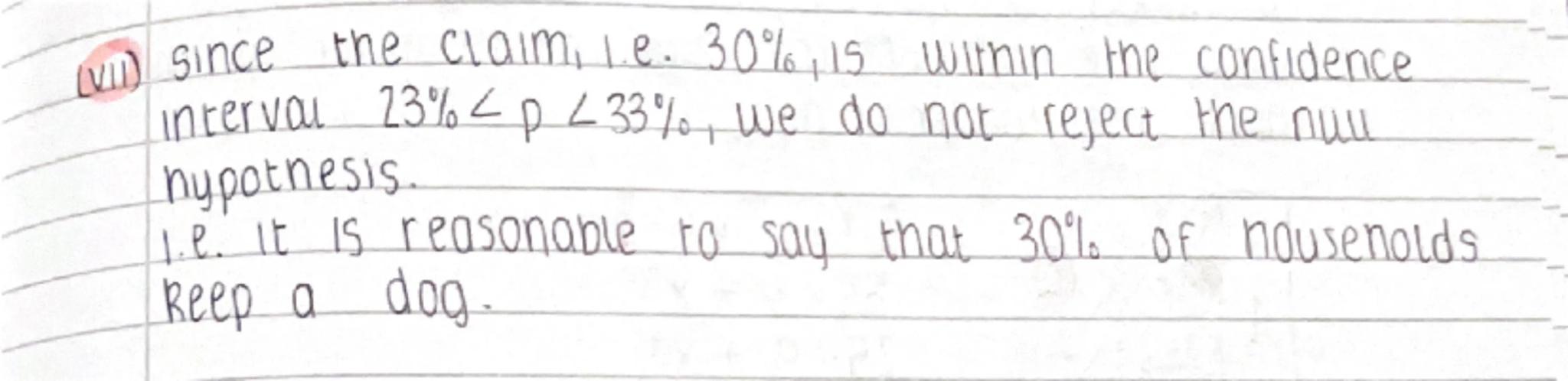
Testing Your Hypothesis
Once you've got your data, you need to work out the margin of error using the formula 1/√n, where n is your sample size. With 400 households, that's 1/√400 = 0.05 or 5%.
Your confidence interval tells you the range where the true value likely sits. You calculate this as: sample proportion ± margin of error. So 0.28 ± 0.05 gives you 23% to 33%.
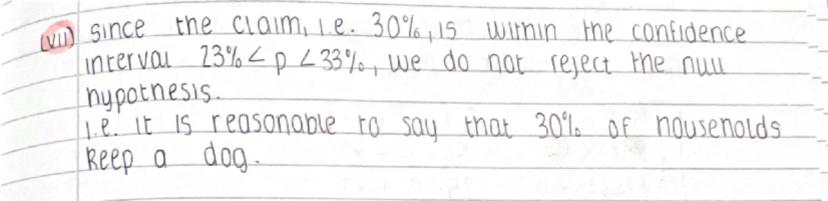
The crucial decision comes next: if your original claim (30%) falls within this confidence interval, you don't reject the null hypothesis. Since 30% sits comfortably between 23% and 33%, the Kennel Club's claim seems reasonable.
Remember: You're not proving the claim is definitely true - just that your evidence doesn't contradict it enough to reject it.
3
of 7
Circle Calculations
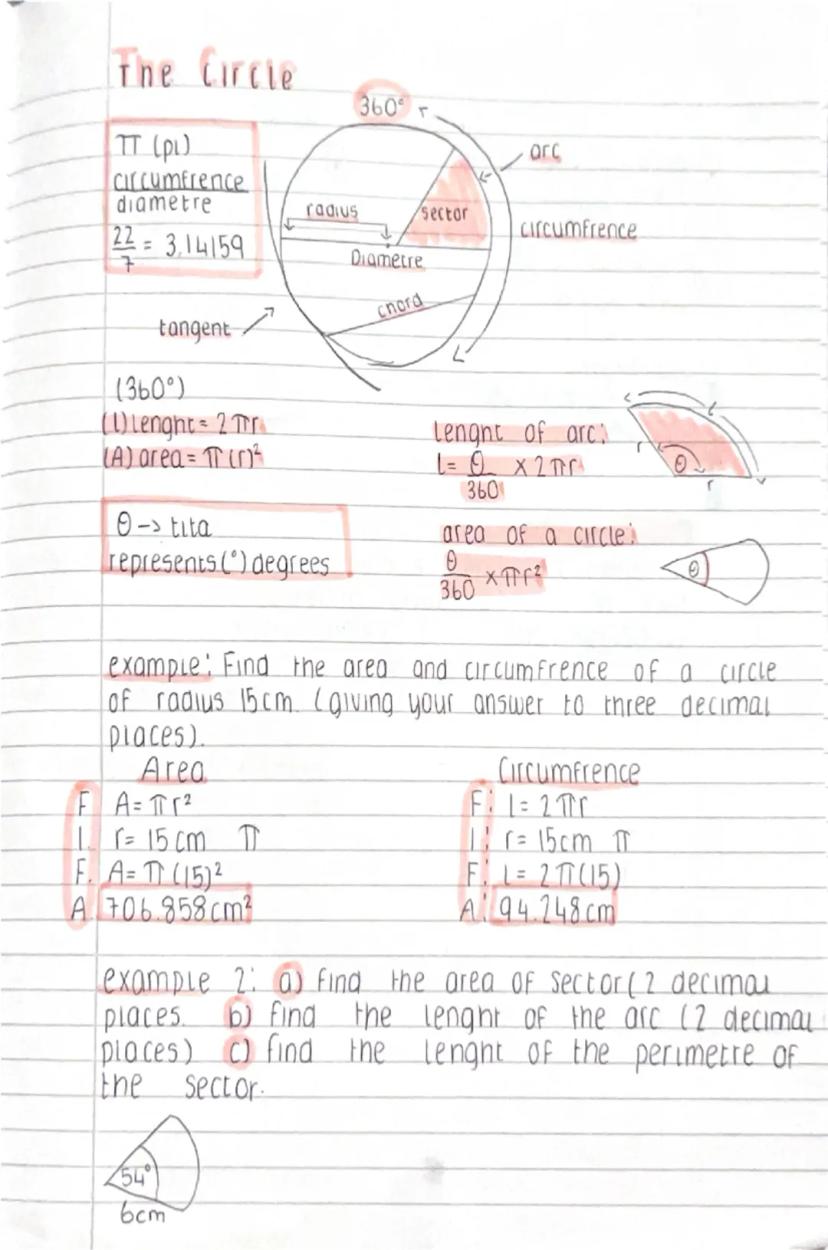
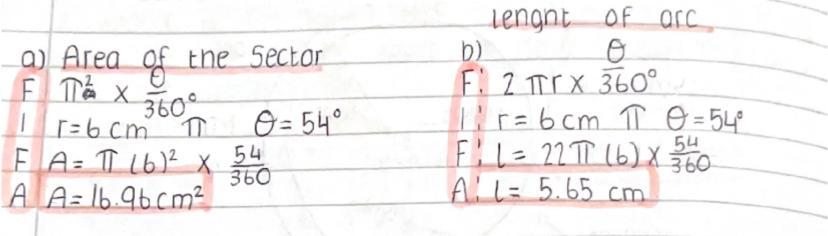
Circles pop up everywhere in maths, so getting comfortable with circumference and area calculations is essential. The key formulas are C = 2πr for circumference and A = πr² for area.
When working with arcs and sectors , you're dealing with portions of the full circle. The arc length formula is L = (θ/360°) × 2πr, where θ is your angle in degrees.
For sector area, use A = (θ/360°) × πr². These formulas essentially ask "what fraction of the full circle am I working with?" then multiply by the full circle's measurement.
Pro Tip: Always check whether your answer makes sense - a 90° sector should be exactly quarter of the full circle's area.
4
of 7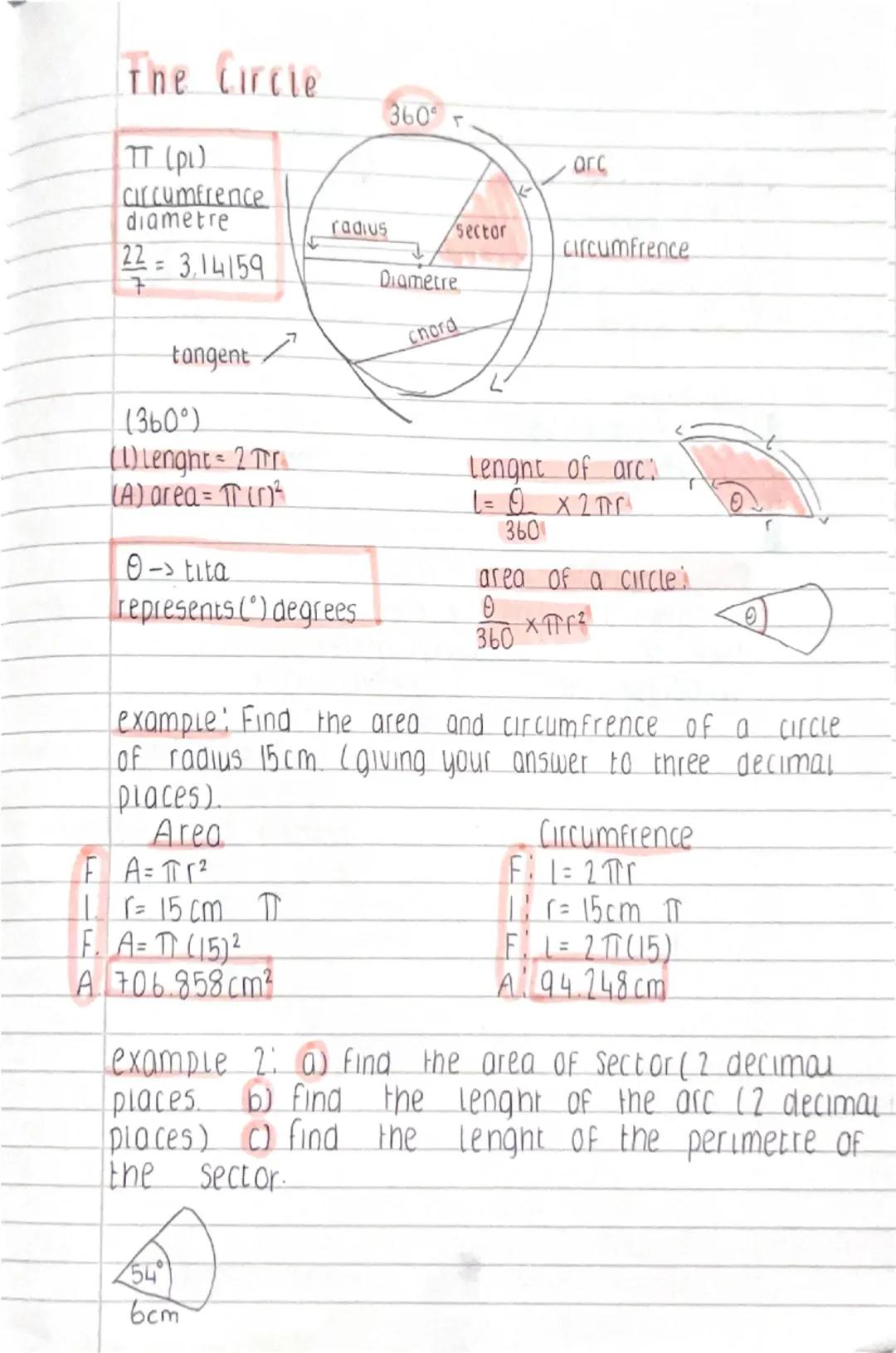
Counting and Arrangements
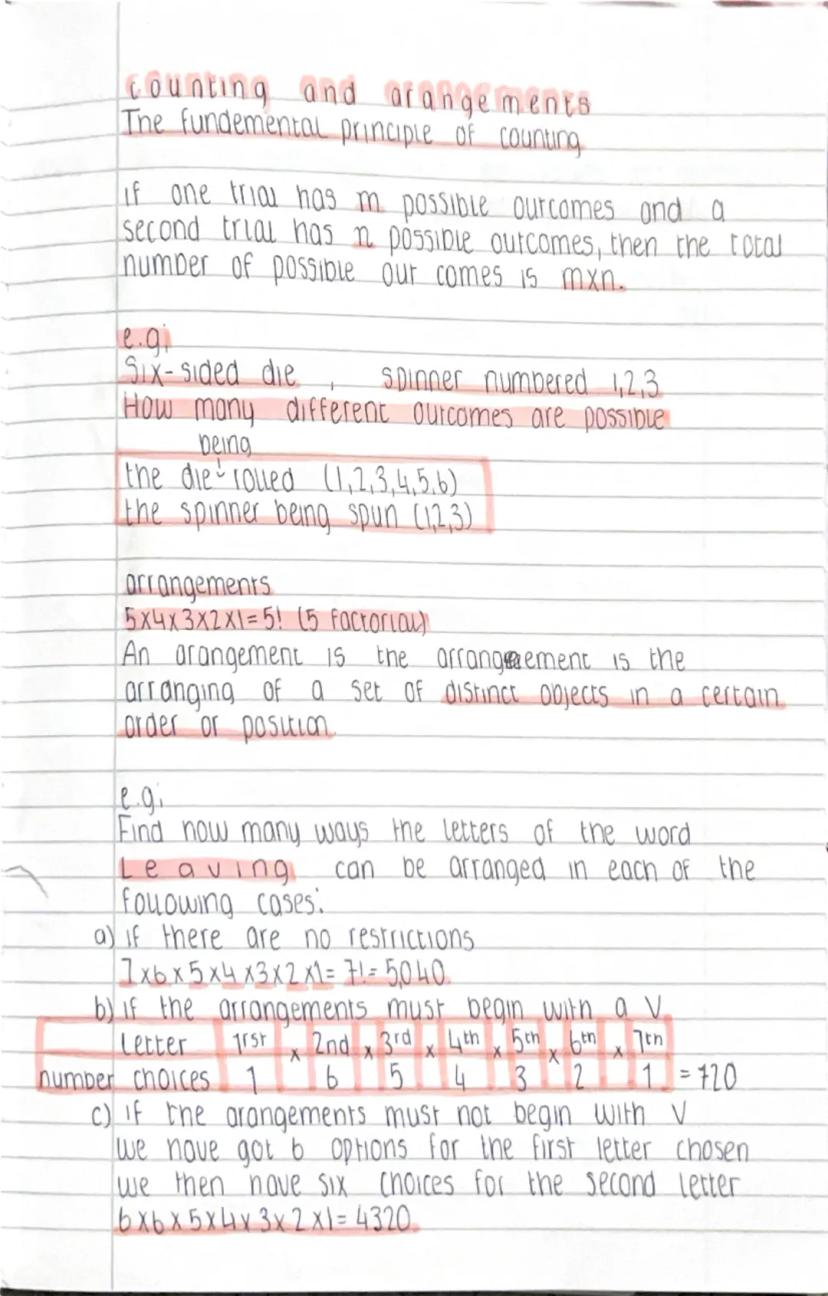
The fundamental principle of counting is brilliantly simple: if one event has m outcomes and another has n outcomes, together they have m × n total outcomes. Rolling a die (6 outcomes) and spinning a three-number spinner gives 6 × 3 = 18 possible combinations.
Arrangements (or permutations) deal with ordering distinct objects. When arranging the letters in "LEAVING", you've got 7 choices for first position, 6 for second, 5 for third, and so on. This gives 7! = 5,040 total arrangements.
Restrictions change everything though. If arrangements must start with 'V', you've only got 1 choice for first position, leaving 6! = 720 arrangements. If they can't start with 'V', you've got 6 choices for first position: 6 × 6! = 4,320 arrangements.
Key Insight: Break complex counting problems into steps - decide what goes in each position, then multiply your choices together.
5
of 7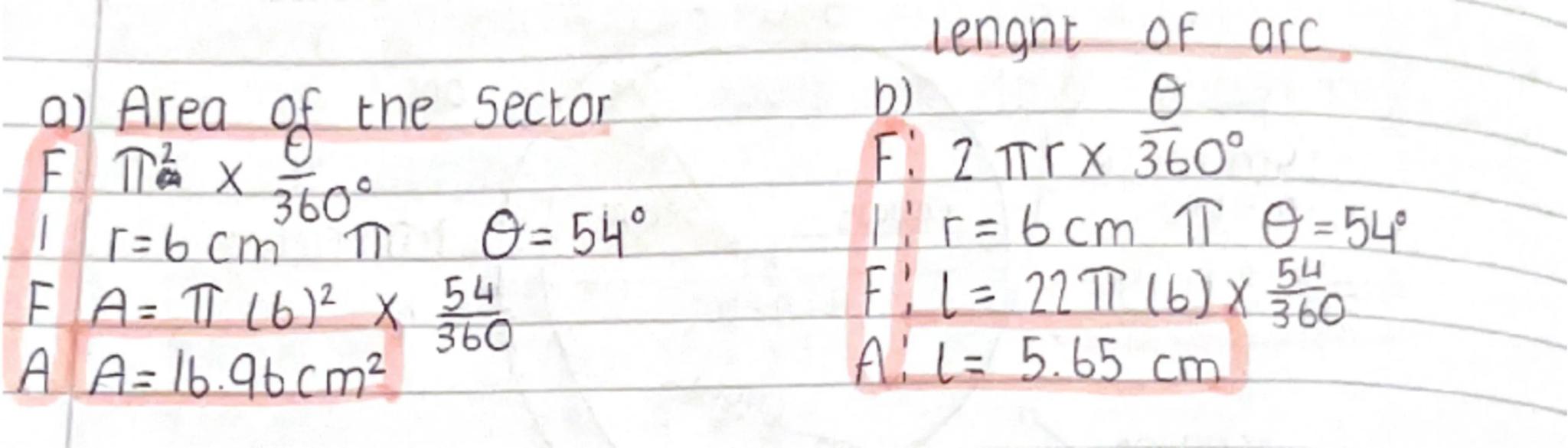
6
of 7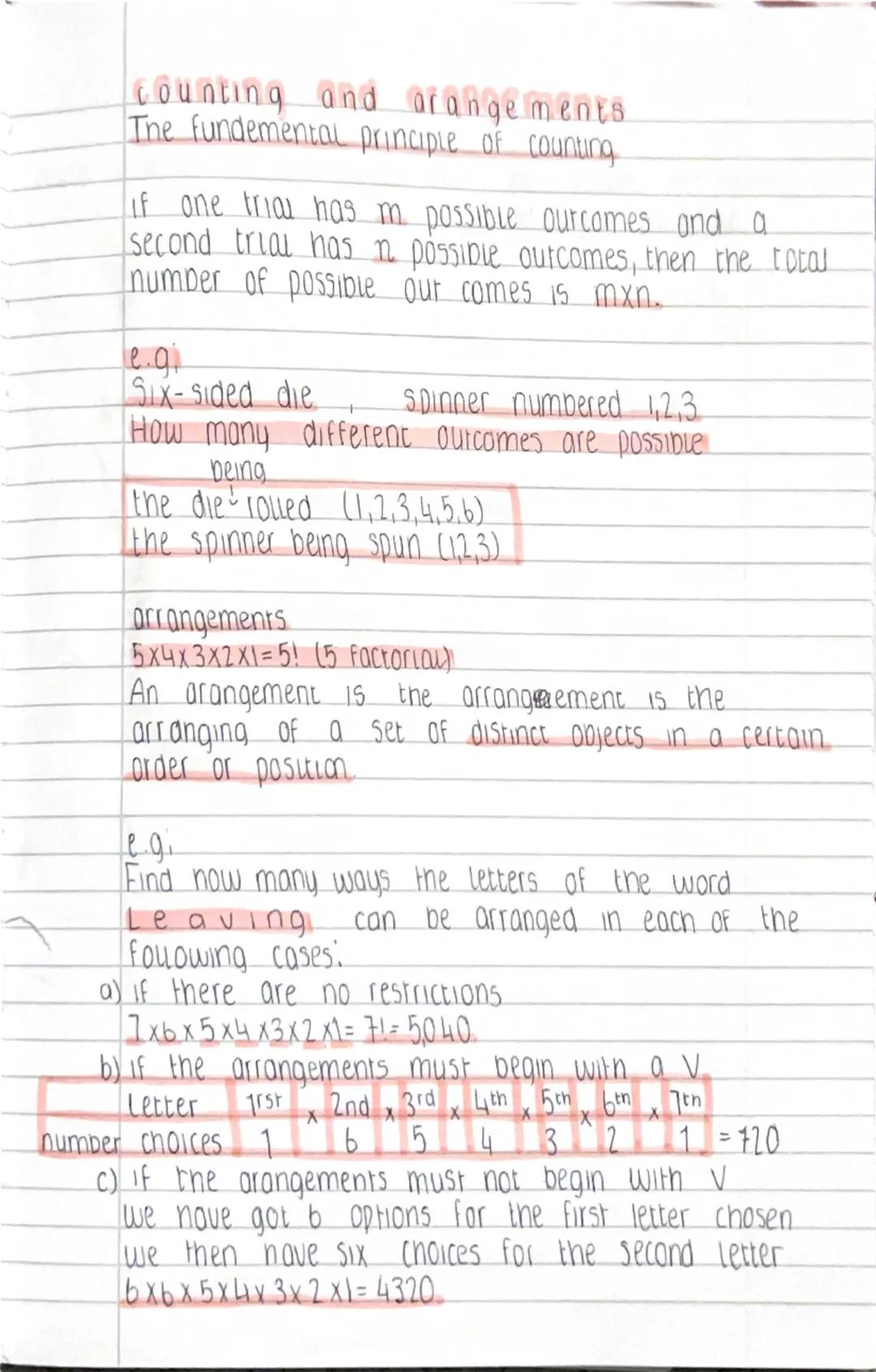
7
of 7
We thought you’d never ask...
What is the Knowunity AI companion?
Our AI companion is specifically built for the needs of students. Based on the millions of content pieces we have on the platform we can provide truly meaningful and relevant answers to students. But its not only about answers, the companion is even more about guiding students through their daily learning challenges, with personalised study plans, quizzes or content pieces in the chat and 100% personalisation based on the students skills and developments.
Where can I download the Knowunity app?
You can download the app in the Google Play Store and in the Apple App Store.
Is Knowunity really free of charge?
That's right! Enjoy free access to study content, connect with fellow students, and get instant help – all at your fingertips.
Most popular content in Mathematics
8MathematicsAlgebra
Algebra
5th Year91
MathematicsAlgebra 2
Algebra notes focusing on the factor theorem, completing the square, -b formula, graphs of polynomials
5th Year130
MathematicsSolving Equations
This section focuses on solving one-step and two-step linear equations to find the value of an unknown variable.
1st Year131
MathematicsArithmetic sequences and series
With examples
5th Year130
MathematicsIntroduction to Probability
This topic introduces basic probability concepts, including calculating the probability of simple events and understanding the difference between experimental and theoretical probability.
2nd Year91
MathematicsMaths jc algebra
Maths jc
1st Year230
MathematicsNatural Numbers and Integers
Students will learn about positive whole numbers, zero, and negative whole numbers, and how to add, subtract, multiply, and divide them correctly.
1st Year131
MathematicsDifferential Calculus
Calculus is a topic that comes up nearly everywhere on your maths LC. This is just starter notes that could be useful end of 5th year or start of 6th year
5th Year271
Most popular content
9 Irish
IrishIrish oral questions and answers
Questions and answers for the leaving cert oral
5th Year4264
 English
Key Quotes : Sive
Key Quotes and explanations: Sive
6th Year2842
IrishIrish oral questions
Outline of oral questions
5th Year2055
IrishIníon- le hÁine Durkin
Aine Durkin’s poem, Iníon: Themes & summary
5th Year890
IrishIrish poetry 2027
Iníon + Dínit an Bhróin
5th Year1153
IrishLC HL notes- Iníon (poem)
Includes poem in English and Irish, theme, key words & phrases
5th Year2304
EnglishCultural Context : Shawshank Redemption : Sive : Small Things Like These
Comparative Study : Cultural Context : Shawshank Redemption, Sive and Small Things Like These
6th Year1430
IrishMo Ghrá-sa (Idir Lúibíní)
Notes on mo ghrá-sa
5th Year380
IrishAn Gaeilge Aiste
Irish Language essay
6th Year1320
Can't find what you're looking for? Explore other subjects.
Students love us — and so will you.
4.6/5App Store
4.7/5Google Play
The app is very easy to use and well designed. I have found everything I was looking for so far and have been able to learn a lot from the presentations! I will definitely use the app for a class assignment! And of course it also helps a lot as an inspiration.
Stefan SiOS user
This app is really great. There are so many study notes and help [...]. My problem subject is French, for example, and the app has so many options for help. Thanks to this app, I have improved my French. I would recommend it to anyone.
Samantha KlichAndroid user
Wow, I am really amazed. I just tried the app because I've seen it advertised many times and was absolutely stunned. This app is THE HELP you want for school and above all, it offers so many things, such as workouts and fact sheets, which have been VERY helpful to me personally.
AnnaiOS user
Mathematics4 views·Updated Jun 5, 2026·7 pagesEasy Math Notes for Quick Learning
M
megan roche @meganroch_zj4pd
This guide covers three crucial maths topics you'll need to master: hypothesis testing for analysing claims with data, circle calculations including arcs and sectors, and counting arrangements for probability problems.
1
of 7
Sign up to see the content. It's free!
- Access to all documents
- Improve your grades
- Join milions of students
Hypothesis Testing Basics
Ever wondered how statisticians decide if claims are actually true? Hypothesis testing is your tool for examining whether statements backed by data hold up to scrutiny.
You'll work with two key ideas: the null hypothesis (H₀) - this is the original claim or assumption you're testing. Then there's the alternative hypothesis (H₁) - basically the opposite of what you're testing.
Here's how it works in practice: if the Kennel Club claims 30% of households keep dogs, your H₀ would be "30% of households keep a dog" and your H₁ would be "the percentage is not 30%". When you survey 400 households and find 112 have dogs, you can calculate whether this supports or contradicts the original claim.
Quick Tip: The sample proportion is simply your result divided by total surveyed - so 112/400 = 0.28 or 28%.
2
of 7Sign up to see the content. It's free!
- Access to all documents
- Improve your grades
- Join milions of students
Testing Your Hypothesis
Once you've got your data, you need to work out the margin of error using the formula 1/√n, where n is your sample size. With 400 households, that's 1/√400 = 0.05 or 5%.
Your confidence interval tells you the range where the true value likely sits. You calculate this as: sample proportion ± margin of error. So 0.28 ± 0.05 gives you 23% to 33%.
The crucial decision comes next: if your original claim (30%) falls within this confidence interval, you don't reject the null hypothesis. Since 30% sits comfortably between 23% and 33%, the Kennel Club's claim seems reasonable.
Remember: You're not proving the claim is definitely true - just that your evidence doesn't contradict it enough to reject it.
3
of 7Sign up to see the content. It's free!
- Access to all documents
- Improve your grades
- Join milions of students
Circle Calculations
Circles pop up everywhere in maths, so getting comfortable with circumference and area calculations is essential. The key formulas are C = 2πr for circumference and A = πr² for area.
When working with arcs and sectors , you're dealing with portions of the full circle. The arc length formula is L = (θ/360°) × 2πr, where θ is your angle in degrees.
For sector area, use A = (θ/360°) × πr². These formulas essentially ask "what fraction of the full circle am I working with?" then multiply by the full circle's measurement.
Pro Tip: Always check whether your answer makes sense - a 90° sector should be exactly quarter of the full circle's area.
4
of 7Sign up to see the content. It's free!
- Access to all documents
- Improve your grades
- Join milions of students
Counting and Arrangements
The fundamental principle of counting is brilliantly simple: if one event has m outcomes and another has n outcomes, together they have m × n total outcomes. Rolling a die (6 outcomes) and spinning a three-number spinner gives 6 × 3 = 18 possible combinations.
Arrangements (or permutations) deal with ordering distinct objects. When arranging the letters in "LEAVING", you've got 7 choices for first position, 6 for second, 5 for third, and so on. This gives 7! = 5,040 total arrangements.
Restrictions change everything though. If arrangements must start with 'V', you've only got 1 choice for first position, leaving 6! = 720 arrangements. If they can't start with 'V', you've got 6 choices for first position: 6 × 6! = 4,320 arrangements.
Key Insight: Break complex counting problems into steps - decide what goes in each position, then multiply your choices together.
5
of 7Sign up to see the content. It's free!
- Access to all documents
- Improve your grades
- Join milions of students
6
of 7Sign up to see the content. It's free!
- Access to all documents
- Improve your grades
- Join milions of students
7
of 7Sign up to see the content. It's free!
- Access to all documents
- Improve your grades
- Join milions of students
We thought you’d never ask...
What is the Knowunity AI companion?
Our AI companion is specifically built for the needs of students. Based on the millions of content pieces we have on the platform we can provide truly meaningful and relevant answers to students. But its not only about answers, the companion is even more about guiding students through their daily learning challenges, with personalised study plans, quizzes or content pieces in the chat and 100% personalisation based on the students skills and developments.
Where can I download the Knowunity app?
You can download the app in the Google Play Store and in the Apple App Store.
Is Knowunity really free of charge?
That's right! Enjoy free access to study content, connect with fellow students, and get instant help – all at your fingertips.
Most popular content in Mathematics
8MathematicsAlgebra
Algebra
5th Year91
MathematicsAlgebra 2
Algebra notes focusing on the factor theorem, completing the square, -b formula, graphs of polynomials
5th Year130
MathematicsSolving Equations
This section focuses on solving one-step and two-step linear equations to find the value of an unknown variable.
1st Year131
MathematicsArithmetic sequences and series
With examples
5th Year130
MathematicsIntroduction to Probability
This topic introduces basic probability concepts, including calculating the probability of simple events and understanding the difference between experimental and theoretical probability.
2nd Year91
MathematicsMaths jc algebra
Maths jc
1st Year230
MathematicsNatural Numbers and Integers
Students will learn about positive whole numbers, zero, and negative whole numbers, and how to add, subtract, multiply, and divide them correctly.
1st Year131
MathematicsDifferential Calculus
Calculus is a topic that comes up nearly everywhere on your maths LC. This is just starter notes that could be useful end of 5th year or start of 6th year
5th Year271
Most popular content
9IrishIrish oral questions and answers
Questions and answers for the leaving cert oral
5th Year4264
EnglishKey Quotes : Sive
Key Quotes and explanations: Sive
6th Year2842
IrishIrish oral questions
Outline of oral questions
5th Year2055
IrishIníon- le hÁine Durkin
Aine Durkin’s poem, Iníon: Themes & summary
5th Year890
IrishIrish poetry 2027
Iníon + Dínit an Bhróin
5th Year1153
IrishLC HL notes- Iníon (poem)
Includes poem in English and Irish, theme, key words & phrases
5th Year2304
EnglishCultural Context : Shawshank Redemption : Sive : Small Things Like These
Comparative Study : Cultural Context : Shawshank Redemption, Sive and Small Things Like These
6th Year1430
IrishMo Ghrá-sa (Idir Lúibíní)
Notes on mo ghrá-sa
5th Year380
IrishAn Gaeilge Aiste
Irish Language essay
6th Year1320
Can't find what you're looking for? Explore other subjects.
Students love us — and so will you.
4.6/5App Store
4.7/5Google Play
The app is very easy to use and well designed. I have found everything I was looking for so far and have been able to learn a lot from the presentations! I will definitely use the app for a class assignment! And of course it also helps a lot as an inspiration.
Stefan SiOS user
This app is really great. There are so many study notes and help [...]. My problem subject is French, for example, and the app has so many options for help. Thanks to this app, I have improved my French. I would recommend it to anyone.
Samantha KlichAndroid user
Wow, I am really amazed. I just tried the app because I've seen it advertised many times and was absolutely stunned. This app is THE HELP you want for school and above all, it offers so many things, such as workouts and fact sheets, which have been VERY helpful to me personally.
AnnaiOS user