
O Present Perfect é um tempo verbal em inglês que... Show more
 Inglês899 views·Updated May 24, 2026·4 pages
Como Usar o Present Perfect em Inglês: Guia Fácil
1 / 4
1
of 4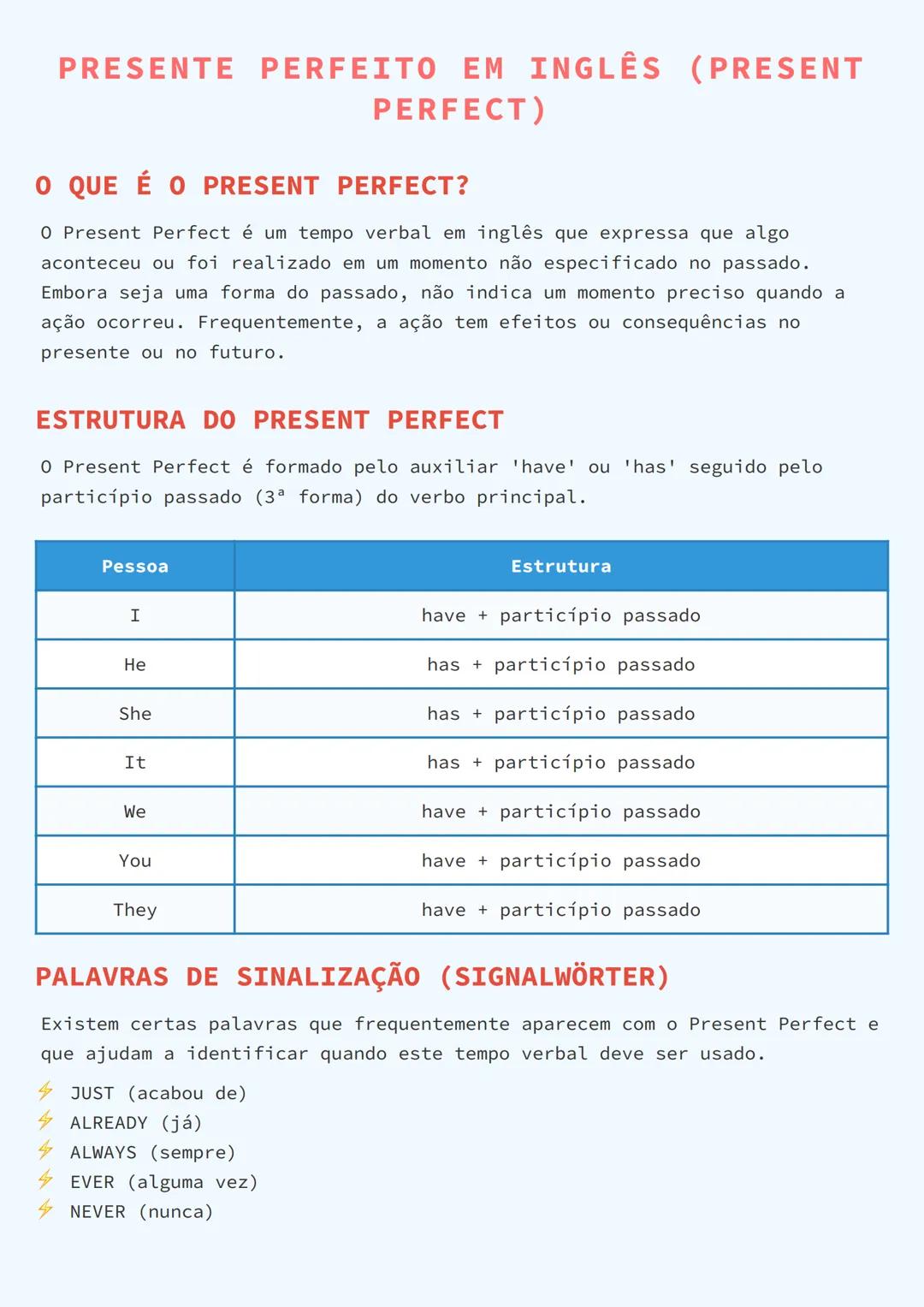
O que é o Present Perfect?
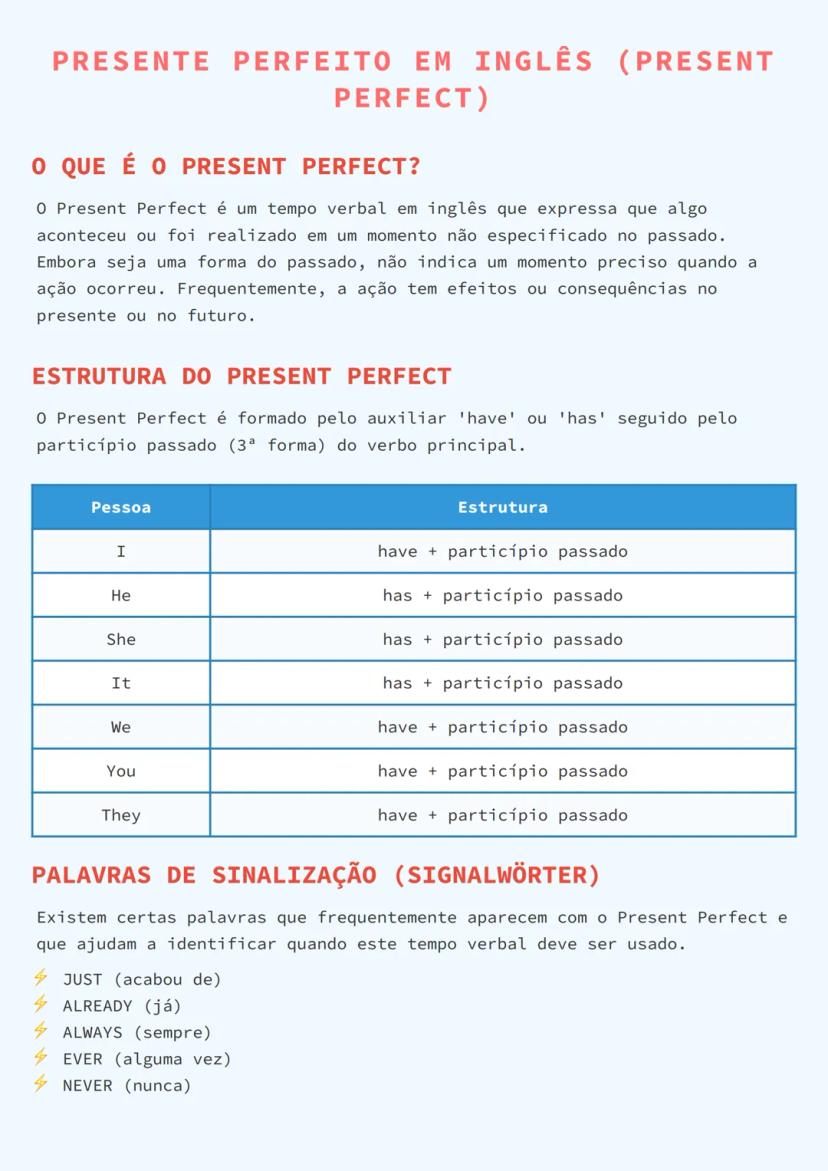
Quando você quer falar que algo aconteceu em algum momento no passado sem especificar quando, o Present Perfect é seu melhor amigo! Ele expressa ações que ocorreram e podem ter efeitos até agora.
Para formar o Present Perfect, use o auxiliar "have" ou "has" + o particípio passado do verbo principal. Use "has" com he, she e it, e "have" com I, you, we e they.
As palavras de sinalização ajudam a identificar quando usar este tempo verbal. As mais comuns são:
- just (acabou de)
- already (já)
- always (sempre)
- ever (alguma vez)
- never (nunca)
💡 Dica útil: Pense no Present Perfect como uma ponte entre o passado e o presente - a ação aconteceu antes, mas ainda é relevante agora!
2
of 4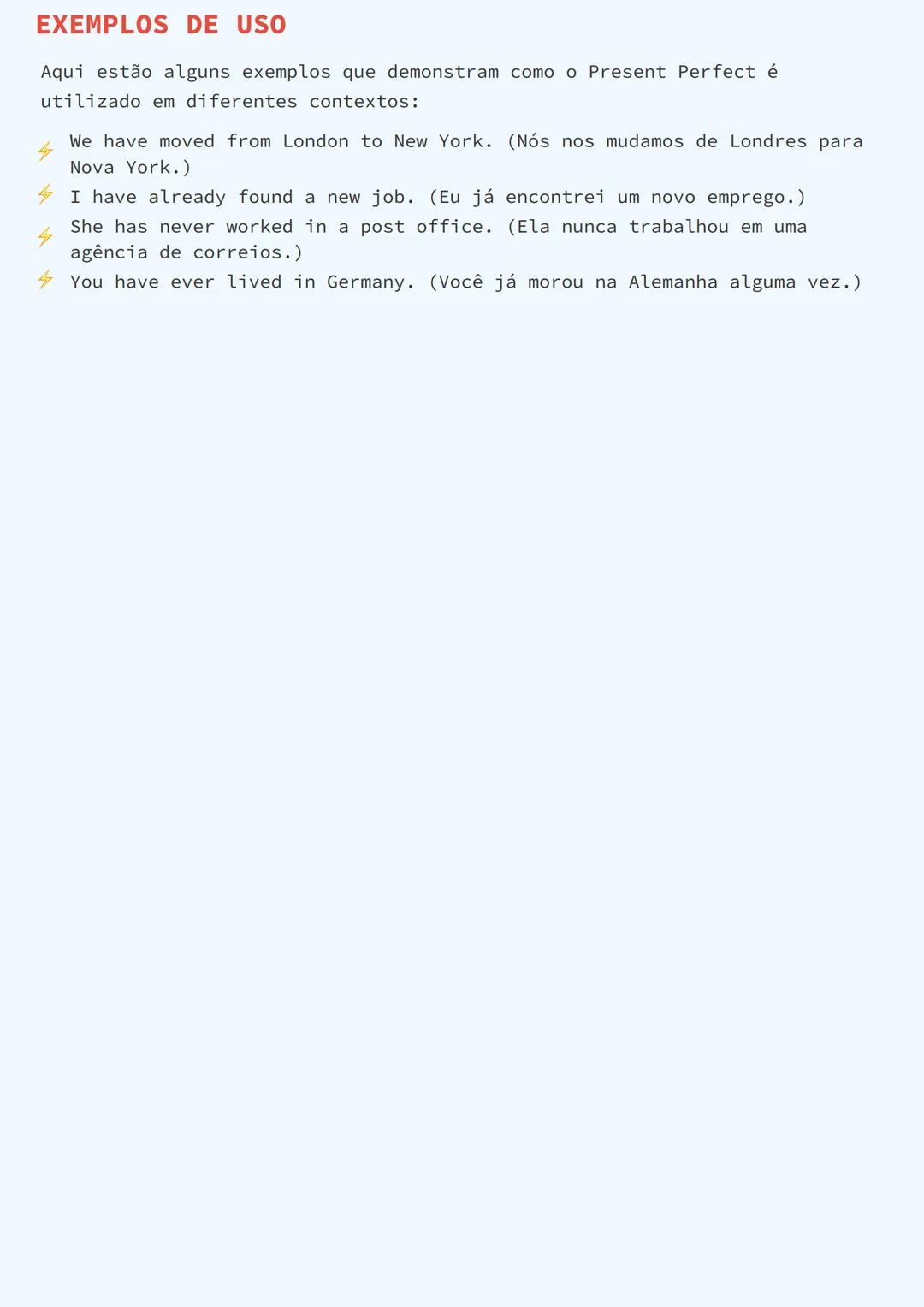
Exemplos de Uso
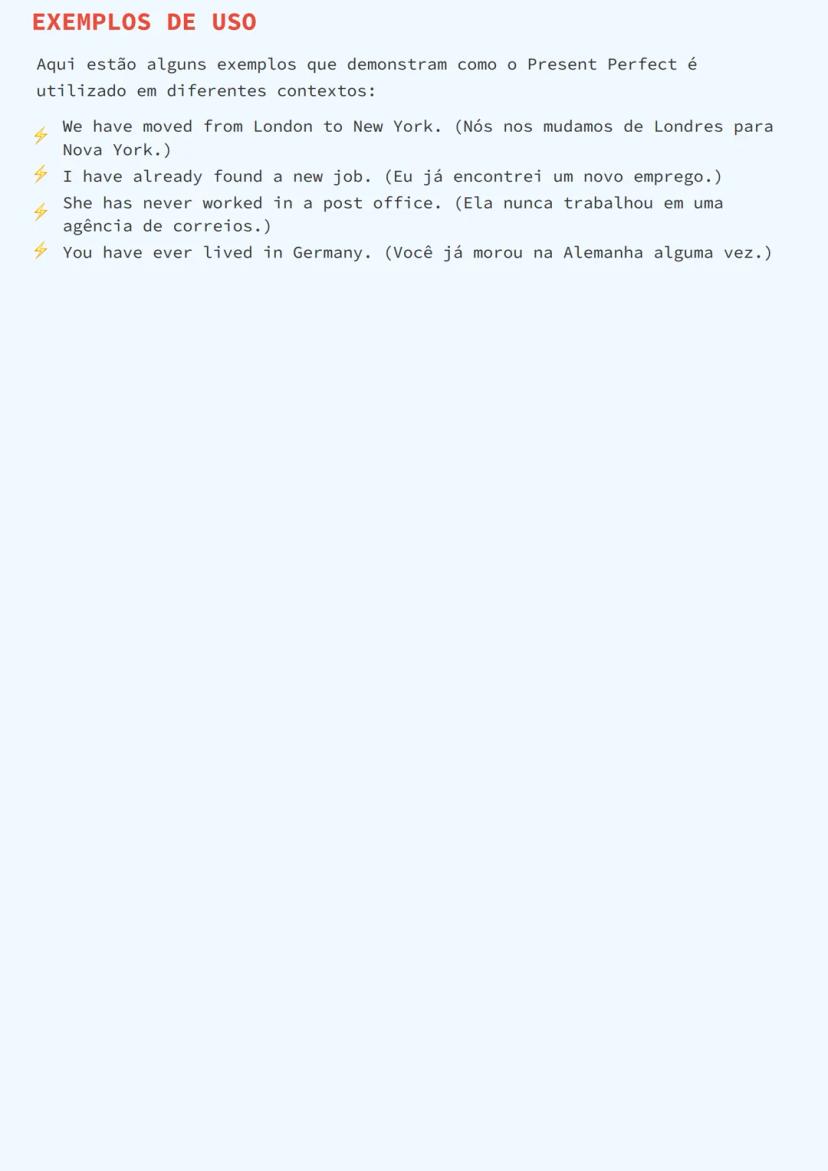
Você consegue usar o Present Perfect em várias situações do dia a dia! Veja como ele funciona com exemplos práticos:
"We have moved from London to New York" significa que a mudança aconteceu recentemente e ainda afeta a vida atual. Não importa exatamente quando a família se mudou.
Com o advérbio "already", podemos mostrar que algo aconteceu antes do esperado: "I have already found a new job." E com "never", indicamos que algo não aconteceu em toda a vida de alguém: "She has never worked in a post office."
Para fazer perguntas sobre experiências de vida, usamos "ever": "Have you ever lived in Germany?" — que pergunta se em algum momento da vida a pessoa morou na Alemanha.
💡 Lembre-se: Quando usamos Present Perfect, estamos mais interessados no resultado ou na experiência do que no momento exato em que algo aconteceu!
3
of 4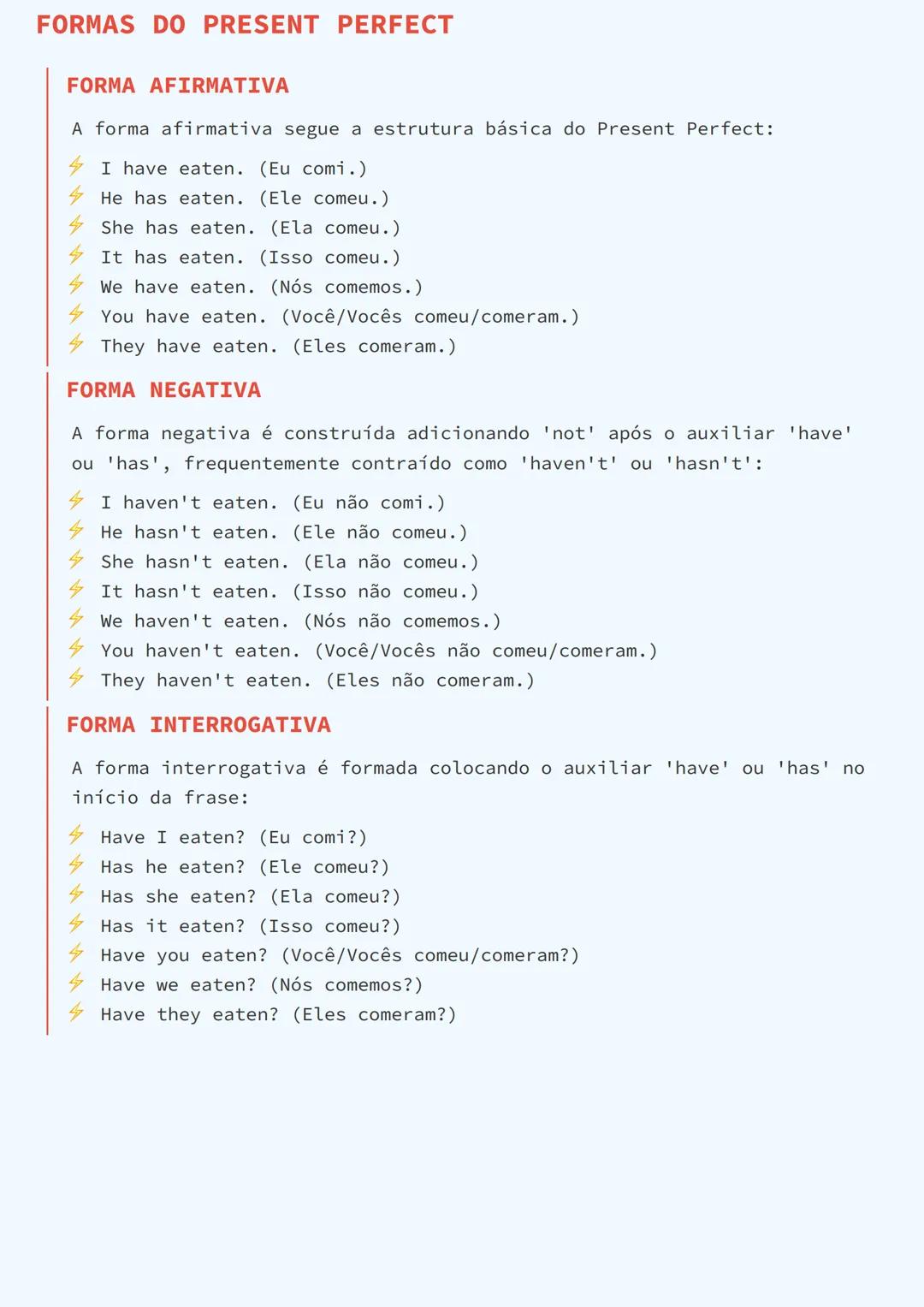
Formas do Present Perfect
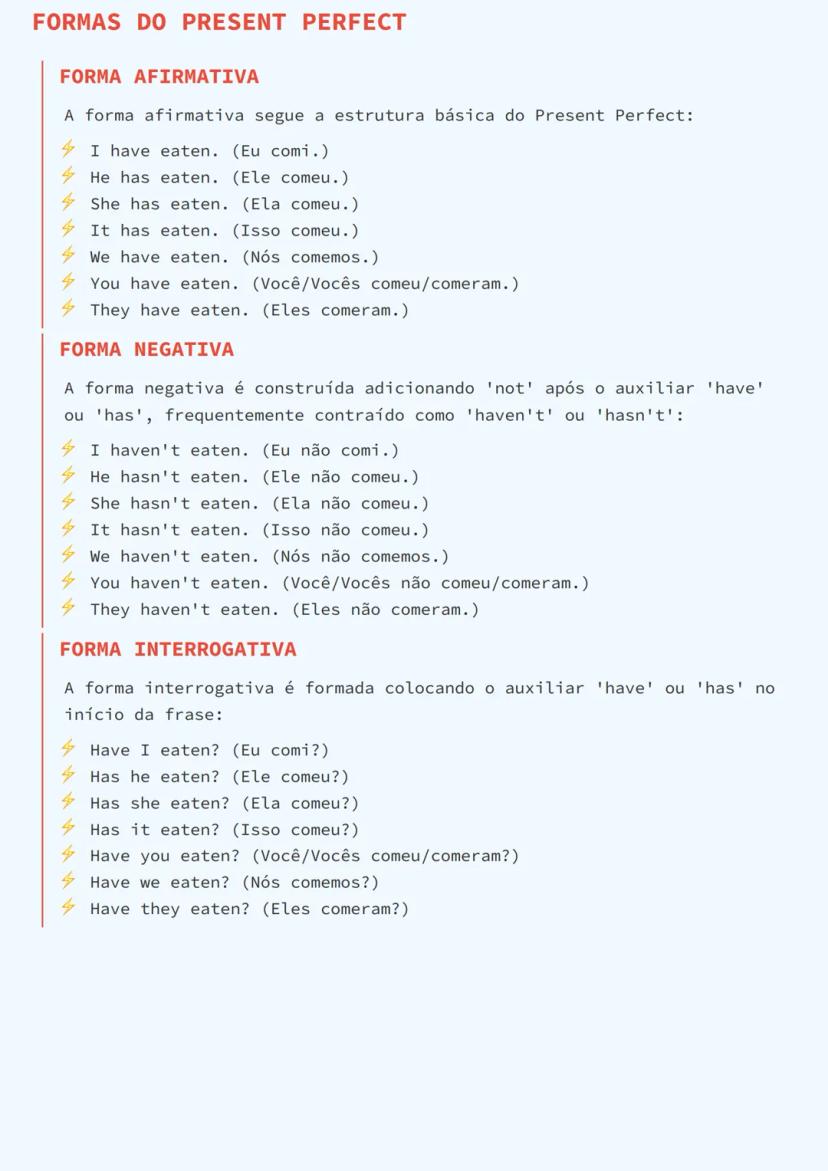
A forma afirmativa segue a estrutura básica: sujeito + have/has + particípio passado. Por exemplo: "I have eaten" (Eu comi) ou "She has eaten" (Ela comeu).
Para fazer frases negativas, adicione "not" depois de have/has. Na fala, geralmente usamos contrações como "haven't" ou "hasn't". Compare: "We haven't eaten" (Nós não comemos) e "They haven't eaten" (Eles não comeram).
Quer fazer uma pergunta? Coloque o have/has no início da frase! "Have you eaten?" (Você comeu?) ou "Has she eaten?" (Ela comeu?). É bem simples quando você pega o jeito!
💡 Truque fácil: Para transformar uma frase afirmativa em pergunta, apenas mova o auxiliar have/has para o início da frase e adicione ponto de interrogação.
4
of 4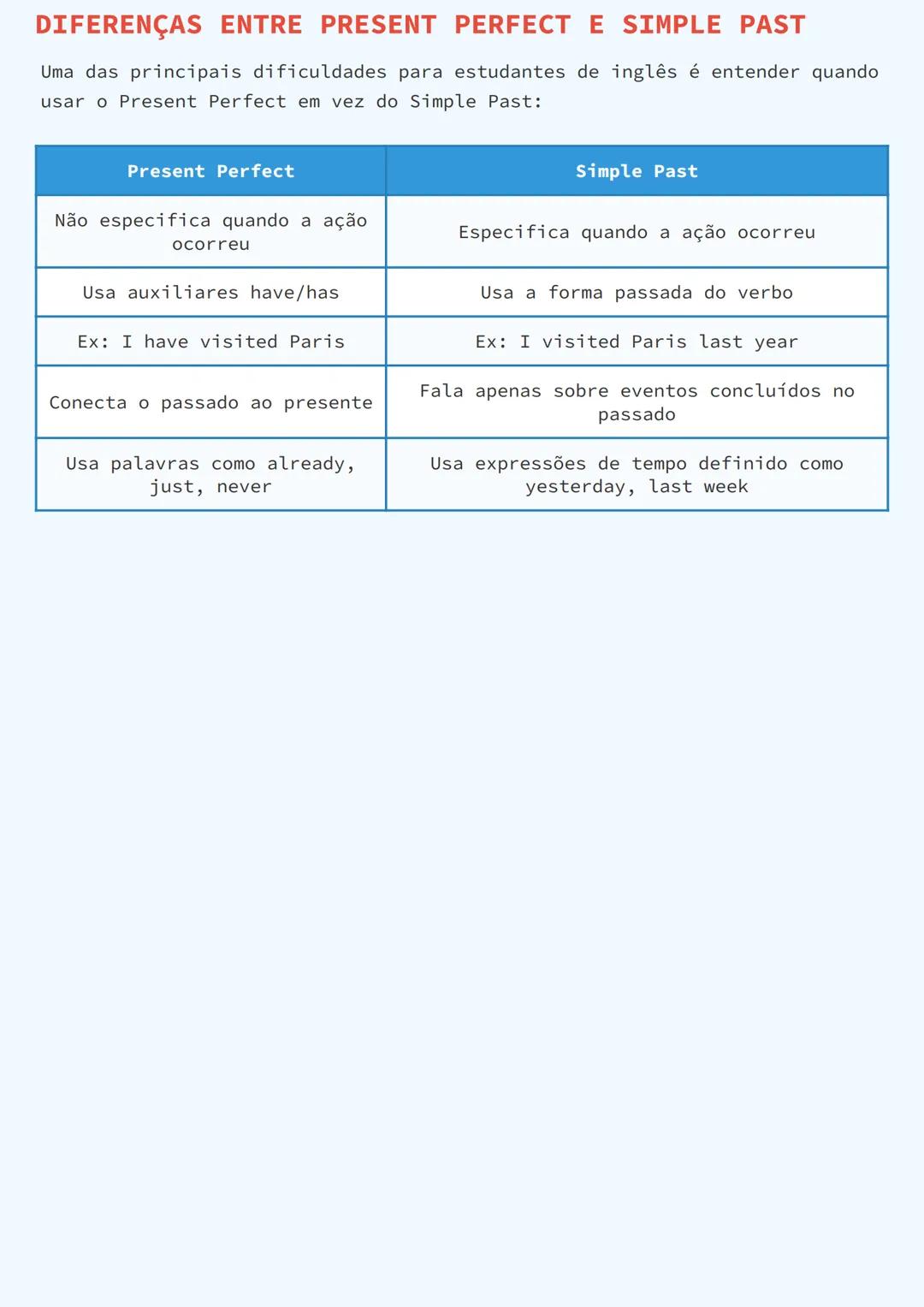
Diferenças entre Present Perfect e Simple Past
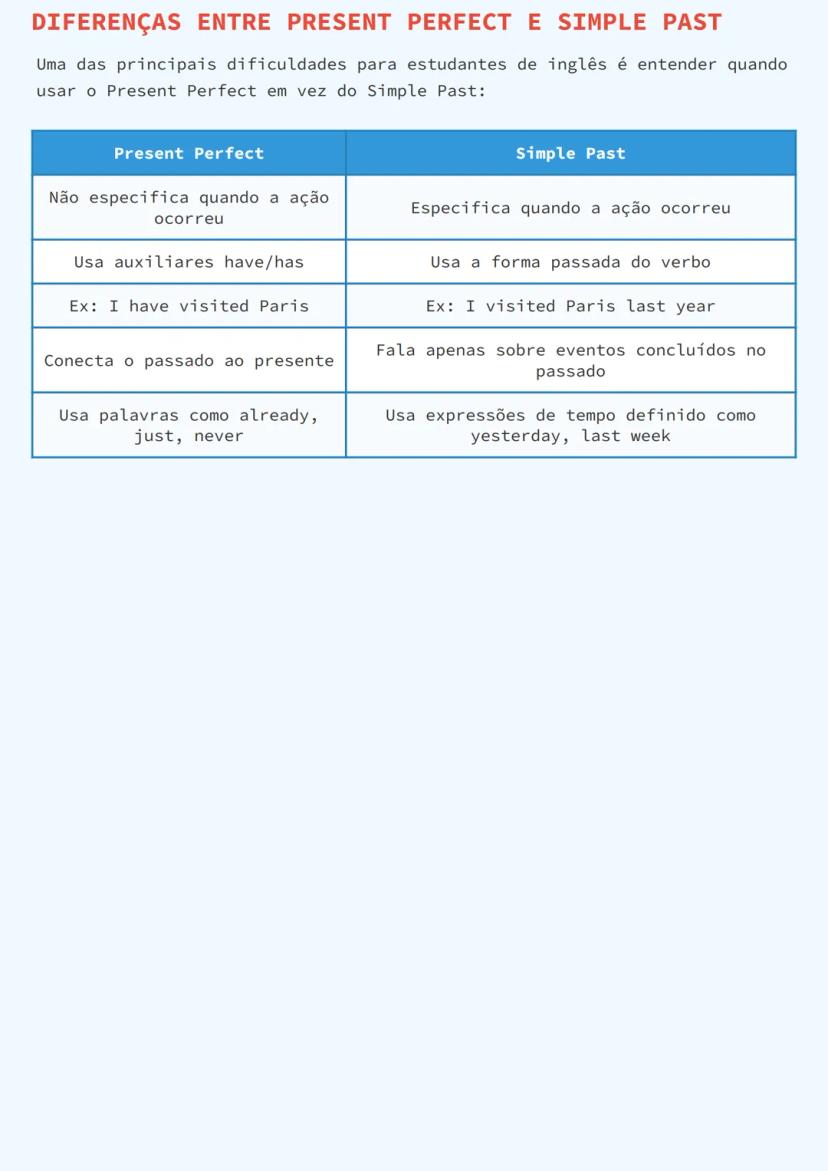
Está confuso sobre quando usar o Present Perfect ou o Simple Past? Não se preocupe! A diferença principal está no tempo e na conexão com o presente.
O Present Perfect não diz quando a ação aconteceu e usa os auxiliares have/has. Por exemplo: "I have visited Paris" (não sabemos quando). Ele conecta o passado ao presente e frequentemente usa palavras como already, just e never.
Já o Simple Past especifica quando a ação ocorreu e usa a forma passada do verbo. Exemplo: "I visited Paris last year" (sabemos que foi ano passado). Ele fala apenas de eventos completamente terminados e usa expressões de tempo definido como yesterday e last week.
💡 Pense assim: Use Present Perfect quando o "quando" não importa, mas o resultado sim. Use Simple Past quando quiser contar exatamente quando algo aconteceu.
We thought you’d never ask...
What is the Knowunity AI companion?
Our AI companion is specifically built for the needs of students. Based on the millions of content pieces we have on the platform we can provide truly meaningful and relevant answers to students. But its not only about answers, the companion is even more about guiding students through their daily learning challenges, with personalised study plans, quizzes or content pieces in the chat and 100% personalisation based on the students skills and developments.
Where can I download the Knowunity app?
You can download the app in the Google Play Store and in the Apple App Store.
Is Knowunity really free of charge?
That's right! Enjoy free access to study content, connect with fellow students, and get instant help – all at your fingertips.
Most popular content: Perfect Aspect
1Most popular content in Inglês
9InglêsVerbo to be
Aqui vc aprende
8°1,92072
InglêsVerbo to be
resumo sobre verbo to be
1°EM2,04637
Inglêspronomes pessoais em inglês
resumo sobre pronomes pessoais em inglês!🇺🇸
1°EM1,29224
InglêsSimple past e past continuous
Características
8°76614
InglêsTempos Verbais em Inglês
resumo sobre tempos verbais em inglês
1°EM1,91138
InglêsFuturo simples "going to"
Formas: interrogativa, negativa e afirmativa. O que ele expressa em um contexto; como dar respostas curtas em uma frase, e as junções com o verbo to be
8°48714
InglêsSimple present
Formas afirmativa, negativa e interrogativa, quando utilizar e casos especiais de uso
6°4678
InglêsVerbos modais
Resumo sobre verbo modais, língua inglesa.
2°EM2924
 Português
Enem 2026
eu e um sonho
3°EM4736
Most popular content
9 História
primeira guerra mundial
Teste seus conhecimentos sobre a primeira guerra mundial, causas da primeira guerra mundial e consequências da Primeira Guerra Mundial, fases da primeira guerra mundial
9°2,6110
 Matematica
Potenciação
Resumo de potenciação - matemática
9°9,124203
Históriailuminismo e pensadores iluministas
Teste seus conhecimentos sobre o Iluminismo e seus principais pensadores, explorando suas ideias e impacto histórico.
8°8540
HistóriaPrimeira Guerra Mundial
Resumo sobre a primeira guerra mundial
6°4,584121
PortuguêsComo fazer uma redação ENEM
Redação ENEM estrutura
Univ.6,375216
HistóriaIluminismo
Sobre iluminismo
7°6,440322
MatematicaRadiciação
Radiciação
8°9560
MatematicaRadiciação
Resumo sobre radiciação, com propriedades, operações com radicais potenciação e etc.
9°6,50590
E
Matematicaestudos de raízes
para você estudar um pouco sobre raizes na matemática
8°7740
Can't find what you're looking for? Explore other subjects.
Students love us — and so will you.
4.6/5App Store
4.7/5Google Play
The app is very easy to use and well designed. I have found everything I was looking for so far and have been able to learn a lot from the presentations! I will definitely use the app for a class assignment! And of course it also helps a lot as an inspiration.
Stefan SiOS user
This app is really great. There are so many study notes and help [...]. My problem subject is French, for example, and the app has so many options for help. Thanks to this app, I have improved my French. I would recommend it to anyone.
Samantha KlichAndroid user
Wow, I am really amazed. I just tried the app because I've seen it advertised many times and was absolutely stunned. This app is THE HELP you want for school and above all, it offers so many things, such as workouts and fact sheets, which have been VERY helpful to me personally.
AnnaiOS user
Inglês899 views·Updated May 24, 2026·4 pagesComo Usar o Present Perfect em Inglês: Guia Fácil
O Present Perfect é um tempo verbal em inglês que mostra ações que aconteceram no passado, mas sem dizer exatamente quando. É super importante porque conecta situações do passado com o presente, algo que não temos de forma idêntica no... Show more
1
of 4Sign up to see the content. It's free!
- Access to all documents
- Improve your grades
- Join milions of students
O que é o Present Perfect?
Quando você quer falar que algo aconteceu em algum momento no passado sem especificar quando, o Present Perfect é seu melhor amigo! Ele expressa ações que ocorreram e podem ter efeitos até agora.
Para formar o Present Perfect, use o auxiliar "have" ou "has" + o particípio passado do verbo principal. Use "has" com he, she e it, e "have" com I, you, we e they.
As palavras de sinalização ajudam a identificar quando usar este tempo verbal. As mais comuns são:
- just (acabou de)
- already (já)
- always (sempre)
- ever (alguma vez)
- never (nunca)
💡 Dica útil: Pense no Present Perfect como uma ponte entre o passado e o presente - a ação aconteceu antes, mas ainda é relevante agora!
2
of 4Sign up to see the content. It's free!
- Access to all documents
- Improve your grades
- Join milions of students
Exemplos de Uso
Você consegue usar o Present Perfect em várias situações do dia a dia! Veja como ele funciona com exemplos práticos:
"We have moved from London to New York" significa que a mudança aconteceu recentemente e ainda afeta a vida atual. Não importa exatamente quando a família se mudou.
Com o advérbio "already", podemos mostrar que algo aconteceu antes do esperado: "I have already found a new job." E com "never", indicamos que algo não aconteceu em toda a vida de alguém: "She has never worked in a post office."
Para fazer perguntas sobre experiências de vida, usamos "ever": "Have you ever lived in Germany?" — que pergunta se em algum momento da vida a pessoa morou na Alemanha.
💡 Lembre-se: Quando usamos Present Perfect, estamos mais interessados no resultado ou na experiência do que no momento exato em que algo aconteceu!
3
of 4Sign up to see the content. It's free!
- Access to all documents
- Improve your grades
- Join milions of students
Formas do Present Perfect
A forma afirmativa segue a estrutura básica: sujeito + have/has + particípio passado. Por exemplo: "I have eaten" (Eu comi) ou "She has eaten" (Ela comeu).
Para fazer frases negativas, adicione "not" depois de have/has. Na fala, geralmente usamos contrações como "haven't" ou "hasn't". Compare: "We haven't eaten" (Nós não comemos) e "They haven't eaten" (Eles não comeram).
Quer fazer uma pergunta? Coloque o have/has no início da frase! "Have you eaten?" (Você comeu?) ou "Has she eaten?" (Ela comeu?). É bem simples quando você pega o jeito!
💡 Truque fácil: Para transformar uma frase afirmativa em pergunta, apenas mova o auxiliar have/has para o início da frase e adicione ponto de interrogação.
4
of 4Sign up to see the content. It's free!
- Access to all documents
- Improve your grades
- Join milions of students
Diferenças entre Present Perfect e Simple Past
Está confuso sobre quando usar o Present Perfect ou o Simple Past? Não se preocupe! A diferença principal está no tempo e na conexão com o presente.
O Present Perfect não diz quando a ação aconteceu e usa os auxiliares have/has. Por exemplo: "I have visited Paris" (não sabemos quando). Ele conecta o passado ao presente e frequentemente usa palavras como already, just e never.
Já o Simple Past especifica quando a ação ocorreu e usa a forma passada do verbo. Exemplo: "I visited Paris last year" (sabemos que foi ano passado). Ele fala apenas de eventos completamente terminados e usa expressões de tempo definido como yesterday e last week.
💡 Pense assim: Use Present Perfect quando o "quando" não importa, mas o resultado sim. Use Simple Past quando quiser contar exatamente quando algo aconteceu.
We thought you’d never ask...
What is the Knowunity AI companion?
Our AI companion is specifically built for the needs of students. Based on the millions of content pieces we have on the platform we can provide truly meaningful and relevant answers to students. But its not only about answers, the companion is even more about guiding students through their daily learning challenges, with personalised study plans, quizzes or content pieces in the chat and 100% personalisation based on the students skills and developments.
Where can I download the Knowunity app?
You can download the app in the Google Play Store and in the Apple App Store.
Is Knowunity really free of charge?
That's right! Enjoy free access to study content, connect with fellow students, and get instant help – all at your fingertips.
Most popular content: Perfect Aspect
1Most popular content in Inglês
9InglêsVerbo to be
Aqui vc aprende
8°1,92072
InglêsVerbo to be
resumo sobre verbo to be
1°EM2,04637
Inglêspronomes pessoais em inglês
resumo sobre pronomes pessoais em inglês!🇺🇸
1°EM1,29224
InglêsSimple past e past continuous
Características
8°76614
InglêsTempos Verbais em Inglês
resumo sobre tempos verbais em inglês
1°EM1,91138
InglêsFuturo simples "going to"
Formas: interrogativa, negativa e afirmativa. O que ele expressa em um contexto; como dar respostas curtas em uma frase, e as junções com o verbo to be
8°48714
InglêsSimple present
Formas afirmativa, negativa e interrogativa, quando utilizar e casos especiais de uso
6°4678
InglêsVerbos modais
Resumo sobre verbo modais, língua inglesa.
2°EM2924
PortuguêsEnem 2026
eu e um sonho
3°EM4736
Most popular content
9Históriaprimeira guerra mundial
Teste seus conhecimentos sobre a primeira guerra mundial, causas da primeira guerra mundial e consequências da Primeira Guerra Mundial, fases da primeira guerra mundial
9°2,6110
MatematicaPotenciação
Resumo de potenciação - matemática
9°9,124203
Históriailuminismo e pensadores iluministas
Teste seus conhecimentos sobre o Iluminismo e seus principais pensadores, explorando suas ideias e impacto histórico.
8°8540
HistóriaPrimeira Guerra Mundial
Resumo sobre a primeira guerra mundial
6°4,584121
PortuguêsComo fazer uma redação ENEM
Redação ENEM estrutura
Univ.6,375216
HistóriaIluminismo
Sobre iluminismo
7°6,440322
MatematicaRadiciação
Radiciação
8°9560
MatematicaRadiciação
Resumo sobre radiciação, com propriedades, operações com radicais potenciação e etc.
9°6,50590
E
Matematicaestudos de raízes
para você estudar um pouco sobre raizes na matemática
8°7740
Can't find what you're looking for? Explore other subjects.
Students love us — and so will you.
4.6/5App Store
4.7/5Google Play
The app is very easy to use and well designed. I have found everything I was looking for so far and have been able to learn a lot from the presentations! I will definitely use the app for a class assignment! And of course it also helps a lot as an inspiration.
Stefan SiOS user
This app is really great. There are so many study notes and help [...]. My problem subject is French, for example, and the app has so many options for help. Thanks to this app, I have improved my French. I would recommend it to anyone.
Samantha KlichAndroid user
Wow, I am really amazed. I just tried the app because I've seen it advertised many times and was absolutely stunned. This app is THE HELP you want for school and above all, it offers so many things, such as workouts and fact sheets, which have been VERY helpful to me personally.
AnnaiOS user