
The Great Famine was one of the darkest chapters in...
 History14 views·Updated 3 Jul 2026·9 pages
The Irish Potato Famine: Causes and Consequences

1 / 9
1
of 9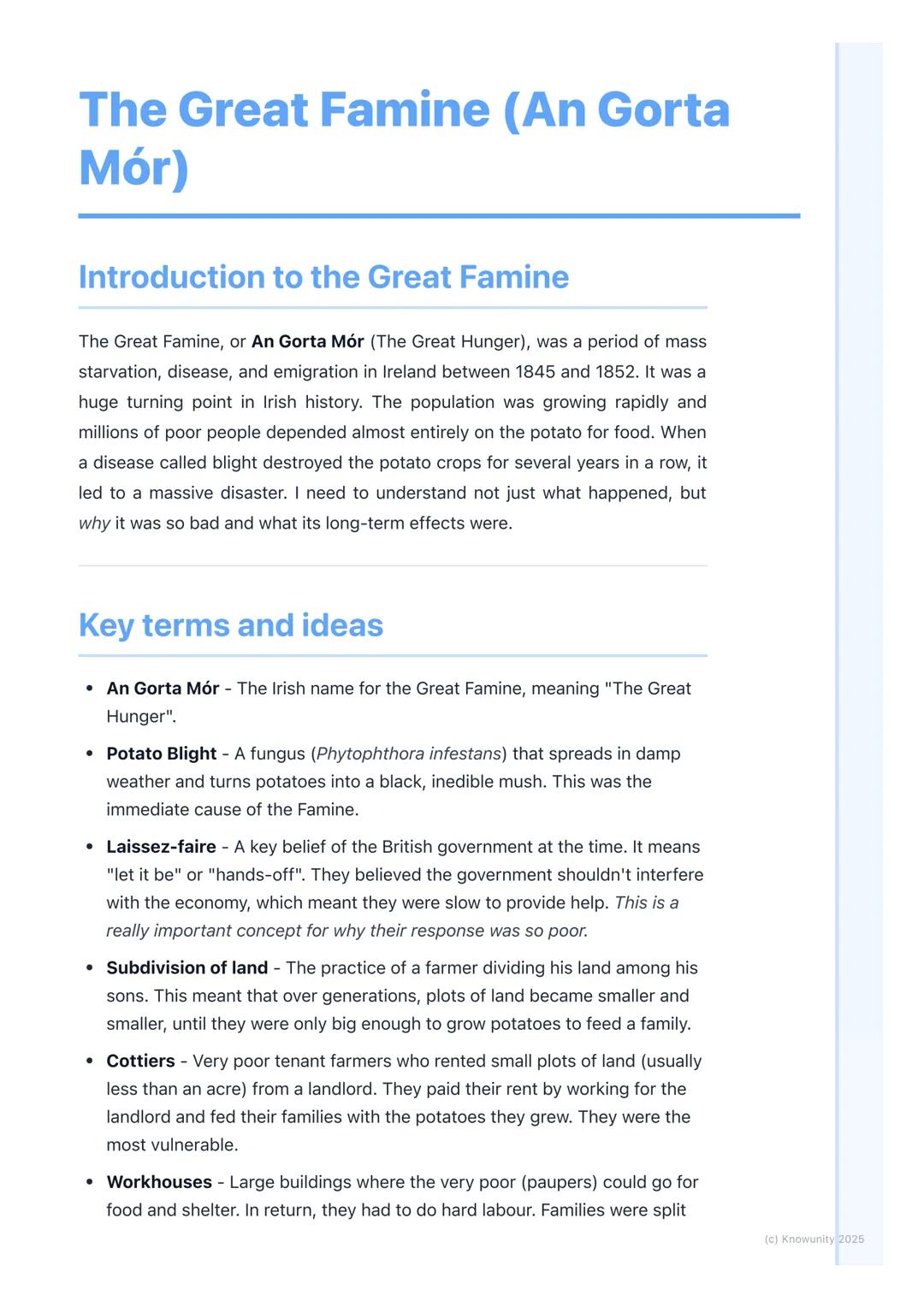
The Great Famine - An Gorta Mór
Ever wondered why so many Americans claim Irish heritage? The Great Famine is a huge part of that story. An Gorta Mór (The Great Hunger) wasn't just about potatoes going bad - it was a disaster waiting to happen.
When potato blight hit in 1845, it destroyed the one crop that millions of poor Irish people depended on completely. This fungus turned potatoes into black, rotting mush in damp weather. But here's the thing - other food was still being grown in Ireland and shipped to Britain whilst people starved.
Cottiers were the most vulnerable people during this time. These were extremely poor farmers who rented tiny plots of land (less than an acre) and paid rent by working for their landlords. When the potatoes failed, they had nothing left to eat and no way to pay rent.
Key Point: The British government's laissez-faire policy (basically "hands-off" economics) meant they were incredibly slow to help, believing the government shouldn't interfere with the market.
2
of 9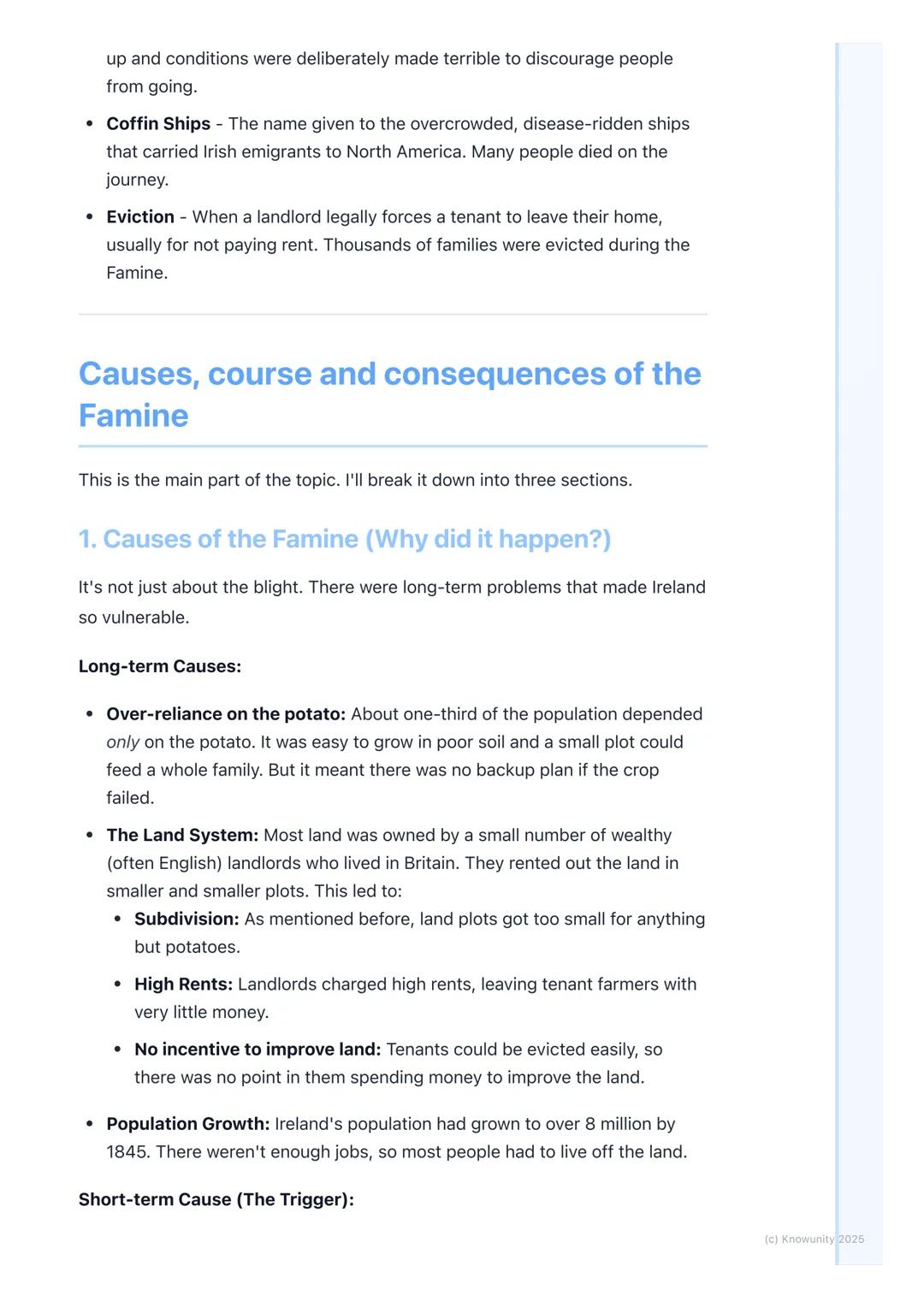
Why the Famine Happened - The Perfect Storm
You can't just blame the blight - Ireland was already a disaster waiting to happen. The subdivision of land meant that over generations, farms got smaller and smaller as fathers divided land between sons. Eventually, plots were so tiny that only potatoes could feed a family.
About one-third of Ireland's 8+ million people lived entirely on potatoes by 1845. It was brilliant for feeding lots of people on small plots, but catastrophic when it failed. Most land was owned by wealthy (often English) landlords who lived in Britain and charged high rents.
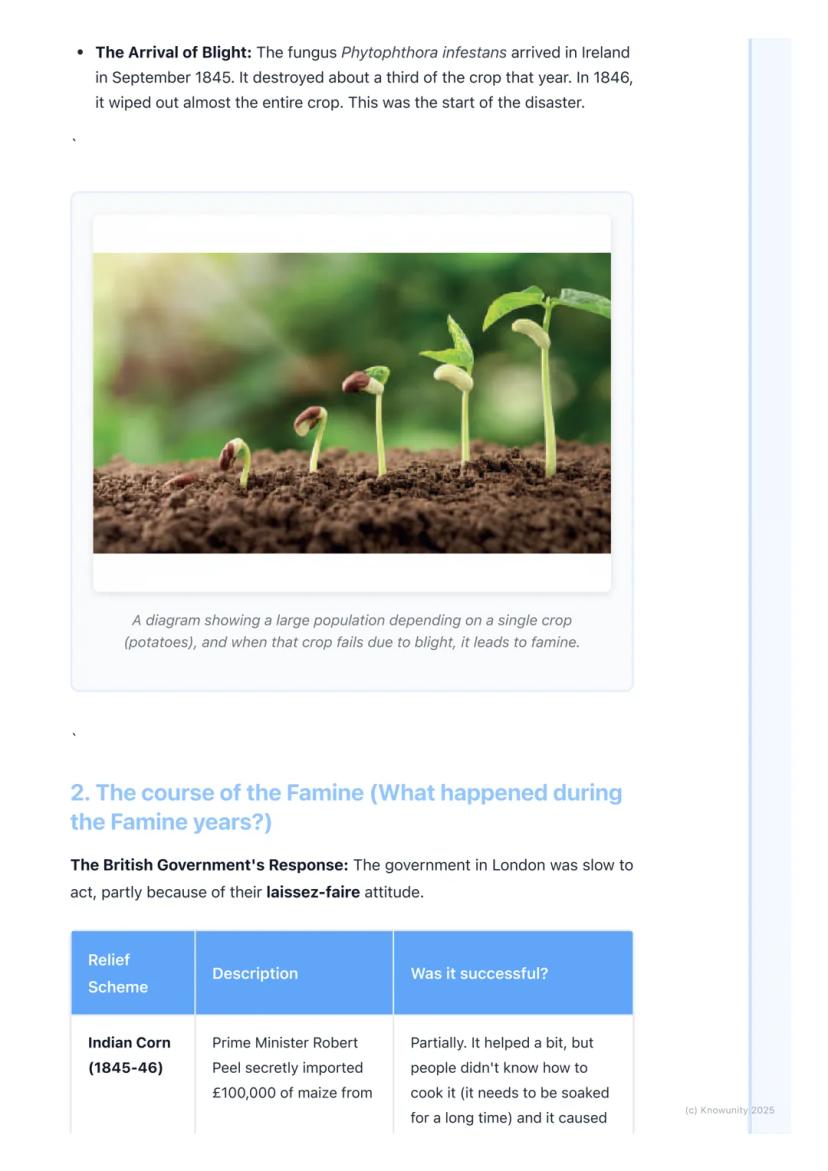
When blight arrived in September 1845, it destroyed a third of the crop. In 1846, it wiped out almost everything. People were already living on the edge - this pushed them over.
Remember: The long-term causes (land system, poverty, over-reliance on potatoes) made Ireland vulnerable. The blight was just the trigger that set off the disaster.
3
of 9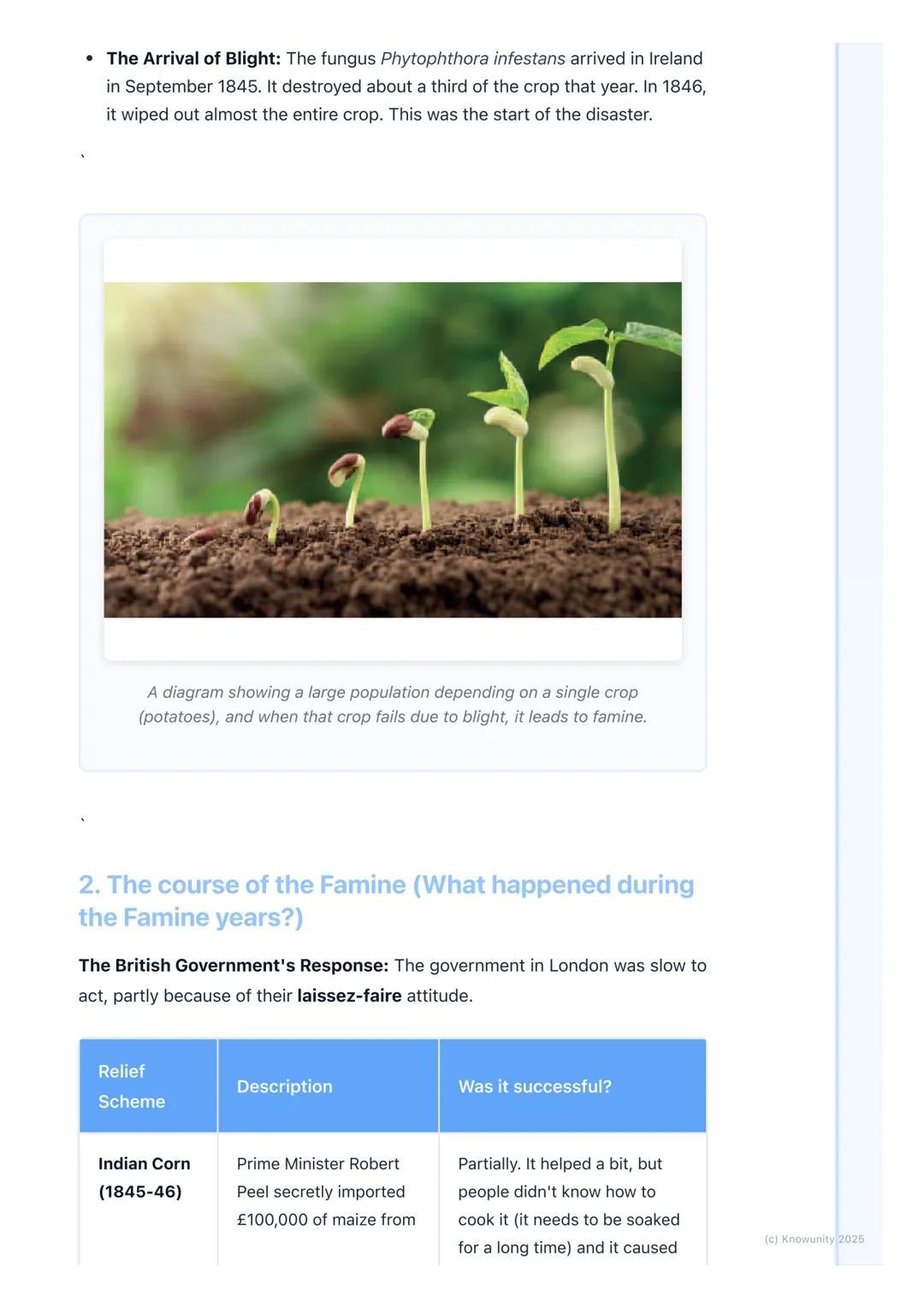
The Government's Failed Response
The British government's response was shockingly inadequate, and their laissez-faire attitude made everything worse. Prime Minister Robert Peel imported Indian corn (maize) from America, but people didn't know how to cook it properly and it caused stomach problems - they called it "Peel's Brimstone."
Public works schemes were meant to give people jobs building "famine roads" so they could earn money for food. Massive failure - wages were too low, the work was too hard for starving people, and food was still too expensive anyway.
The soup kitchens in 1847 were actually the most successful relief effort, feeding 3 million people daily at their peak. But the government shut them down after just six months! Workhouses became overcrowded death traps where diseases like typhus and cholera spread rapidly.
Shocking Fact: While people starved, Ireland was still exporting corn, wheat, and cattle to Britain because poor Irish farmers couldn't afford to buy it.
4
of 9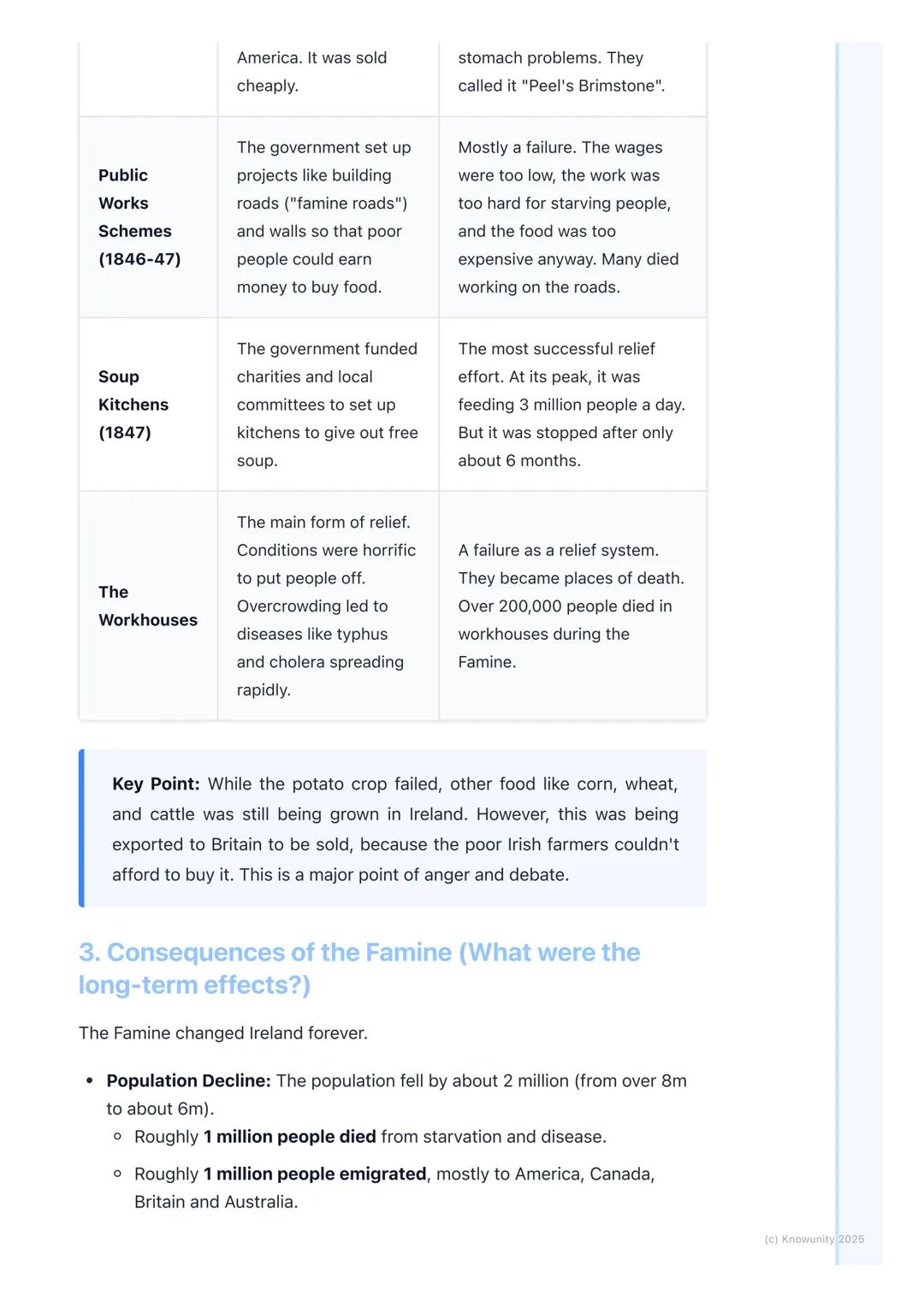
The Nightmare of Famine Life
Imagine being so desperate that workhouses seemed like a good option. Families were split up, conditions were deliberately awful to discourage people from coming, and over 200,000 people died in these places during the Famine. That's how bad things got.
Thousands of families faced eviction when they couldn't pay rent. Landlords legally threw people out of their homes, leaving entire families to die on roadsides. Those lucky enough to escape often boarded coffin ships - overcrowded, disease-ridden vessels to North America where many died during the journey.
The west of Ireland, where most people spoke Irish, was hit hardest. Entire communities were wiped out through death and emigration. This is why the Irish language declined so rapidly - whole generations of Irish speakers simply disappeared.
Key Point: The Famine wasn't just about hunger - it destroyed families, communities, and Irish culture itself.
5
of 9
How the Famine Changed Ireland Forever
The numbers are staggering - Ireland's population dropped by about 2 million people. Roughly 1 million died from starvation and disease, whilst another million emigrated, mainly to America, Canada, Britain, and Australia. That's like losing a quarter of the entire population today.
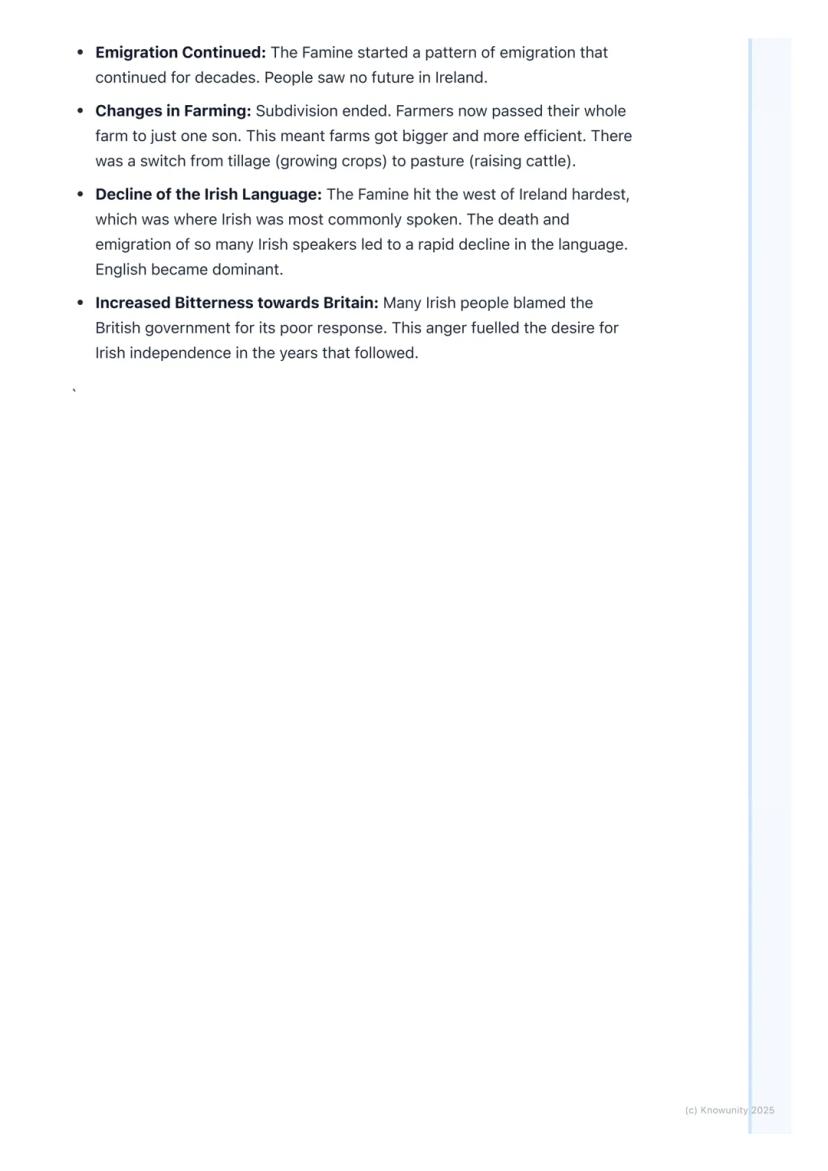
But the changes went deeper than numbers. Subdivision ended completely - farmers now passed their whole farm to just one son, making farms bigger and more efficient. There was a major shift from growing crops to raising cattle, which needed fewer workers.
Emigration became a normal part of Irish life for decades after. Young people saw no future in staying, creating Irish communities worldwide. This mass emigration continued well into the 20th century, shaping Ireland's relationship with countries like America.
Long-term Impact: The Famine created lasting bitterness towards Britain that fuelled the independence movement. Many Irish people blamed the British government's poor response for making the disaster so much worse.
6
of 9
What You Need to Know for Exams
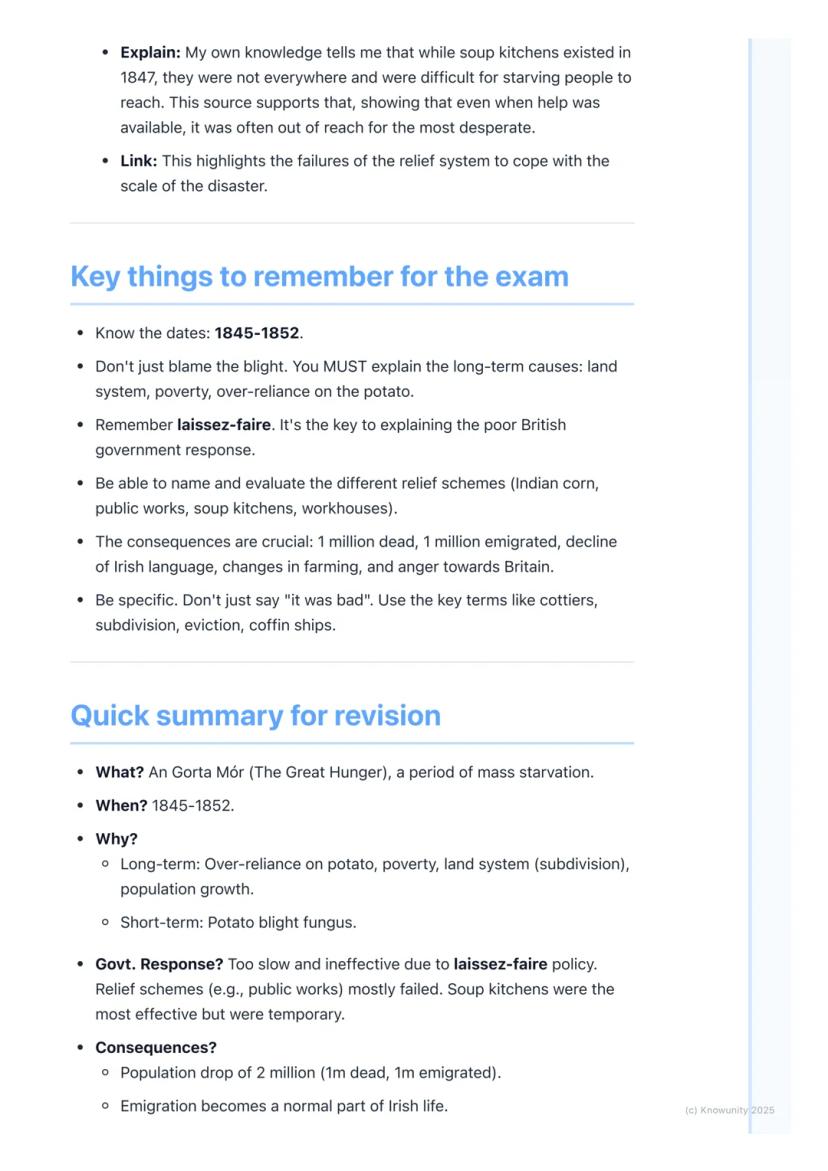
Don't just memorise facts - understand the connections. The long-term causes (land system, poverty, over-reliance on potatoes) are just as important as the blight itself. You need to explain why Ireland was so vulnerable before the disease even arrived.
Know your key terms: cottiers, subdivision, laissez-faire, eviction, coffin ships. These aren't just vocabulary - they represent real people's experiences and government policies that shaped the disaster.
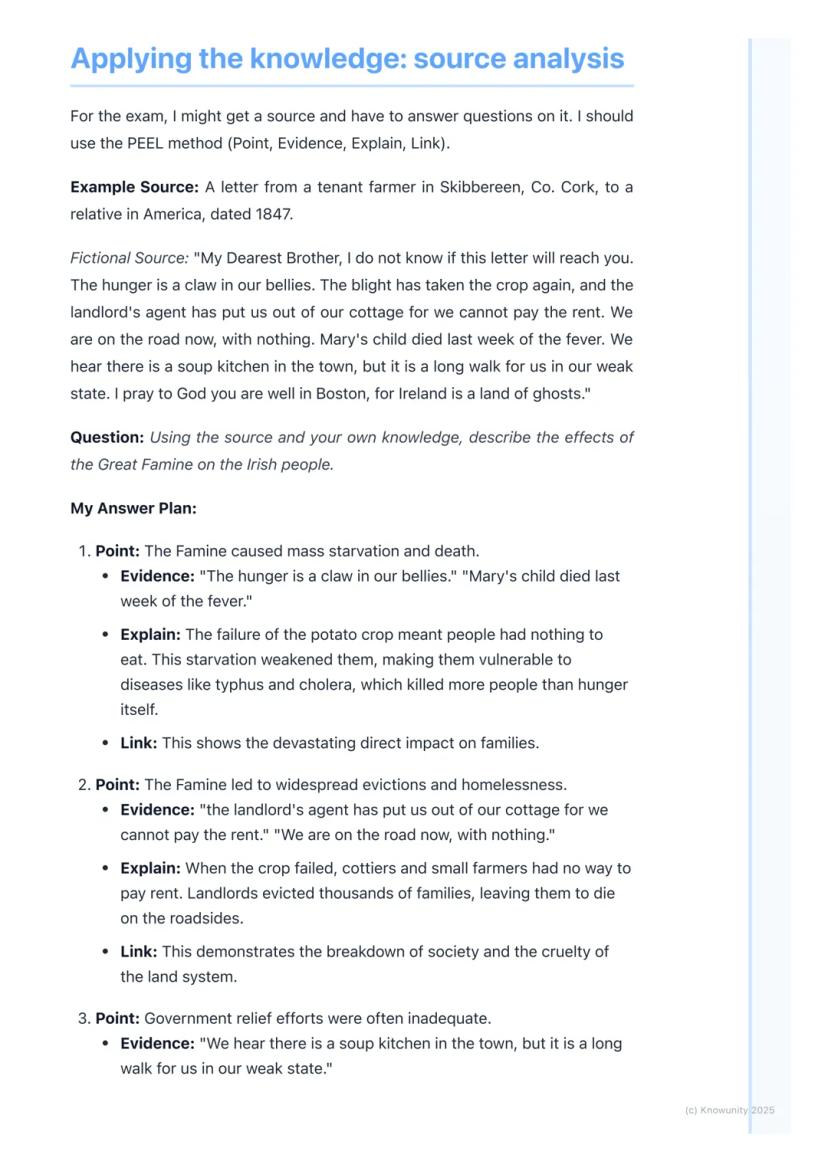
For source analysis, use the PEEL method (Point, Evidence, Explain, Link). Always connect the source to your wider knowledge about causes, government response, and consequences. Don't just describe what happened - explain why it happened and what it meant.
Exam Tip: Be specific about the government's relief schemes - Indian corn, public works, soup kitchens, workhouses. Know which ones worked, which failed, and why this matters for understanding British policy.
7
of 9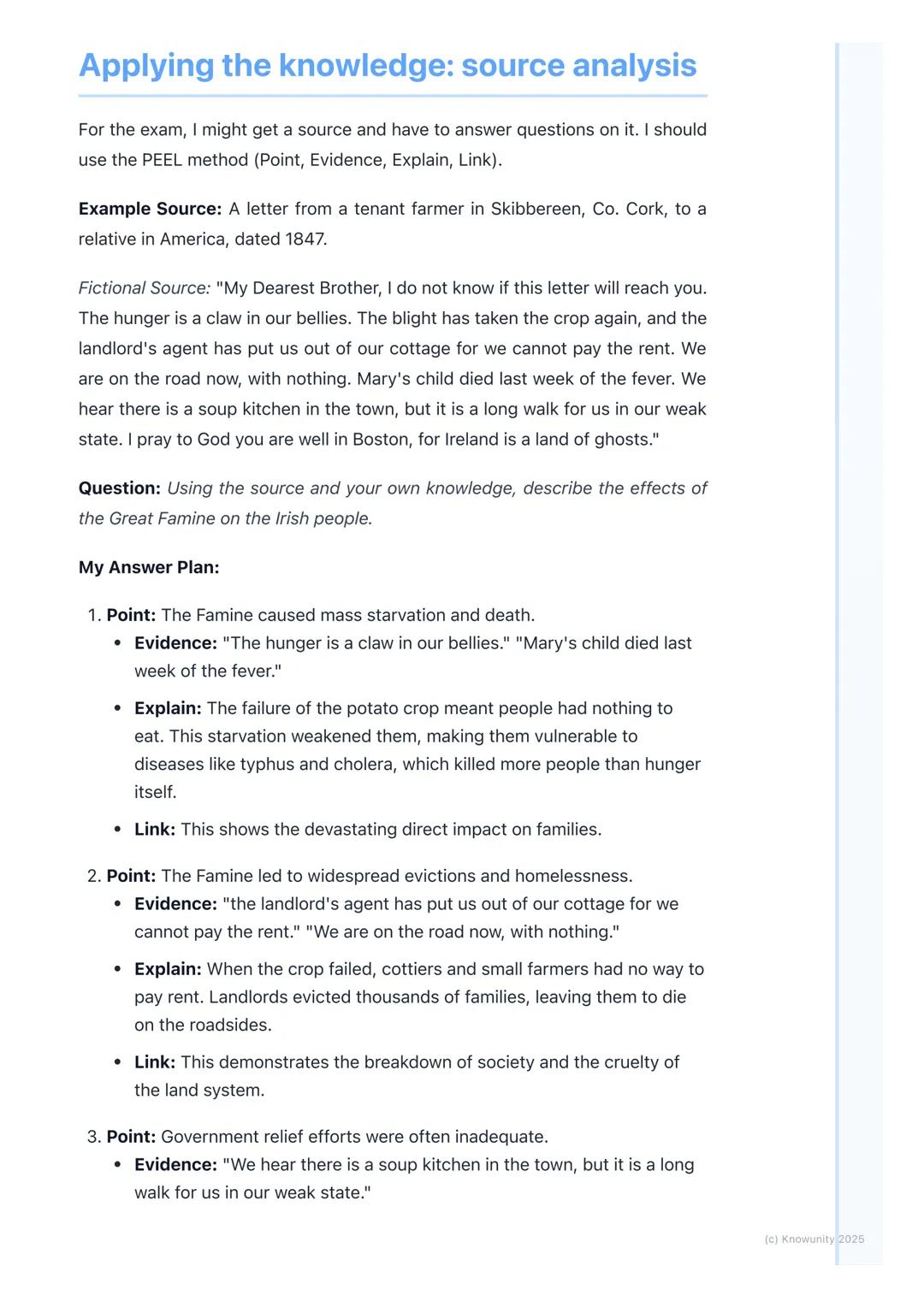
8
of 9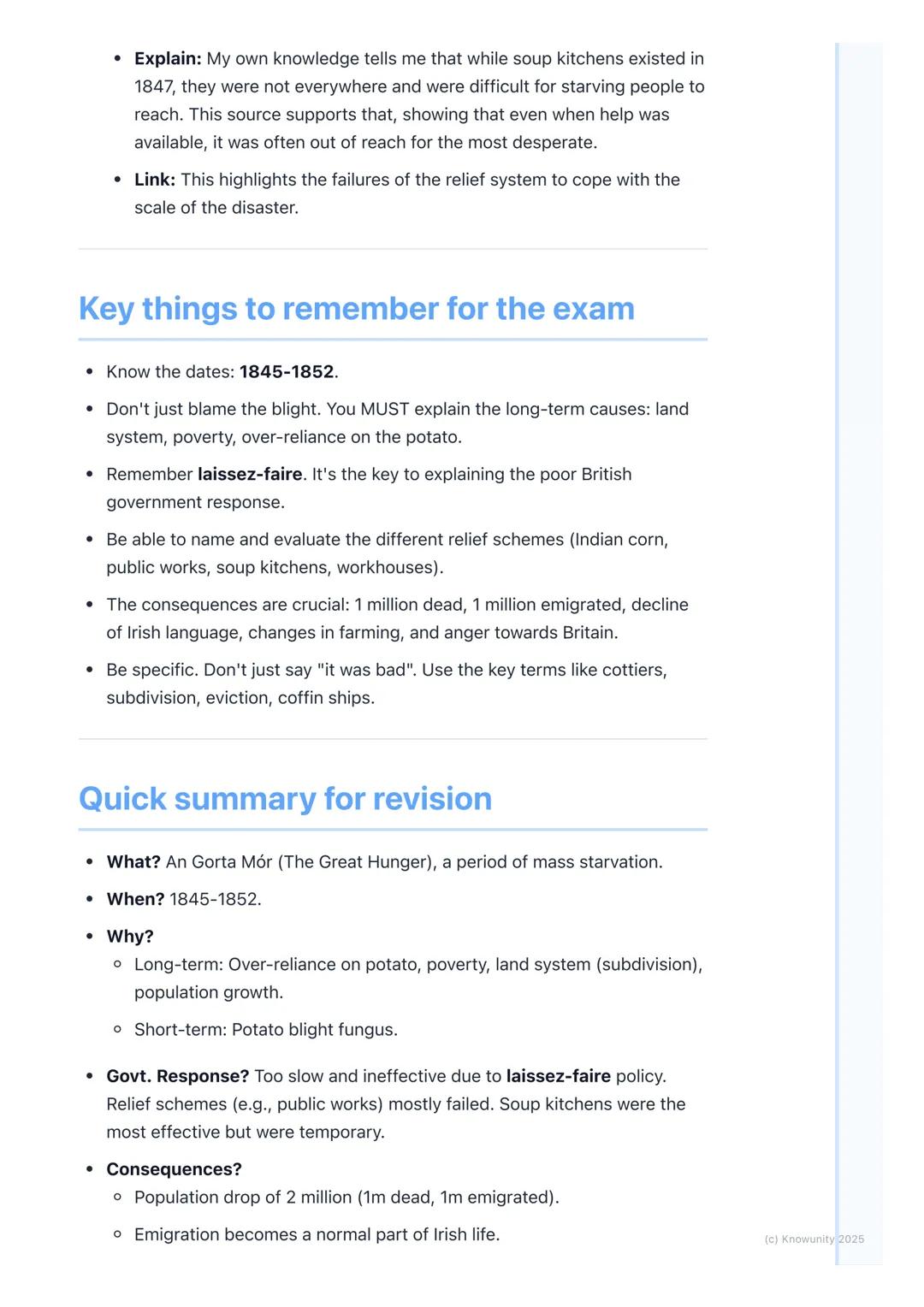
9
of 9
We thought you’d never ask...
Our AI companion is specifically built for the needs of students. Based on the millions of content pieces we have on the platform we can provide truly meaningful and relevant answers to students. But its not only about answers, the companion is even more about guiding students through their daily learning challenges, with personalised study plans, quizzes or content pieces in the chat and 100% personalisation based on the students skills and developments.
You can download the app in the Google Play Store and in the Apple App Store.
That's right! Enjoy free access to study content, connect with fellow students, and get instant help – all at your fingertips.
Most popular content in History
9HistoryThe Great Famine (An Gorta Mór)
Students will learn about the causes, devastating impact, and long-term consequences of the potato famine on Irish population and society.
2nd Year282
HistoryAmerican revolution
junior cert american revolution summary
1st Year442
HistoryThe 1798 Rebellion in Ireland
Learning about the causes, events, and aftermath of the United Irishmen's rebellion against British rule, inspired by revolutionary ideals.
3rd Year211
HistoryCauses and Consequences of World War II
This subtopic covers the origins of the Second World War, its global scale, and its devastating human and political consequences, including the atomic bomb.
3rd Year152
HistoryThe renaissance
junior cert renaissance summary
1st Year361
HistoryThe Renaissance
Students will learn about a time of 'rebirth' in Europe, where new ideas in art, science, and literature flourished.
1st Year140
History1916 Rising Revison Sheet
revision sheet
3rd Year211
HistoryThe American Revolution
Exploring the causes and consequences of the American colonies' fight for independence from British rule and its global significance.
3rd Year180
HistoryThe Civil Rights Movement and The Troubles
Students will explore the demands for civil rights in Northern Ireland, the outbreak of violence in the late 1960s, and the key events and figures of The Troubles.
TY81
Most popular content
9 English
Key Quotes : Sive
Key Quotes and explanations: Sive
6th Year2852
 Physics
Balanced and Unbalanced Forces
Students will explore how balanced forces result in no change in motion, while unbalanced forces cause an object to accelerate or change direction.
2nd Year592
 Irish
IrishIníon- le hÁine Durkin
Aine Durkin’s poem, Iníon: Themes & summary
5th Year890
IrishIrish oral questions and answers
Questions and answers for the leaving cert oral
5th Year4274
EnglishCultural Context : Shawshank Redemption : Sive : Small Things Like These
Comparative Study : Cultural Context : Shawshank Redemption, Sive and Small Things Like These
6th Year1430
IrishMo Ghrá-sa (Idir Lúibíní)
Notes on mo ghrá-sa
5th Year380
EnglishElizabeth Bishop notes
Elizabeth Bishop notes
6th Year1271
PhysicsTypes of Forces
Students will identify common forces such as gravity (pulling objects down), friction (opposing motion), and air resistance (slowing objects in the air).
2nd Year580
IrishAn Gaeilge Aiste
Irish Language essay
6th Year1320
Students love us — and so will you.
4.6/5App Store
4.7/5Google Play
The app is very easy to use and well designed. I have found everything I was looking for so far and have been able to learn a lot from the presentations! I will definitely use the app for a class assignment! And of course it also helps a lot as an inspiration.
Stefan SiOS user
This app is really great. There are so many study notes and help [...]. My problem subject is French, for example, and the app has so many options for help. Thanks to this app, I have improved my French. I would recommend it to anyone.
Samantha KlichAndroid user
Wow, I am really amazed. I just tried the app because I've seen it advertised many times and was absolutely stunned. This app is THE HELP you want for school and above all, it offers so many things, such as workouts and fact sheets, which have been VERY helpful to me personally.
AnnaiOS user
History14 views·Updated 3 Jul 2026·9 pagesThe Irish Potato Famine: Causes and Consequences
The Great Famine was one of the darkest chapters in Irish history, and understanding it helps explain so much about modern Ireland. Between 1845 and 1852, a potato disease called blight turned Ireland into a nightmare of starvation, death, and...
1
of 9
Sign up to see the content. It's free!
- Access to all documents
- Improve your grades
- Join milions of students
By signing up you accept Terms of Service and Privacy Policy
The Great Famine - An Gorta Mór
Ever wondered why so many Americans claim Irish heritage? The Great Famine is a huge part of that story. An Gorta Mór (The Great Hunger) wasn't just about potatoes going bad - it was a disaster waiting to happen.
When potato blight hit in 1845, it destroyed the one crop that millions of poor Irish people depended on completely. This fungus turned potatoes into black, rotting mush in damp weather. But here's the thing - other food was still being grown in Ireland and shipped to Britain whilst people starved.
Cottiers were the most vulnerable people during this time. These were extremely poor farmers who rented tiny plots of land (less than an acre) and paid rent by working for their landlords. When the potatoes failed, they had nothing left to eat and no way to pay rent.
Key Point: The British government's laissez-faire policy (basically "hands-off" economics) meant they were incredibly slow to help, believing the government shouldn't interfere with the market.
2
of 9Sign up to see the content. It's free!
- Access to all documents
- Improve your grades
- Join milions of students
By signing up you accept Terms of Service and Privacy Policy
Why the Famine Happened - The Perfect Storm
You can't just blame the blight - Ireland was already a disaster waiting to happen. The subdivision of land meant that over generations, farms got smaller and smaller as fathers divided land between sons. Eventually, plots were so tiny that only potatoes could feed a family.
About one-third of Ireland's 8+ million people lived entirely on potatoes by 1845. It was brilliant for feeding lots of people on small plots, but catastrophic when it failed. Most land was owned by wealthy (often English) landlords who lived in Britain and charged high rents.
When blight arrived in September 1845, it destroyed a third of the crop. In 1846, it wiped out almost everything. People were already living on the edge - this pushed them over.
Remember: The long-term causes (land system, poverty, over-reliance on potatoes) made Ireland vulnerable. The blight was just the trigger that set off the disaster.
3
of 9Sign up to see the content. It's free!
- Access to all documents
- Improve your grades
- Join milions of students
By signing up you accept Terms of Service and Privacy Policy
The Government's Failed Response
The British government's response was shockingly inadequate, and their laissez-faire attitude made everything worse. Prime Minister Robert Peel imported Indian corn (maize) from America, but people didn't know how to cook it properly and it caused stomach problems - they called it "Peel's Brimstone."
Public works schemes were meant to give people jobs building "famine roads" so they could earn money for food. Massive failure - wages were too low, the work was too hard for starving people, and food was still too expensive anyway.
The soup kitchens in 1847 were actually the most successful relief effort, feeding 3 million people daily at their peak. But the government shut them down after just six months! Workhouses became overcrowded death traps where diseases like typhus and cholera spread rapidly.
Shocking Fact: While people starved, Ireland was still exporting corn, wheat, and cattle to Britain because poor Irish farmers couldn't afford to buy it.
4
of 9Sign up to see the content. It's free!
- Access to all documents
- Improve your grades
- Join milions of students
By signing up you accept Terms of Service and Privacy Policy
The Nightmare of Famine Life
Imagine being so desperate that workhouses seemed like a good option. Families were split up, conditions were deliberately awful to discourage people from coming, and over 200,000 people died in these places during the Famine. That's how bad things got.
Thousands of families faced eviction when they couldn't pay rent. Landlords legally threw people out of their homes, leaving entire families to die on roadsides. Those lucky enough to escape often boarded coffin ships - overcrowded, disease-ridden vessels to North America where many died during the journey.
The west of Ireland, where most people spoke Irish, was hit hardest. Entire communities were wiped out through death and emigration. This is why the Irish language declined so rapidly - whole generations of Irish speakers simply disappeared.
Key Point: The Famine wasn't just about hunger - it destroyed families, communities, and Irish culture itself.
5
of 9Sign up to see the content. It's free!
- Access to all documents
- Improve your grades
- Join milions of students
By signing up you accept Terms of Service and Privacy Policy
How the Famine Changed Ireland Forever
The numbers are staggering - Ireland's population dropped by about 2 million people. Roughly 1 million died from starvation and disease, whilst another million emigrated, mainly to America, Canada, Britain, and Australia. That's like losing a quarter of the entire population today.
But the changes went deeper than numbers. Subdivision ended completely - farmers now passed their whole farm to just one son, making farms bigger and more efficient. There was a major shift from growing crops to raising cattle, which needed fewer workers.
Emigration became a normal part of Irish life for decades after. Young people saw no future in staying, creating Irish communities worldwide. This mass emigration continued well into the 20th century, shaping Ireland's relationship with countries like America.
Long-term Impact: The Famine created lasting bitterness towards Britain that fuelled the independence movement. Many Irish people blamed the British government's poor response for making the disaster so much worse.
6
of 9Sign up to see the content. It's free!
- Access to all documents
- Improve your grades
- Join milions of students
By signing up you accept Terms of Service and Privacy Policy
What You Need to Know for Exams
Don't just memorise facts - understand the connections. The long-term causes (land system, poverty, over-reliance on potatoes) are just as important as the blight itself. You need to explain why Ireland was so vulnerable before the disease even arrived.
Know your key terms: cottiers, subdivision, laissez-faire, eviction, coffin ships. These aren't just vocabulary - they represent real people's experiences and government policies that shaped the disaster.
For source analysis, use the PEEL method (Point, Evidence, Explain, Link). Always connect the source to your wider knowledge about causes, government response, and consequences. Don't just describe what happened - explain why it happened and what it meant.
Exam Tip: Be specific about the government's relief schemes - Indian corn, public works, soup kitchens, workhouses. Know which ones worked, which failed, and why this matters for understanding British policy.
7
of 9Sign up to see the content. It's free!
- Access to all documents
- Improve your grades
- Join milions of students
By signing up you accept Terms of Service and Privacy Policy
8
of 9Sign up to see the content. It's free!
- Access to all documents
- Improve your grades
- Join milions of students
By signing up you accept Terms of Service and Privacy Policy
9
of 9Sign up to see the content. It's free!
- Access to all documents
- Improve your grades
- Join milions of students
By signing up you accept Terms of Service and Privacy Policy
We thought you’d never ask...
Our AI companion is specifically built for the needs of students. Based on the millions of content pieces we have on the platform we can provide truly meaningful and relevant answers to students. But its not only about answers, the companion is even more about guiding students through their daily learning challenges, with personalised study plans, quizzes or content pieces in the chat and 100% personalisation based on the students skills and developments.
You can download the app in the Google Play Store and in the Apple App Store.
That's right! Enjoy free access to study content, connect with fellow students, and get instant help – all at your fingertips.
Most popular content in History
9HistoryThe Great Famine (An Gorta Mór)
Students will learn about the causes, devastating impact, and long-term consequences of the potato famine on Irish population and society.
2nd Year282
HistoryAmerican revolution
junior cert american revolution summary
1st Year442
HistoryThe 1798 Rebellion in Ireland
Learning about the causes, events, and aftermath of the United Irishmen's rebellion against British rule, inspired by revolutionary ideals.
3rd Year211
HistoryCauses and Consequences of World War II
This subtopic covers the origins of the Second World War, its global scale, and its devastating human and political consequences, including the atomic bomb.
3rd Year152
HistoryThe renaissance
junior cert renaissance summary
1st Year361
HistoryThe Renaissance
Students will learn about a time of 'rebirth' in Europe, where new ideas in art, science, and literature flourished.
1st Year140
History1916 Rising Revison Sheet
revision sheet
3rd Year211
HistoryThe American Revolution
Exploring the causes and consequences of the American colonies' fight for independence from British rule and its global significance.
3rd Year180
HistoryThe Civil Rights Movement and The Troubles
Students will explore the demands for civil rights in Northern Ireland, the outbreak of violence in the late 1960s, and the key events and figures of The Troubles.
TY81
Most popular content
9EnglishKey Quotes : Sive
Key Quotes and explanations: Sive
6th Year2852
PhysicsBalanced and Unbalanced Forces
Students will explore how balanced forces result in no change in motion, while unbalanced forces cause an object to accelerate or change direction.
2nd Year592
IrishIníon- le hÁine Durkin
Aine Durkin’s poem, Iníon: Themes & summary
5th Year890
IrishIrish oral questions and answers
Questions and answers for the leaving cert oral
5th Year4274
EnglishCultural Context : Shawshank Redemption : Sive : Small Things Like These
Comparative Study : Cultural Context : Shawshank Redemption, Sive and Small Things Like These
6th Year1430
IrishMo Ghrá-sa (Idir Lúibíní)
Notes on mo ghrá-sa
5th Year380
EnglishElizabeth Bishop notes
Elizabeth Bishop notes
6th Year1271
PhysicsTypes of Forces
Students will identify common forces such as gravity (pulling objects down), friction (opposing motion), and air resistance (slowing objects in the air).
2nd Year580
IrishAn Gaeilge Aiste
Irish Language essay
6th Year1320
Students love us — and so will you.
4.6/5App Store
4.7/5Google Play
The app is very easy to use and well designed. I have found everything I was looking for so far and have been able to learn a lot from the presentations! I will definitely use the app for a class assignment! And of course it also helps a lot as an inspiration.
Stefan SiOS user
This app is really great. There are so many study notes and help [...]. My problem subject is French, for example, and the app has so many options for help. Thanks to this app, I have improved my French. I would recommend it to anyone.
Samantha KlichAndroid user
Wow, I am really amazed. I just tried the app because I've seen it advertised many times and was absolutely stunned. This app is THE HELP you want for school and above all, it offers so many things, such as workouts and fact sheets, which have been VERY helpful to me personally.
AnnaiOS user