
Ever wondered how Ireland got its stunning landscapes like the... Show more
 Geography21 views·Updated Jun 8, 2026·7 pages
Comprehensive Geography Notes on Glaciation
K
Kyla McInerney@kylamcinerney
1 / 7
1
of 7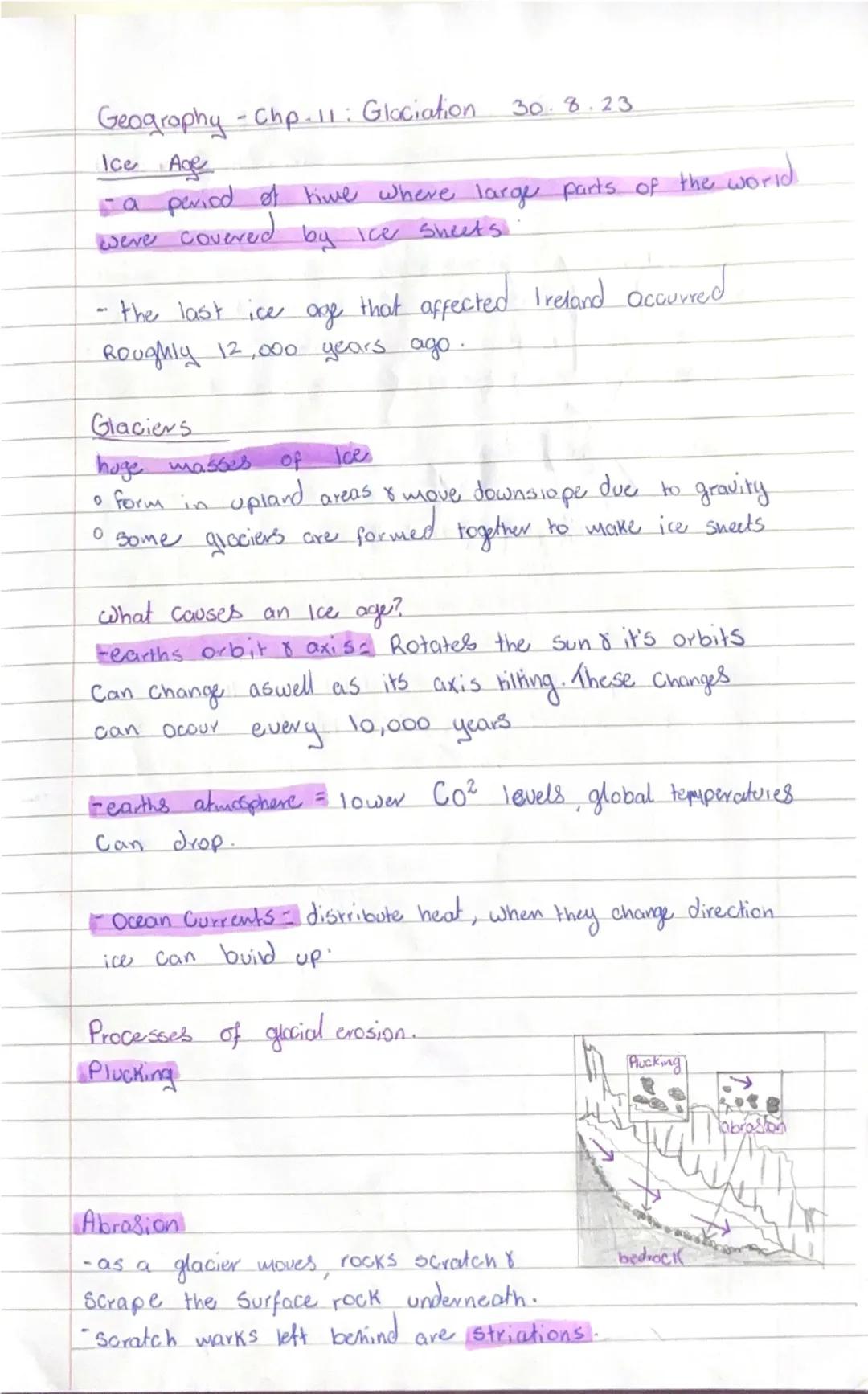
What Are Ice Ages and Glaciers?
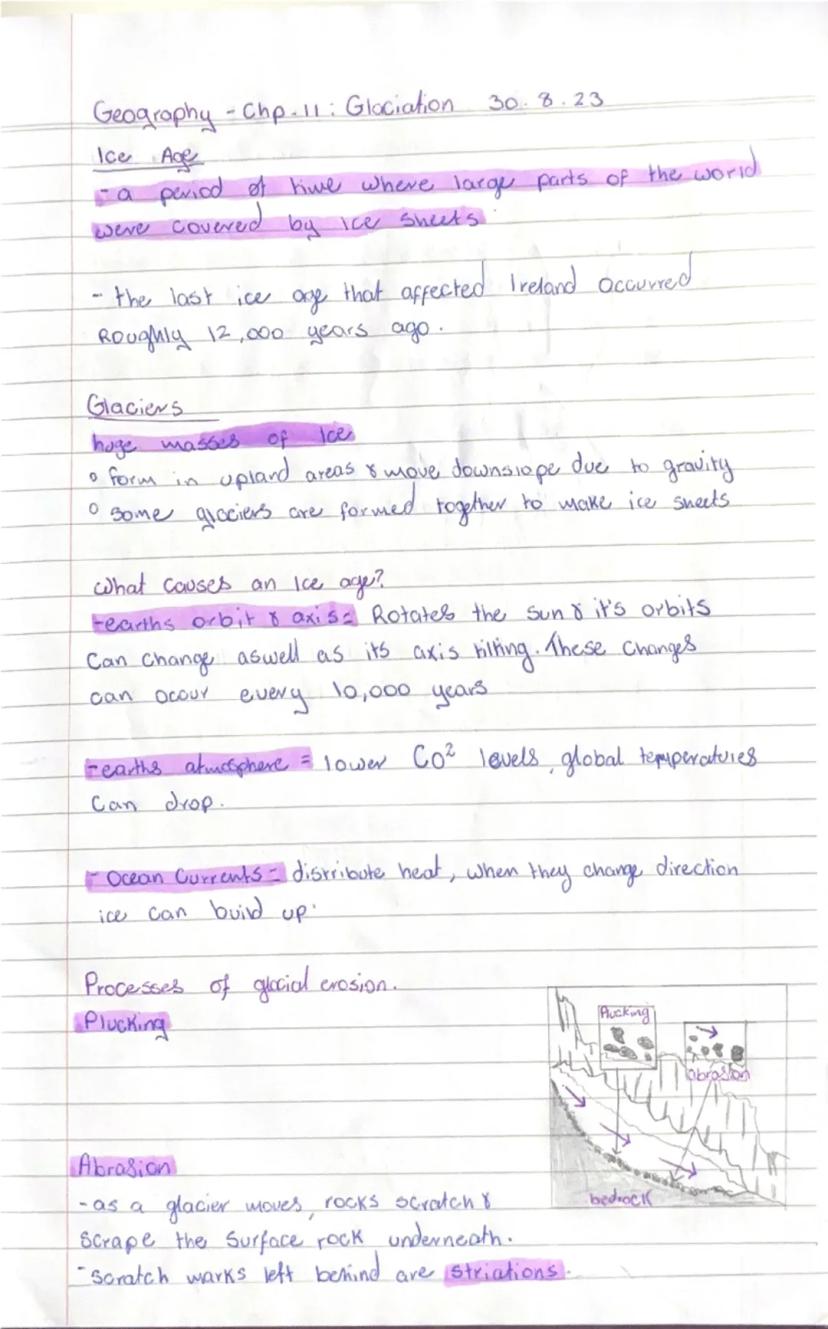
Think of an Ice Age as Earth's version of hitting the freeze button - massive ice sheets covered huge chunks of our planet, including Ireland, around 12,000 years ago. That might seem like ancient history, but it's actually quite recent in Earth's timeline!
Glaciers are basically huge rivers of ice that form in mountainous areas and slowly slide downhill thanks to gravity. When loads of these glaciers join together, they create enormous ice sheets that can cover entire countries.
So what triggers these icy periods? Earth's orbit around the sun isn't perfectly stable - it wobbles and tilts every 10,000 years or so, affecting how much heat we receive. Lower CO2 levels in the atmosphere and changes in ocean currents can also send global temperatures plummeting.
Quick Fact: The scratches you might see on rocks in places like Wicklow are called striations - they're like ancient fingerprints left behind by glaciers scraping across the landscape!
2
of 7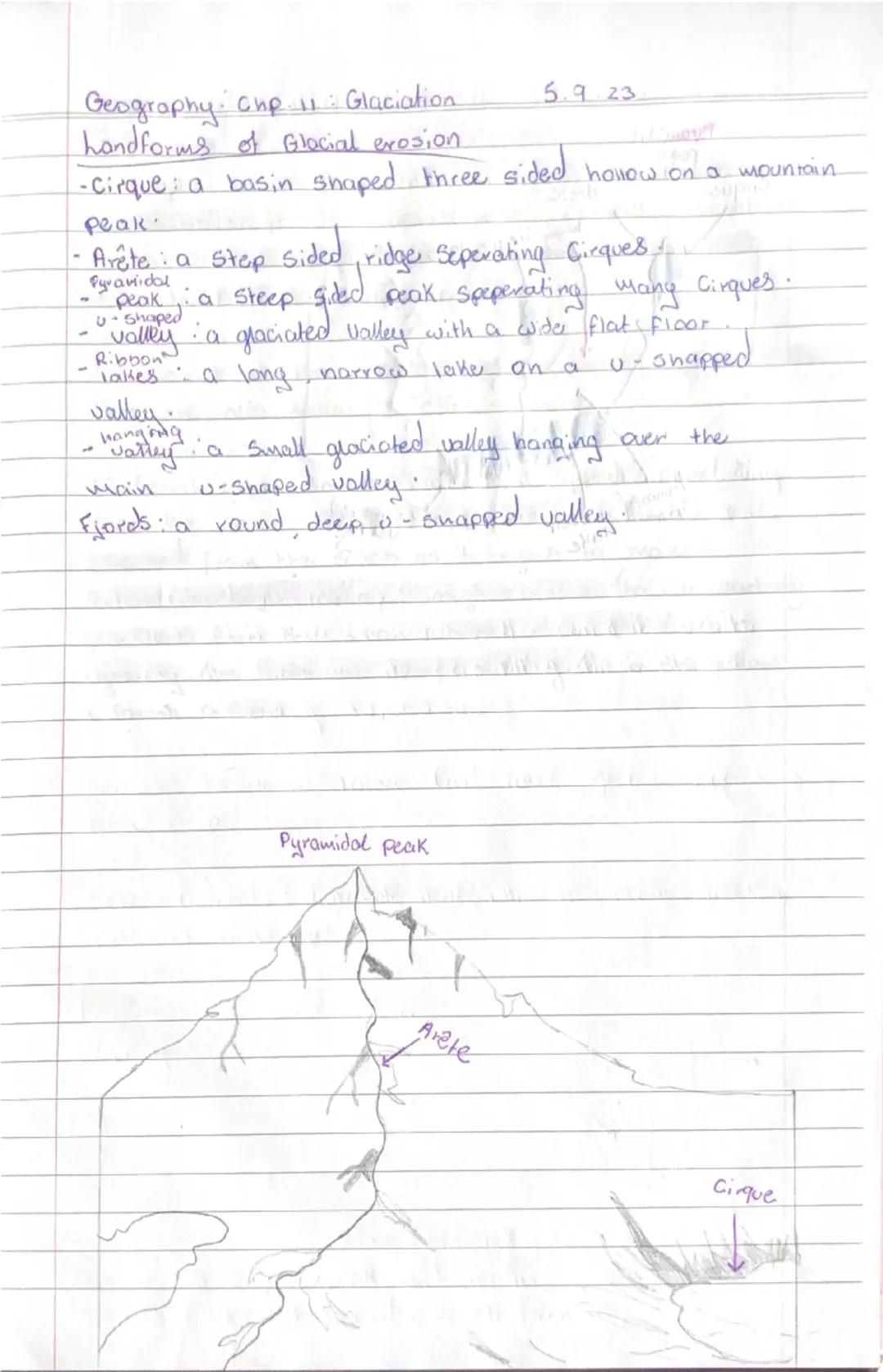
Landforms Created by Glacial Erosion
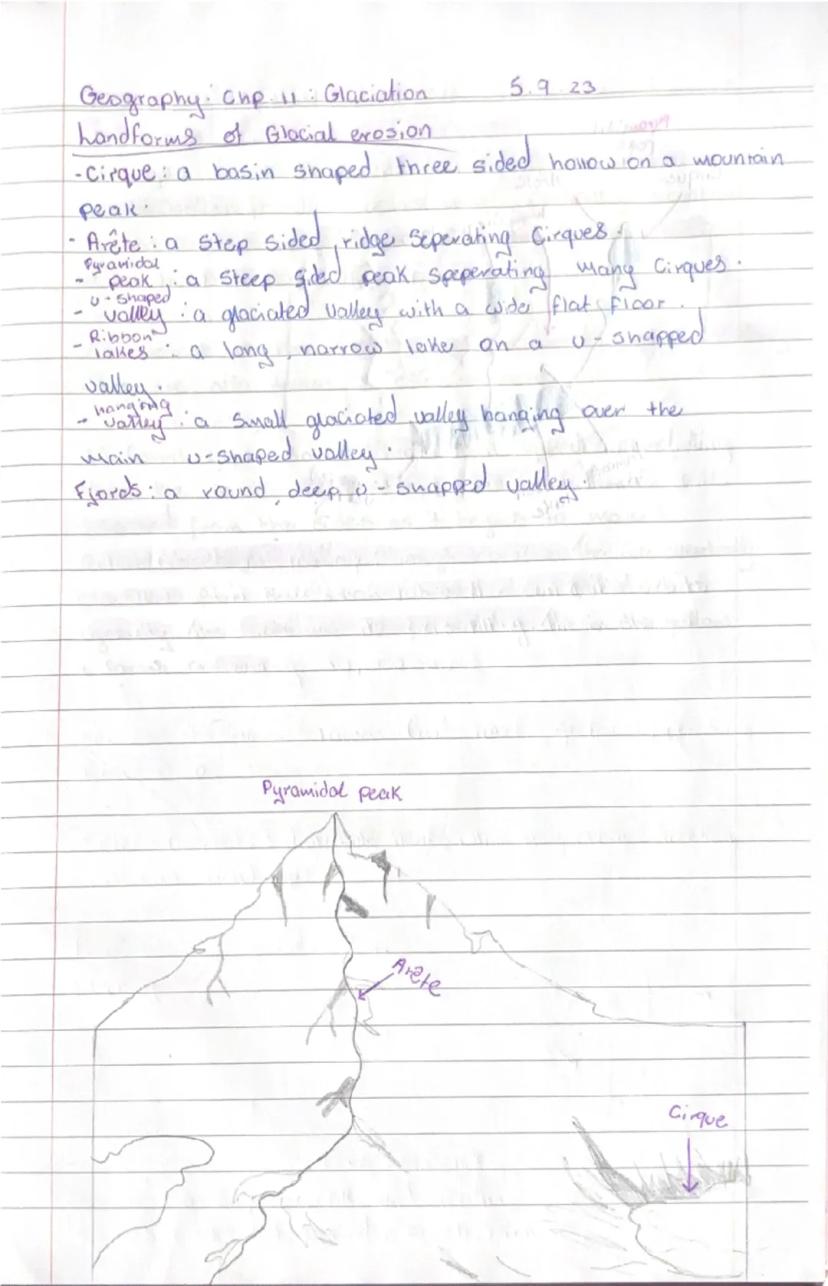
Glaciers are incredible landscape sculptors, and Ireland is basically their masterpiece! When glaciers carved through our mountains, they left behind some seriously impressive features that you can still visit today.
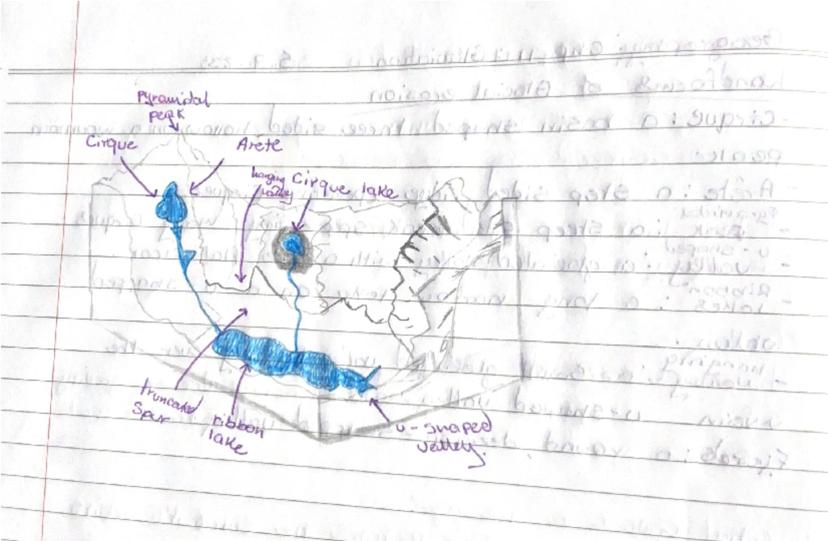
A cirque is like nature's amphitheatre - a bowl-shaped hollow with three steep sides, often filled with a lake (called a tarn). The Devil's Punchbowl in Killarney is a perfect example. When several cirques form near each other, they create knife-edge ridges called arêtes and pointy pyramidal peaks.
Glaciers also transformed narrow river valleys into wide, flat-bottomed U-shaped valleys. Sometimes smaller valleys get left 'hanging' above the main valley, creating spectacular waterfalls. Along coastlines, these U-shaped valleys flooded by the sea become fjords.
Did You Know?: Those long, skinny lakes you see in glaciated valleys are called ribbon lakes - they formed where the glacier dug extra deep into softer rock!
3
of 7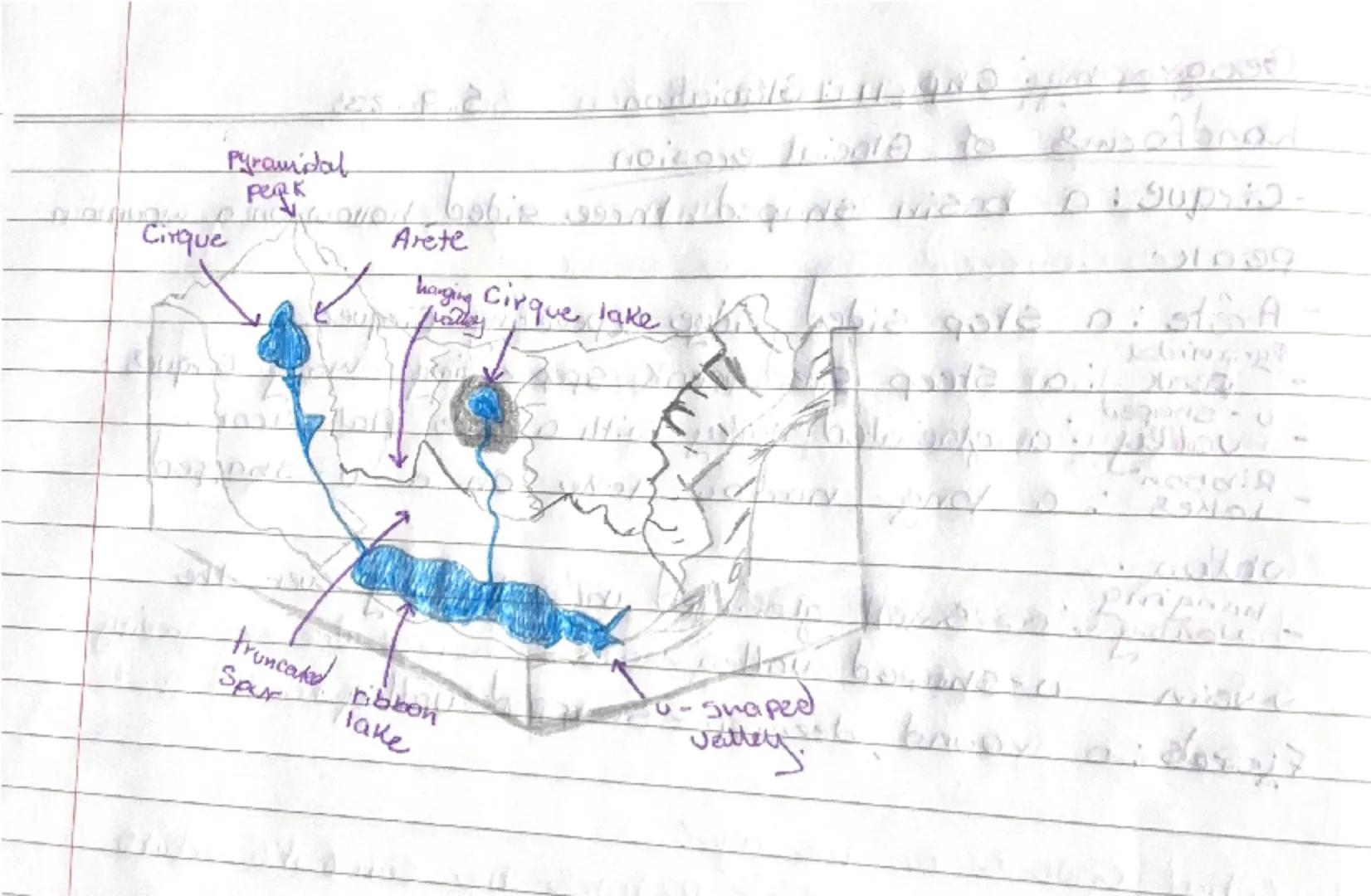
How Cirques Form
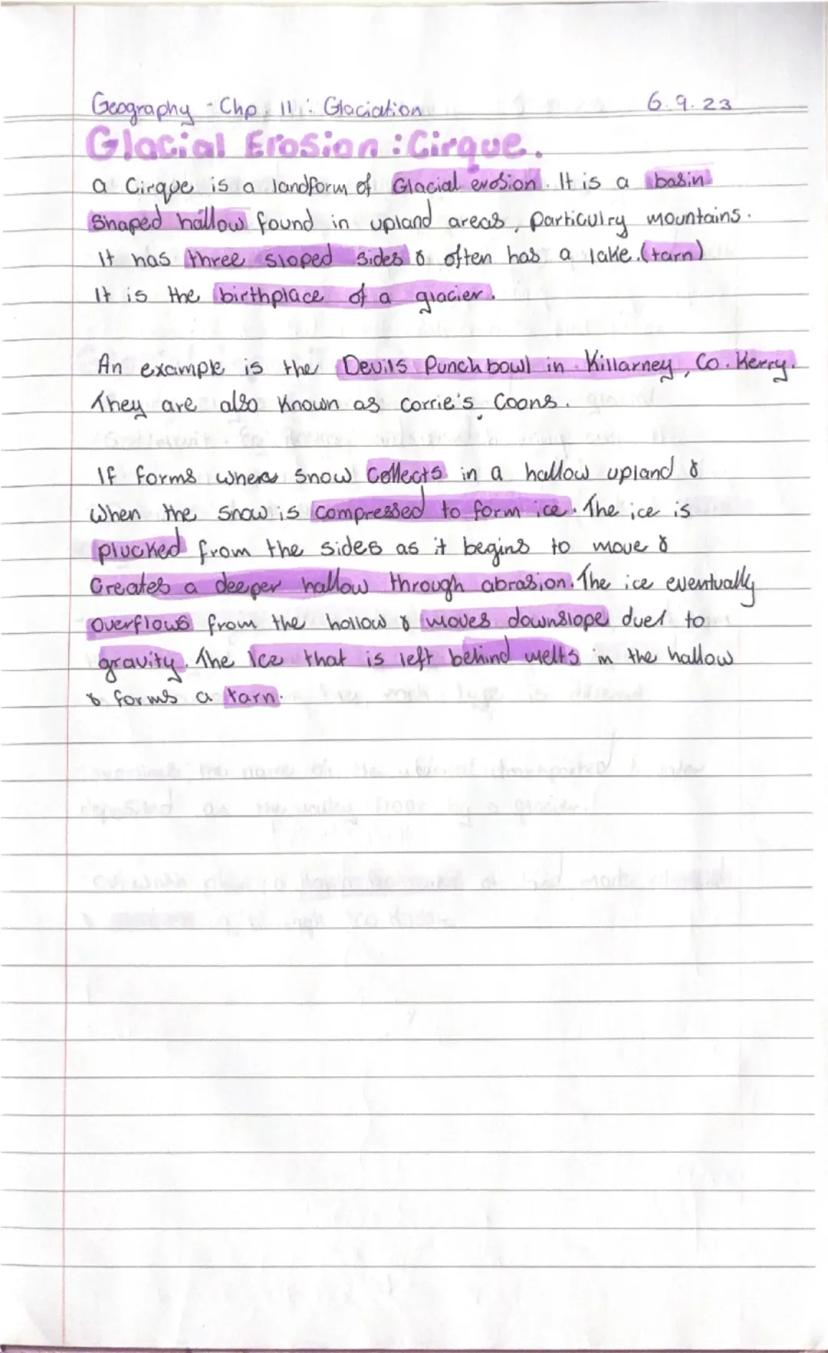
Understanding how a cirque forms is like watching nature's slow-motion construction project. These basin-shaped hollows are literally where glaciers are born, making them pretty special in the glaciation story.
It all starts when snow collects in a mountain hollow year after year. Eventually, this snow gets compressed into solid ice under its own weight. As the ice begins to move, it starts plucking chunks of rock from the sides and scraping the bottom through abrasion.
This creates a deeper and deeper hollow until eventually the ice overflows and flows downhill as a glacier. When the ice finally melts, it leaves behind that characteristic bowl shape, often with a beautiful lake (tarn) sitting in the bottom.
Real Example: Next time you're in Kerry, check out the Devil's Punchbowl - it's a textbook cirque that shows this process perfectly!
4
of 7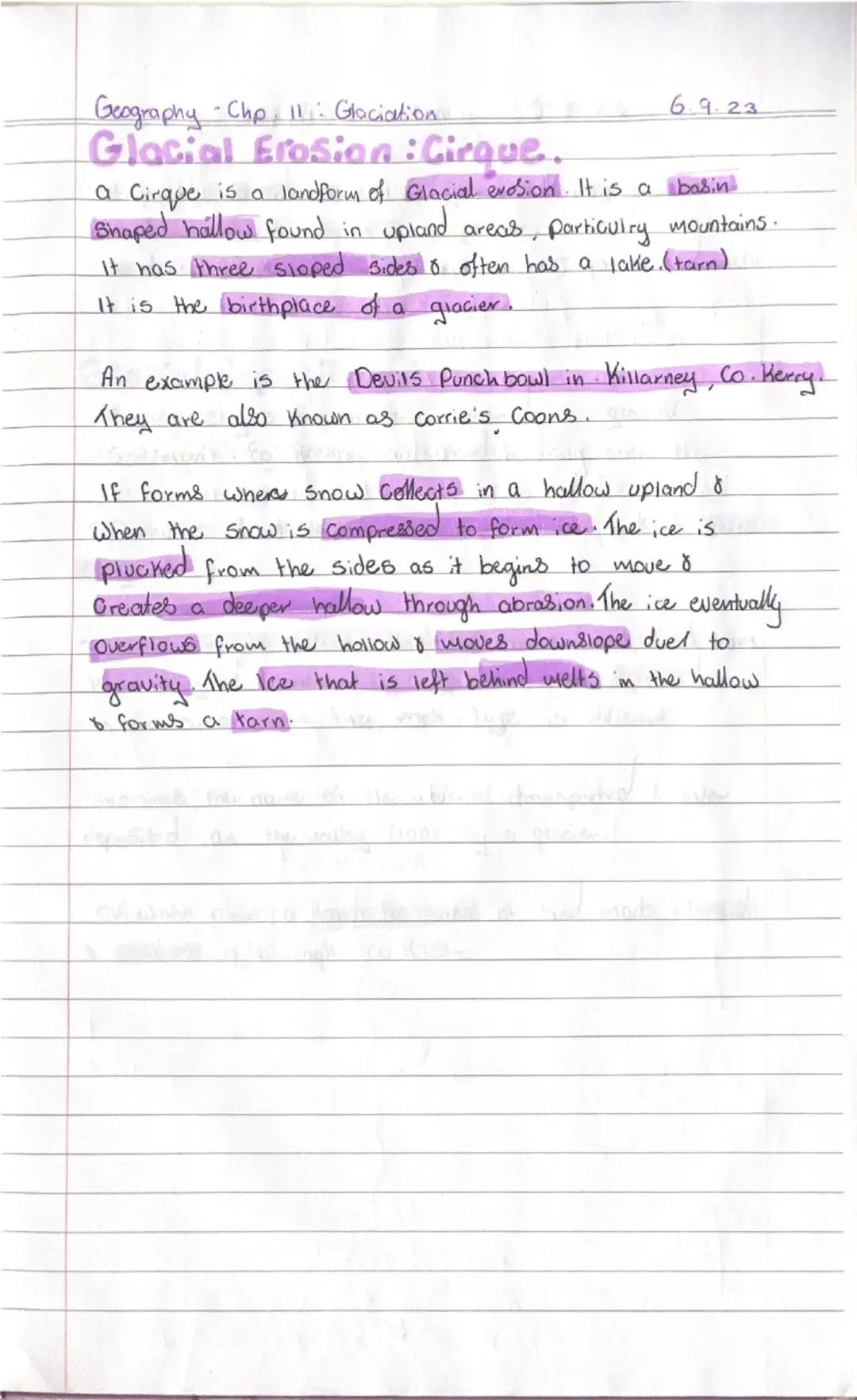
Glacial Transportation and Deposition
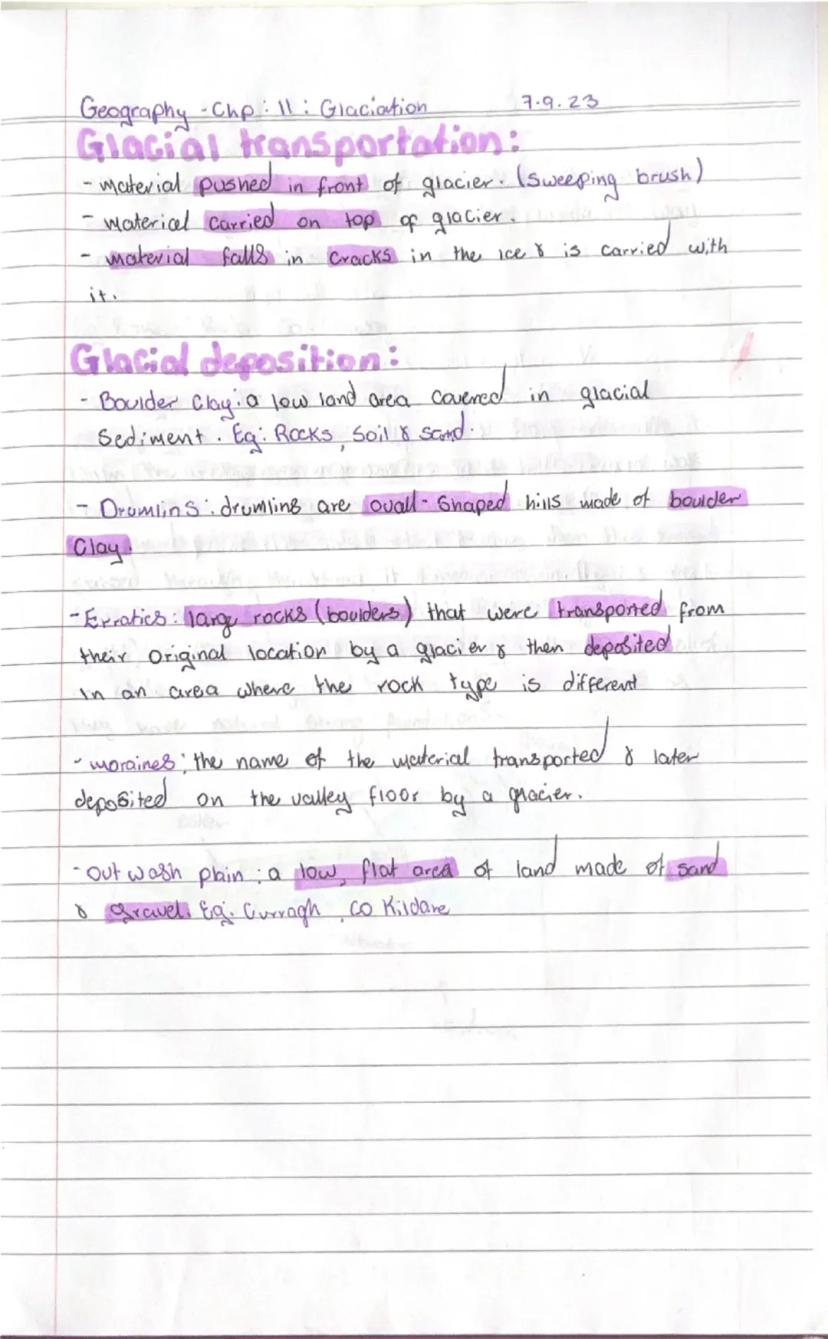
Glaciers aren't just destroyers - they're also incredible movers and builders! Think of a glacier as a massive, slow-moving conveyor belt that picks up everything in its path and dumps it somewhere completely different.
Glaciers transport material in three main ways: pushing it like a giant bulldozer, carrying it on top like a conveyor belt, or dragging it along in cracks within the ice. When the ice finally melts, all this material gets dumped, creating some fascinating landscape features.
Boulder clay covers huge areas of lowland Ireland - it's basically a mixture of rocks, soil, and sand that glaciers left behind. Drumlins are those oval-shaped hills you see dotting the Irish countryside, while erratics are massive boulders that ended up in completely the wrong place geologically speaking.
Cool Fact: Some erratics in Ireland came from as far away as Scotland - imagine the journey that boulder took, frozen inside a glacier for thousands of years!
5
of 7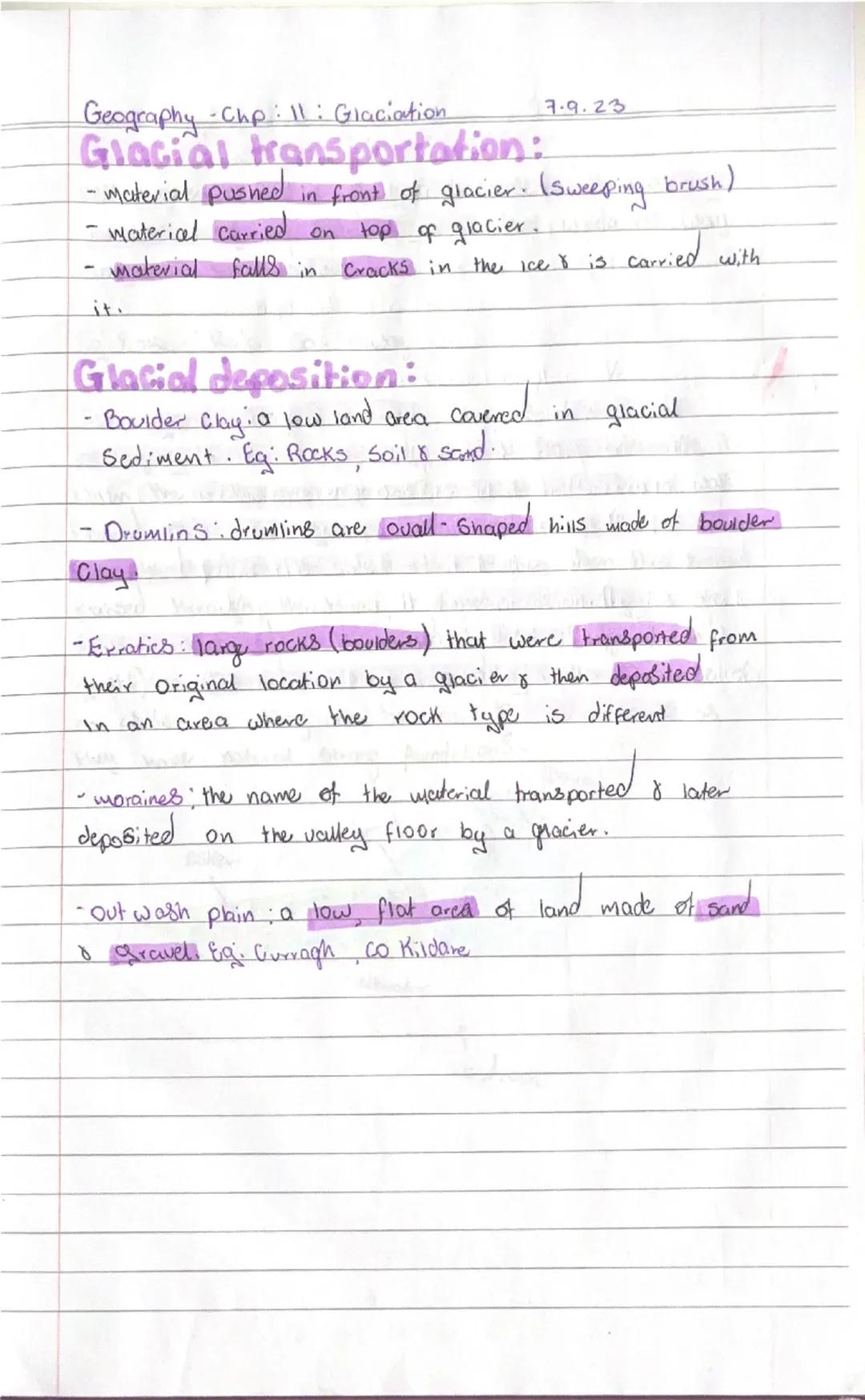
Eskers: Nature's Motorways
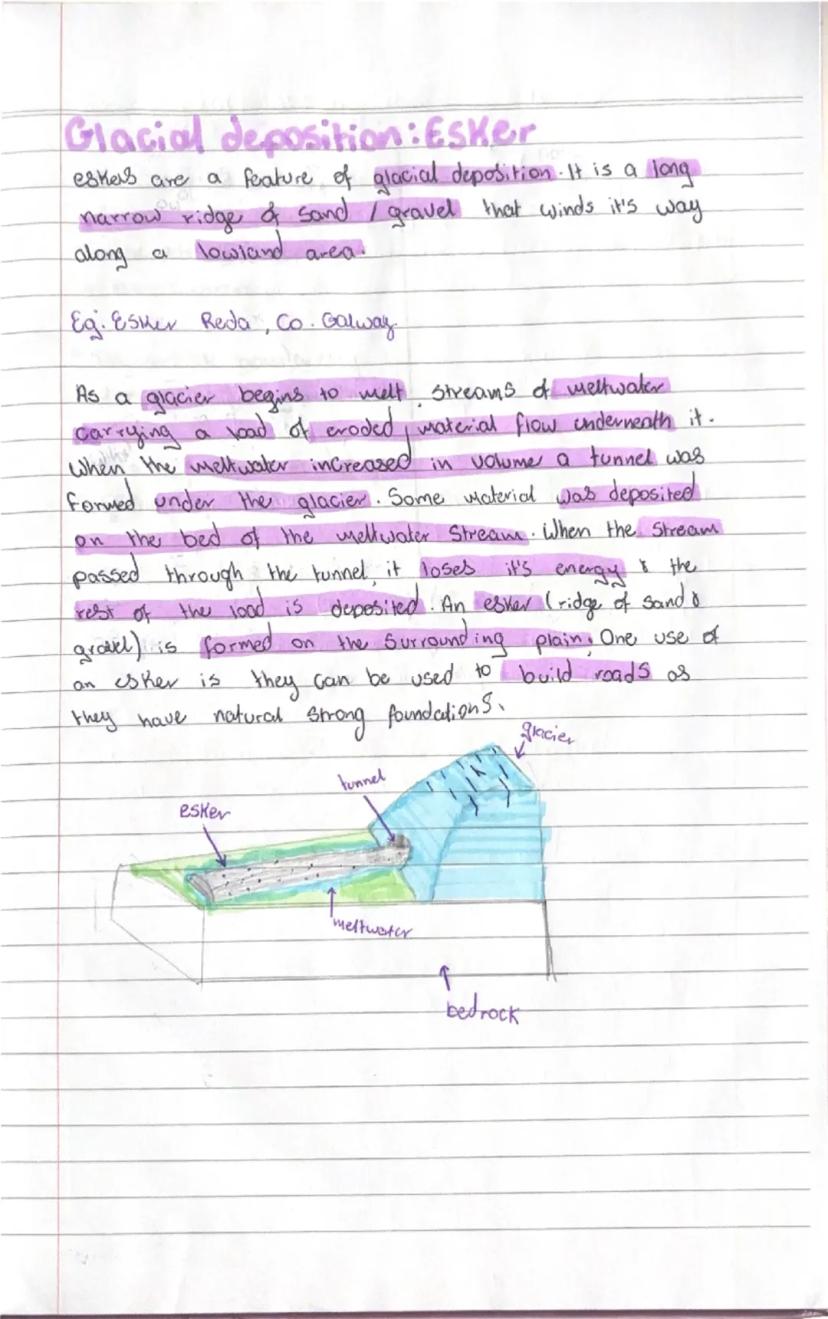
Eskers are some of the coolest features left behind by melting glaciers, and Ireland has loads of them! These long, winding ridges of sand and gravel snake across our lowlands like ancient motorways.
Here's how they formed: as glaciers began melting, streams of meltwater flowed underneath the ice, carrying loads of eroded material. When the water volume increased, it carved tunnels under the glacier, depositing material on the tunnel floor.
As the glacier completely melted away, these deposits were left behind as raised ridges on the surrounding plains. Esker Riada in Galway is a famous example that actually provided a natural route across boggy central Ireland for centuries.
Modern Use: Eskers make brilliant foundations for roads because they're naturally well-drained and stable - so you might actually drive on one without realising it!
6
of 7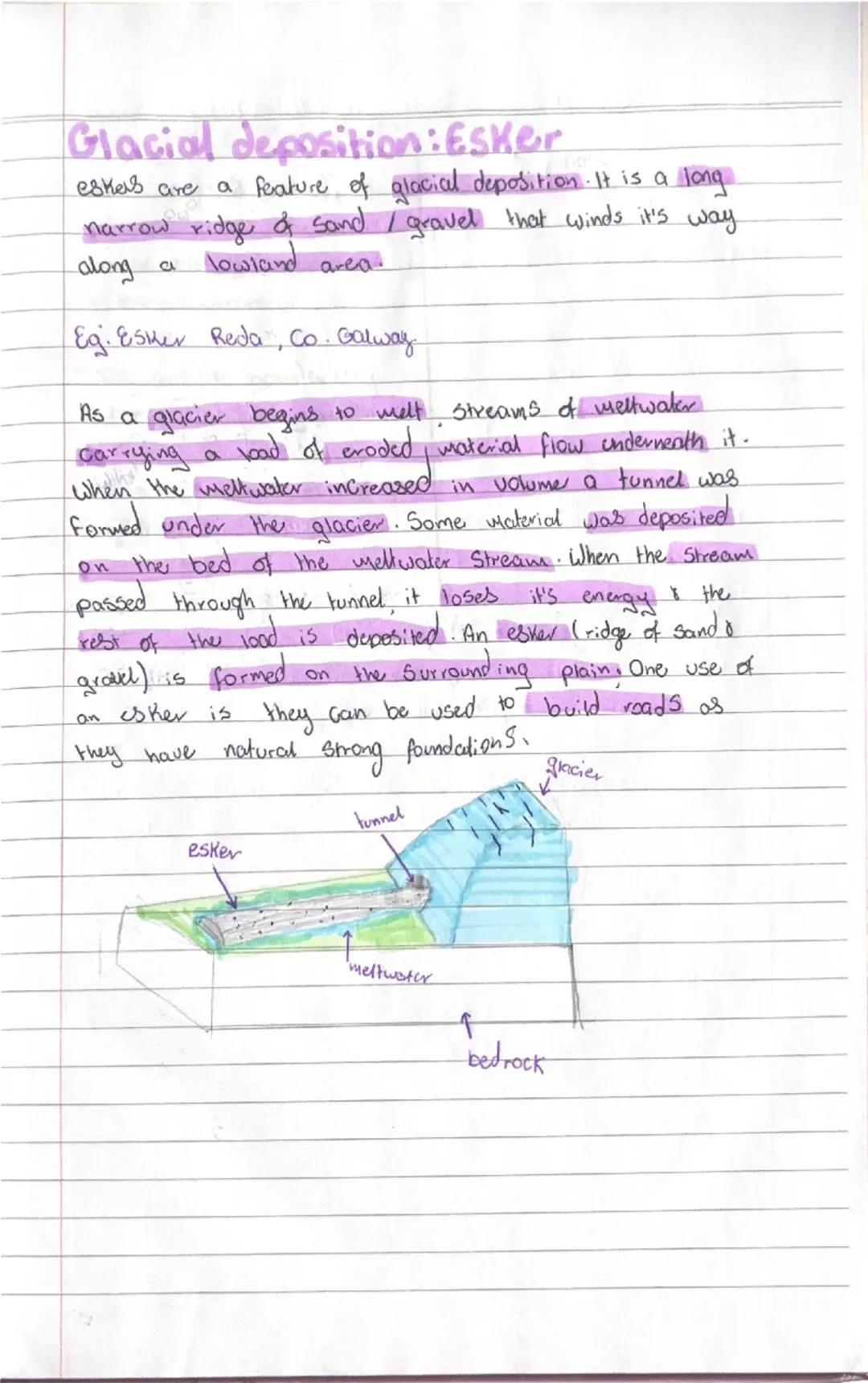
How Glaciation Benefits People Today
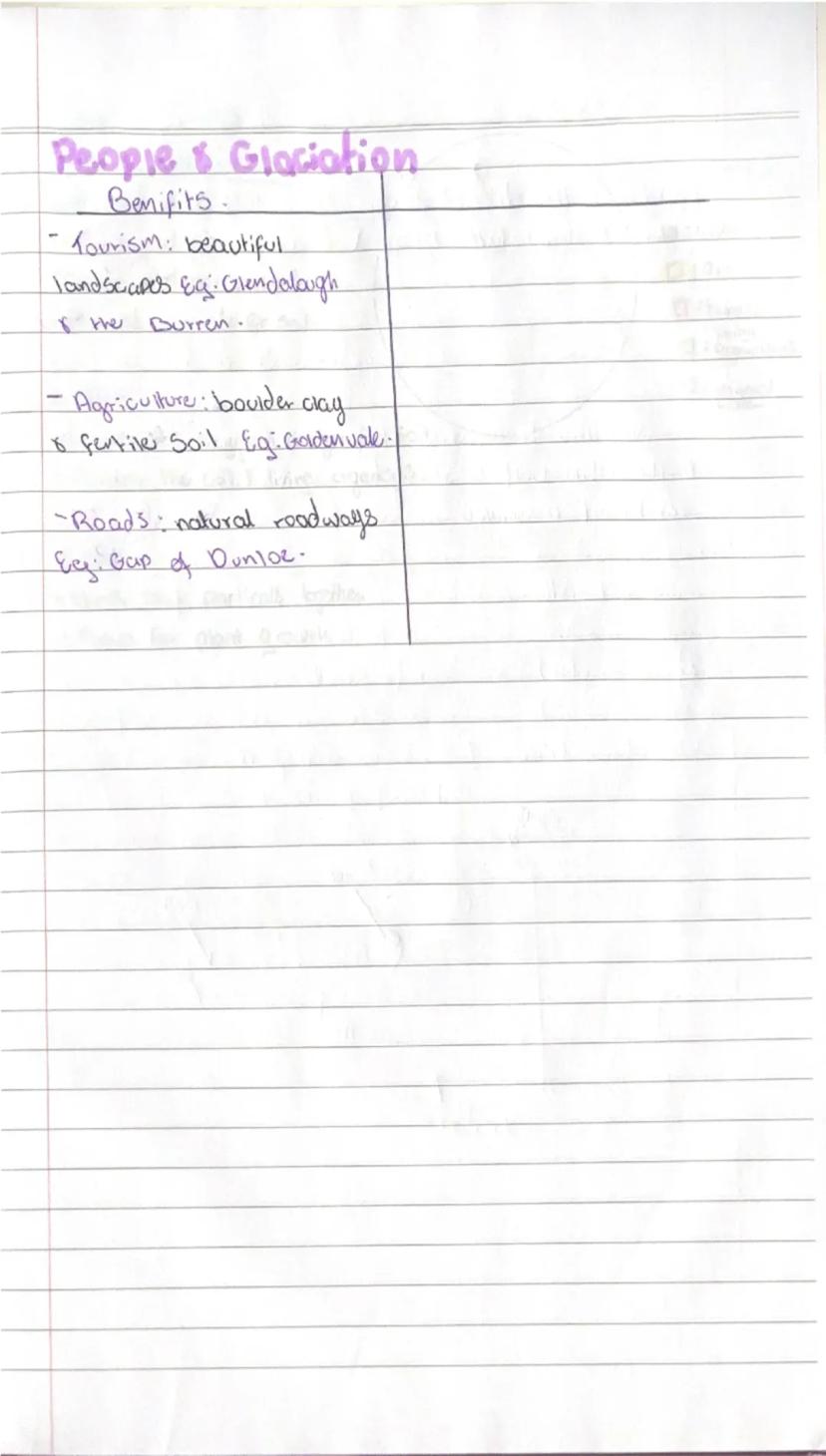
All that ancient ice activity wasn't just about creating pretty scenery - it actually gave Ireland some serious advantages that we still benefit from today! Glaciation basically set us up for success in several key areas.
Tourism is huge thanks to our glaciated landscapes. Places like Glendalough with its stunning lakes and the dramatic Gap of Dunloe attract millions of visitors who come specifically to see these ice-carved wonders.
The boulder clay left behind by glaciers created some of Ireland's most fertile farmland, including the Golden Vale. This rich soil is why certain areas are so perfect for agriculture - those ancient glaciers basically delivered premium topsoil from all over the place.
Handy Routes: Many of our mountain passes and roads follow routes that glaciers carved out thousands of years ago - nature did the hard work of cutting through the mountains for us!
7
of 7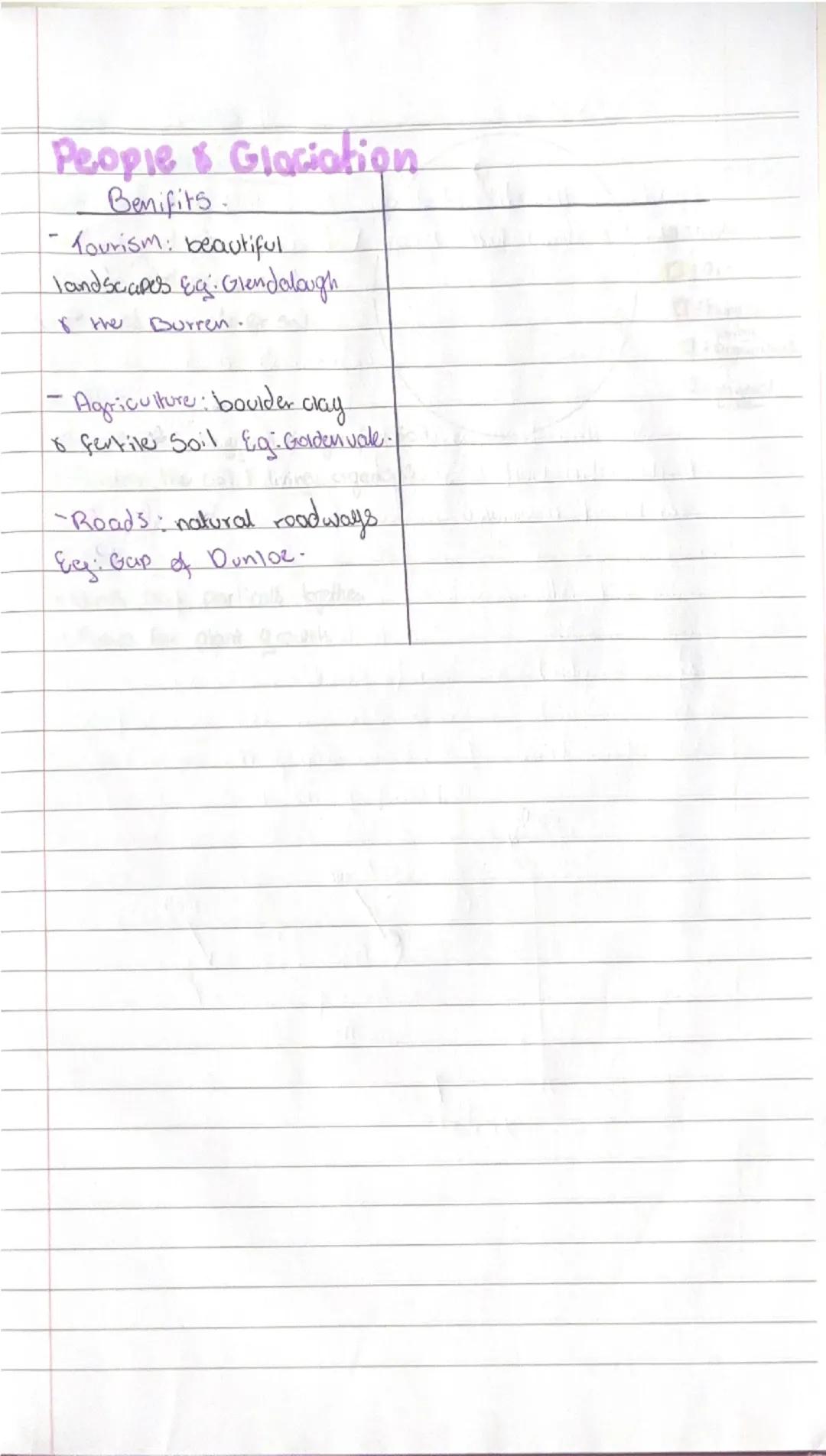
We thought you’d never ask...
What is the Knowunity AI companion?
Our AI companion is specifically built for the needs of students. Based on the millions of content pieces we have on the platform we can provide truly meaningful and relevant answers to students. But its not only about answers, the companion is even more about guiding students through their daily learning challenges, with personalised study plans, quizzes or content pieces in the chat and 100% personalisation based on the students skills and developments.
Where can I download the Knowunity app?
You can download the app in the Google Play Store and in the Apple App Store.
Is Knowunity really free of charge?
That's right! Enjoy free access to study content, connect with fellow students, and get instant help – all at your fingertips.
Most popular content in Geography
9Most popular content
9Can't find what you're looking for? Explore other subjects.
Students love us — and so will you.
4.6/5App Store
4.7/5Google Play
The app is very easy to use and well designed. I have found everything I was looking for so far and have been able to learn a lot from the presentations! I will definitely use the app for a class assignment! And of course it also helps a lot as an inspiration.
Stefan SiOS user
This app is really great. There are so many study notes and help [...]. My problem subject is French, for example, and the app has so many options for help. Thanks to this app, I have improved my French. I would recommend it to anyone.
Samantha KlichAndroid user
Wow, I am really amazed. I just tried the app because I've seen it advertised many times and was absolutely stunned. This app is THE HELP you want for school and above all, it offers so many things, such as workouts and fact sheets, which have been VERY helpful to me personally.
AnnaiOS user
Geography21 views·Updated Jun 8, 2026·7 pagesComprehensive Geography Notes on Glaciation
K
Kyla McInerney@kylamcinerney
Ever wondered how Ireland got its stunning landscapes like the Ring of Kerry or Glendalough? It's all thanks to massive ice sheets that covered our country about 12,000 years ago during the last Ice Age, carving out the dramatic mountains,... Show more
1
of 7Sign up to see the content. It's free!
- Access to all documents
- Improve your grades
- Join milions of students
What Are Ice Ages and Glaciers?
Think of an Ice Age as Earth's version of hitting the freeze button - massive ice sheets covered huge chunks of our planet, including Ireland, around 12,000 years ago. That might seem like ancient history, but it's actually quite recent in Earth's timeline!
Glaciers are basically huge rivers of ice that form in mountainous areas and slowly slide downhill thanks to gravity. When loads of these glaciers join together, they create enormous ice sheets that can cover entire countries.
So what triggers these icy periods? Earth's orbit around the sun isn't perfectly stable - it wobbles and tilts every 10,000 years or so, affecting how much heat we receive. Lower CO2 levels in the atmosphere and changes in ocean currents can also send global temperatures plummeting.
Quick Fact: The scratches you might see on rocks in places like Wicklow are called striations - they're like ancient fingerprints left behind by glaciers scraping across the landscape!
2
of 7Sign up to see the content. It's free!
- Access to all documents
- Improve your grades
- Join milions of students
Landforms Created by Glacial Erosion
Glaciers are incredible landscape sculptors, and Ireland is basically their masterpiece! When glaciers carved through our mountains, they left behind some seriously impressive features that you can still visit today.
A cirque is like nature's amphitheatre - a bowl-shaped hollow with three steep sides, often filled with a lake (called a tarn). The Devil's Punchbowl in Killarney is a perfect example. When several cirques form near each other, they create knife-edge ridges called arêtes and pointy pyramidal peaks.
Glaciers also transformed narrow river valleys into wide, flat-bottomed U-shaped valleys. Sometimes smaller valleys get left 'hanging' above the main valley, creating spectacular waterfalls. Along coastlines, these U-shaped valleys flooded by the sea become fjords.
Did You Know?: Those long, skinny lakes you see in glaciated valleys are called ribbon lakes - they formed where the glacier dug extra deep into softer rock!
3
of 7Sign up to see the content. It's free!
- Access to all documents
- Improve your grades
- Join milions of students
How Cirques Form
Understanding how a cirque forms is like watching nature's slow-motion construction project. These basin-shaped hollows are literally where glaciers are born, making them pretty special in the glaciation story.
It all starts when snow collects in a mountain hollow year after year. Eventually, this snow gets compressed into solid ice under its own weight. As the ice begins to move, it starts plucking chunks of rock from the sides and scraping the bottom through abrasion.
This creates a deeper and deeper hollow until eventually the ice overflows and flows downhill as a glacier. When the ice finally melts, it leaves behind that characteristic bowl shape, often with a beautiful lake (tarn) sitting in the bottom.
Real Example: Next time you're in Kerry, check out the Devil's Punchbowl - it's a textbook cirque that shows this process perfectly!
4
of 7Sign up to see the content. It's free!
- Access to all documents
- Improve your grades
- Join milions of students
Glacial Transportation and Deposition
Glaciers aren't just destroyers - they're also incredible movers and builders! Think of a glacier as a massive, slow-moving conveyor belt that picks up everything in its path and dumps it somewhere completely different.
Glaciers transport material in three main ways: pushing it like a giant bulldozer, carrying it on top like a conveyor belt, or dragging it along in cracks within the ice. When the ice finally melts, all this material gets dumped, creating some fascinating landscape features.
Boulder clay covers huge areas of lowland Ireland - it's basically a mixture of rocks, soil, and sand that glaciers left behind. Drumlins are those oval-shaped hills you see dotting the Irish countryside, while erratics are massive boulders that ended up in completely the wrong place geologically speaking.
Cool Fact: Some erratics in Ireland came from as far away as Scotland - imagine the journey that boulder took, frozen inside a glacier for thousands of years!
5
of 7Sign up to see the content. It's free!
- Access to all documents
- Improve your grades
- Join milions of students
Eskers: Nature's Motorways
Eskers are some of the coolest features left behind by melting glaciers, and Ireland has loads of them! These long, winding ridges of sand and gravel snake across our lowlands like ancient motorways.
Here's how they formed: as glaciers began melting, streams of meltwater flowed underneath the ice, carrying loads of eroded material. When the water volume increased, it carved tunnels under the glacier, depositing material on the tunnel floor.
As the glacier completely melted away, these deposits were left behind as raised ridges on the surrounding plains. Esker Riada in Galway is a famous example that actually provided a natural route across boggy central Ireland for centuries.
Modern Use: Eskers make brilliant foundations for roads because they're naturally well-drained and stable - so you might actually drive on one without realising it!
6
of 7Sign up to see the content. It's free!
- Access to all documents
- Improve your grades
- Join milions of students
How Glaciation Benefits People Today
All that ancient ice activity wasn't just about creating pretty scenery - it actually gave Ireland some serious advantages that we still benefit from today! Glaciation basically set us up for success in several key areas.
Tourism is huge thanks to our glaciated landscapes. Places like Glendalough with its stunning lakes and the dramatic Gap of Dunloe attract millions of visitors who come specifically to see these ice-carved wonders.
The boulder clay left behind by glaciers created some of Ireland's most fertile farmland, including the Golden Vale. This rich soil is why certain areas are so perfect for agriculture - those ancient glaciers basically delivered premium topsoil from all over the place.
Handy Routes: Many of our mountain passes and roads follow routes that glaciers carved out thousands of years ago - nature did the hard work of cutting through the mountains for us!
7
of 7Sign up to see the content. It's free!
- Access to all documents
- Improve your grades
- Join milions of students
We thought you’d never ask...
What is the Knowunity AI companion?
Our AI companion is specifically built for the needs of students. Based on the millions of content pieces we have on the platform we can provide truly meaningful and relevant answers to students. But its not only about answers, the companion is even more about guiding students through their daily learning challenges, with personalised study plans, quizzes or content pieces in the chat and 100% personalisation based on the students skills and developments.
Where can I download the Knowunity app?
You can download the app in the Google Play Store and in the Apple App Store.
Is Knowunity really free of charge?
That's right! Enjoy free access to study content, connect with fellow students, and get instant help – all at your fingertips.
Most popular content in Geography
9Most popular content
9Can't find what you're looking for? Explore other subjects.
Students love us — and so will you.
4.6/5App Store
4.7/5Google Play
The app is very easy to use and well designed. I have found everything I was looking for so far and have been able to learn a lot from the presentations! I will definitely use the app for a class assignment! And of course it also helps a lot as an inspiration.
Stefan SiOS user
This app is really great. There are so many study notes and help [...]. My problem subject is French, for example, and the app has so many options for help. Thanks to this app, I have improved my French. I would recommend it to anyone.
Samantha KlichAndroid user
Wow, I am really amazed. I just tried the app because I've seen it advertised many times and was absolutely stunned. This app is THE HELP you want for school and above all, it offers so many things, such as workouts and fact sheets, which have been VERY helpful to me personally.
AnnaiOS user