
Ever wonder why you don't float off into space when...
 Engineering16 views·Updated Jun 5, 2026·5 pages
Understanding Gravity and Friction: Key Concepts
1 / 5
1
of 5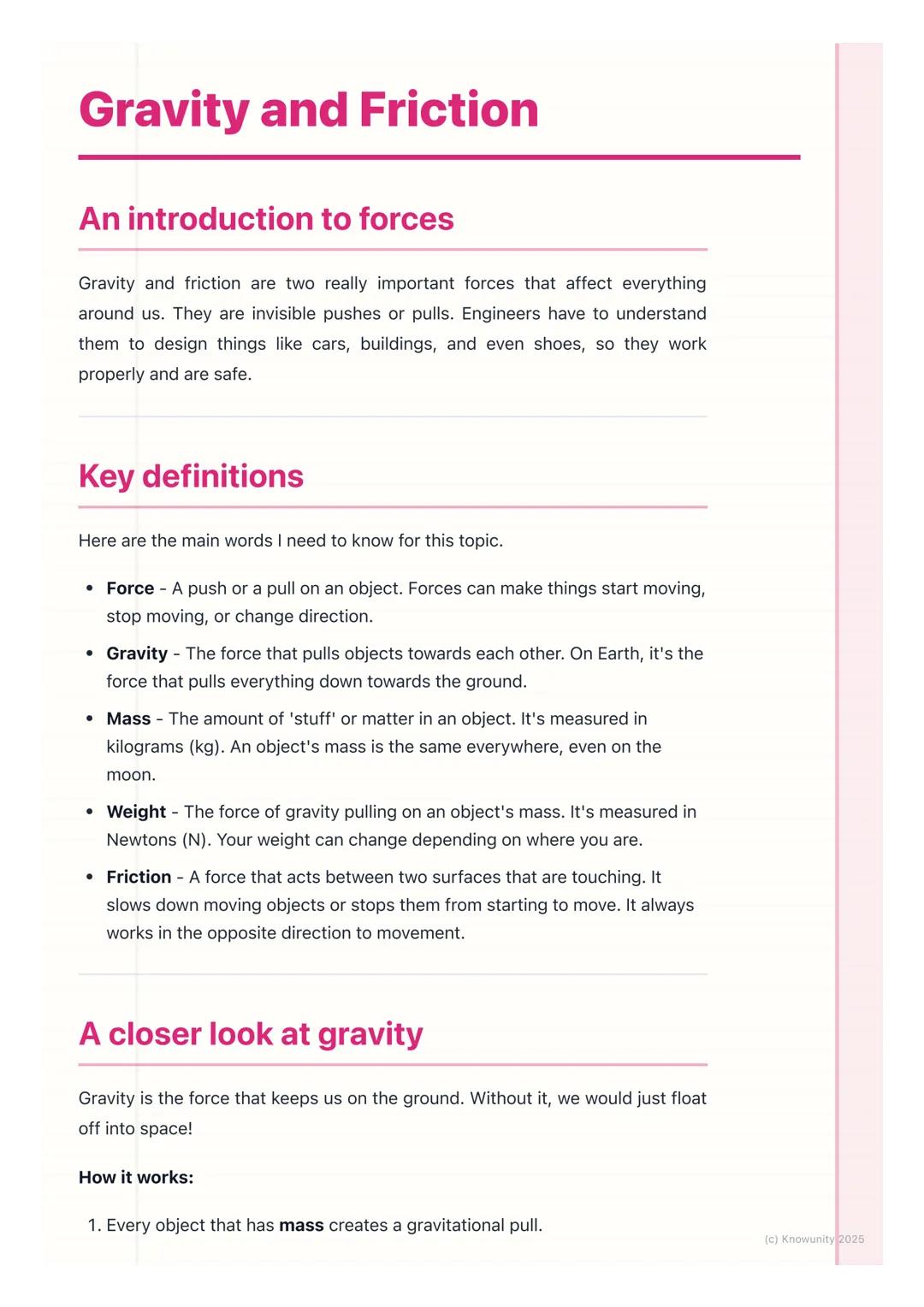
Introduction to Forces
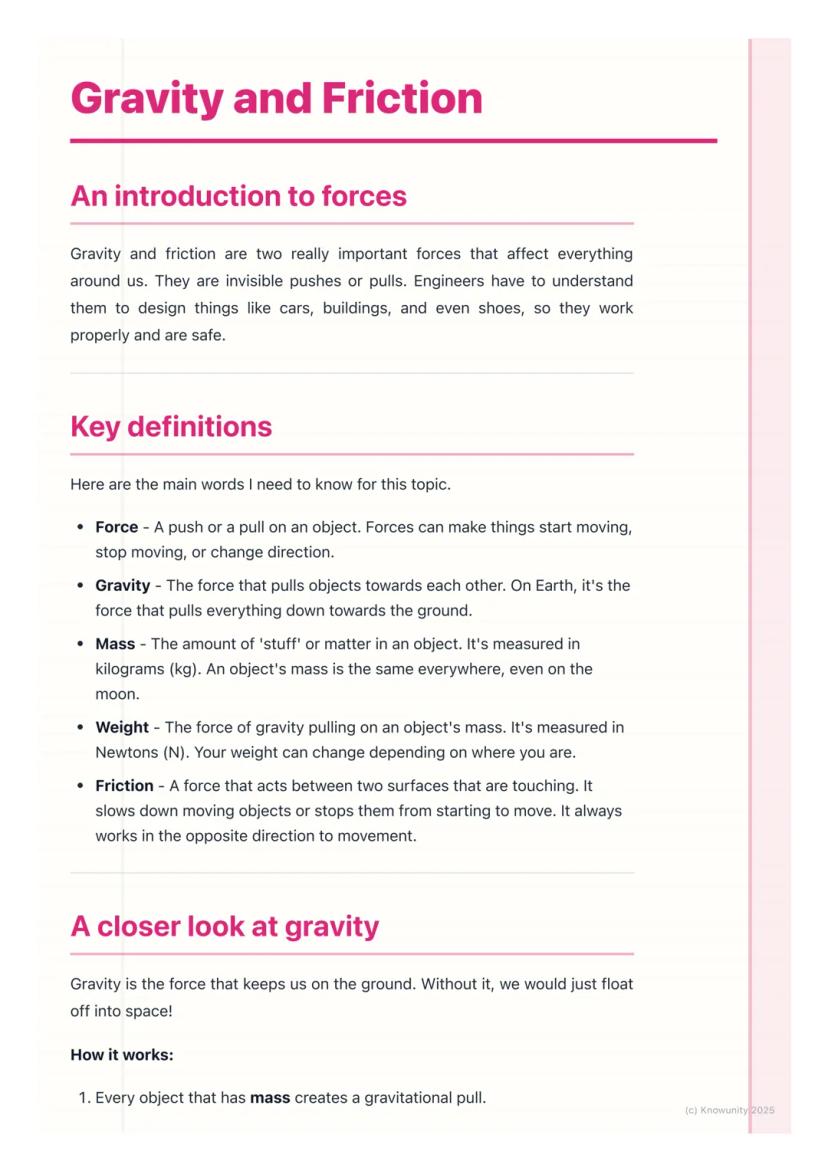
You can't see them, but forces are constantly pushing and pulling everything around you! These invisible forces make things start moving, stop moving, or change direction completely.
Gravity is the force that keeps your feet on the ground and makes things fall down towards Earth. Friction happens when surfaces rub together - it's what stops you from sliding around like you're on ice all the time.
Engineers need to understand these forces brilliantly to design safe cars, sturdy buildings, and even the trainers on your feet. Once you get how these work, you'll start spotting them everywhere!
Quick Tip: Think of forces as invisible hands that are always pushing or pulling objects - even when nothing seems to be happening!
2
of 5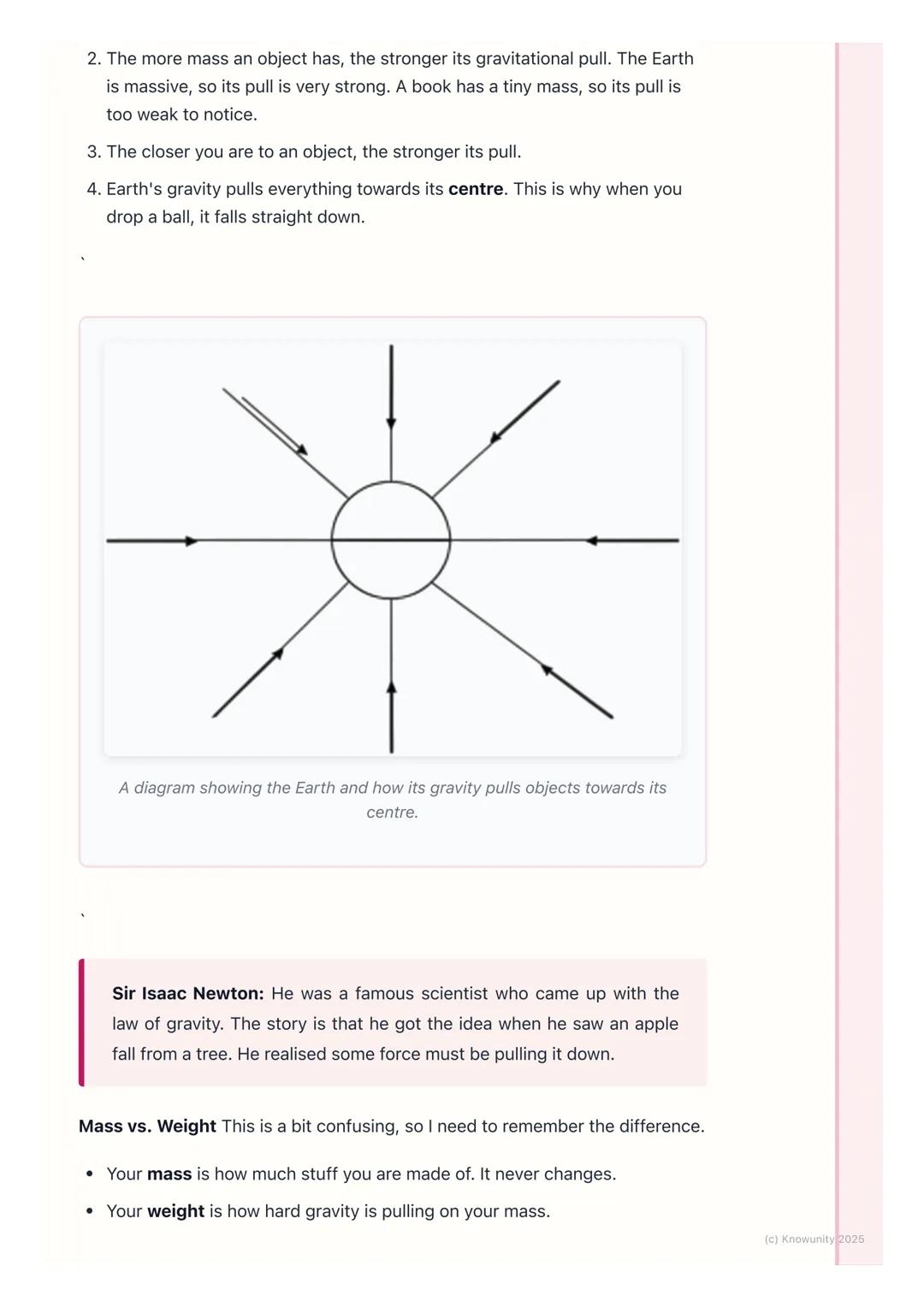
How Gravity Actually Works
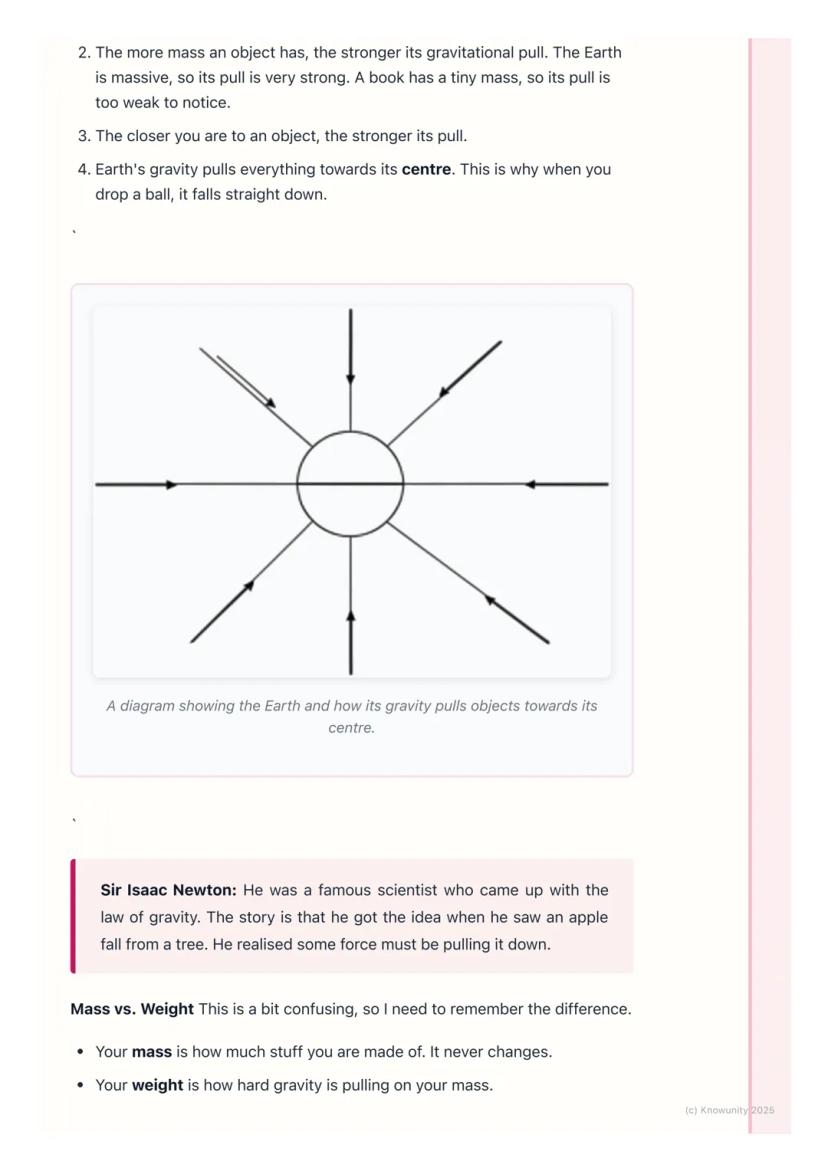
Here's the mad thing about gravity - every single object that has mass (the amount of stuff it's made of) pulls on every other object! Earth is absolutely massive, so its gravitational pull is incredibly strong.
The closer you are to something, the stronger the pull gets. That's why when you drop your phone, it falls straight down towards Earth's centre rather than floating sideways.
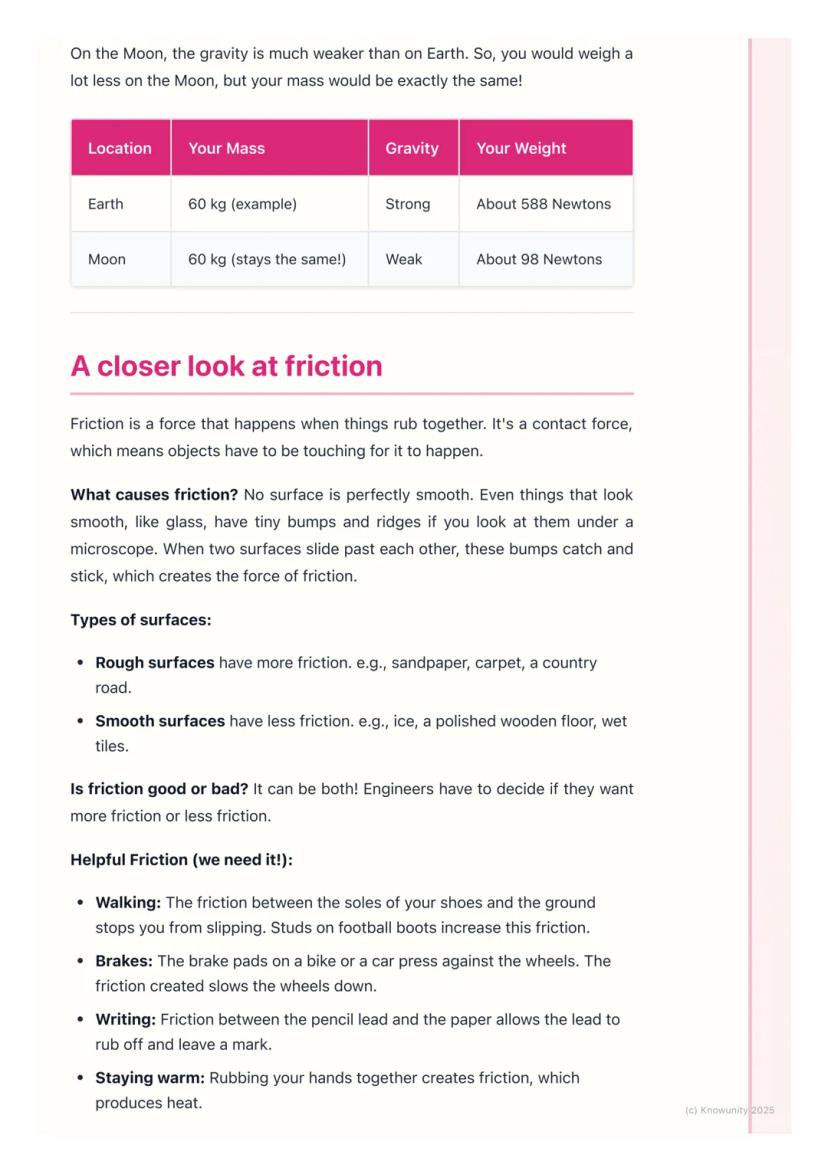
Mass versus weight trips up loads of students, but it's actually dead simple. Your mass (measured in kg) never changes - you're made of the same amount of stuff whether you're in Dublin or on the Moon. Your weight (measured in Newtons) is just how hard gravity pulls on that mass.
On the Moon, you'd weigh about six times less than on Earth, but you'd still be exactly the same person with the same mass!
Remember: Sir Isaac Newton figured out gravity when he saw an apple fall - sometimes the best discoveries come from noticing everyday things!
3
of 5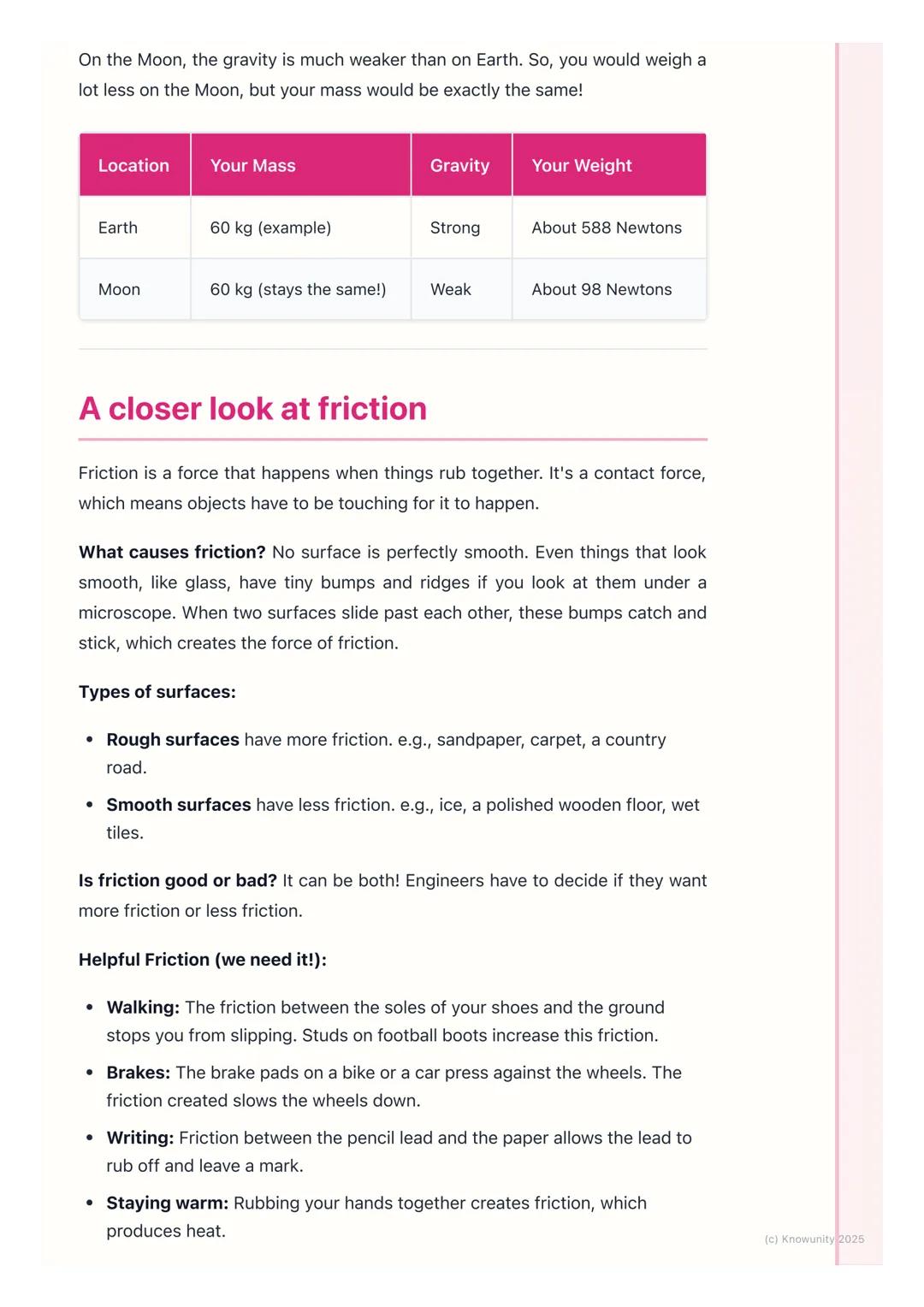
Understanding Friction
Friction is the force you feel when surfaces rub together, and it always works against movement. Even surfaces that look perfectly smooth have tiny bumps and ridges that catch and stick when they slide past each other.
Rough surfaces like sandpaper or a football pitch create loads of friction. Smooth surfaces like ice or wet tiles have much less friction - that's why they're so slippery!
Sometimes friction is brilliant and sometimes it's a right pain. You absolutely need it for walking (without it, you'd slip constantly), using brakes on your bike, or even writing with a pencil. But friction also wears out your shoes and makes it harder to push heavy things around.
Engineers get really clever about this - they add oil to engine parts to reduce unwanted friction, but they make car tyres rough to increase helpful friction with the road.
Key Point: Friction always pushes in the opposite direction to movement - if something slides right, friction pushes it left!
4
of 5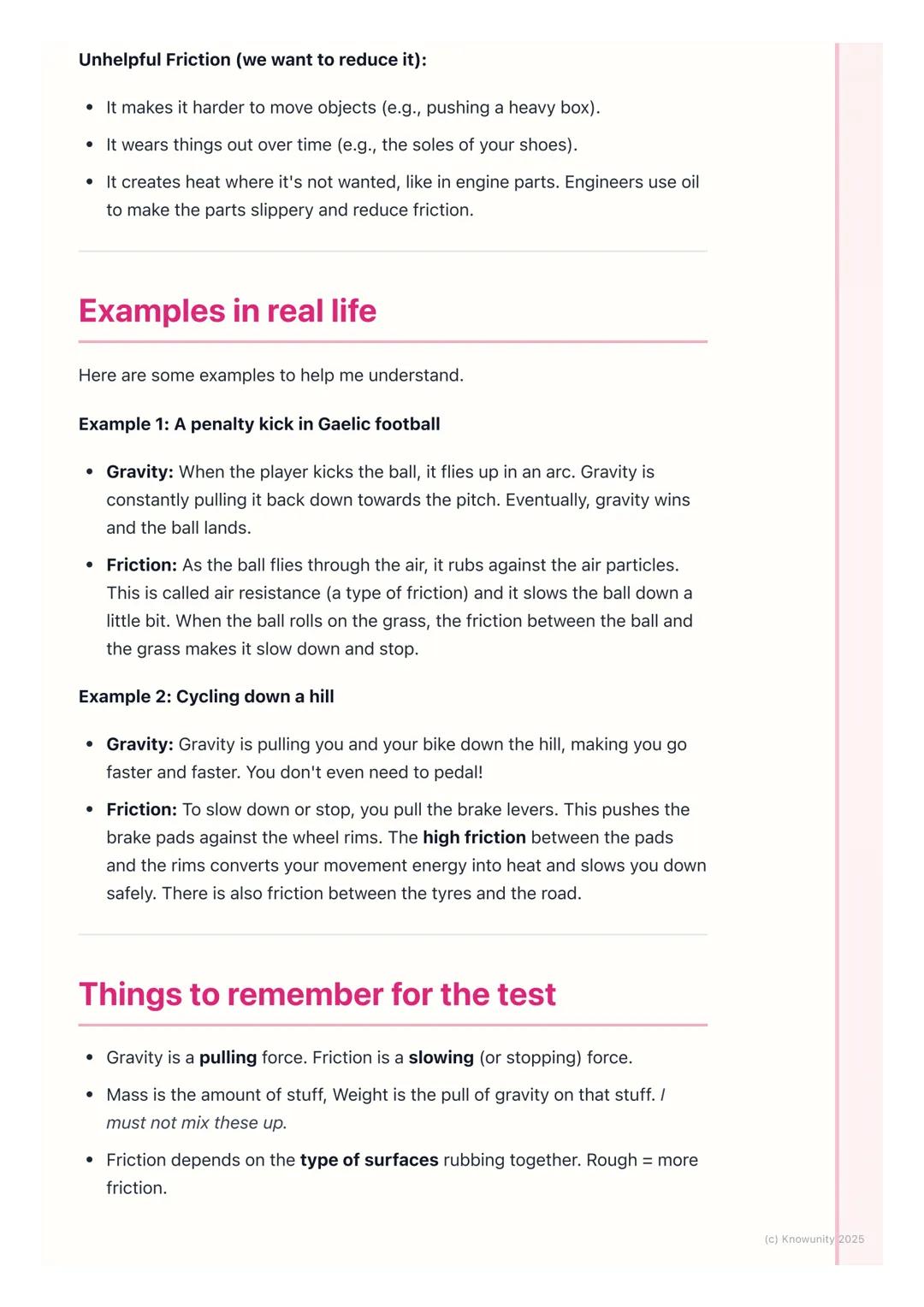
Real-Life Examples
Picture a penalty kick in Gaelic football. When the ball leaves the player's boot, gravity immediately starts pulling it back down towards the pitch. Meanwhile, air resistance (a type of friction) slows the ball down as it flies through the air.
When you're cycling down a hill, gravity pulls you faster and faster - you don't even need to pedal! To slow down safely, you squeeze the brake levers, which creates loads of friction between the brake pads and your wheel rims.
These forces work together constantly. Gravity might be pulling a book off your desk, but friction between the book and the desk surface keeps it in place. It's like an invisible tug-of-war happening all around you!
Every sport, every form of transport, and every simple task like walking involves these two forces working either together or against each other.
Think About It: Next time you're walking on different surfaces, notice how your shoes grip differently - that's friction changing with the surface type!
5
of 5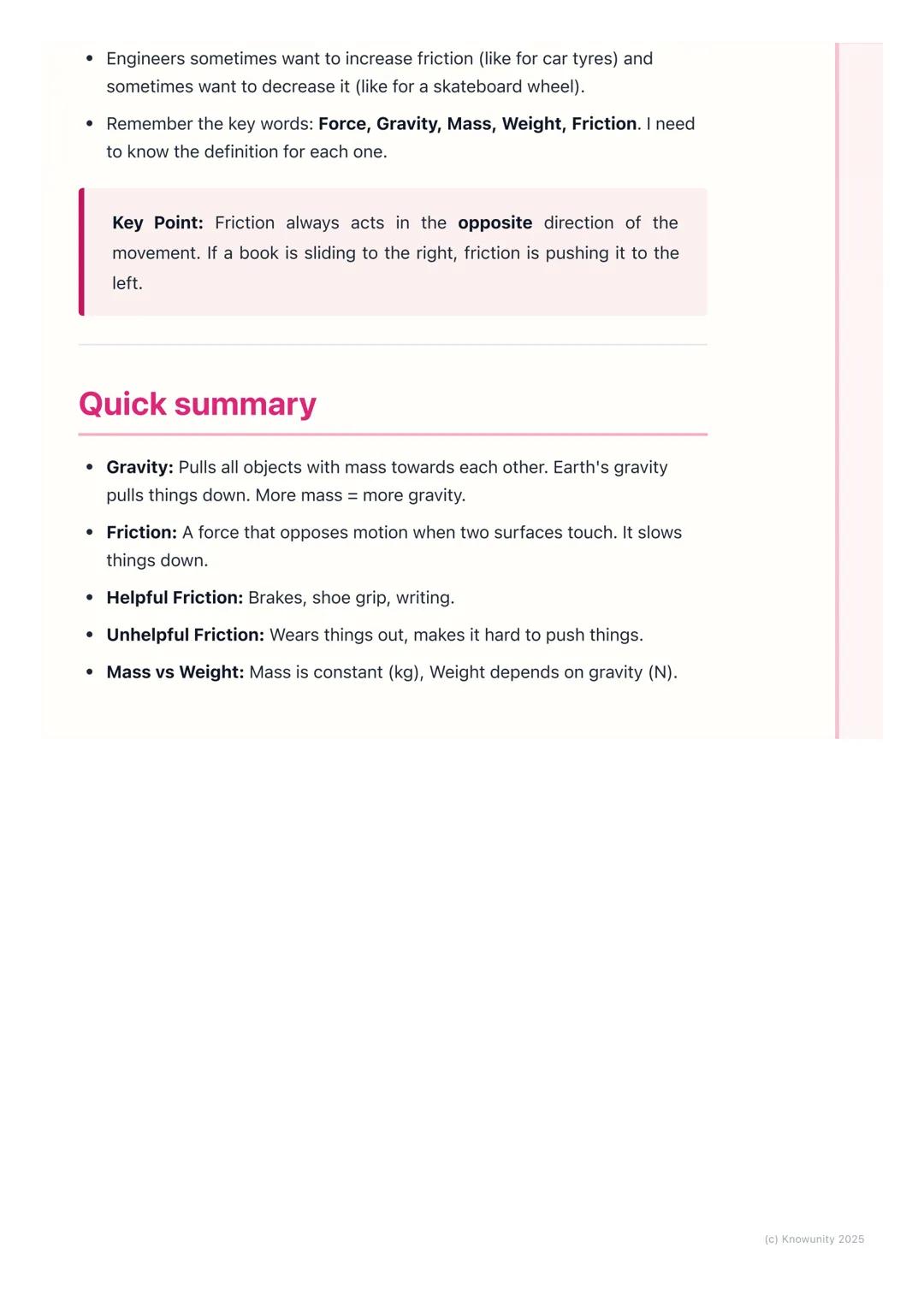
Key Points for Tests
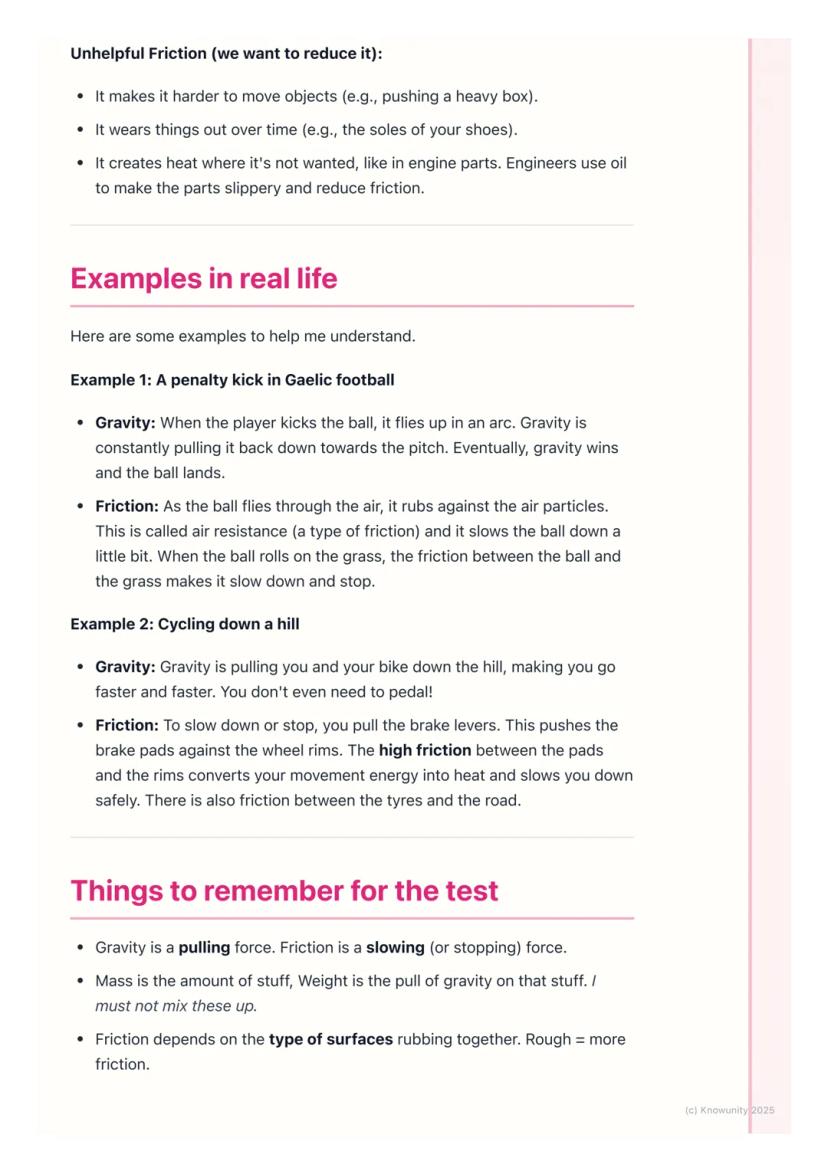
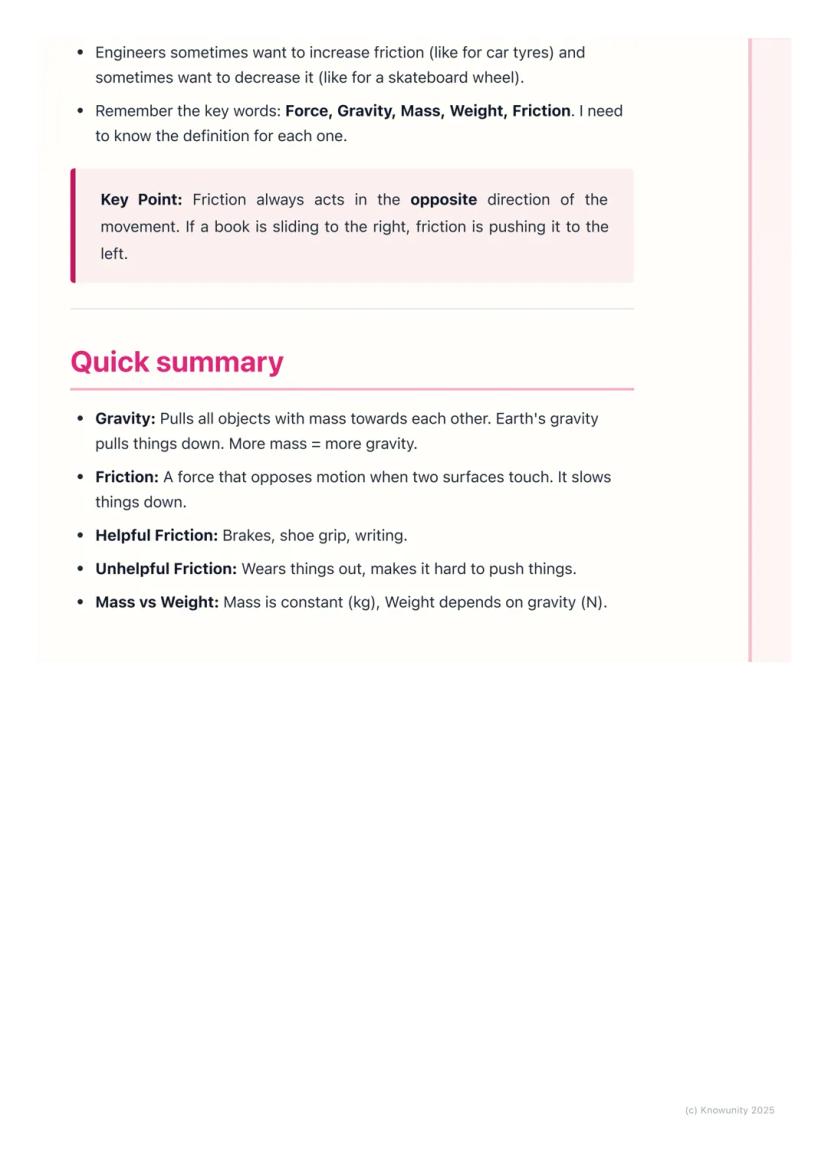
Remember that gravity always pulls objects together (on Earth, that means downwards), while friction always opposes movement between touching surfaces. Don't mix up mass and weight - mass stays constant, but weight changes depending on gravity's strength.
The type of surface makes a huge difference to friction. Engineers sometimes want more friction (like football boot studs) and sometimes want less (like skateboard wheels). Both forces are essential for understanding how things move in the real world.
For your exams, make sure you can define these terms clearly: Force (push or pull), Gravity (pulls objects towards each other), Mass (amount of matter in kg), Weight (gravity's pull measured in Newtons), and Friction (opposes motion between surfaces).
These concepts aren't just for tests though - they explain why your world works the way it does, from why you can walk without slipping to why things eventually stop moving when you let them go.
Exam Success: Practice explaining these forces using everyday examples - it makes them much easier to remember and understand!
We thought you’d never ask...
What is the Knowunity AI companion?
Our AI companion is specifically built for the needs of students. Based on the millions of content pieces we have on the platform we can provide truly meaningful and relevant answers to students. But its not only about answers, the companion is even more about guiding students through their daily learning challenges, with personalised study plans, quizzes or content pieces in the chat and 100% personalisation based on the students skills and developments.
Where can I download the Knowunity app?
You can download the app in the Google Play Store and in the Apple App Store.
Is Knowunity really free of charge?
That's right! Enjoy free access to study content, connect with fellow students, and get instant help – all at your fingertips.
Most popular content in Engineering
1Most popular content
9Can't find what you're looking for? Explore other subjects.
Students love us — and so will you.
4.6/5App Store
4.7/5Google Play
The app is very easy to use and well designed. I have found everything I was looking for so far and have been able to learn a lot from the presentations! I will definitely use the app for a class assignment! And of course it also helps a lot as an inspiration.
Stefan SiOS user
This app is really great. There are so many study notes and help [...]. My problem subject is French, for example, and the app has so many options for help. Thanks to this app, I have improved my French. I would recommend it to anyone.
Samantha KlichAndroid user
Wow, I am really amazed. I just tried the app because I've seen it advertised many times and was absolutely stunned. This app is THE HELP you want for school and above all, it offers so many things, such as workouts and fact sheets, which have been VERY helpful to me personally.
AnnaiOS user
Engineering16 views·Updated Jun 5, 2026·5 pagesUnderstanding Gravity and Friction: Key Concepts
Ever wonder why you don't float off into space when you jump, or why your shoes grip the ground when you walk? Two invisible forces called gravity and friction are working around you all the time, affecting everything from kicking...
1
of 5
Sign up to see the content. It's free!
- Access to all documents
- Improve your grades
- Join milions of students
Introduction to Forces
You can't see them, but forces are constantly pushing and pulling everything around you! These invisible forces make things start moving, stop moving, or change direction completely.
Gravity is the force that keeps your feet on the ground and makes things fall down towards Earth. Friction happens when surfaces rub together - it's what stops you from sliding around like you're on ice all the time.
Engineers need to understand these forces brilliantly to design safe cars, sturdy buildings, and even the trainers on your feet. Once you get how these work, you'll start spotting them everywhere!
Quick Tip: Think of forces as invisible hands that are always pushing or pulling objects - even when nothing seems to be happening!
2
of 5Sign up to see the content. It's free!
- Access to all documents
- Improve your grades
- Join milions of students
How Gravity Actually Works
Here's the mad thing about gravity - every single object that has mass (the amount of stuff it's made of) pulls on every other object! Earth is absolutely massive, so its gravitational pull is incredibly strong.
The closer you are to something, the stronger the pull gets. That's why when you drop your phone, it falls straight down towards Earth's centre rather than floating sideways.
Mass versus weight trips up loads of students, but it's actually dead simple. Your mass (measured in kg) never changes - you're made of the same amount of stuff whether you're in Dublin or on the Moon. Your weight (measured in Newtons) is just how hard gravity pulls on that mass.
On the Moon, you'd weigh about six times less than on Earth, but you'd still be exactly the same person with the same mass!
Remember: Sir Isaac Newton figured out gravity when he saw an apple fall - sometimes the best discoveries come from noticing everyday things!
3
of 5Sign up to see the content. It's free!
- Access to all documents
- Improve your grades
- Join milions of students
Understanding Friction
Friction is the force you feel when surfaces rub together, and it always works against movement. Even surfaces that look perfectly smooth have tiny bumps and ridges that catch and stick when they slide past each other.
Rough surfaces like sandpaper or a football pitch create loads of friction. Smooth surfaces like ice or wet tiles have much less friction - that's why they're so slippery!
Sometimes friction is brilliant and sometimes it's a right pain. You absolutely need it for walking (without it, you'd slip constantly), using brakes on your bike, or even writing with a pencil. But friction also wears out your shoes and makes it harder to push heavy things around.
Engineers get really clever about this - they add oil to engine parts to reduce unwanted friction, but they make car tyres rough to increase helpful friction with the road.
Key Point: Friction always pushes in the opposite direction to movement - if something slides right, friction pushes it left!
4
of 5Sign up to see the content. It's free!
- Access to all documents
- Improve your grades
- Join milions of students
Real-Life Examples
Picture a penalty kick in Gaelic football. When the ball leaves the player's boot, gravity immediately starts pulling it back down towards the pitch. Meanwhile, air resistance (a type of friction) slows the ball down as it flies through the air.
When you're cycling down a hill, gravity pulls you faster and faster - you don't even need to pedal! To slow down safely, you squeeze the brake levers, which creates loads of friction between the brake pads and your wheel rims.
These forces work together constantly. Gravity might be pulling a book off your desk, but friction between the book and the desk surface keeps it in place. It's like an invisible tug-of-war happening all around you!
Every sport, every form of transport, and every simple task like walking involves these two forces working either together or against each other.
Think About It: Next time you're walking on different surfaces, notice how your shoes grip differently - that's friction changing with the surface type!
5
of 5Sign up to see the content. It's free!
- Access to all documents
- Improve your grades
- Join milions of students
Key Points for Tests
Remember that gravity always pulls objects together (on Earth, that means downwards), while friction always opposes movement between touching surfaces. Don't mix up mass and weight - mass stays constant, but weight changes depending on gravity's strength.
The type of surface makes a huge difference to friction. Engineers sometimes want more friction (like football boot studs) and sometimes want less (like skateboard wheels). Both forces are essential for understanding how things move in the real world.
For your exams, make sure you can define these terms clearly: Force (push or pull), Gravity (pulls objects towards each other), Mass (amount of matter in kg), Weight (gravity's pull measured in Newtons), and Friction (opposes motion between surfaces).
These concepts aren't just for tests though - they explain why your world works the way it does, from why you can walk without slipping to why things eventually stop moving when you let them go.
Exam Success: Practice explaining these forces using everyday examples - it makes them much easier to remember and understand!
We thought you’d never ask...
What is the Knowunity AI companion?
Our AI companion is specifically built for the needs of students. Based on the millions of content pieces we have on the platform we can provide truly meaningful and relevant answers to students. But its not only about answers, the companion is even more about guiding students through their daily learning challenges, with personalised study plans, quizzes or content pieces in the chat and 100% personalisation based on the students skills and developments.
Where can I download the Knowunity app?
You can download the app in the Google Play Store and in the Apple App Store.
Is Knowunity really free of charge?
That's right! Enjoy free access to study content, connect with fellow students, and get instant help – all at your fingertips.
Most popular content in Engineering
1Most popular content
9Can't find what you're looking for? Explore other subjects.
Students love us — and so will you.
4.6/5App Store
4.7/5Google Play
The app is very easy to use and well designed. I have found everything I was looking for so far and have been able to learn a lot from the presentations! I will definitely use the app for a class assignment! And of course it also helps a lot as an inspiration.
Stefan SiOS user
This app is really great. There are so many study notes and help [...]. My problem subject is French, for example, and the app has so many options for help. Thanks to this app, I have improved my French. I would recommend it to anyone.
Samantha KlichAndroid user
Wow, I am really amazed. I just tried the app because I've seen it advertised many times and was absolutely stunned. This app is THE HELP you want for school and above all, it offers so many things, such as workouts and fact sheets, which have been VERY helpful to me personally.
AnnaiOS user