
Ever wonder how businesses, government, and communities all work together...
 Business13 views·Updated Jun 10, 2026·4 pages
Leaving Cert Business Chapter 1
D
Darragh Walsh@darraghwalsh
1 / 4
1
of 4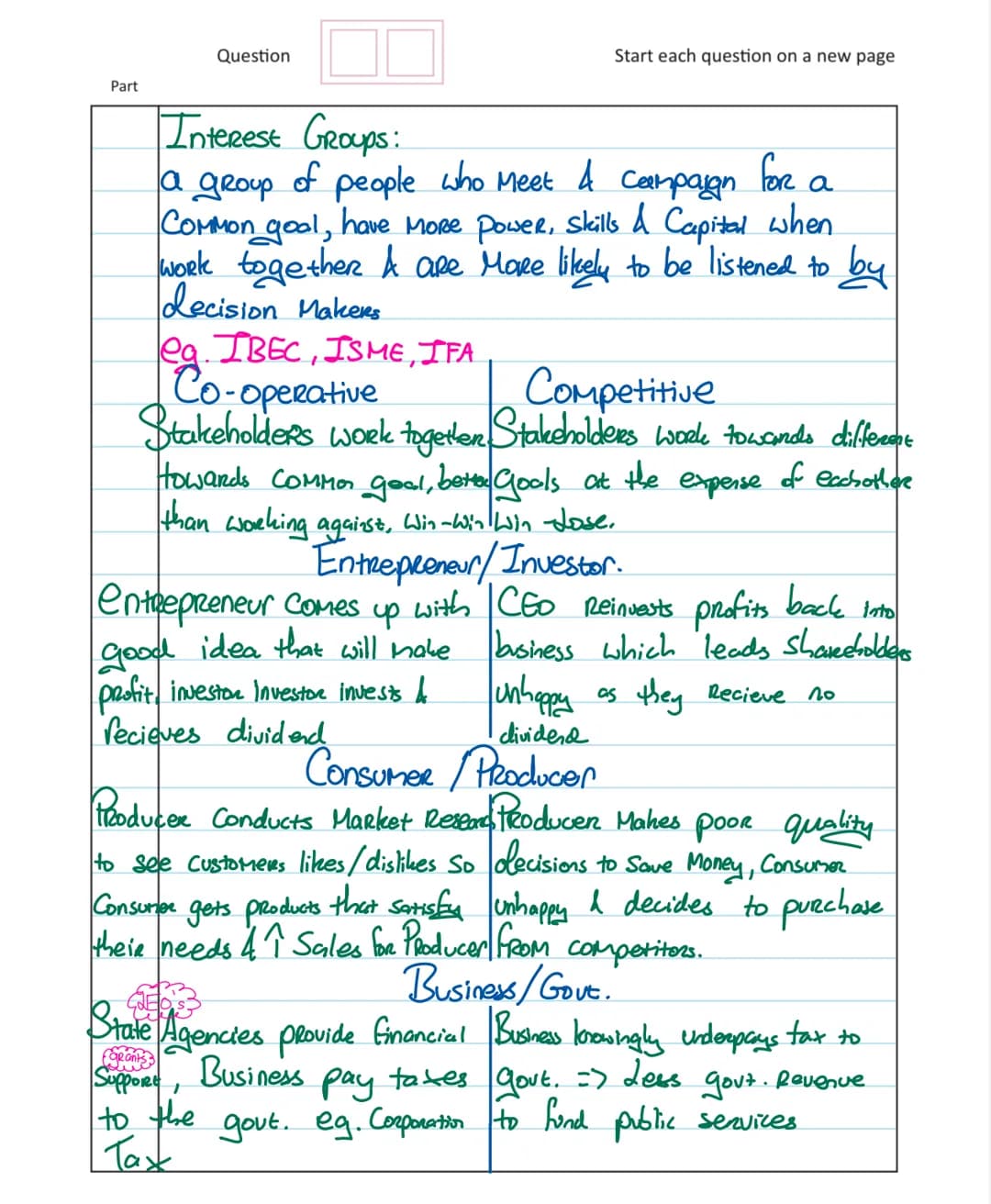
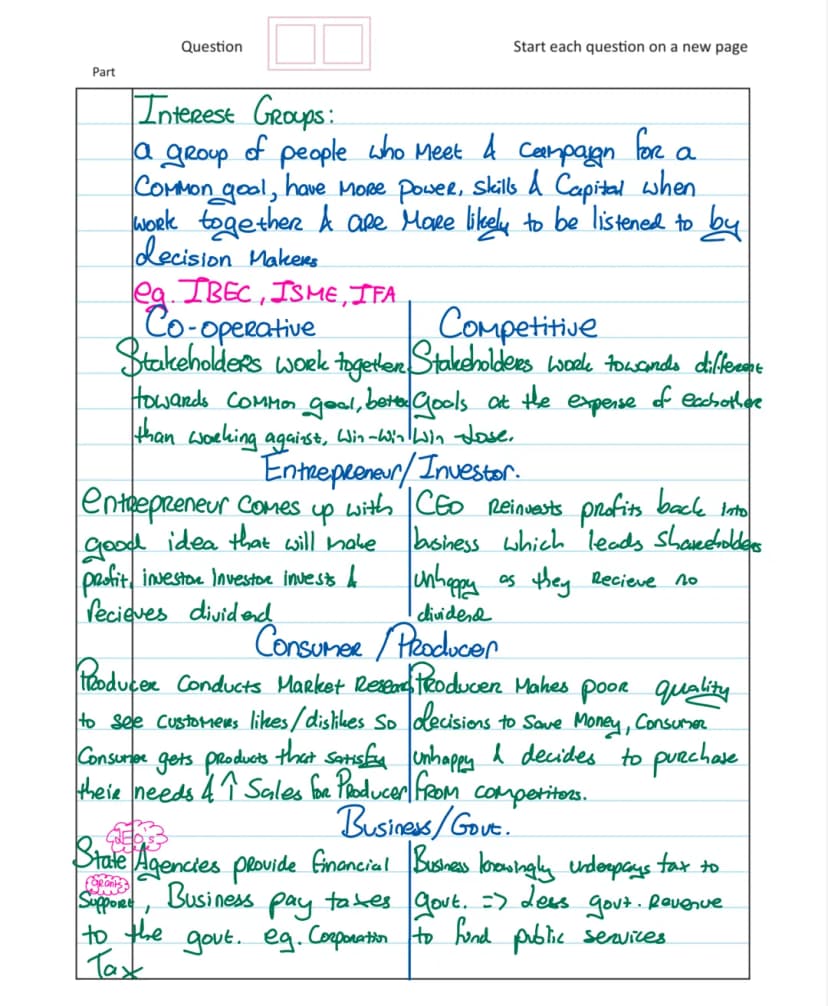
Stakeholder Relationships: Working Together or Against Each Other
Think about it - every business decision affects multiple groups of people, and these stakeholders don't always see eye to eye. You've got entrepreneurs wanting profits, consumers wanting quality products, and governments needing tax revenue.
Interest groups like IBEC or the IFA have figured out that there's strength in numbers. When people with common goals band together, they've got more power, skills, and money to influence the decision-makers who actually matter.
Stakeholder relationships fall into two camps: co-operative (everyone wins together) and competitive (someone's gain is someone else's loss). For example, when an entrepreneur reinvests profits instead of paying dividends, shareholders aren't exactly thrilled, but the business grows stronger.
Key Point: Understanding whether stakeholders are working together or competing helps predict how business decisions will play out.
2
of 4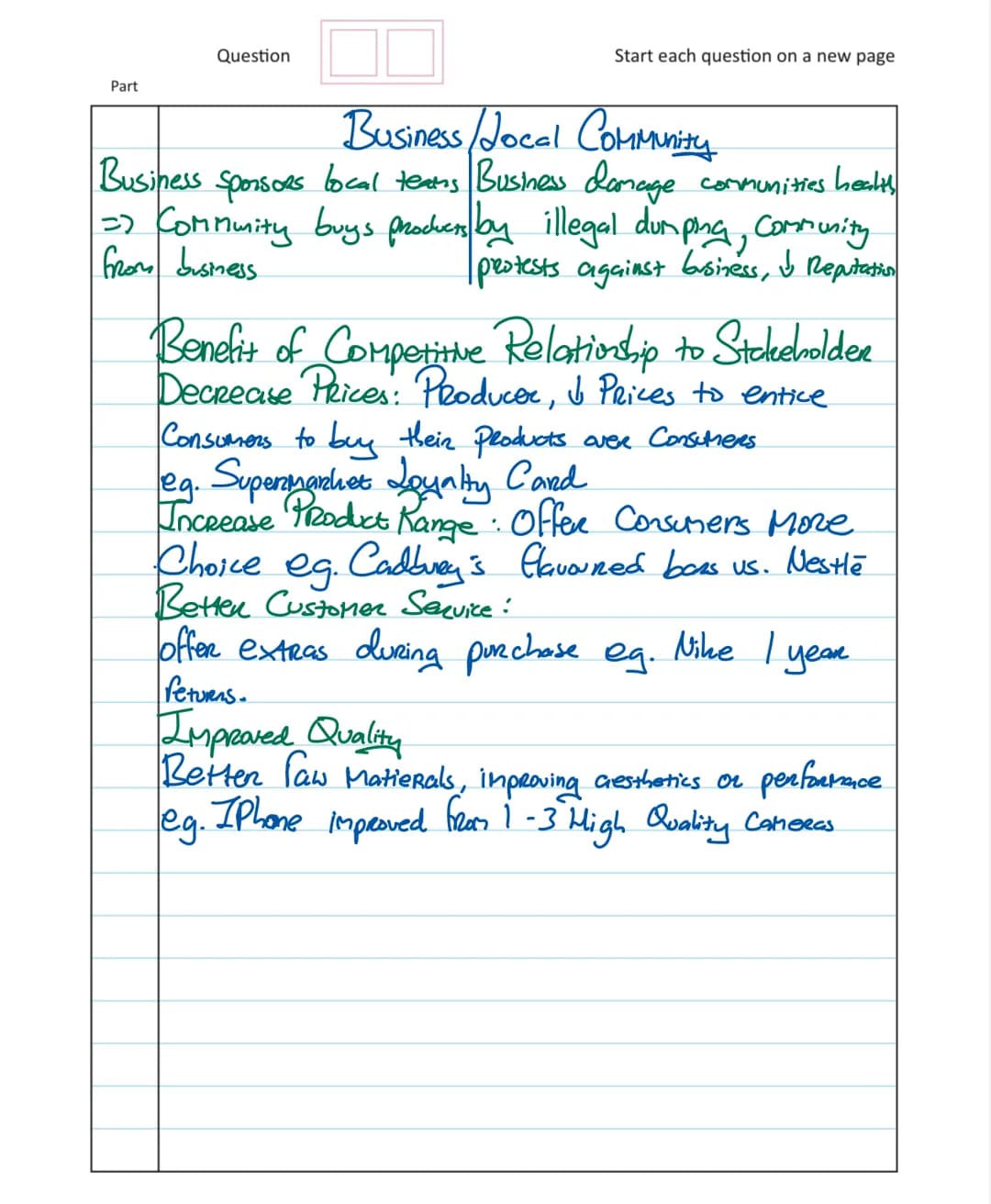
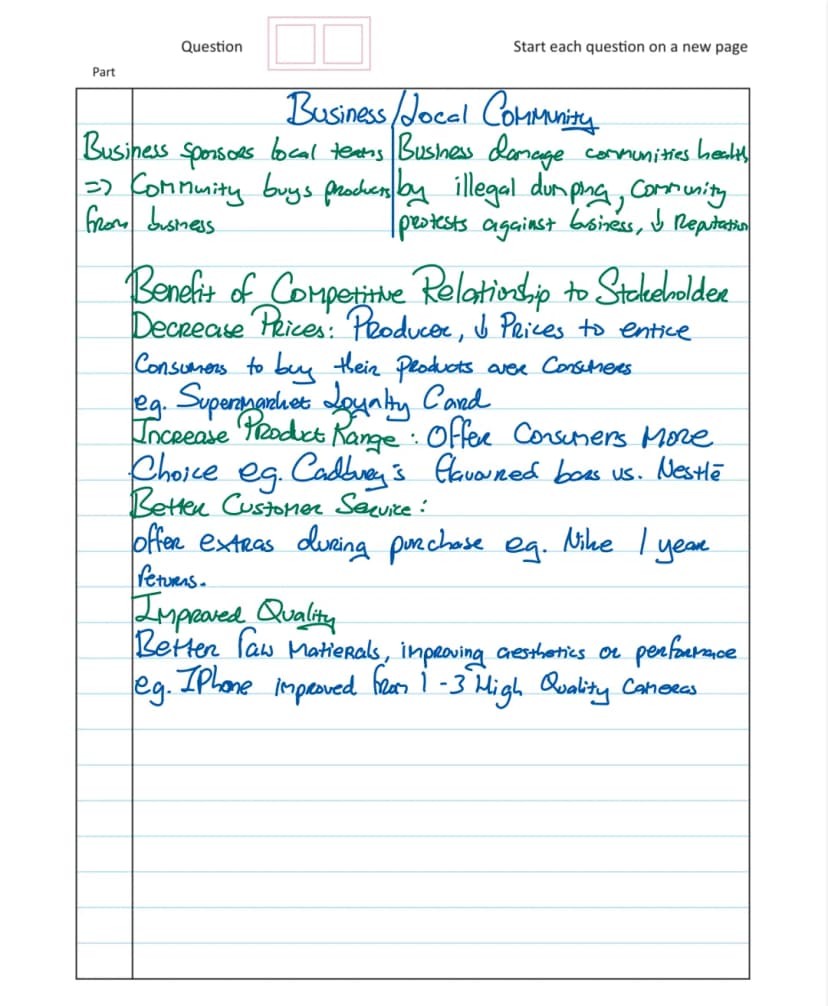
Real-World Stakeholder Conflicts and Benefits
Here's where it gets interesting - the same stakeholders can be best friends or worst enemies depending on the situation. When businesses sponsor local teams, communities love them and buy their products. But if that same business starts illegally dumping waste, suddenly they're facing protests and a damaged reputation.
Competition between businesses actually benefits consumers massively. Companies slash prices, expand product ranges, and improve customer service just to win your business. Think about supermarket loyalty cards or how mobile networks keep offering better deals.
Quality improvements are huge too - remember when phones had one rubbish camera? Now they've got three high-quality ones because companies keep trying to outdo each other.
Remember: Competitive relationships between businesses usually mean better deals for consumers - it's basic market forces at work.
3
of 4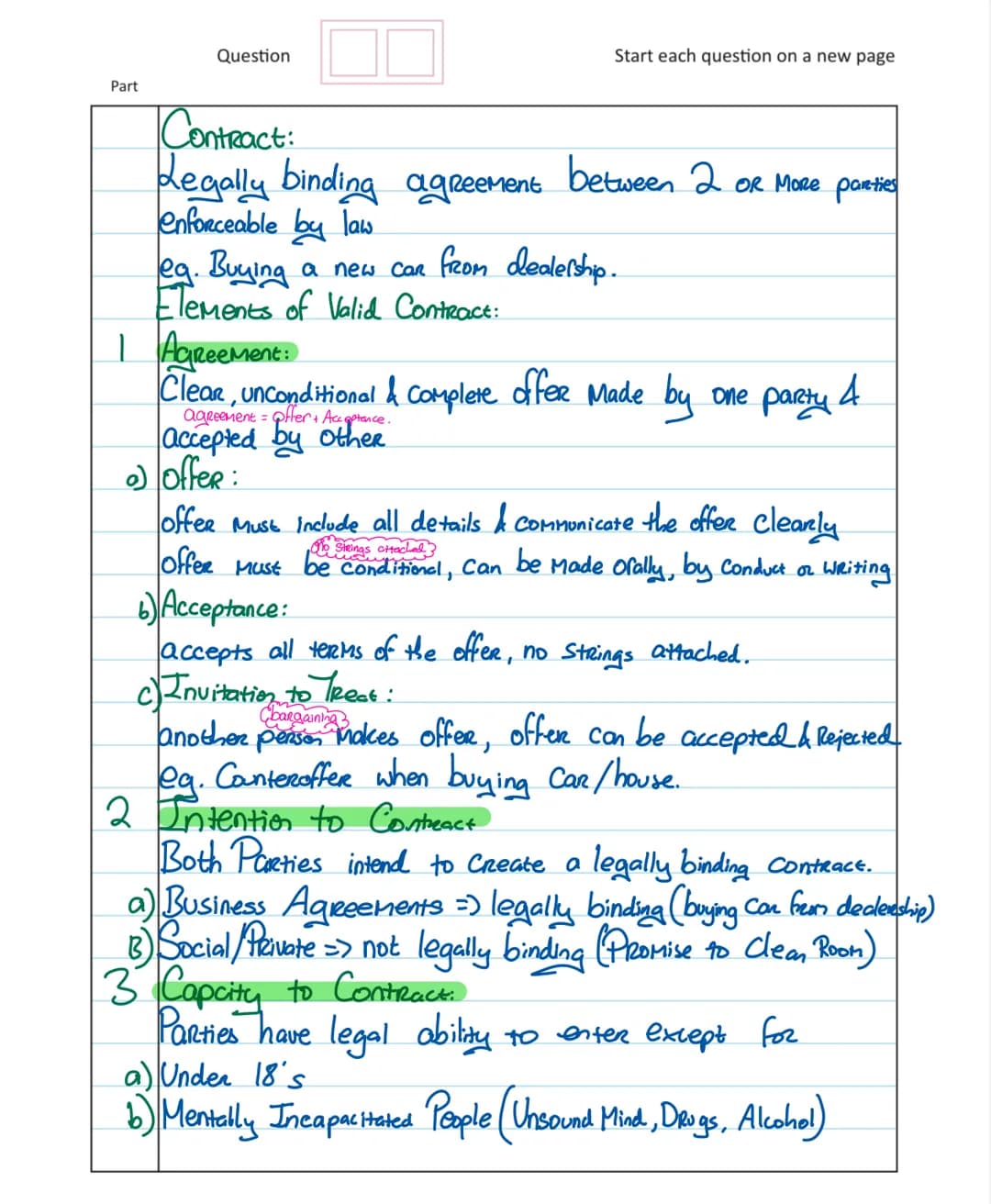
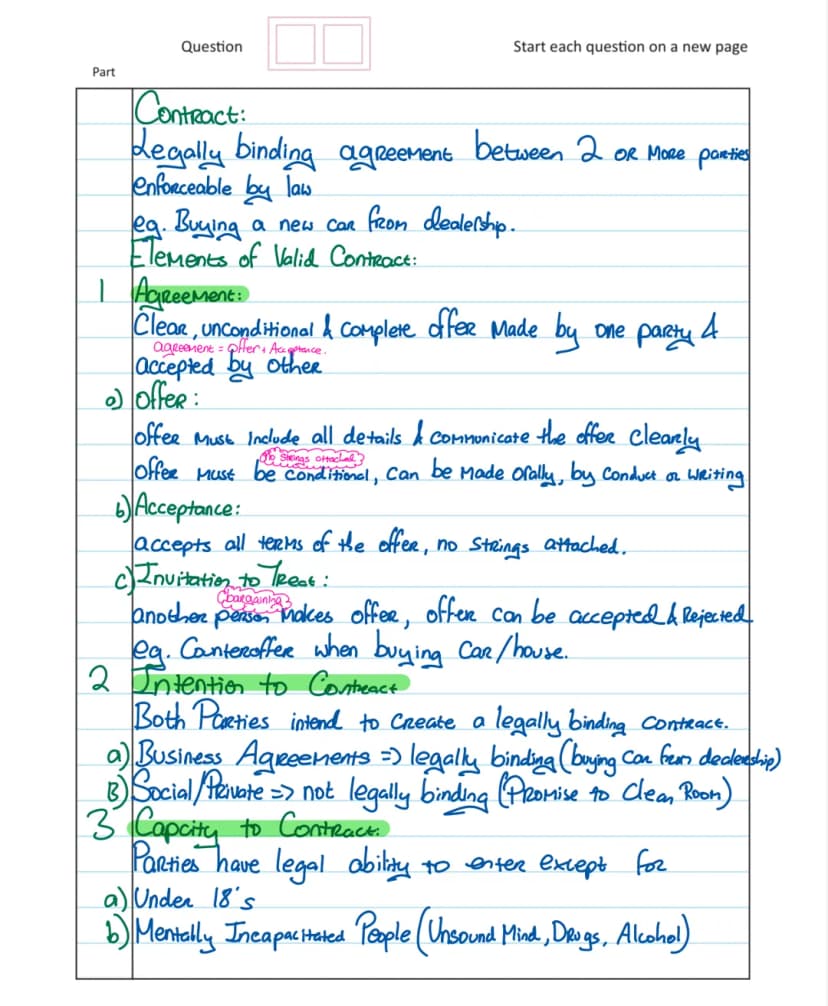
Contracts: The Legal Agreements That Matter
Every time you buy something significant, you're entering a legally binding contract - and yes, that includes buying a car from a dealership. Contracts aren't just boring legal documents; they're what make business relationships actually work.
For a contract to be valid, you need seven essential elements. First up is agreement - someone makes a clear, unconditional offer, and someone else accepts it completely. No strings attached, no "maybe if you change this bit."
Intention to contract matters too. Business agreements are legally binding (like buying that car), but social promises (like promising to clean your room) aren't going to land you in court.
Only certain people have the capacity to contract - if you're under 18 or mentally incapacitated (including being drunk or on drugs), you can't legally enter binding agreements.
Important: Understanding these elements helps you recognise when you're entering a serious legal commitment versus just making casual promises.
4
of 4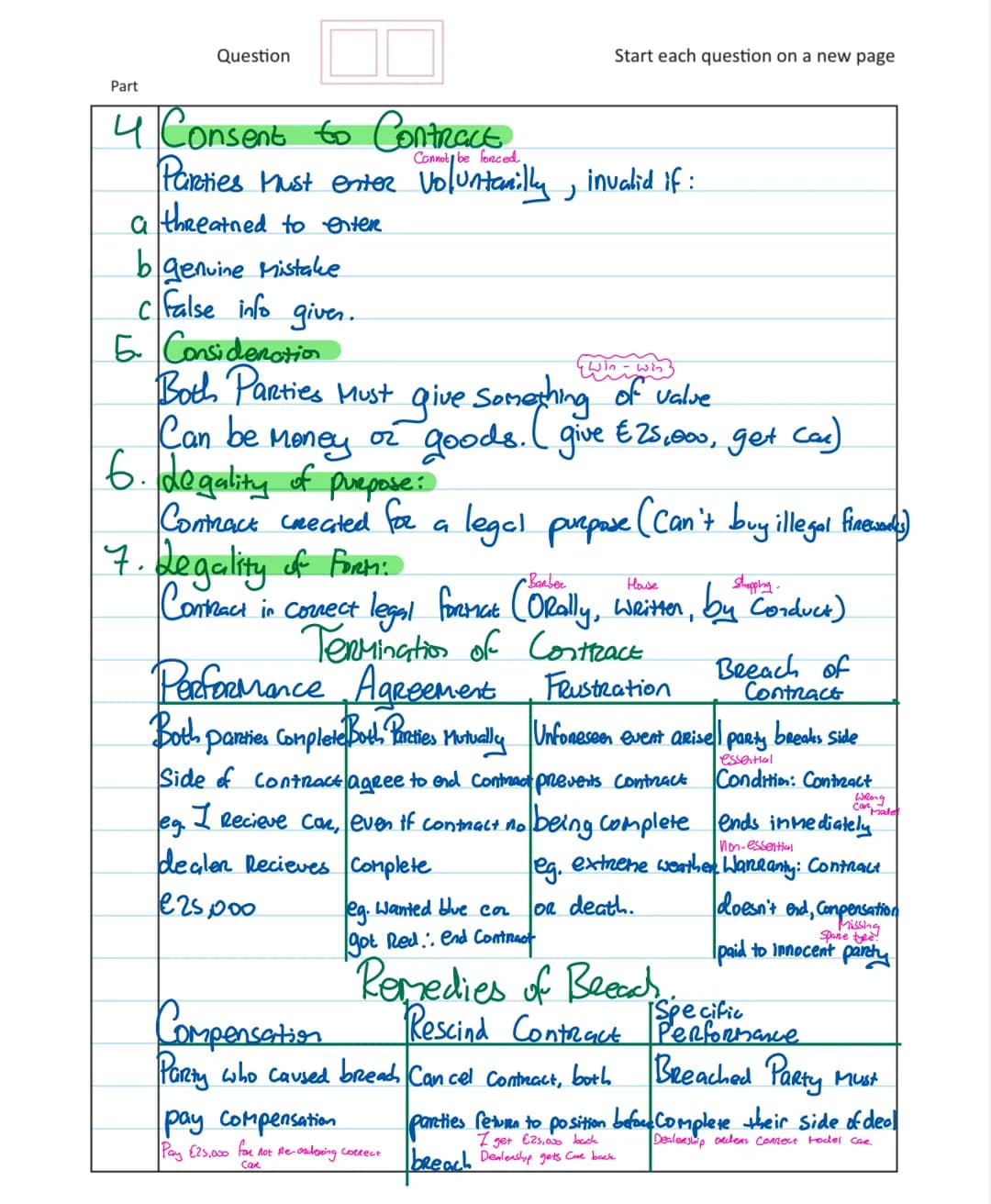
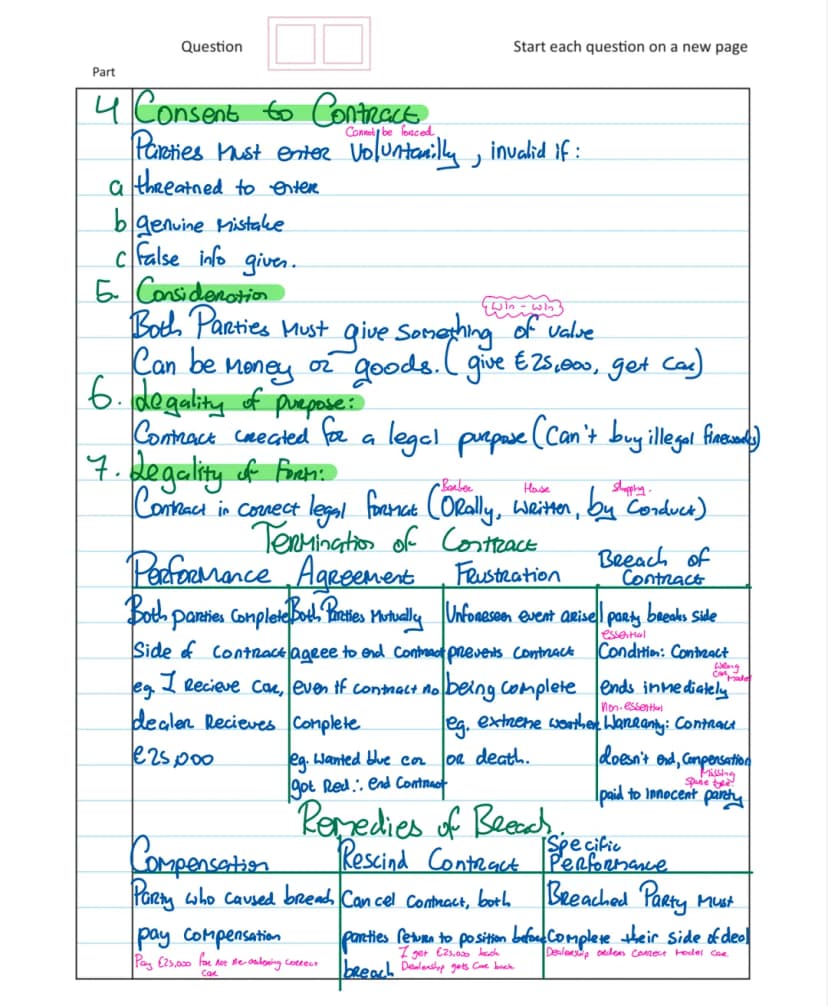
When Contracts Go Wrong: Termination and Remedies
Contracts don't always go smoothly, and knowing how they can end saves you from nasty surprises. Consent is crucial - you can't be threatened or tricked into signing. Both parties must give consideration (something of value), and the contract must be for legal purposes.
Contracts can terminate in four ways: performance (everyone does their bit), mutual agreement, frustration (unforeseen events), or breach (someone breaks the rules). When you order a blue car but get a red one, that's a condition breach - contract ends immediately.
When someone breaches a contract, the innocent party gets remedies. They might receive compensation, cancel the contract entirely, or force the other party to complete their obligations through specific performance.
The key difference between conditions and warranties matters for exams: breaking a condition ends the contract immediately, while breaking a warranty just means paying compensation but the contract continues.
Exam Tip: Remember the four ways contracts end and the three main remedies - this stuff comes up regularly in business studies papers.
We thought you’d never ask...
What is the Knowunity AI companion?
Our AI companion is specifically built for the needs of students. Based on the millions of content pieces we have on the platform we can provide truly meaningful and relevant answers to students. But its not only about answers, the companion is even more about guiding students through their daily learning challenges, with personalised study plans, quizzes or content pieces in the chat and 100% personalisation based on the students skills and developments.
Where can I download the Knowunity app?
You can download the app in the Google Play Store and in the Apple App Store.
Is Knowunity really free of charge?
That's right! Enjoy free access to study content, connect with fellow students, and get instant help – all at your fingertips.
Most popular content in Business
3Most popular content
9 Irish
IrishIrish oral questions and answers
Questions and answers for the leaving cert oral
5th Year4264
 English
Key Quotes : Sive
Key Quotes and explanations: Sive
6th Year2842
IrishIrish oral questions
Outline of oral questions
5th Year2055
IrishIníon- le hÁine Durkin
Aine Durkin’s poem, Iníon: Themes & summary
5th Year850
IrishIrish poetry 2027
Iníon + Dínit an Bhróin
5th Year1133
IrishLC HL notes- Iníon (poem)
Includes poem in English and Irish, theme, key words & phrases
5th Year2284
EnglishCultural Context : Shawshank Redemption : Sive : Small Things Like These
Comparative Study : Cultural Context : Shawshank Redemption, Sive and Small Things Like These
6th Year1430
IrishMo Ghrá-sa (Idir Lúibíní)
Notes on mo ghrá-sa
5th Year380
IrishAn Gaeilge Aiste
Irish Language essay
6th Year1320
Can't find what you're looking for? Explore other subjects.
Students love us — and so will you.
4.6/5App Store
4.7/5Google Play
The app is very easy to use and well designed. I have found everything I was looking for so far and have been able to learn a lot from the presentations! I will definitely use the app for a class assignment! And of course it also helps a lot as an inspiration.
Stefan SiOS user
This app is really great. There are so many study notes and help [...]. My problem subject is French, for example, and the app has so many options for help. Thanks to this app, I have improved my French. I would recommend it to anyone.
Samantha KlichAndroid user
Wow, I am really amazed. I just tried the app because I've seen it advertised many times and was absolutely stunned. This app is THE HELP you want for school and above all, it offers so many things, such as workouts and fact sheets, which have been VERY helpful to me personally.
AnnaiOS user
Business13 views·Updated Jun 10, 2026·4 pagesLeaving Cert Business Chapter 1
D
Darragh Walsh@darraghwalsh
Ever wonder how businesses, government, and communities all work together (or sometimes clash)? Understanding stakeholder relationships and contracts is crucial for anyone entering the business world or just trying to make sense of how deals get made.
1
of 4
Sign up to see the content. It's free!
- Access to all documents
- Improve your grades
- Join milions of students
Stakeholder Relationships: Working Together or Against Each Other
Think about it - every business decision affects multiple groups of people, and these stakeholders don't always see eye to eye. You've got entrepreneurs wanting profits, consumers wanting quality products, and governments needing tax revenue.
Interest groups like IBEC or the IFA have figured out that there's strength in numbers. When people with common goals band together, they've got more power, skills, and money to influence the decision-makers who actually matter.
Stakeholder relationships fall into two camps: co-operative (everyone wins together) and competitive (someone's gain is someone else's loss). For example, when an entrepreneur reinvests profits instead of paying dividends, shareholders aren't exactly thrilled, but the business grows stronger.
Key Point: Understanding whether stakeholders are working together or competing helps predict how business decisions will play out.
2
of 4Sign up to see the content. It's free!
- Access to all documents
- Improve your grades
- Join milions of students
Real-World Stakeholder Conflicts and Benefits
Here's where it gets interesting - the same stakeholders can be best friends or worst enemies depending on the situation. When businesses sponsor local teams, communities love them and buy their products. But if that same business starts illegally dumping waste, suddenly they're facing protests and a damaged reputation.
Competition between businesses actually benefits consumers massively. Companies slash prices, expand product ranges, and improve customer service just to win your business. Think about supermarket loyalty cards or how mobile networks keep offering better deals.
Quality improvements are huge too - remember when phones had one rubbish camera? Now they've got three high-quality ones because companies keep trying to outdo each other.
Remember: Competitive relationships between businesses usually mean better deals for consumers - it's basic market forces at work.
3
of 4Sign up to see the content. It's free!
- Access to all documents
- Improve your grades
- Join milions of students
Contracts: The Legal Agreements That Matter
Every time you buy something significant, you're entering a legally binding contract - and yes, that includes buying a car from a dealership. Contracts aren't just boring legal documents; they're what make business relationships actually work.
For a contract to be valid, you need seven essential elements. First up is agreement - someone makes a clear, unconditional offer, and someone else accepts it completely. No strings attached, no "maybe if you change this bit."
Intention to contract matters too. Business agreements are legally binding (like buying that car), but social promises (like promising to clean your room) aren't going to land you in court.
Only certain people have the capacity to contract - if you're under 18 or mentally incapacitated (including being drunk or on drugs), you can't legally enter binding agreements.
Important: Understanding these elements helps you recognise when you're entering a serious legal commitment versus just making casual promises.
4
of 4Sign up to see the content. It's free!
- Access to all documents
- Improve your grades
- Join milions of students
When Contracts Go Wrong: Termination and Remedies
Contracts don't always go smoothly, and knowing how they can end saves you from nasty surprises. Consent is crucial - you can't be threatened or tricked into signing. Both parties must give consideration (something of value), and the contract must be for legal purposes.
Contracts can terminate in four ways: performance (everyone does their bit), mutual agreement, frustration (unforeseen events), or breach (someone breaks the rules). When you order a blue car but get a red one, that's a condition breach - contract ends immediately.
When someone breaches a contract, the innocent party gets remedies. They might receive compensation, cancel the contract entirely, or force the other party to complete their obligations through specific performance.
The key difference between conditions and warranties matters for exams: breaking a condition ends the contract immediately, while breaking a warranty just means paying compensation but the contract continues.
Exam Tip: Remember the four ways contracts end and the three main remedies - this stuff comes up regularly in business studies papers.
We thought you’d never ask...
What is the Knowunity AI companion?
Our AI companion is specifically built for the needs of students. Based on the millions of content pieces we have on the platform we can provide truly meaningful and relevant answers to students. But its not only about answers, the companion is even more about guiding students through their daily learning challenges, with personalised study plans, quizzes or content pieces in the chat and 100% personalisation based on the students skills and developments.
Where can I download the Knowunity app?
You can download the app in the Google Play Store and in the Apple App Store.
Is Knowunity really free of charge?
That's right! Enjoy free access to study content, connect with fellow students, and get instant help – all at your fingertips.
Most popular content in Business
3Most popular content
9IrishIrish oral questions and answers
Questions and answers for the leaving cert oral
5th Year4264
EnglishKey Quotes : Sive
Key Quotes and explanations: Sive
6th Year2842
IrishIrish oral questions
Outline of oral questions
5th Year2055
IrishIníon- le hÁine Durkin
Aine Durkin’s poem, Iníon: Themes & summary
5th Year850
IrishIrish poetry 2027
Iníon + Dínit an Bhróin
5th Year1133
IrishLC HL notes- Iníon (poem)
Includes poem in English and Irish, theme, key words & phrases
5th Year2284
EnglishCultural Context : Shawshank Redemption : Sive : Small Things Like These
Comparative Study : Cultural Context : Shawshank Redemption, Sive and Small Things Like These
6th Year1430
IrishMo Ghrá-sa (Idir Lúibíní)
Notes on mo ghrá-sa
5th Year380
IrishAn Gaeilge Aiste
Irish Language essay
6th Year1320
Can't find what you're looking for? Explore other subjects.
Students love us — and so will you.
4.6/5App Store
4.7/5Google Play
The app is very easy to use and well designed. I have found everything I was looking for so far and have been able to learn a lot from the presentations! I will definitely use the app for a class assignment! And of course it also helps a lot as an inspiration.
Stefan SiOS user
This app is really great. There are so many study notes and help [...]. My problem subject is French, for example, and the app has so many options for help. Thanks to this app, I have improved my French. I would recommend it to anyone.
Samantha KlichAndroid user
Wow, I am really amazed. I just tried the app because I've seen it advertised many times and was absolutely stunned. This app is THE HELP you want for school and above all, it offers so many things, such as workouts and fact sheets, which have been VERY helpful to me personally.
AnnaiOS user