
Členy jsou jednou z nejtěžších částí angličtiny pro Čechy, protože... Show more
 Angličtina273 views·Updated Jun 1, 2026·6 pages
Jak používat členy v angličtině: The, A, a An


1 / 6
1
of 6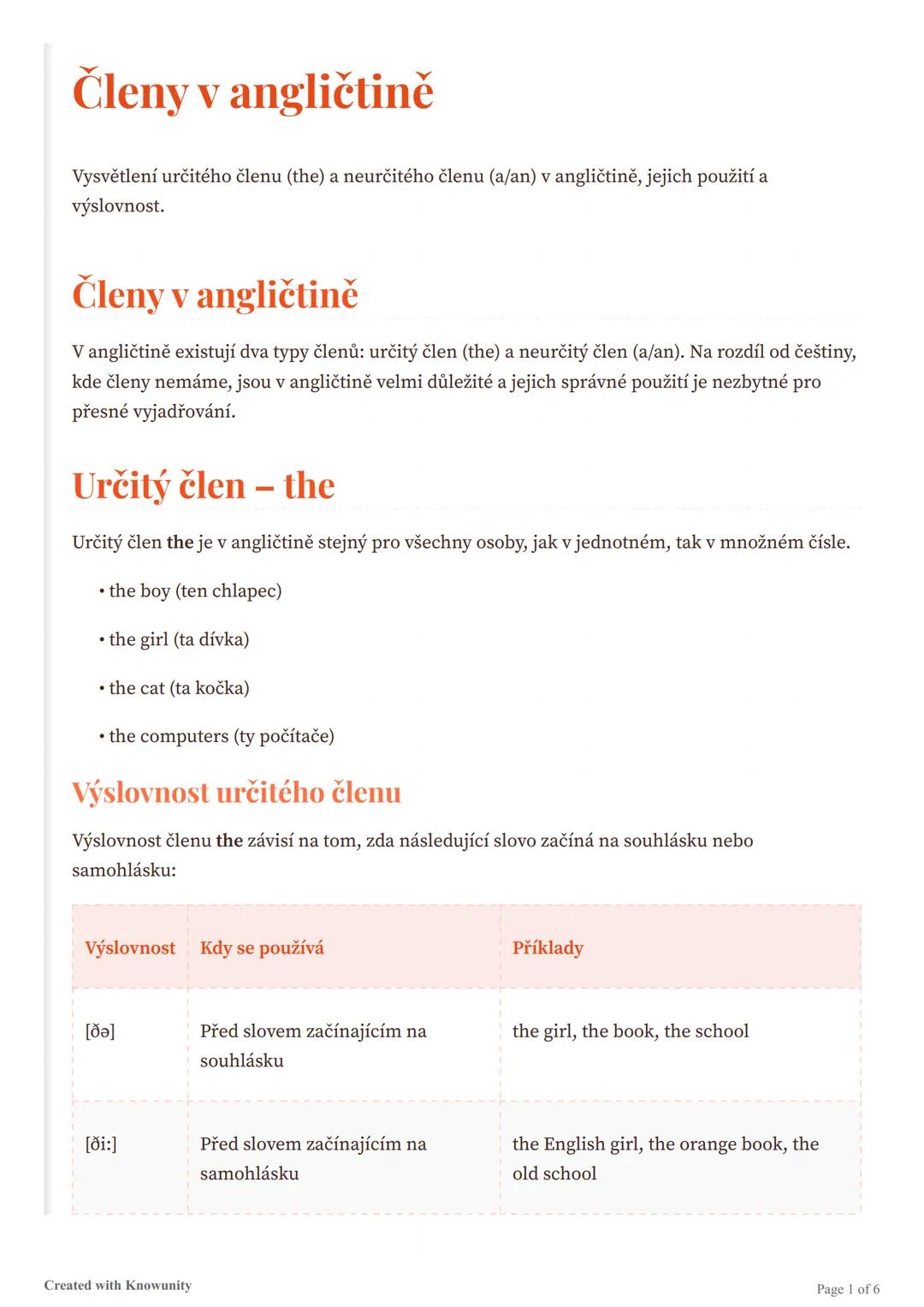
Základy členů v angličtině
Angličtina má dva typy členů: určitý člen "the" a neurčitý člen "a/an". Zatímco v češtině se bez členů obejdeme bez problémů, v angličtině jsou naprosto nezbytné.
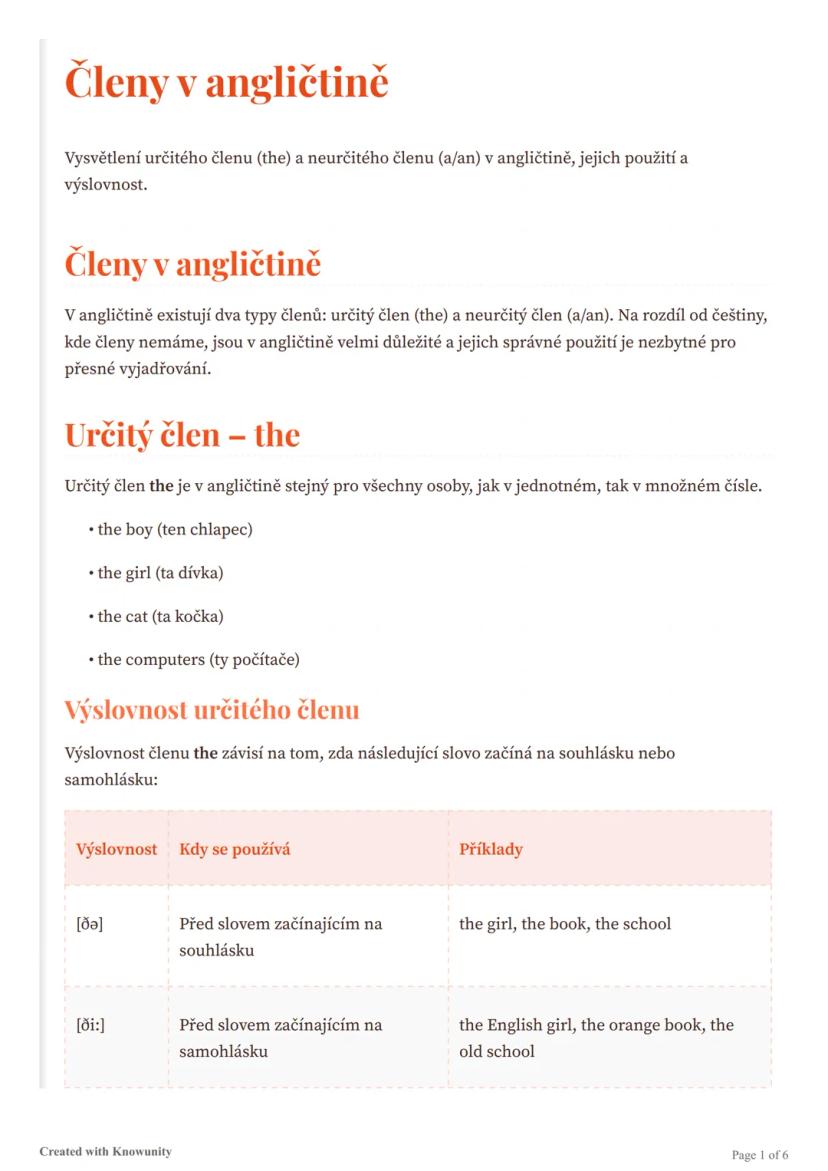
Určitý člen "the" je jednoduchý - stejná forma pro všechno. Ať už mluvíš o "the boy" nebo "the computers", vždycky je to "the". Ale pozor na výslovnost!
Výslovnost záleží na tom, co následuje: Před souhláskami říkej [ðə] (the girl, the book), před samohláskami [ði:] (the English girl, the orange book). Důležité je, jak se slovo vyslovuje, ne jak se píše - "the unit" je [ðə], ale "the uncle" je [ði:].
💡 Tip: Poslouchej pozorně výslovnost v angličtině a všimni si rozdílu!
2
of 6
Neurčitý člen a/an
Neurčitý člen má dvě podoby: "a" a "an", ale používá se jen v jednotném čísle. V množném čísle prostě nic nepoužíváš - z "a boy" se stává jen "boys".
Pravidlo je jednoduché: "a" před souhláskami (a boy, a school), "an" před samohláskami (an aunt, an old school). Opět platí, že záleží na výslovnosti - "a unit" (vyslovuje se s [j]), ale "an uncle".
Neurčitý člen má speciální použití, které musíš znát: před časovými údaji ("4 times a week"), před povoláními ("My father is a mechanic"), s výrazy "half" a "quite", nebo při označování národnosti ("He is an American").
💡 Pamatuj si: V množném čísle neurčitý člen prostě zmizí!
3
of 6
Speciální případy neurčitého členu
Člen "a/an" se objevuje v situacích, kde bys to možná nečekal. Před časovými údaji říkáš "twice a year" (dvakrát ročně) nebo "250 kilometres an hour" (250 km za hodinu).
U povolání je člen povinný: "My father is a car mechanic" - v češtině říkáme "je automechanik", ale angličtina chce to "a". Stejně tak u národností: "Bruce Springsteen is an American".
S výrazy "half" a "quite" člen také patří: "half a pound of sugar" nebo "quite a good story". Tyhle kombinace si prostě musíš zapamatovat.
💡 Pozor: Anglické fráze často obsahují člen tam, kde ho čeština nepotřebuje!
4
of 6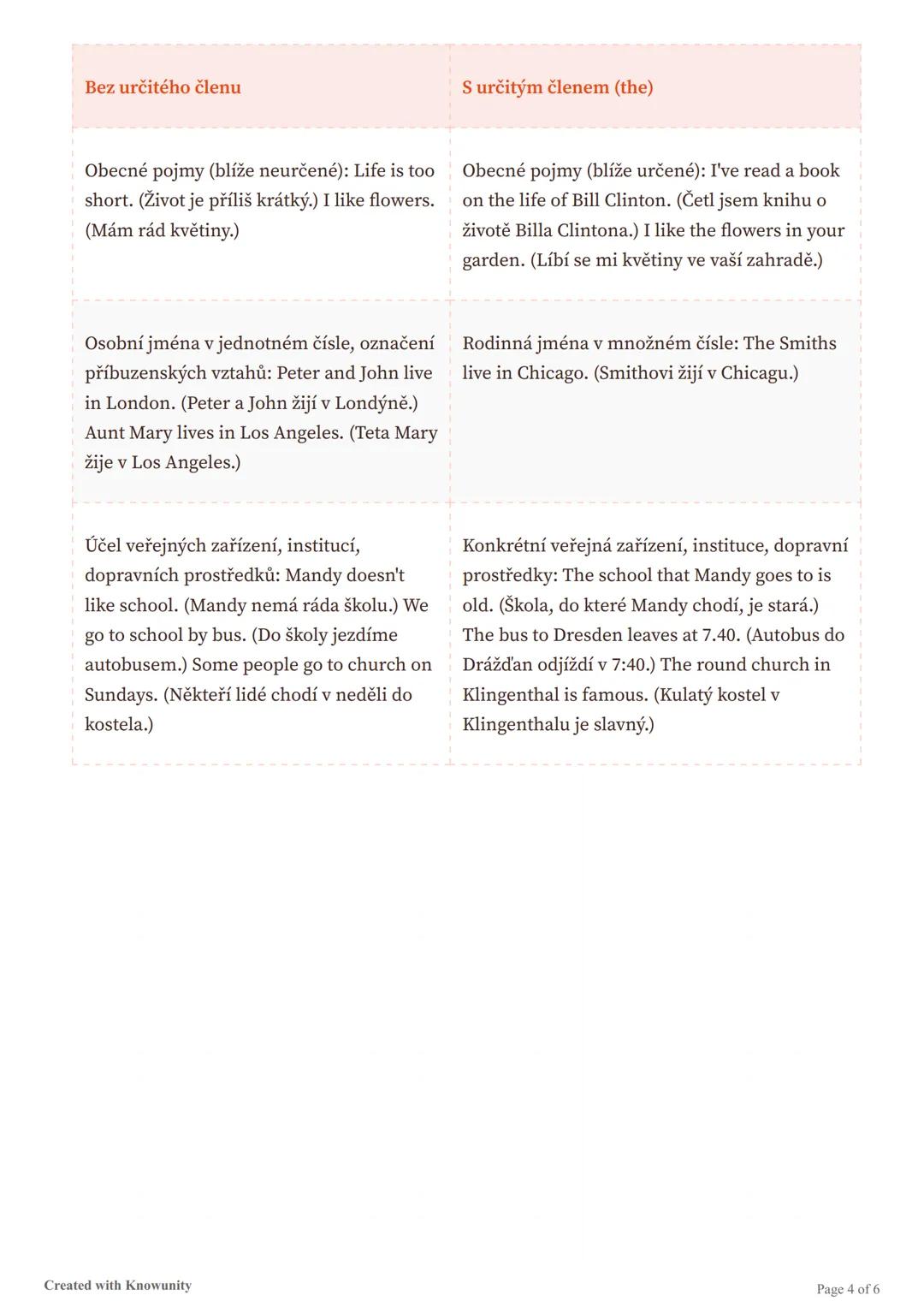
Kdy člen nepoužívat vs. kdy použít "the"
Bez členu mluvíš obecně: "Life is too short" (život obecně), "I like flowers" (květiny obecně). Taky u jmen osob ("Peter and John"), příbuzenských vztahů ("Aunt Mary") a účelu institucí ("go to school", "by bus").
S členem "the" budeš konkrétní: "the life of Bill Clinton" (konkrétní život), "the flowers in your garden" (konkrétní květiny). U rodinných jmen v množném čísle ("the Smiths") a u konkrétních institucí ("the school that Mandy goes to").
Rozdíl je v tom, jestli mluvíš obecně nebo konkrétně. "Go to school" znamená jít se učit, ale "go to the school" znamená jít do té konkrétní školní budovy.
💡 Klíčové rozlišení: Obecně = bez členu, konkrétně = s "the"!
5
of 6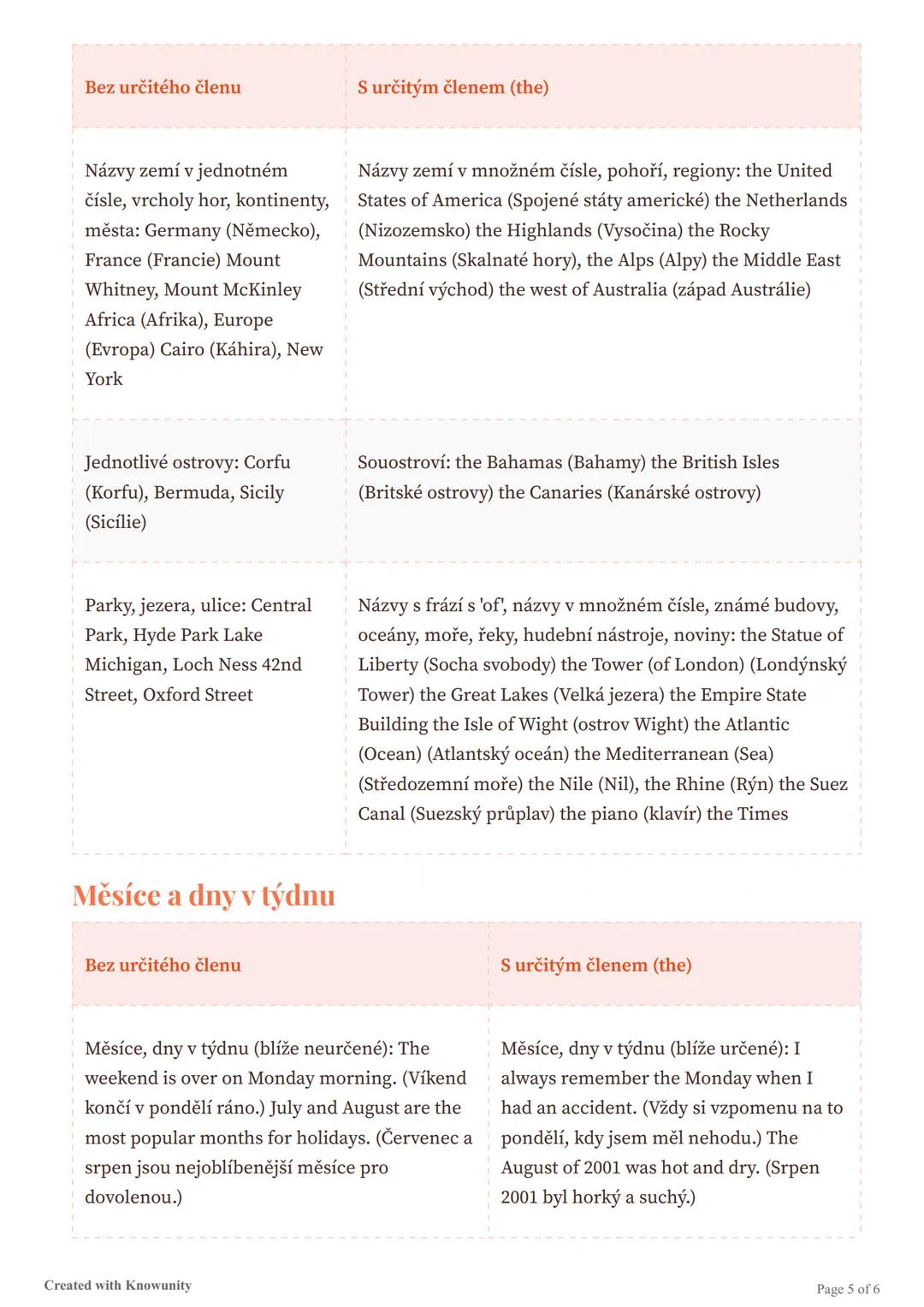
Geografické názvy a čas
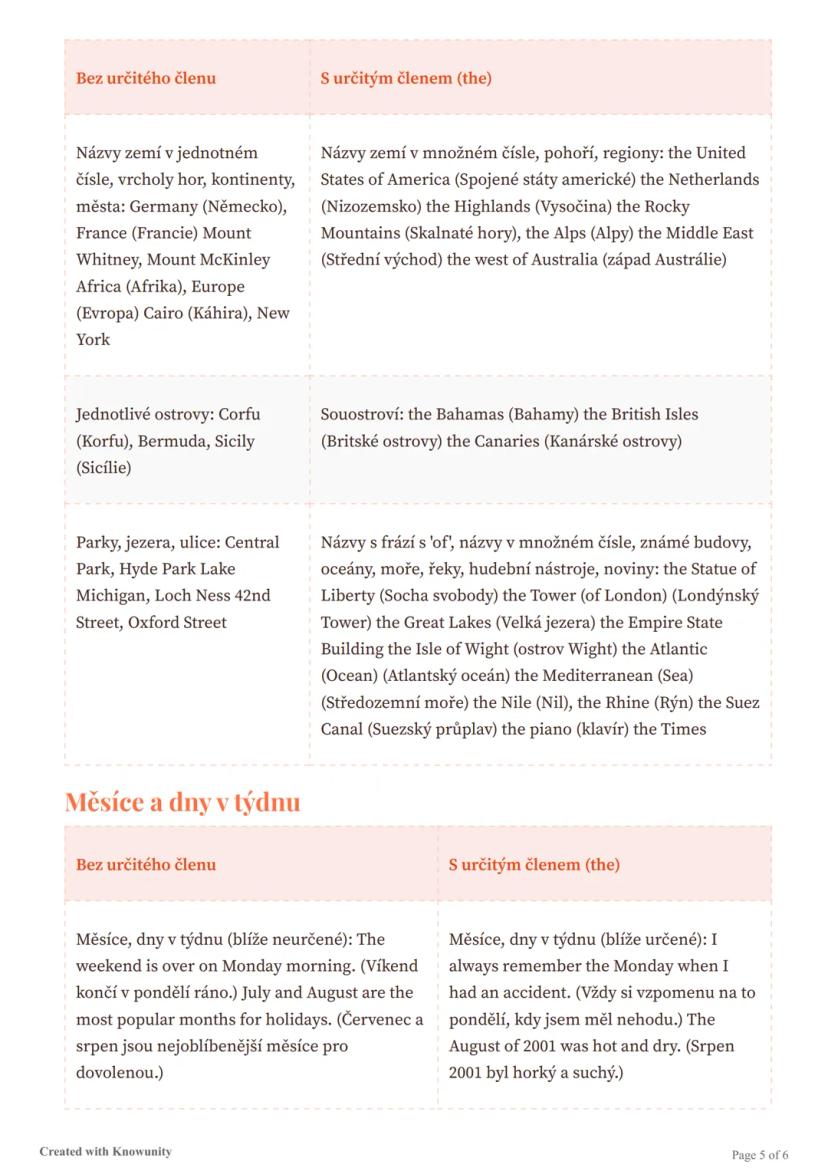
Země v jednotném čísle, města, kontinenty - bez členu: "Germany", "New York", "Europe". Ale země v množném čísle, pohoří, regiony - s "the": "the United States", "the Alps", "the Middle East".
Jednotlivé ostrovy bez členu ("Corfu"), ale souostroví s "the" ("the Bahamas"). Oceány, moře, řeky vždycky s "the" ("the Atlantic", "the Nile"), ale jezera a parky bez členu ("Lake Michigan", "Central Park").
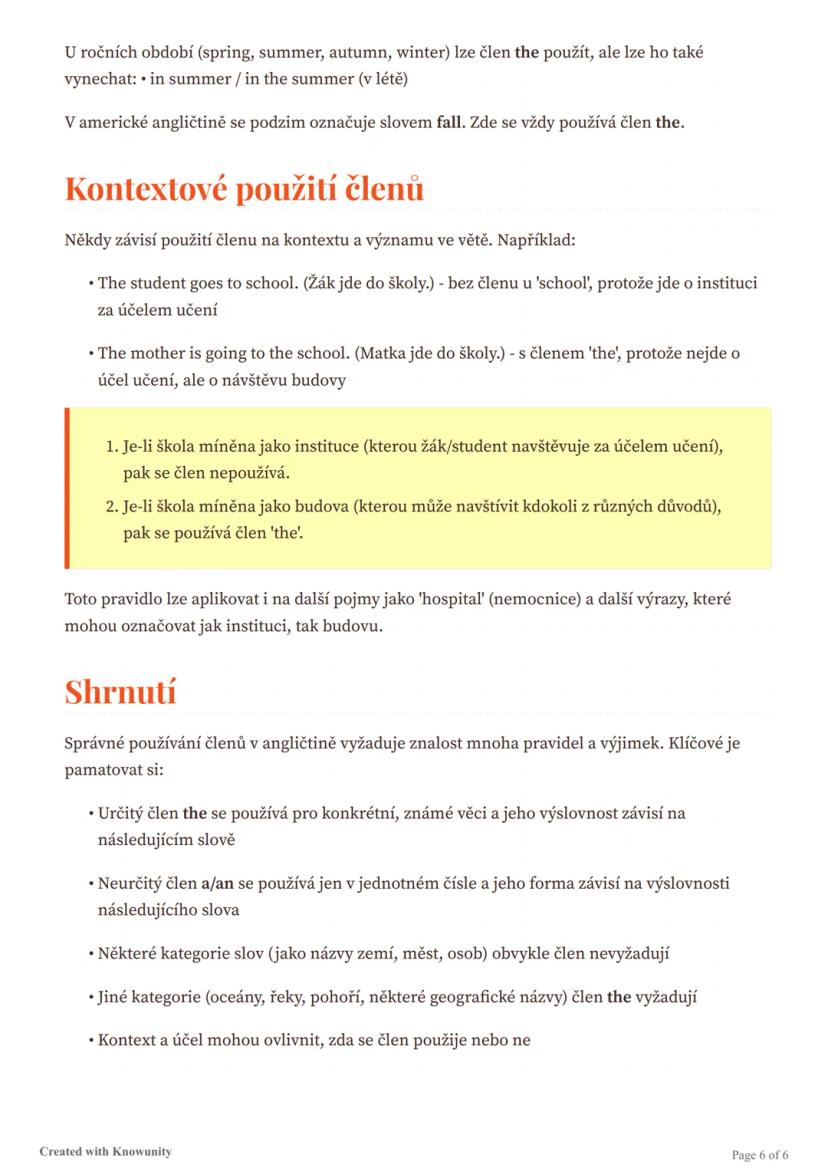
Měsíce a dny obecně bez členu ("July and August"), ale konkrétně s "the" ("the Monday when I had an accident"). U ročních období můžeš "the" použít nebo vynechat .
💡 Pravidlo: Výjimky jsou časté, ale logika "obecně vs. konkrétně" často funguje!
6
of 6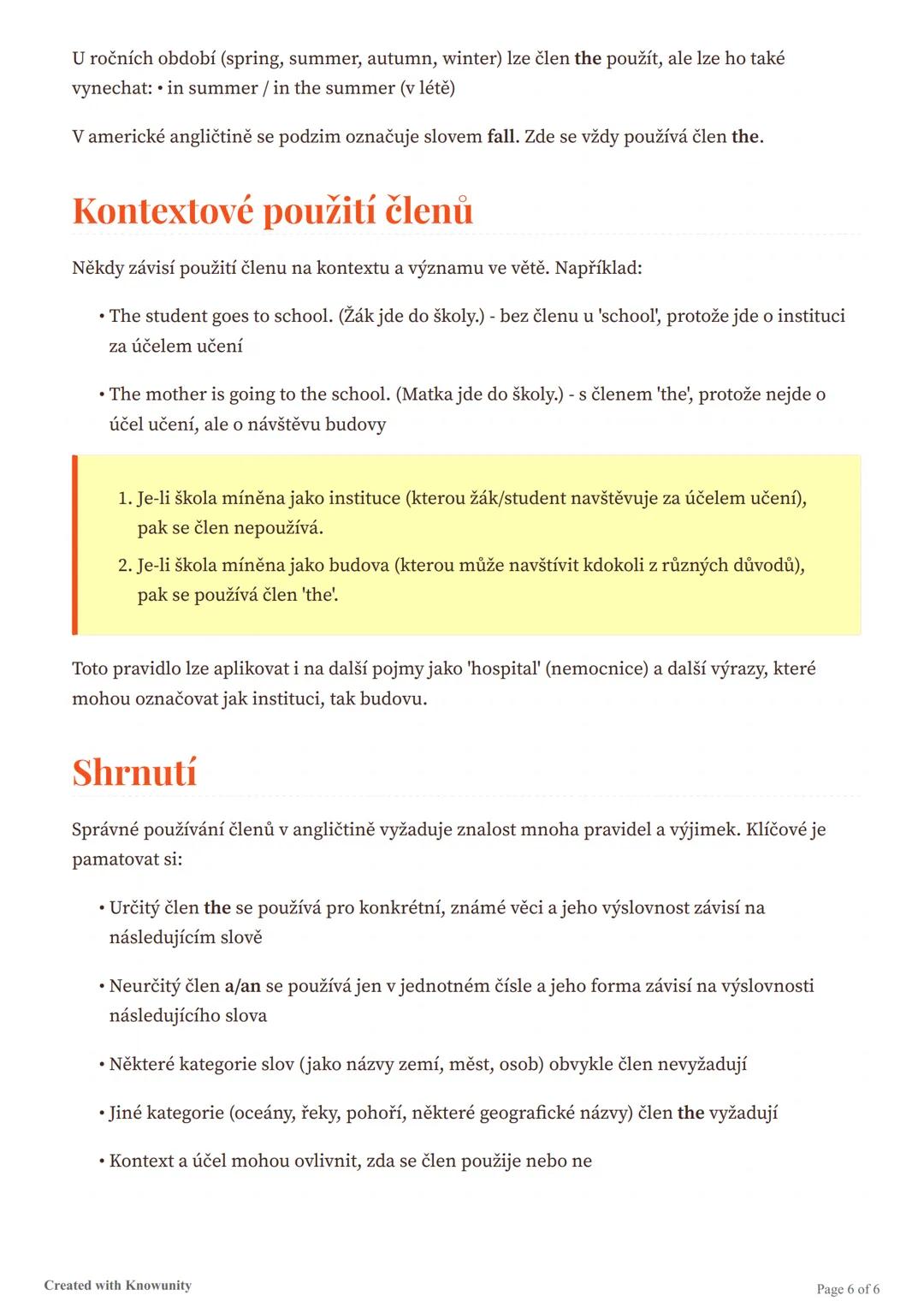
Kontextové použití a shrnutí
Kontext rozhoduje o použití členu. "The student goes to school" vs. "The mother is going to the school" . Stejné pravidlo platí pro "hospital" a podobné výrazy.
Shrnutí hlavních pravidel: Určitý člen "the" pro konkrétní věci, výslovnost podle následujícího slova. Neurčitý člen "a/an" jen v jednotném čísle, forma podle výslovnosti. Některé kategorie (jména, země) obvykle bez členu, jiné (oceány, řeky) s "the".
Nezoufej si, když ti to na začátku nepůjde - členy jsou i pro pokročilé studenty náročné. S praxí si osvojíš intuici a použití ti bude přirozenější.
💡 Finální tip: Čti a poslouchej hodně angličtiny - intuice pro členy se rozvíjí postupně!
We thought you’d never ask...
What is the Knowunity AI companion?
Our AI companion is specifically built for the needs of students. Based on the millions of content pieces we have on the platform we can provide truly meaningful and relevant answers to students. But its not only about answers, the companion is even more about guiding students through their daily learning challenges, with personalised study plans, quizzes or content pieces in the chat and 100% personalisation based on the students skills and developments.
Where can I download the Knowunity app?
You can download the app in the Google Play Store and in the Apple App Store.
Is Knowunity really free of charge?
That's right! Enjoy free access to study content, connect with fellow students, and get instant help – all at your fingertips.
Most popular content: Definite Article
1Most popular content in Angličtina
9Most popular content
9Can't find what you're looking for? Explore other subjects.
Students love us — and so will you.
4.6/5App Store
4.7/5Google Play
The app is very easy to use and well designed. I have found everything I was looking for so far and have been able to learn a lot from the presentations! I will definitely use the app for a class assignment! And of course it also helps a lot as an inspiration.
Stefan SiOS user
This app is really great. There are so many study notes and help [...]. My problem subject is French, for example, and the app has so many options for help. Thanks to this app, I have improved my French. I would recommend it to anyone.
Samantha KlichAndroid user
Wow, I am really amazed. I just tried the app because I've seen it advertised many times and was absolutely stunned. This app is THE HELP you want for school and above all, it offers so many things, such as workouts and fact sheets, which have been VERY helpful to me personally.
AnnaiOS user
Angličtina273 views·Updated Jun 1, 2026·6 pagesJak používat členy v angličtině: The, A, a An
Členy jsou jednou z nejtěžších částí angličtiny pro Čechy, protože v češtině je prostě nemáme. Ale neboj se - s jasným vysvětlením a pravidly si to rychle osvojíš!
1
of 6Sign up to see the content. It's free!
- Access to all documents
- Improve your grades
- Join milions of students
Základy členů v angličtině
Angličtina má dva typy členů: určitý člen "the" a neurčitý člen "a/an". Zatímco v češtině se bez členů obejdeme bez problémů, v angličtině jsou naprosto nezbytné.
Určitý člen "the" je jednoduchý - stejná forma pro všechno. Ať už mluvíš o "the boy" nebo "the computers", vždycky je to "the". Ale pozor na výslovnost!
Výslovnost záleží na tom, co následuje: Před souhláskami říkej [ðə] (the girl, the book), před samohláskami [ði:] (the English girl, the orange book). Důležité je, jak se slovo vyslovuje, ne jak se píše - "the unit" je [ðə], ale "the uncle" je [ði:].
💡 Tip: Poslouchej pozorně výslovnost v angličtině a všimni si rozdílu!
2
of 6Sign up to see the content. It's free!
- Access to all documents
- Improve your grades
- Join milions of students
Neurčitý člen a/an
Neurčitý člen má dvě podoby: "a" a "an", ale používá se jen v jednotném čísle. V množném čísle prostě nic nepoužíváš - z "a boy" se stává jen "boys".
Pravidlo je jednoduché: "a" před souhláskami (a boy, a school), "an" před samohláskami (an aunt, an old school). Opět platí, že záleží na výslovnosti - "a unit" (vyslovuje se s [j]), ale "an uncle".
Neurčitý člen má speciální použití, které musíš znát: před časovými údaji ("4 times a week"), před povoláními ("My father is a mechanic"), s výrazy "half" a "quite", nebo při označování národnosti ("He is an American").
💡 Pamatuj si: V množném čísle neurčitý člen prostě zmizí!
3
of 6Sign up to see the content. It's free!
- Access to all documents
- Improve your grades
- Join milions of students
Speciální případy neurčitého členu
Člen "a/an" se objevuje v situacích, kde bys to možná nečekal. Před časovými údaji říkáš "twice a year" (dvakrát ročně) nebo "250 kilometres an hour" (250 km za hodinu).
U povolání je člen povinný: "My father is a car mechanic" - v češtině říkáme "je automechanik", ale angličtina chce to "a". Stejně tak u národností: "Bruce Springsteen is an American".
S výrazy "half" a "quite" člen také patří: "half a pound of sugar" nebo "quite a good story". Tyhle kombinace si prostě musíš zapamatovat.
💡 Pozor: Anglické fráze často obsahují člen tam, kde ho čeština nepotřebuje!
4
of 6Sign up to see the content. It's free!
- Access to all documents
- Improve your grades
- Join milions of students
Kdy člen nepoužívat vs. kdy použít "the"
Bez členu mluvíš obecně: "Life is too short" (život obecně), "I like flowers" (květiny obecně). Taky u jmen osob ("Peter and John"), příbuzenských vztahů ("Aunt Mary") a účelu institucí ("go to school", "by bus").
S členem "the" budeš konkrétní: "the life of Bill Clinton" (konkrétní život), "the flowers in your garden" (konkrétní květiny). U rodinných jmen v množném čísle ("the Smiths") a u konkrétních institucí ("the school that Mandy goes to").
Rozdíl je v tom, jestli mluvíš obecně nebo konkrétně. "Go to school" znamená jít se učit, ale "go to the school" znamená jít do té konkrétní školní budovy.
💡 Klíčové rozlišení: Obecně = bez členu, konkrétně = s "the"!
5
of 6Sign up to see the content. It's free!
- Access to all documents
- Improve your grades
- Join milions of students
Geografické názvy a čas
Země v jednotném čísle, města, kontinenty - bez členu: "Germany", "New York", "Europe". Ale země v množném čísle, pohoří, regiony - s "the": "the United States", "the Alps", "the Middle East".
Jednotlivé ostrovy bez členu ("Corfu"), ale souostroví s "the" ("the Bahamas"). Oceány, moře, řeky vždycky s "the" ("the Atlantic", "the Nile"), ale jezera a parky bez členu ("Lake Michigan", "Central Park").
Měsíce a dny obecně bez členu ("July and August"), ale konkrétně s "the" ("the Monday when I had an accident"). U ročních období můžeš "the" použít nebo vynechat .
💡 Pravidlo: Výjimky jsou časté, ale logika "obecně vs. konkrétně" často funguje!
6
of 6Sign up to see the content. It's free!
- Access to all documents
- Improve your grades
- Join milions of students
Kontextové použití a shrnutí
Kontext rozhoduje o použití členu. "The student goes to school" vs. "The mother is going to the school" . Stejné pravidlo platí pro "hospital" a podobné výrazy.
Shrnutí hlavních pravidel: Určitý člen "the" pro konkrétní věci, výslovnost podle následujícího slova. Neurčitý člen "a/an" jen v jednotném čísle, forma podle výslovnosti. Některé kategorie (jména, země) obvykle bez členu, jiné (oceány, řeky) s "the".
Nezoufej si, když ti to na začátku nepůjde - členy jsou i pro pokročilé studenty náročné. S praxí si osvojíš intuici a použití ti bude přirozenější.
💡 Finální tip: Čti a poslouchej hodně angličtiny - intuice pro členy se rozvíjí postupně!
We thought you’d never ask...
What is the Knowunity AI companion?
Our AI companion is specifically built for the needs of students. Based on the millions of content pieces we have on the platform we can provide truly meaningful and relevant answers to students. But its not only about answers, the companion is even more about guiding students through their daily learning challenges, with personalised study plans, quizzes or content pieces in the chat and 100% personalisation based on the students skills and developments.
Where can I download the Knowunity app?
You can download the app in the Google Play Store and in the Apple App Store.
Is Knowunity really free of charge?
That's right! Enjoy free access to study content, connect with fellow students, and get instant help – all at your fingertips.
Most popular content: Definite Article
1Most popular content in Angličtina
9Most popular content
9Can't find what you're looking for? Explore other subjects.
Students love us — and so will you.
4.6/5App Store
4.7/5Google Play
The app is very easy to use and well designed. I have found everything I was looking for so far and have been able to learn a lot from the presentations! I will definitely use the app for a class assignment! And of course it also helps a lot as an inspiration.
Stefan SiOS user
This app is really great. There are so many study notes and help [...]. My problem subject is French, for example, and the app has so many options for help. Thanks to this app, I have improved my French. I would recommend it to anyone.
Samantha KlichAndroid user
Wow, I am really amazed. I just tried the app because I've seen it advertised many times and was absolutely stunned. This app is THE HELP you want for school and above all, it offers so many things, such as workouts and fact sheets, which have been VERY helpful to me personally.
AnnaiOS user