Consumer Protection Laws and Seeking Redress
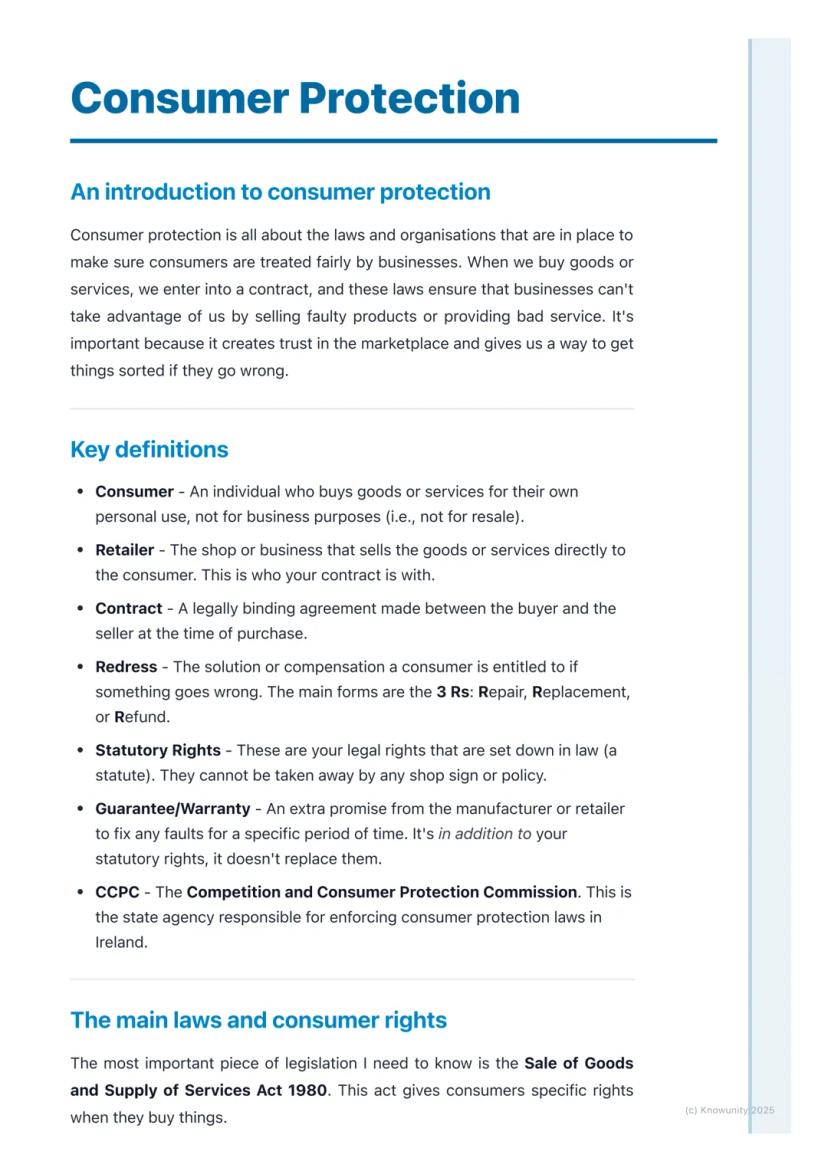
Beyond product quality, the Consumer Protection Act 2007 protects you from unfair business practices. It bans misleading practices like false advertising, aggressive sales tactics that pressure you into buying, and any unfair commercial practices that aren't honest or professional.
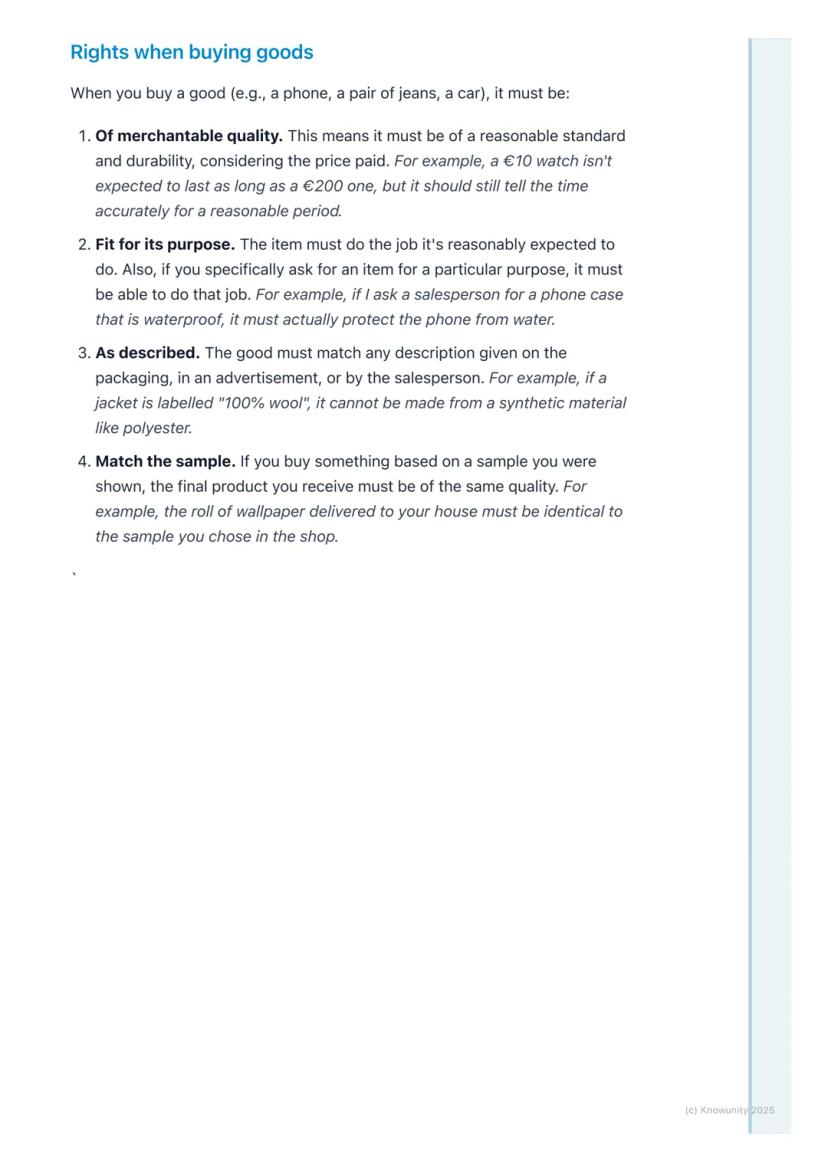
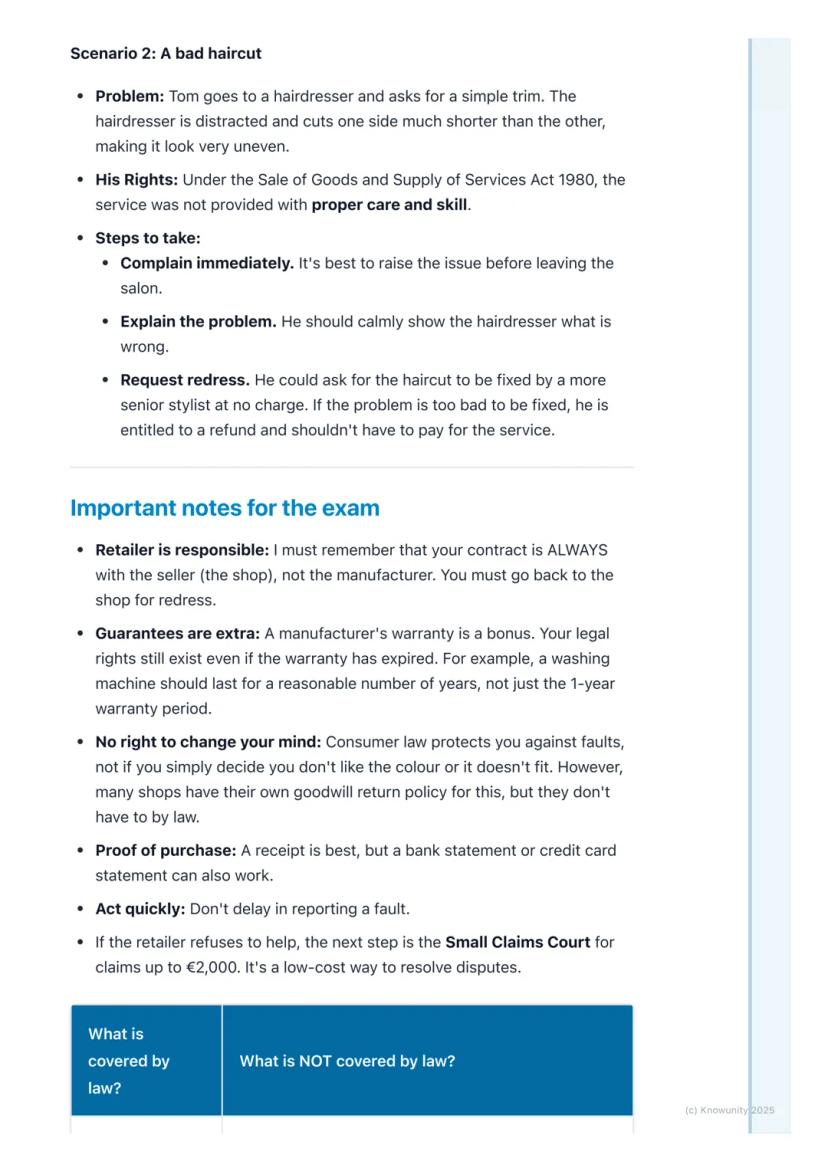
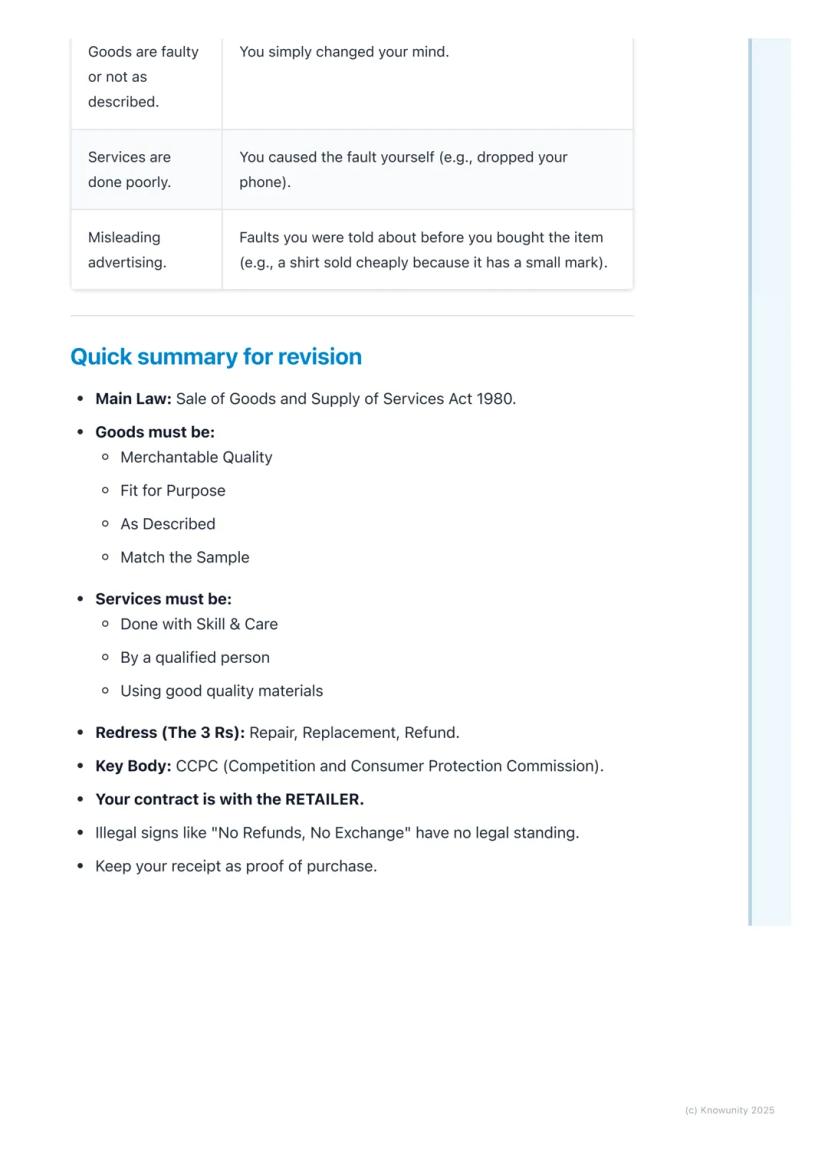
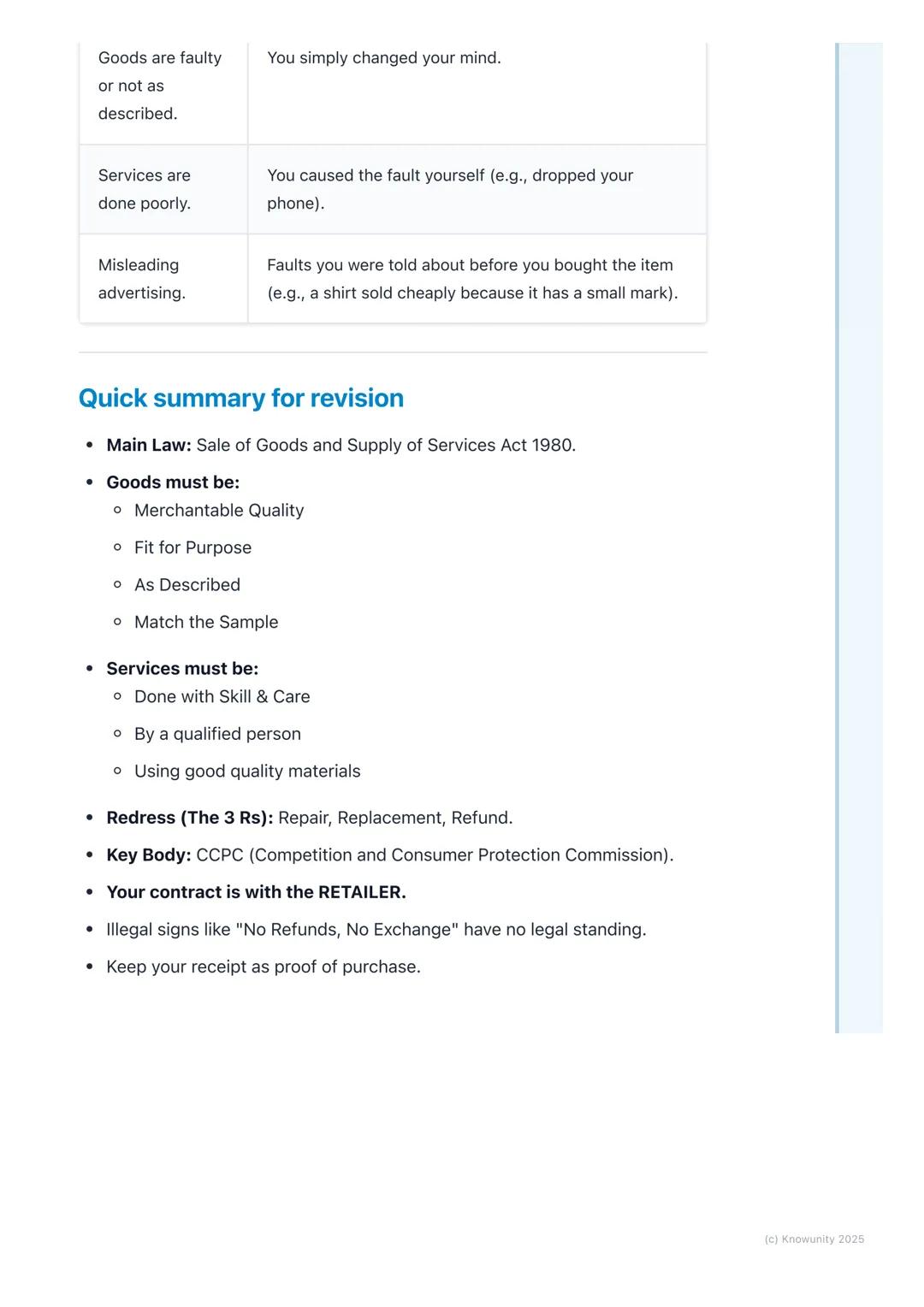
When something goes wrong with a purchase, knowing how to seek redress is crucial. Take Sarah's example with her faulty €400 games console that stopped working after three weeks. Under consumer law, this clearly fails the merchantable quality test. Her first steps should be to stop using it, find her receipt, and contact the retailer (not the manufacturer).
The key to resolving issues is understanding that your contract is with the shop that sold you the item. Sarah should explain the problem, mention her statutory rights, and request one of the 3 Rs: repair, replacement, or refund. For a major fault in a new, expensive item, a replacement or refund would be reasonable.
🔑 Action tip: Always keep receipts for major purchases and act quickly when problems arise. Taking photos of the fault can help support your case when seeking redress.




 Business Studies
 Irish
Irish English
 Biology
 Agricultural Science